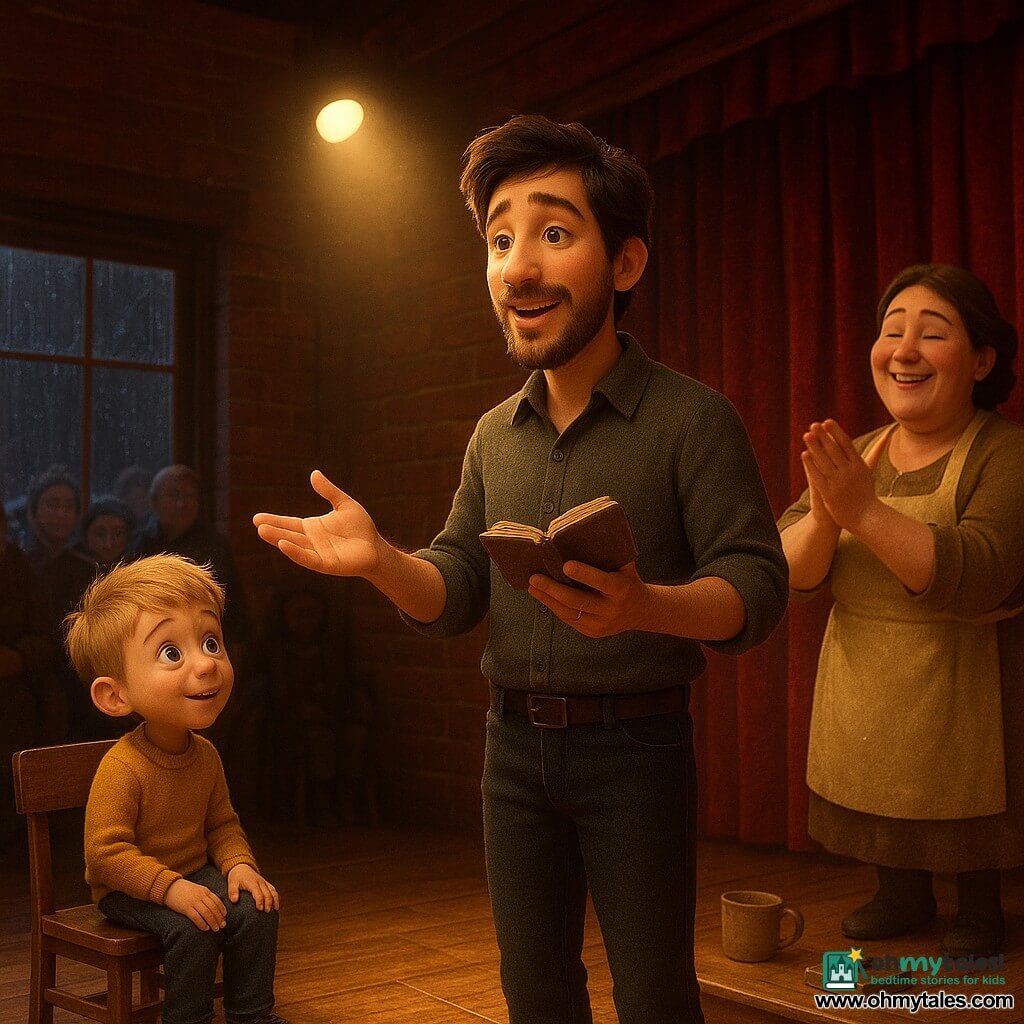
Chapter 1 — The Quiet Song
Marco lived in a small flat above a bakery, where the smell of warm bread braided with the smell of his morning tea. He was a humble singer, a man whose voice preferred to wander softly down the street instead of shouting from rooftops. Each evening he sat at his little window and hummed, testing notes like pebbles for skipping.
One gray afternoon, a child across the road tapped on the radiator in a steady, curious beat. Marco listened. He tapped his knee to match it, then beat a finger on his mug. "Rhythm likes to hide in everything," he told himself. He took out a small notebook and wrote, in careful letters: idea — rhythm: small heart, then long breath.
That night he practiced breathing with the patience of someone tending a tiny flame. He learned how a breath could make a note blossom, how silence could be a petal falling. When he sang, he remembered to listen first—listen to the room, to the people, to the hush between the wagon wheels and the kettle's sigh. He believed a singer learned most by hearing others.
Chapter 2 — The Red Curtain
A poster appeared in the bakery window: "Open Stage. All Welcome. Tonight." Marco's heart gave a little flit. He had never been loud. He had never stood under bright lights. But he wanted to learn what a stage felt like, like a new pair of boots or a warm cup held in both hands.
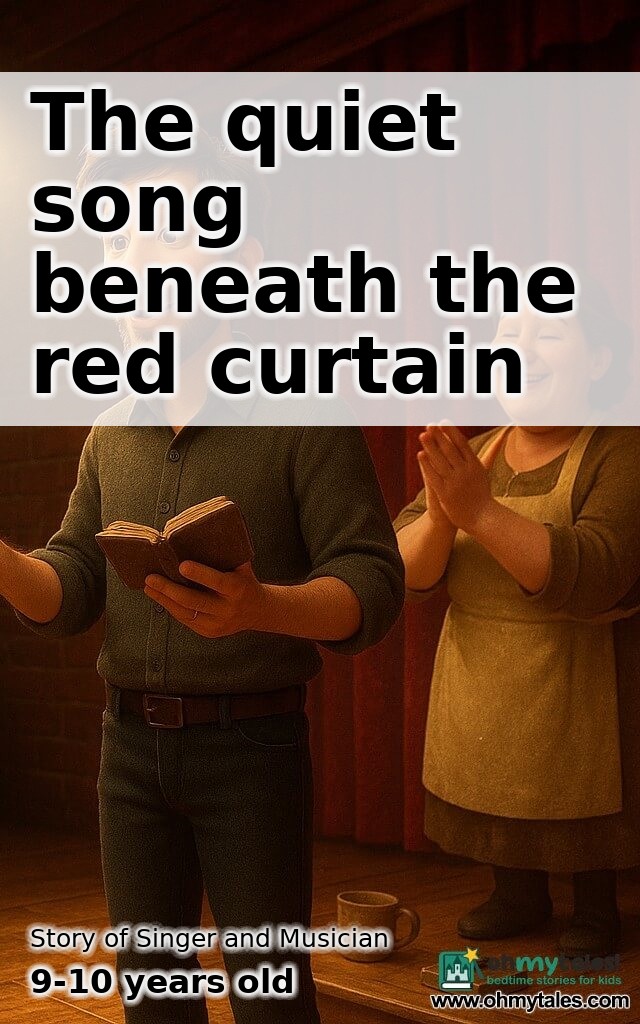
That evening the small theater smelled of dust and lemon polish. A red curtain hung like a sleeping dragon. Backstage, Marco felt the roughness of the curtain with the tip of his finger. "It is only cloth," he whispered, to steady his hands and remind himself that courage is also ordinary.
The lights warmed his face. He sang a simple song about the bakery, the radiator, and the pebble-skipping notes. Halfway through, someone in the front row coughed. Marco paused, then smiled and folded that cough into his song, like turning an unexpected page into melody. The audience laughed softly; they felt included. After the applause, a small girl came up, eyes wide. "Your voice makes the room feel like a blanket," she said. Marco's cheeks warmed. He realized that singing wasn't only about the sound—it was about carrying people safely on the waves of a song.
Chapter 3 — The Idea of Rhythm
A week later, Marco sat in the park. He watched pigeons shuffle, a mother tie a shoelace, a bus doors' blink and sigh. He heard rhythms: the staccato of footsteps, the long, smooth breath of a passing violinist. He flicked open his notebook and wrote new notes: rhythm is like walking with someone — step, wait, then step together.
He tried clapping patterns with a friend, a baker named Ria who had broad, flour-dusted hands. "Do you feel it?" Marco asked. "Do you sense how a pause can make the next note surprise you?" Ria clapped, then tapped her apron. They laughed when the rhythm turned into a silly dance. Marco taught Ria how to hum while tapping, and Ria taught Marco how to notice the quiet rhythms of others—the anxious foot tapping of a neighbor, the soft snores of an old man in the bench.
One afternoon he sat before the red curtain again; this time he brought a small percussion box and a notebook full of rhythms. He shared his idea with the theater's young group. "Think of rhythm as a conversation," he said. "If someone pauses, listen. If someone rushes, match them gently." He showed them how to write a rhythm simply: heart-heart-long. The children tried, clapping and whispering, learning to hug each other's beats instead of drowning them out.
Chapter 4 — The Shared Song
A storm rolled in one night, and the theater's heater coughed out smoky groans. People gathered inside, damp coats draped like friendly animals. Marco stood before the red curtain and felt the hush of a room full of stories. He did not come to command, but to connect.
He began to sing, not a solo but a call for voices. "Sing what you feel," he said softly. At first only a few answered—an old woman with a lullaby tucked under her tongue, a teenager who hummed like a distant radio. Marco matched his voice to theirs, lowering when they were low, opening wide when they dared. He guided them like someone threading beads onto a string; each voice shivered, then settled beside the other.
Mid-song, the power flickered, and the curtains trembled. Someone in the crowd started a rhythm by knocking a spoon against a cup. Marco smiled and caught the spoon beat, letting his voice lift over it. He showed them how to make a storm into music: drums from the windowpanes, wind sighed through pipes, and the red curtain itself made a soft drum when a hand rubbed it. The room became an orchestra of ordinary sounds, stitched together by kindness.
Afterwards, people lingered in small groups, cheeks flushed. A man who had been quiet took Marco's hand. "You made room for us," he said. Marco felt the truth of his calling—being a singer was not only about singing well, but about making space for others to be heard. He wrote in his notebook: song is shelter.
Chapter 5 — The Dream of Piano
That night, tired in the warm, safe way you are after giving something true, Marco walked home beneath lamplight. He thought about rhythm and listening, about the red curtain that had become a home to many voices. He climbed the narrow stairs, made a cup of tea, and placed his notebook beside his bed.
As sleep softened his eyelids, he dreamed of a piano. It was not a grand, distant thing but an old upright tucked beneath a window, keys worn like small doorsteps. In the dream, the piano spoke in colors: low notes like deep blue wool, high notes like sparks of silver. Marco sat down and touched a key. A warm ripple moved through the room, and each note touched a different person in his theater—Ria, the little girl, the man who had held his hand—each one smiling as if their hearts had been brushed.
He played the rhythm he had written: heart-heart-long, step-wait-step together. The melody was gentle and strong, like a friend holding your hand while you cross a puddle. In the dream, the piano taught him the kindest lesson: music is a place where differences can meet and rest, where voices that were shy find courage, and where a single idea of rhythm can become the map that guides everyone home.
When he woke, his hand curled around his notebook. He could still feel the piano's warm keys, like wood polished by many caring hands. He hummed a soft tune and wrote one last line: sing to include, listen to hold. Then he closed his eyes and let a lullaby of small sounds carry him back to sleep—the kettle's last bubble, a distant footstep, the steady, sleep-soft heartbeat of the city.