Chapter 1: The Echo in the Garden
Mara woke with the soft patter of rain on her window like tiny fingers playing a xylophone. She slipped on her slippers and carried her violin across the room, its wood warm from being hugged. Outside, the garden smelled of wet earth and jasmine. Mara liked to practice where sounds could answer back. She called it listening to the echo.
She drew the bow across the strings and a gentle note floated up—long, smooth, like honey poured from a spoon. The hedge answered: a thinner, brighter whisper that made Mara smile. "Hello," she said to the air, and the echo returned her word as if the garden had learned to talk.
Mara was a singer and musician, which meant her life was full of sounds that could be shaped. Tonight she wanted to work on articulation—the way words and notes fit together like stepping stones. She placed a leaf on the neck of her violin and plucked a pattern: da-da, da-da, daaa. Each pluck was a little mouth shaping a consonant, each slide a vowel stretching like taffy. She practiced saying soft syllables—"ta," "mi," "la"—as the echo repeated them. Little by little the garden's replies grew clearer. Mara breathed slowly, feeling the muscles around her lips and jaw loosen. Concentration felt like a warm blanket, holding each tiny sound safe.
When the clock struck seven, a surprising thought brushed her like a breeze: she could visit the hospital hall down the street. Hospitals had great echoes, she thought, and also people who might love a gentle song. She packed her violin, a small tin of throat lozenges, and a notebook of lullabies, and walked into the evening with the rain still humming on the pavement.
Chapter 2: The Long Hall of Voices
The hospital stood quiet and wide, its lights like lanterns against the night. The main hall smelled of soap and lemons and something that felt like courage. Nurses hurried by with soft shoes; a father rocked a child who had eyes like glass marbles. Mara found a bench near the reception desk and tuned her violin. The hall was a tunnel of reflections—floors that held footsteps like echoes in a jar.
She began with a single melodic line, a slow bow that painted a silver thread through the air. The sound slid along the walls and returned like a friendly ghost. A woman in a cardigan stopped and listened. A child peered around a pillar with a sleepy grin. Even the automatic doors seemed to pause.
Mara practiced articulation out loud, shaping consonants with gentle clicks of her tongue and bright vowels that opened like small windows. "Ta—ta—ti, ma—ri—po." The hospital's echo answered, stretching the syllables, making them shimmer. She turned her practice into a tiny story: each consonant was a pebble, each vowel a pond. She tapped pebbles into ponds and the echoes made ripples.
A nurse approached and asked if she would play for a boy in room 214 who had trouble speaking after a fall. Mara's heart tapped like a snare drum. This was the important moment she'd been hoping for: to use her music to help someone find voice again. The nurse led her down a corridor that smelled of warm blankets.
Chapter 3: Finding the Tiny Sounds
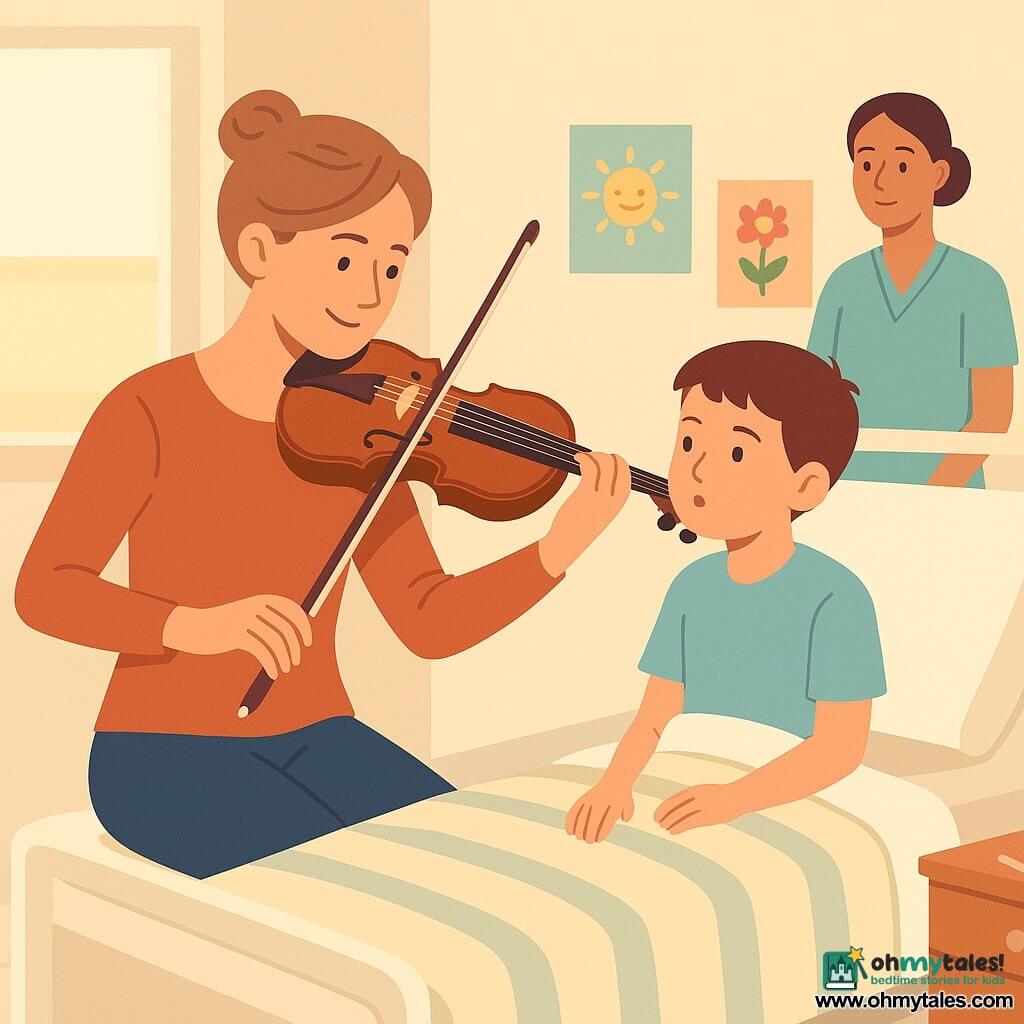
Inside room 214, sunlight from a small window lay across the bed like a golden ribbon. The boy, Jonah, looked at Mara with curious, careful eyes. He tried to smile and then inhaled slowly as if practicing courage. Mara sat close enough that Jonah could see the bow move, and she invited him into a game.
"Let's catch echoes," she whispered. She hummed low and then high, and Jonah echoed back with a breathy hum. Mara noticed his mouth moved slowly, as if the sounds were shy. She taught him little exercises—funny faces that loosened the cheeks, puffing up like a balloon then letting air out with a soft "pah." They tapped syllables on their knees: "pa-pa, ta-ta, ka-ka," and clapped the rhythm. Jonah giggled when he missed a beat, which made the nurse laugh too.
Mara used the violin like a friend in the game. Bow strokes became slides that nudged Jonah's tongue to touch his teeth for crisp consonants. She hummed a pattern and asked him to match the vowel: "Ah—eh—ee," like tasting three different fruits. Each time Jonah tried, the hospital hall outside sent the sound back, making him sound brave and not alone.
As they practiced, Mara taught him how concentration could be a little lighthouse—steady and bright. "When you focus on the sound, your mouth remembers where to go," she said, drawing the word focus slowly. Jonah traced the letters in the air with his finger, as if learning to shape them with a tiny boat. By the end of their session, he could say small words with clearer edges, and his smile had widened like a dawning sun.
Chapter 4: The Echo that Stayed
Mara left the room with light steps. In the hall, the echoes seemed kinder now, as if they'd learned a new tune. She sat back on her bench and pulled out a soft scarf to warm her throat. Around her, the hospital hummed—quiet conversations, the distant beep of machines, the rustle of pages. Mara played a lullaby, slow and tender, and let each note hang like a tiny lantern.
Concentration was a friend walking beside her; she felt it in the steady beat of her heart and the careful shape of each syllable as she whispered them. She practiced articulation one last time, making consonants crisp and vowels round: "Do—re—mi." The echo folded the sounds into the hall like a blanket.
Before she left, a small boy in the waiting area waved and mouthed the notes back, so faint she had to lean in. Mara leaned toward him and whispered, soft as a secret, "do—re—mi." The boy's voice answered in the smallest human bell, a delicate echo that made Mara's chest glow.
Outside, the rain had stopped. The garden seemed to nod in the moonlight. Mara walked home with her violin tucked under her arm, the hospital's echoes like footprints following her. At her window she hummed once more for the echo in the garden. The reply was a thin, moonlit thread.
She lay down, the violin safe on the bedside table, and breathed in slow patterns she'd taught Jonah—soft balloons filling, then quieting. To herself, half awake and very pleased, she whispered the last thing she loved to hear: do—re—mi. The three notes slipped into the dark like a promise and the echo, gentle as a lullaby, came back almost inaudible, almost magic.