Morning Sun and Painted Shells
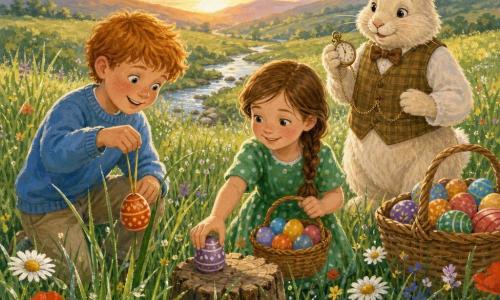
The day began with the smell of sugar and lemon, sunlight stitching gold stripes across the kitchen table. Mina, Tomas, and Arlo woke like three sleepy sparrows, each with a pocket already warm from the coins their grandmother had slipped them. They were almost ten, which felt like the perfect age for discovering secret things.
Grandma had set out a basket of eggs, soft pastels and loud polka dots, and a note tied with blue ribbon: "Easter puzzle hunt. Follow the clues, find the lost egg, bring back the cheer!" The lost egg was famous in their family — a wooden egg painted like a little planet, said to have been hidden by Grandma when she was small. If the trio found it, they would earn the honor of placing it in the center of the table for everyone to admire.
"Ready?" Mina whispered, fingers itching to start.
"Ready," Tomas agreed, already scanning the garden through the kitchen window.
Arlo took the lead with a grin. "Let the hunt begin."
The First Riddle: Under the Swing
The first clue was written on a strip of paper in looping handwriting: "I watch the sky but sit on the ground; I sway with laughter and creak without sound." Mina read it aloud. Tomas's eyes lit up. "Swing!"
They scurried outside. The swing hung from the old apple tree, its ropes braided with years of summer laughter. Underneath, something blue peeked from a tuft of grass. It wasn't the wooden egg — just a feather from their neighbour's parrot — but tucked with it was another riddle: "Eyes like marbles, nose made of stone; I guard tiny stories where the roots are grown."
The children grinned. The riddles were warm like toasted marshmallows. Arlo crouched and examined the flower bed near the tree roots. Mina brushed aside soil until her fingers found something smooth: a small glass marble wrapped in a bit of ribbon, and another paper hiding beneath. "We're getting close," she said, cheeks flushed like painted eggs.
The Garden's Secret
The next clue led them around the garden, through a line of tulips that nodded in the breeze, to the small stone frog that sat by the vegetable patch. "Croak if you're silly," Tomas joked, tapping the frog's nose. The frog wore a lichen crown and a look of patient amusement.
This riddle was trickier: "I open to welcome, but close when sleep calls; I have many teeth but never eat at all." Mina frowned and then laughed. "A gate! The garden gate's the teeth."
They raced to the gate and found a tiny wooden key tied to the latch with a ribbon the color of sunrise. Attached was a message in a different hand — hurried, with a smudge that looked suspiciously like chocolate: "Follow the sound of something sweet. Where shadows dance, the answer will meet." The children listened. From the house came the clink of spoons, the distant pop of a toaster, and a faint giggle — Grandma humming while she arranged the chocolate eggs.
"Shadows dance..." Arlo said slowly. "Maybe the pergola? The shadows from the trellis make shapes in the morning."
They moved beneath the pergola where vines threw lacy patterns on the stone. There, tucked in the crook of a beam, was a tiny bell that chimed like a silver laugh. The next note was slipped into the bell's loop: "Look where stories rest and whispers sleep."
Books, Blankets, and a Hidden Hint
"Stories rest..." Tomas whispered. "Under the bookshelf? In Grandma's chair?"
They followed the trail into the living room, where books leaned like friends. Sun made a bright rectangle on the carpet and dust motes danced like tiny planets. Mina pulled at a slim, forgotten book and out fluttered a slip of paper. It read: "I hide between covers, but not all tales are true. Seek the oldest story that smells like glue."
They opened the oldest book — a family album smelling of glue and the sweet tang of old paper. Between pictures of cousins and paper flowers was a pressed leaf and, beneath it, a clue written in a child's careful hand: "When afternoon comes, shadows grow long. I sleep where tea dreams go along."
"Tea dreams," Arlo said with a thoughtful face. "Grandma's tea table! The one with the red cloth she uses for special days."
They hurried to the tea table on the back porch. The red cloth was smoothed and folded, and under it lay a ceramic plate of Easter cookies shaped like little chicks. Among the crumbs was a tiny envelope. Inside, in a handwriting that seemed to shimmer, was a riddle almost like a song: "Look to the place where stars might have stayed, where coats hang close and rain is afraid."
Coats, Cloaks, and a Quiet Surprise
"Coat closet!" Mina said, and the three children tumbled into the hallway like a trio of comets. The coat closet was a small cave of wool and umbrellas. It smelled like rain and the memory of wet walks.
Arlo reached to the top shelf and felt fabric. His hand brushed something round and warm. "Got it!" he whispered, pulling down a soft, egg-shaped object wrapped in a faded napkin. But when he unwrapped it, the object was not the wooden planet egg. It was a small, painted stone with a smile, and another riddle tucked beneath: "I spin but never dance; I have colors but no clothes; I am found where meals begin and end."
Tomas laughed. "The kitchen table. Of course." They hurried back, the idea of the wooden egg making their hearts do a gentle drumroll.
The Last Riddle and the Folded Cloth
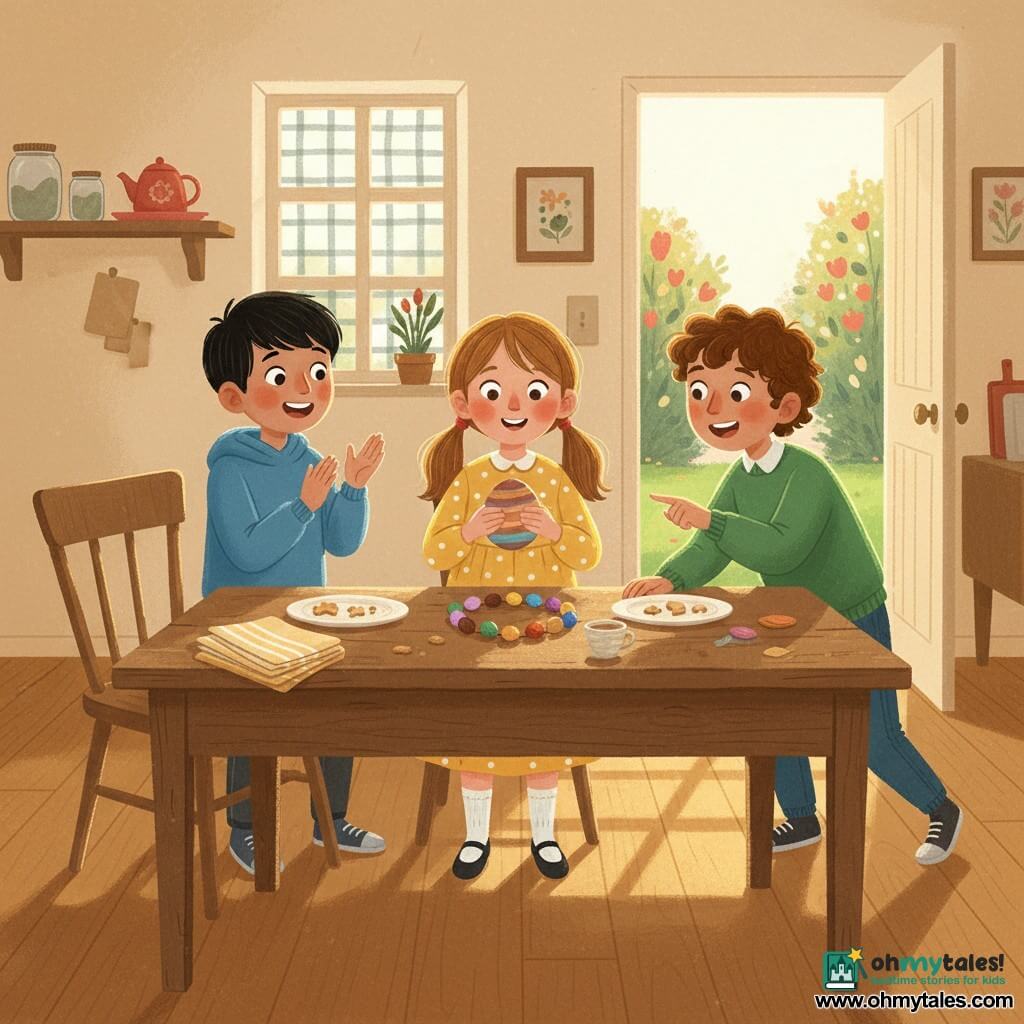
At the kitchen table, chairs waited like patient audience members. The table was strewn with remnants of their hunt: a crumb here, a ribbon there. Mina read the final note slowly: "I was once hidden in simple joy, wrapped in day and folded neat. Find me where hands fold up the feast."
They looked at each other, then at the cupboard where the napkins lived. Mina opened the drawer and found a pile of table linens, soft and perfumed with lemon from past meals. At the very bottom, beneath a stack of cloths, something cool and round met her fingertips. Her heart ticked a little faster.
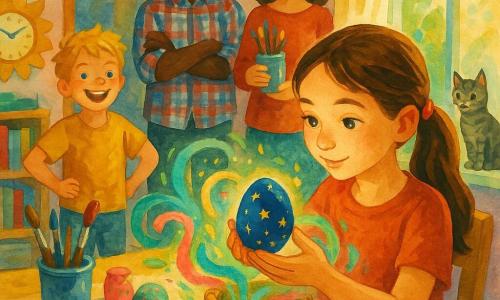
She lifted out the object with both hands. There, painted like a tiny planet with swirling blues and specks of gold, was the lost wooden egg. Around it, thin lines of delicate paint showed tiny people holding hands like a ring. The children whooped and clapped, their laughter making the room shimmer.
Grandma appeared in the doorway, eyes twinkling. "You solved my riddles," she said, voice like warm honey. "You kept the day bright."
They placed the wooden egg in the center of the table, arranging real chocolate eggs around it like a crown. The house hummed with sunlight and sugar and the quiet magic of a secret found. Grandma poured tea into three small cups and handed each child a cookie shaped like a rabbit.
As they celebrated, Mina noticed the napkins on the table. She folded one slowly, carefully, until it became small and neat. Then Tomas and Arlo helped, their fingers quick and precise, folding another, then another. They stacked the napkins like secret letters, soft and precise. When the folding was done, Grandma smiled and took the neat stack, tucking them away with a satisfied sigh.
"An egg found and a table folded," she said. "Easter is simplest when hands do small, kind things."
The day carried on with stories and chocolate, with music from a little radio and shadows stretching like sleepy cats. Later, when they went outside to chase the last light, the wooden egg sat safe on the table under the window, catching the sun like a tiny, painted planet. The folded napkin remained in the drawer, a quiet promise of order and care.
That night, the children went to bed full of sugar and bright thoughts. They dreamed of riddles that wandered like butterflies and of a small planet egg that held family laughter. In the morning, the table would be ready again; the napkins folded; the house waiting for the next little secret.
Joy had been found in clues and in company, in painted shells and in hands that folded cloth. The lost egg had returned, and with it came the gentle, golden feeling that springs from small discoveries shared between friends and family.