Part 1: The Quiet Morning Dig
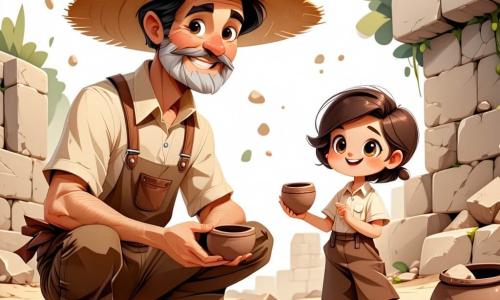
Mr. Rowan brushed his hat and smiled at the soft morning sun. He was an archaeologist. That meant he studied old things people left behind, long, long ago.
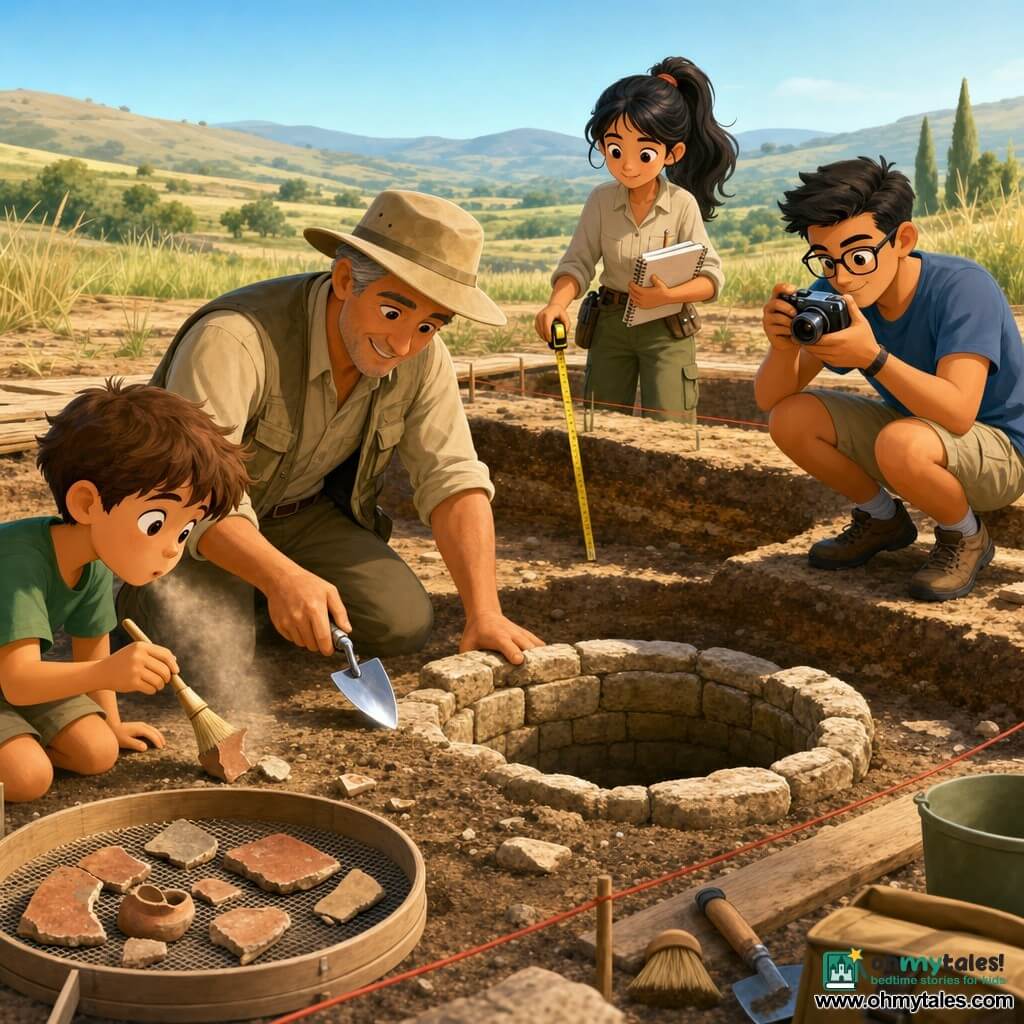
At the dig site, the ground was sandy and warm. A little breeze tickled the tall grass. Mr. Rowan's team was already there: Lina with her notebook, Ben with the measuring tape, and May with the camera.
“Good morning,” Mr. Rowan said. “Thank you for being here. We work best together.”
Lina pointed to a square marked on the ground with string. “We are ready to dig!”
Mr. Rowan nodded, but he held up one finger. “Slowly,” he reminded them, gentle as a lullaby. “We do not dig all at once.”
Ben blinked. “But why? If we dig fast, we find things faster!”
Mr. Rowan knelt down and touched the string. “If we dig too fast, we can break something fragile. And we can also mix up the story the ground is telling us.”
“The ground tells stories?” May asked, eyes wide.
“Yes,” Mr. Rowan said. “Layers are like pages in a book. The top is the newest page. The deeper we go, the older it gets. If we rip the pages, we lose the story.”
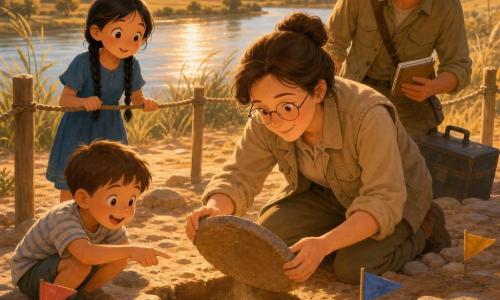
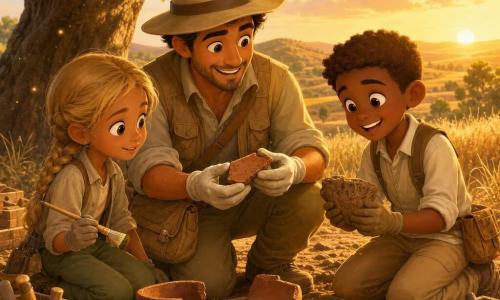
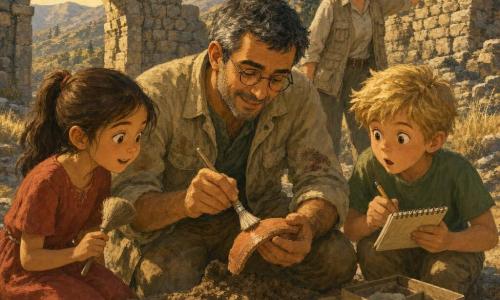
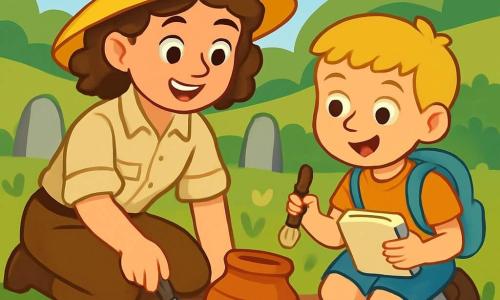
So they worked with small tools. Mr. Rowan used a trowel, like a tiny shovel. Lina used a soft brush. Ben measured the depth and wrote numbers on a board. May took pictures, click, click, click, so they could remember exactly where each thing was found.
Soon Mr. Rowan's trowel tapped something hard.
Tap.
Tap.
He stopped right away. “Everyone,” he whispered, “I found a stone edge.”
They brushed and brushed. A circle appeared in the dirt, made of old stones, set like a ring.
“It's a filled-in well,” Mr. Rowan said, voice calm and proud. “A very old one.”
Part 2: The Old Well and the Gentle Twist
The well was not open. Long ago, someone had filled it with soil and broken pieces, like putting a lid on a deep cup.
“Can we jump in?” Ben asked.
Mr. Rowan shook his head. “No jumping,” he said kindly. “An old well can be dangerous. The sides can crumble. And inside might be important clues. We explore with care.”
He asked Ben to bring wooden boards and bright tape. They made a safe border. May placed a sign: PLEASE WALK SLOWLY.
Mr. Rowan looked into the shallow opening they had cleared. The air felt cooler there. “This well might have been used for water,” he explained, “or later, people might have tossed broken things inside. Not because they were mean—sometimes they used wells like trash bins when they were done.”
Lina frowned. “That sounds sad.”
“It can be,” Mr. Rowan said. “But it also helps us learn how they lived. We learn what they ate, what they fixed, what they threw away. We learn about people, not just objects.”
They began removing the fill, one small bucket at a time. Mr. Rowan showed them how to scoop soil gently, then sift it through a screen, like shaking flour.
“Look!” May called. In the screen, a little curved piece sat like a smile.
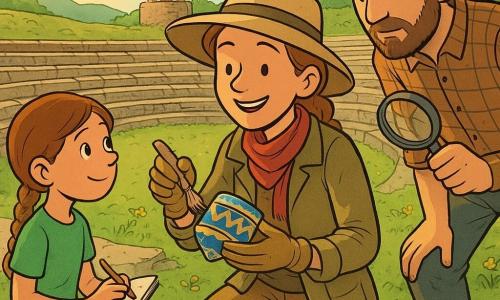
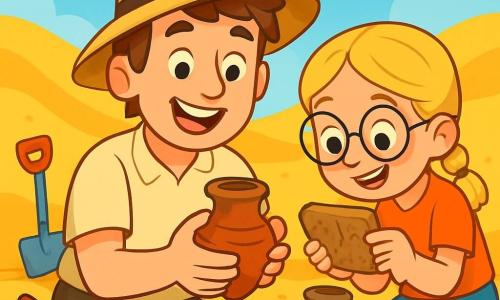
Mr. Rowan picked it up carefully and placed it on a soft pad. “Pottery,” he said. “A piece of a clay bowl.”
Ben grinned. “Treasure!”
Mr. Rowan chuckled. “It is special, yes. But archaeology is not a treasure hunt. The real treasure is the information. Where we found it. How deep. What was near it.”
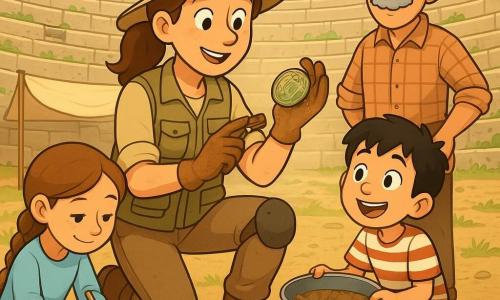
Then a mini-twist happened. Lina's brush uncovered something shiny—a small metal disc with a hole in the middle.
“A coin!” Ben shouted.
Mr. Rowan's eyes sparkled, but he kept his voice steady. “It could be,” he said. “Or it could be a button or a ring piece. We don't guess too fast.”
They didn't rub it hard. They didn't wash it in the well water. Mr. Rowan placed it in a little bag with a label: WELL FILL, LAYER 3, 42 CM.
“Labels are like name tags,” he told them. “Without them, we forget the story.”
They kept going. And then, deeper down, the soil changed. It became darker and smelled a bit like old rain.
Mr. Rowan paused. “When the soil changes, we slow down even more,” he said. “It might mean a new layer, a new time.”
Ben's feet shuffled. “But I want to see the bottom!”
“I know,” Mr. Rowan said softly. “Wanting is normal. But being careful is kinder to the past.”
They all took a slow breath together.
Then May pointed. In the dark soil, something pale curved like a tiny moon.
Mr. Rowan's face became serious, but still gentle. “That might be bone,” he said. “If it is, we call a specialist. We treat it with respect.”
Lina squeezed her notebook. “Like saying thank you?”
“Yes,” Mr. Rowan said. “Thank you to the people who came before us. Thank you for the clues. We learn, and we protect.”
Part 3: Sharing the Story, Then Sleep
By afternoon, the team had found pottery pieces, a small stone bead, and the metal disc that turned out to be a button from a coat—old, but not gold. Everyone laughed, not because it was silly, but because it was honest.
Mr. Rowan felt grateful. Grateful for his team, for the careful tools, for the quiet well that had waited so long.
They covered the well opening with boards again. “We never leave it open,” Mr. Rowan explained. “We keep the site safe, and we keep the ground from getting ruined by rain.”
Back at the small field tent, Mr. Rowan laid out the finds on trays. Lina read the labels aloud. Ben checked the measurements. May showed the photos.
“This is how we share,” Mr. Rowan said. “We don't keep things in our pockets. We write reports. We tell the museum. We teach the town. The past belongs to everyone.”
That evening, Mr. Rowan walked home under a sky the color of blueberry milk. He ate a warm supper and washed the dust from his hands. In his room, he placed his notebook beside his bed.
He closed his eyes and let his mind weave a gentle story for tomorrow. He imagined the old well when it was new. He pictured a family drawing water, laughing softly, helping each other. He pictured someone mending a coat and losing a button—just one small slip, not a disaster. He pictured people making bowls, sharing soup, being tired, being kind.
In his story, nobody was only “ancient.” They were just humans, like us.
Mr. Rowan whispered into the quiet, “Thank you,” to the earth, to the team, and to the people who once stood by that well.
Then, with a calm heart and a patient smile, the archaeologist fell asleep—ready to share a fair and friendly tale in the morning.