Part 1: The Quiet Dig
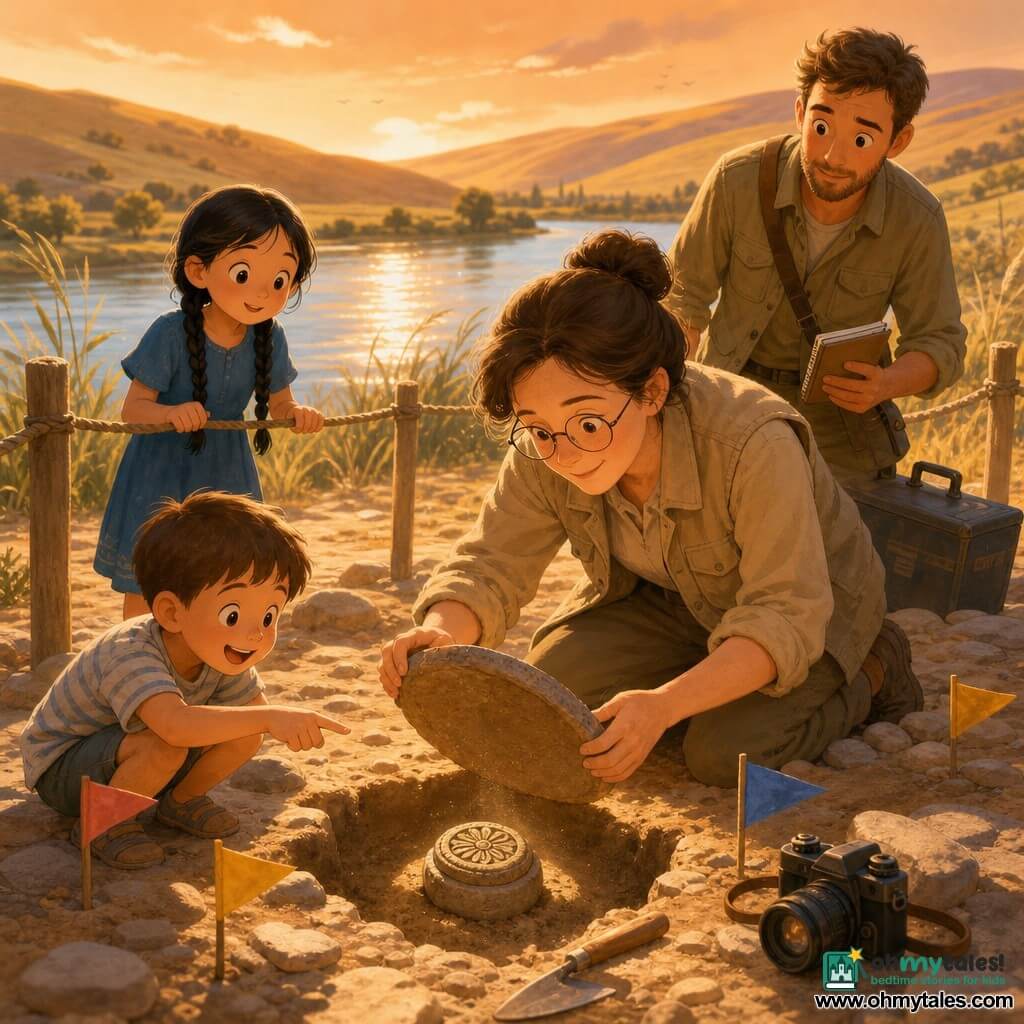
Dr. Mira Lane knelt on the warm, sandy ground. The sun was gentle, not too bright. Around her, the hills were the color of honey, and a small river shone like a ribbon.
“Good morning, site,” Mira whispered, as if the earth could hear.
Her helper, Sam, carried a box of tools. “Brushes, small trowels, pencils, and the camera,” he said.
Mira smiled. “Perfect. Archaeology is not a treasure hunt. It's careful listening.”
A little nearby, two children from the village watched from behind a rope. One waved shyly.
Mira waved back. “Hello! We're working slowly so we don't hurt anything old.”
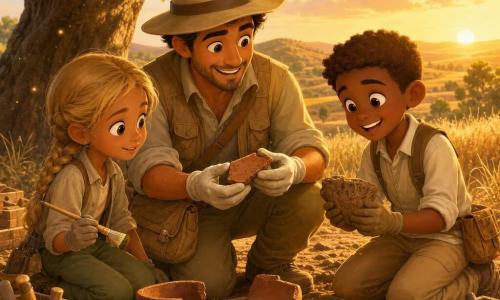
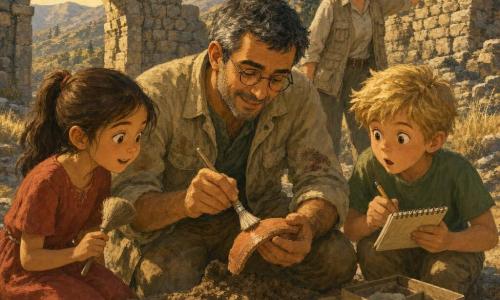
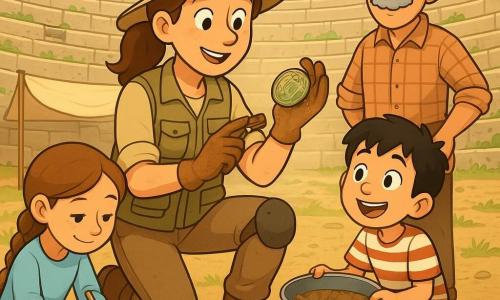
She put on her soft gloves and used a tiny brush. She brushed away dust like she was petting a sleepy kitten. Bit by bit, a small piece of painted clay appeared.
Sam leaned in. “A potsherd?”
“Yes,” Mira said. “A broken piece of a pot. Even small pieces can tell big stories.”
She took out her special tablet. It had an app she made herself. “I'm going to draw it, take photos, and mark the place where we found it.”
Sam blinked. “Why so many notes?”
Mira tapped the screen gently. “Because the place matters. If we forget where it was, we lose part of its story.”
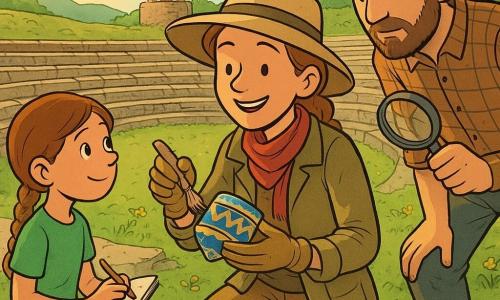
She held the little shard up. It had a red line and a tiny blue flower.
“A flower!” said one of the children behind the rope.
Mira nodded. “A long time ago, someone liked flowers too.”
She looked across the wide land. The wind moved the grass in soft waves. Mira's eyes grew dreamy.
“I wonder,” she said quietly, “how the people from long ago saw this same view. Did they watch the river sparkle like we do? Did they feel this same wind?”
Sam whispered, “Maybe they did.”
Then Mira heard a small crack—very soft. Her heart jumped.
“Oh!” she said, and froze.
Sam froze too. “What is it?”
Mira looked down. The ground had shifted under her knee, just a little. She pulled back carefully.
“No panic,” she said in a calm voice. “This is why we move slowly.”
They brushed the sand away together. Under it was the edge of a flat stone, like a lid.
Part 2: The Stone Lid and the Promise
Mira placed little flags around the stone. “We will not pull it fast,” she told Sam. “We will protect what's below.”
Sam nodded. “We can call the team.”
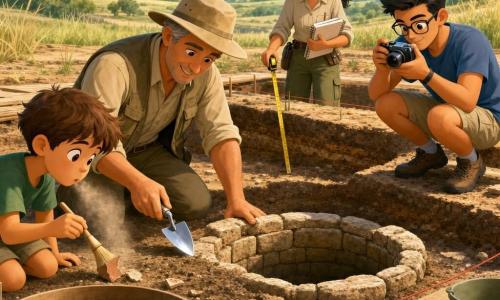
Soon, two more archaeologists came over. One measured the stone. Another wrote notes on a clipboard.
Mira spoke gently to the watching children. “See? We work together. And we never take things for ourselves. What we find belongs to everyone.”
The children nodded very seriously.
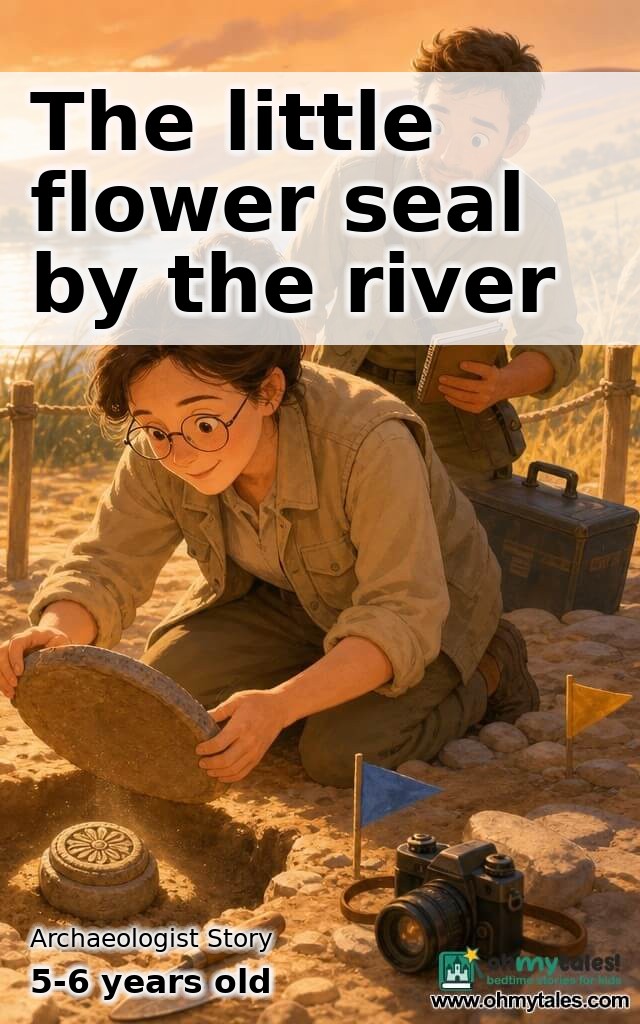
With careful hands, the team lifted the stone using straps. Under it was a shallow space with old, dry soil. No glittering gold. No shiny crown. Just quiet earth and time.
Sam looked puzzled. “Is it empty?”
Mira smiled. “Let's see.”
She brushed and brushed. At last, a small seal appeared—round and smooth, like a cookie. It had a carved pattern: petals curling in a circle.
Mira's eyes shone. “This could be from the Persian world,” she said. “People used seals to press designs into soft clay. It was like a signature.”
Sam leaned closer. “So it's important, even if it's small.”
“Especially because it's small,” Mira said. “Small things get lost. Our job is to help them be remembered.”
She used her tablet again. First, a photo. Then a drawing. Then a voice note. “Seal, flower pattern, found under stone lid near the riverbank,” she recorded.
One child called out, “Will we get to see it again?”
“Yes,” Mira said warmly. “We will take it to the archive room. And we will share what we learn.”
Part 3: The Archive Room of Flowered Persia
That evening, Mira walked into the archive room. It was cool and quiet, with soft lights. On the walls were pictures of Persian gardens—long paths, water channels, and many, many flowers. Some patterns looked like the seal's petals.
Mira placed the seal in a padded tray. “Sleep safely,” she whispered.
An archivist named Laleh came over. “Welcome,” she said. “Let's look carefully.”
They sat at a table. Laleh opened a big book with drawings of ancient seals. Mira's tablet lay beside it, glowing softly.
Mira compared the seal to the pictures. “This flower is like a rosette,” she said. “See the way it turns?”
Laleh nodded. “And this style was used long ago in Persian lands. It might have belonged to a trader, a potter, or a messenger.”
Mira imagined it: a person pressing the seal into clay to close a jar. A hand, warm and living, doing a simple job.
She looked out the window at the dark hills. “How did they see this landscape?” she wondered again. “Did they think the river was a friend? Did they walk to it at sunset?”
Laleh smiled. “We cannot know everything. But we can learn with care.”
Mira turned to the two village children, who had come with their teacher. They stood quietly, eyes wide.
Mira spoke softly. “Archaeology is patient. We ask questions. We write things down. We keep objects safe. And we share.”
She showed them her tablet drawings. “Look. This is my record. If someone else studies the seal later, they can use my notes.”
The children leaned close.
“It's like a story book,” one said.
“Yes,” Mira replied. “A true story, made from clues.”
Part 4: Sharing the Clues, Dreaming Ahead
The next day, Mira returned to the dig. She brought a small poster she made. It showed the seal, the flower pattern, and a simple map of where it was found.
She hung it on a board near the rope line. “This is for everyone,” she said.
Sam clapped softly. “You're sharing right away.”
Mira nodded. “Knowledge grows when we share it.”
The children pointed at the flower. “It's pretty,” they said.
“It is,” Mira answered. “And it tells us that people long ago loved beauty, just like we do.”
As the sun lowered, the team covered the dig carefully to keep it safe. Mira packed her tools, slow and steady.
Before she left, she turned and looked at the river once more. In her mind, she saw Persian gardens painted with flowers, and busy hands using a little seal.
Then she smiled, calm and hopeful.
“Maybe tomorrow,” she said, “we will find another piece—a pot fragment that fits our shard, or a note in the archives that matches our flower. And maybe, years from now, another archaeologist will discover something new that completes our work.”
Sam asked, “Will you be happy if someone finishes the puzzle after you?”
Mira's eyes warmed. “Very happy. That's how archaeology works. We build the story together.”
The wind hummed softly over the honey-colored hills, and Mira felt proud—not of owning anything, but of helping the past speak, and sharing its gentle words with everyone.