Part 1: The Quiet Dig
Dr. Samir Haleed liked mornings that began slowly. The sun was soft, like warm butter on toast, and the wind only whispered.
He was an archaeologist. That meant he tried to learn about people from long ago, not by guessing, but by looking carefully at what they left behind.
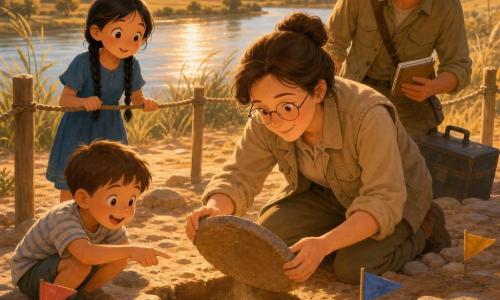
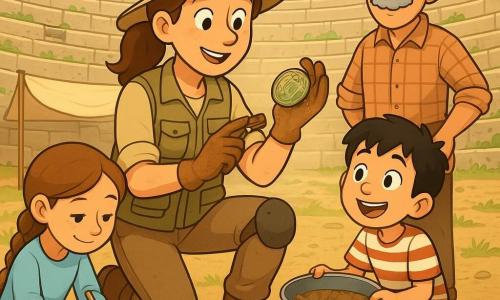
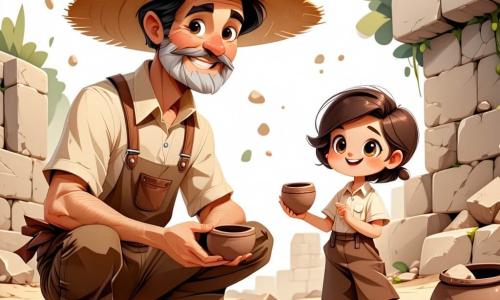
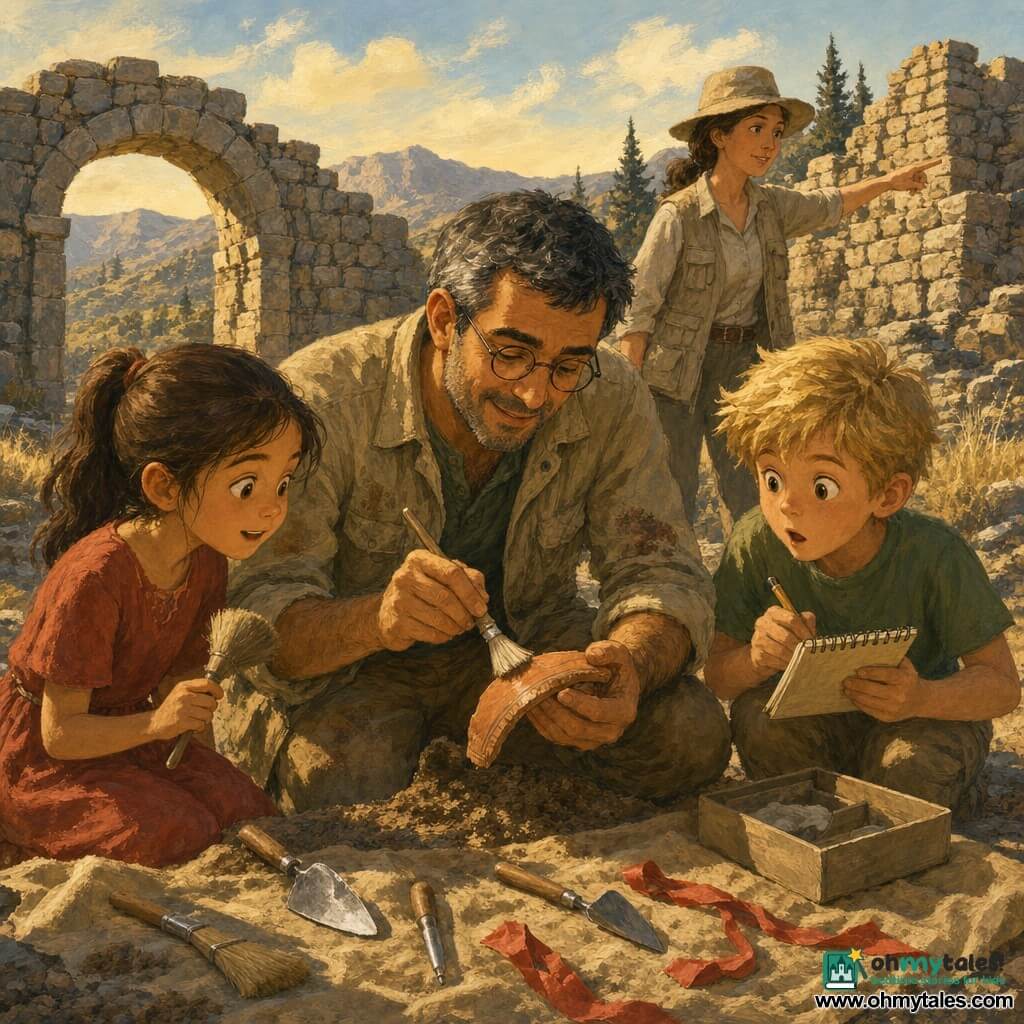
At the dig site, the ground was marked with string lines that made neat squares. Samir knelt beside one square and smiled. “This is our little window into the past,” he told Mina and Leo, two children visiting with their teacher.
Mina leaned close. “Are we going to find treasure?”
Samir shook his head gently. “Sometimes we find shiny things,” he said. “But archaeology is not a treasure hunt. It is patient work. We listen to the ground. We keep things safe. We learn stories.”
He showed them a small tool with a flat metal end. “This is a trowel,” he said. “We use it to scrape the soil slowly. No rushing.”
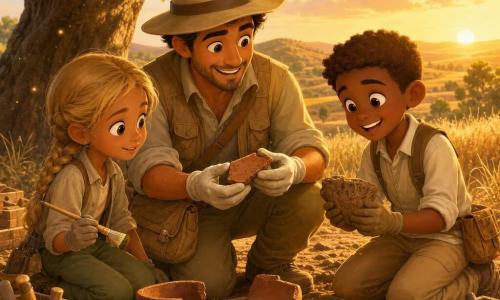
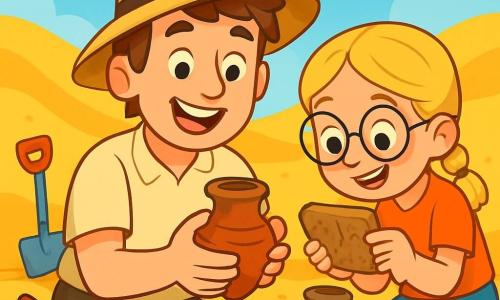
He scraped, and a thin curl of dirt rolled away like chocolate shavings. Under it was a tiny piece of pottery, the color of cinnamon.
Leo's eyes grew wide. “A broken cup?”
“Maybe,” Samir said. “Or a bowl. It could be very old. We never pull it out fast. First we brush.”
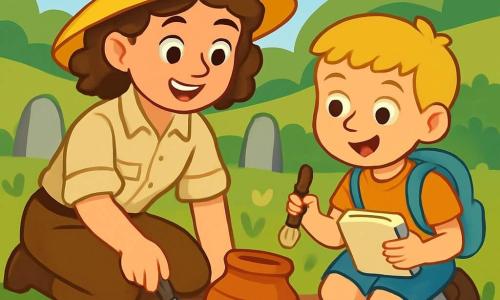
He handed Leo a soft brush. Leo brushed like he was tickling a sleeping kitten. The pottery edge appeared, smooth and curved.
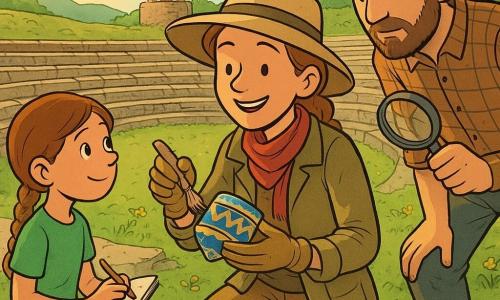
Samir took out a notebook. “We record where we find things,” he explained. “We write it down, draw it, and take a photo. That way, even if we move it, we still remember its home.”
Mina pointed at a little flag in the soil. “Why so many flags?”
“They mark places,” Samir said. “We work as a team. One person digs, one person measures, one person writes. We help each other.”
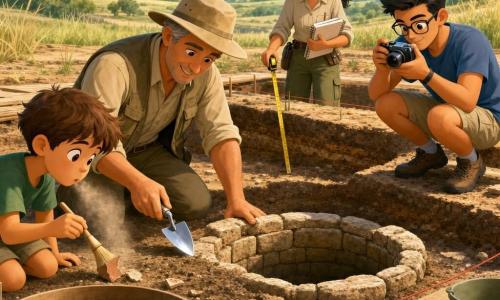
Then his colleague, Aya, called from another square. “Samir! We have a stone line here!”
Samir stood carefully. “That might be a wall,” he said, excited but calm. “A wall can tell us where people lived, or worked, or rested.”
The children followed as Samir and Aya knelt by the stones. They were laid in a tidy row, like a quiet path for ants.
Samir's heart felt bright. “Who placed these stones?” he wondered. “And why?”
He did not know yet. And that was okay.
Part 2: A Map and a Mountain Pass
After lunch, Aya spread a paper map on a table. It had blue lines for rivers and brown lines for mountains.
“Our pottery and wall stones match a place higher up,” Aya said. She tapped the map. “A mountain pass. There used to be a caravansary there.”
Mina blinked. “Car…van… what?”
“A caravansary,” Samir said, pronouncing it slowly. “It was like a big resting place for travelers long ago. People with camels, horses, and wagons stopped there. They ate, slept, and stayed safe.”
Leo imagined it at once. “Like a hotel for long trips!”
Samir laughed softly. “Yes. And it was also a place to share news and trade goods. If we study it, we learn how people helped each other on hard journeys.”
The next day, Samir and the team drove up the mountain road. The air grew cooler. Pines stood tall and dark green. Clouds slid by, low and slow.
At the pass, the land opened wide. Wind swirled around old stones that peeked from the grass. The caravansary ruins sat like a sleepy giant, with half walls and a broken arch.
Samir felt respectful, as if he had walked into someone's old home. “We will be gentle,” he told the group. “We protect heritage. These stones belong to everyone, even people not born yet.”
They placed their tools neatly on a cloth. Trowels, brushes, small shovels, measuring tape, and bags for labels.
Samir showed Mina and Leo the first job. “We look first,” he said. “We don't dig everywhere. We choose careful spots.”
Aya pointed at the ground inside the ruins. “There is a dark line of soil,” she said. “It might be an old fireplace.”
Samir nodded. “If it is, we may find ash or charcoal. That can tell us what kind of wood they burned.”
They scraped slowly. The soil smelled earthy and clean. Soon they saw black specks, and a small, rusty ring.
Leo gasped. “A ring! A treasure!”
Samir held it in his palm, not like a prize, but like a tiny bird. “It could be from a harness,” he said. “Or a bag strap. It is useful because it helps us imagine the travelers.”
Mina touched the air above it, not touching the ring. “Did someone lose it?”
“Maybe,” Samir said. “Maybe it broke and they threw it away. Old trash can be very important.”
The children giggled. “Trash important!”
Samir smiled. “Yes. Because it shows real life. Not just fancy things.”
The wind rose. It fluttered the map and made the grass dance. A small twist happened then—one of the team's pencils rolled away and slipped into a crack between stones.
“Oh no,” Mina said. “It fell into the past!”
Samir chuckled. “Let's not leave our own objects behind,” he said gently. “We must not mix today with yesterday.”
He used a thin wooden stick to reach into the crack and lift the pencil out. “There,” he said. “We keep the site clean and safe.”
As the afternoon light turned golden, Samir looked at the broken arch and tried to picture lanterns glowing, travelers warming their hands, animals drinking water.
He still had many questions. But he also had clues.
Part 3: Counting Tools and Keeping Stories
When the sky began to turn pink, Samir clapped softly. “Time to stop,” he said. “We never dig when we are tired. Mistakes can harm the past.”
The team cleaned their tools. They brushed dirt off the trowels and washed the small shovels. Aya closed the boxes of labeled finds.
Samir stood by the cloth and began counting. “One trowel,” he said, placing it in the tool bag. “Two trowels. Three.” He checked each one like counting bedtime sheep.
Mina watched closely. “Why count?”
“Because tools matter,” Samir said. “If we lose one, someone might step on it, or it could damage the site. And we want to know that our team is ready for tomorrow.”
He continued. “One shovel. Two shovels.” He paused, then smiled. “All here.”
Leo pointed toward the ruins. “Will you take the stones home?”
Samir shook his head. “No. We leave walls where they are. We only take small things that might break or that need careful study. And we share what we learn, with museums, schools, and books.”
Mina hugged her jacket tight. The wind was cooler now. “So other kids can know?”
“Yes,” Samir said. “Archaeology is for everyone. We learn about people long ago so we can understand people today. How they traveled, how they worked together, how they stayed safe in the mountains.”
On the drive back down, the car was quiet. The children were sleepy, and the road curled like a ribbon.
That night, Samir sat in his tent with a lamp. He wrote in his notebook: “Stone wall line. Dark soil hearth. Metal ring—possible harness. Many questions.”
He listened to the wind outside and thought about the caravansary again. Who were the travelers? Where were they going? Did they sing on the pass? Did they feel afraid in storms?
Samir closed his notebook gently. He felt calm and full, like a warm cup of milk.
He whispered to himself, “Even the questions without answers are precious.”
Then he smiled in the quiet dark, ready to keep listening to the past, one careful scrape at a time.