Part One
Tom is an archaeologist. He is gentle and kind. He wears a wide hat and soft boots. He loves old places. He loves quiet work. He loves finding small things that tell big stories.
One morning Tom walks to a sunny dig. The air is warm. The ground is brown. Little tools sit in the shade. There are brushes, trowels, and small picks. Tom smiles. He says, "Hello, little tools." The tools are ready.
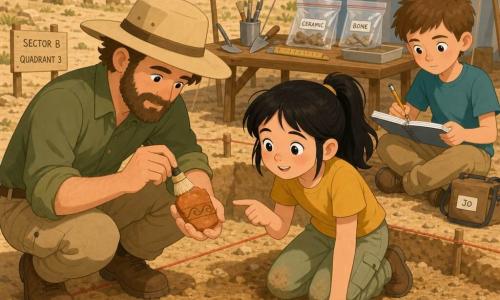
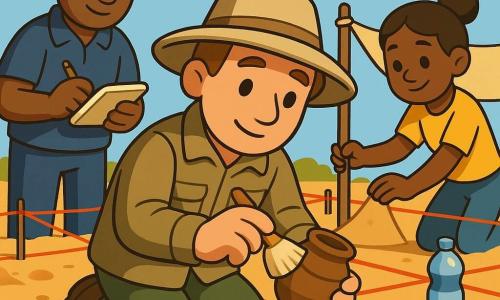
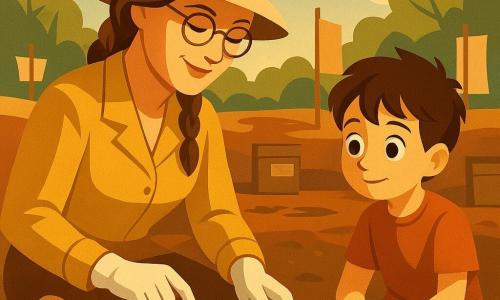
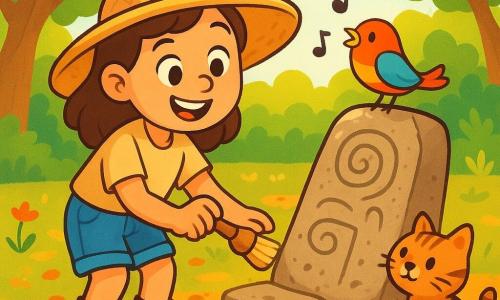
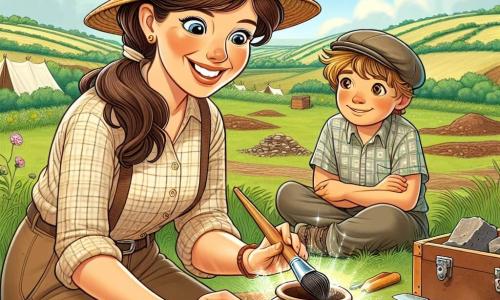
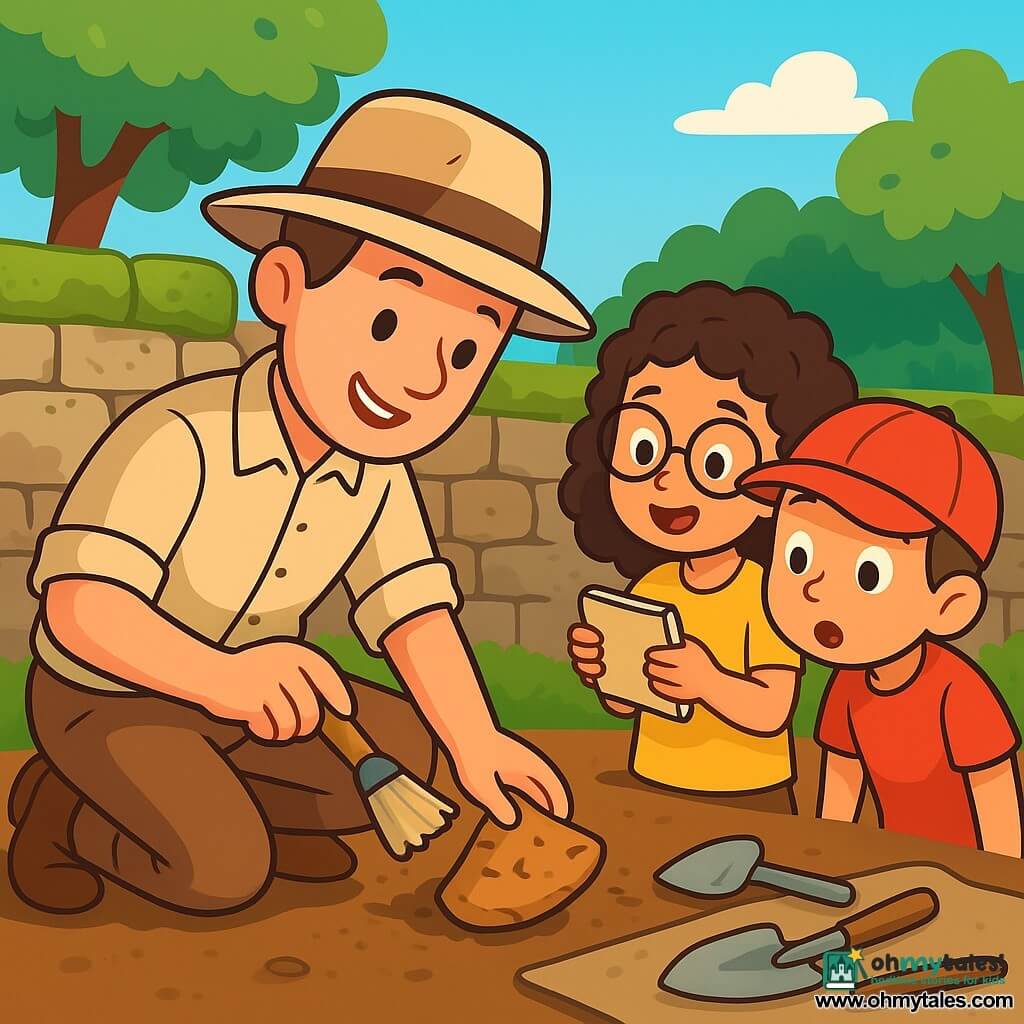
Tom kneels down. He brushes the dirt. He brushes with a soft brush. He moves sand with care. He finds a bit of pottery. It is small and smooth. He shows it to his team. "Look," he says. "Look at this piece." Everyone looks. They smile. They whisper, "Nice find."
Tom always works slowly. Slow is safe. Slow keeps things whole. Slow keeps stories intact. He brushes, he measures, he draws. Drawing helps him remember. He draws the shape of the pottery. He draws the spot where he found it. He draws with a pencil on paper next to his notes.
Then Tom adds a little picture next to the words. He draws a tiny pot with a flower on it. He draws a sun. He draws a hand holding the pot. He likes to draw. The drawing helps others see what he sees. The drawing helps children learn.
Part Two
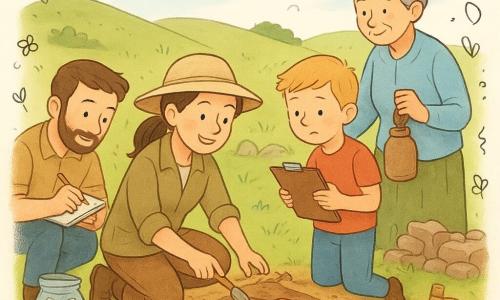
Tom tells the team about the place. "This house," he says, "was here long ago." He points to a low wall. The stones are old. Grass grows between them. He maps the stones with a tape. He measures with a voice that is calm. He writes numbers on his paper. He draws the wall too.
At noon, they rest under a tree. They share water and soft bread. Tom talks about people who lived here before. "They cooked, they laughed, they walked," he says. "They made little things for each other." The children who visit listen with big eyes. They ask, "Did they have toys?" Tom nods, "Yes, small toys. Small shoes. Small cups." They giggle. They like the small things.
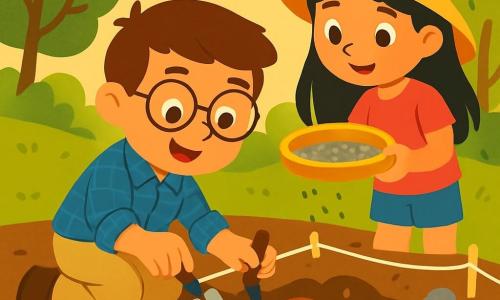
Back at the dig, Tom finds more pieces. He finds a bone. He finds a button. He finds seeds. Each thing is a clue. Each clue helps tell a story. Tom is careful. He uses a small brush. He uses a tiny spoon. He places each find in a small bag. He writes the spot on the bag. He keeps the finds safe. He treats each thing as if it were a friend.
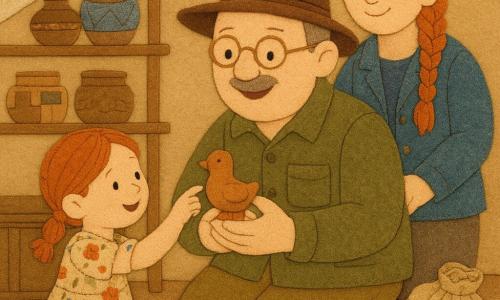
Tom shows the finds to the village. He talks in a soft voice. "These pieces tell us about the people here," he says. "They tell us how people ate, how they made toys, how they kept warm." The people smile. They touch the old pots with clean hands. They listen.
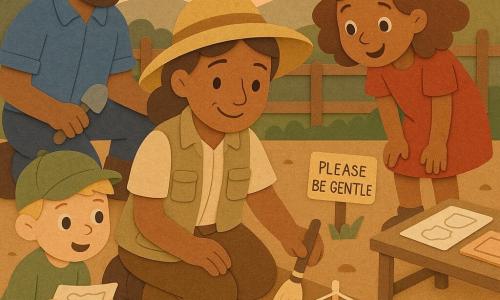
Tom always protects the place. He does not take things to sell. He does not break old walls. He covers the dig at night with a soft cloth. He writes notes so the next day will be easy. He tells the children, "We care for this place." They nod. They help cover the holes. They help place a little sign that says, "Please be kind."
One evening after work, Tom sits by a small table. He writes in his notebook. He draws a tall tree and a circle of stones. He draws a small house and a tiny cup. He writes a short sentence. He adds a drawing next to it. In the drawing, there is a little hand giving a cup to another hand. It is a gentle picture.
Part Three
Tom shares his drawings and notes at the small museum. The museum has a warm light. Children go in with their teachers. They look at the pots in glass cases. They look at the seeds in boxes. They read Tom's simple words and see his drawings. A child points and says, "Look, the cup!" Tom nods. He feels happy.
Tom uses simple words on a panel. He writes, "We learn from the small things." He draws a big smile beside the words. He thinks of the people who lived here long ago. He thinks of their shoes, toys, and cups. He thinks of their songs and work. He thinks of the kind work of his team. He thinks of how slow work keeps history safe.
At the end of the day, Tom locks the museum and walks home. He looks up at the stars. He thinks, "Tomorrow we will dig a little more. We will learn a little more." He tucks his notebook under his arm. He smiles.
Years later, children walk by the museum and read the panel. They stop at Tom's sentence. They see his drawing. They smile. They think of small things and big stories. Tom imagines them there. He imagines a child pointing, whispering, "Look." He feels warm. He feels calm.
Tom closes his eyes and smiles. He knows his work helps people. He knows his drawings help them see. He knows that caring for the past helps people today. He sleeps with a gentle smile, happy that one day, a child will stop, read his words, and smile too.