Part 1
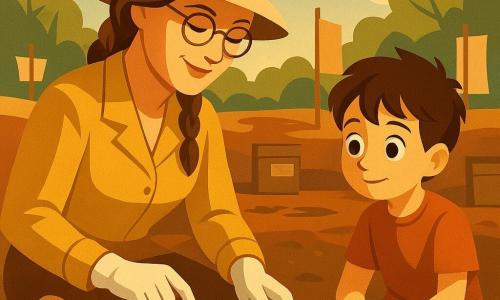
Dr. Maya wore her wide sun hat and smiled at the small group of children. The ground was warm. The sky was bright.
“Today I am an archaeologist,” she said. “That means I learn about people from long ago.”
She held up a little picture card. On it was a simple drawing of a cup.
“We do not hunt for treasure,” Maya said softly. “We look for clues. Clues tell stories.”
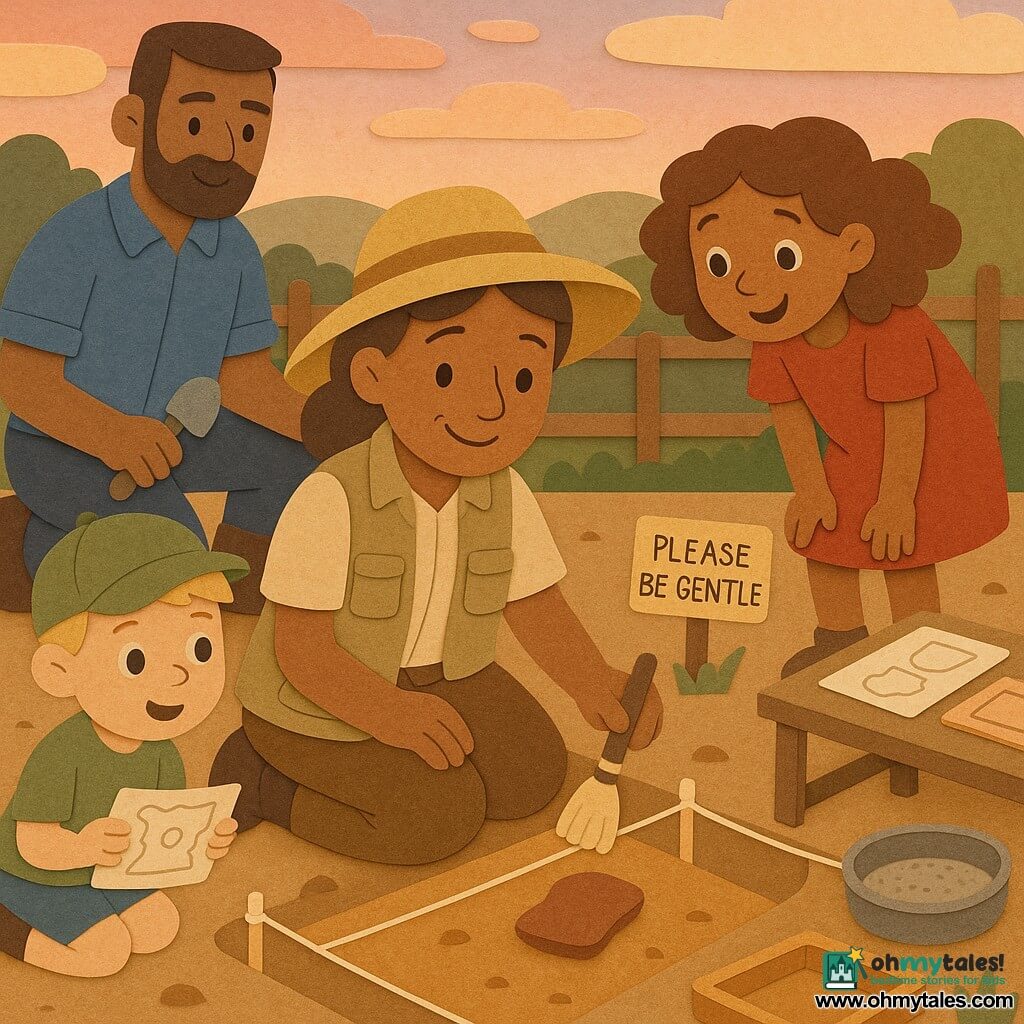
The children walked with her to a quiet dig site. There was a low fence and a sign that said: PLEASE BE GENTLE.
Maya knelt down. “First, we look,” she whispered. “Our eyes are our first tools.”
She pointed. “See these lines in the soil? They can show where a wall used to be.”
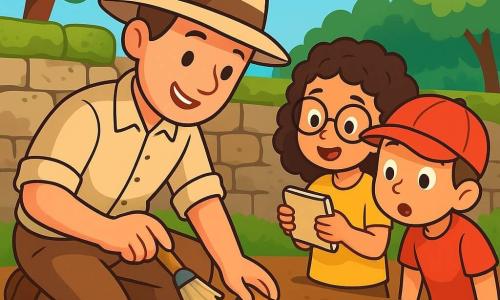
Maya opened a toolbox. Inside were a small trowel, a brush, a ruler, bags, and a notebook.
“Why a brush?” a child asked.
“So we can clean without hurting,” Maya replied. “Old things can be fragile, like a dry leaf.”
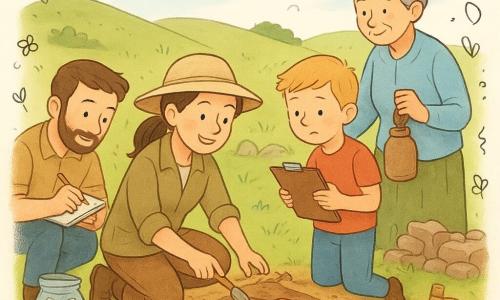
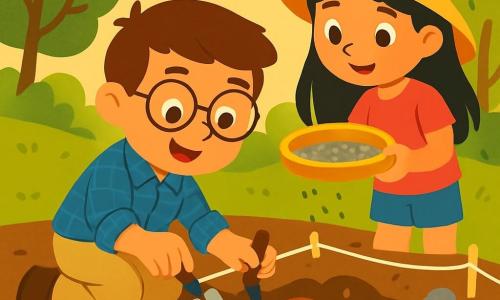
She made a little square with string on the ground.
“This is our work area,” she said. “We dig slowly. We keep it neat. We measure. We write.”
She wrote in her notebook: square A, morning, sunny.
Part 2
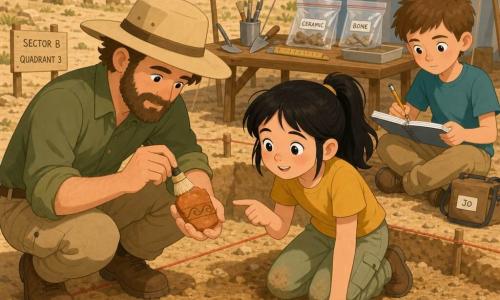
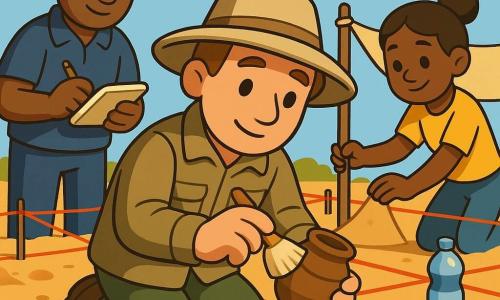
Maya scraped the soil gently with her trowel. Scrape, scrape. Then she stopped.
“Now we brush,” she said.
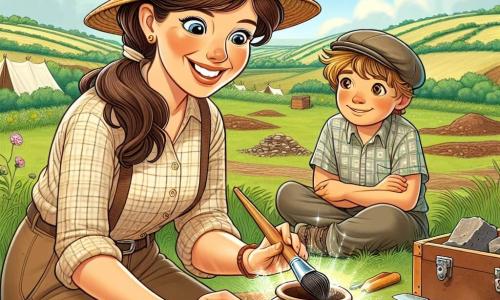
Brush, brush. A tiny piece of pottery peeked out, brown and smooth.
Maya did not pull it fast. She used her fingers like a careful hug.
“There you are,” she said.
The children leaned close.
“What was it?” they asked.
“It was part of a bowl,” Maya said. “Maybe someone ate soup from it.”
She closed her eyes for a moment. “Let's imagine.”
She spoke in a calm voice. “A family sits near a warm fire. A grown-up stirs soup. A child blows on it. The bowl is shared. People talk. People laugh.”
Maya put the pottery piece on a soft tray.
“Now we label it,” she said. She wrote a number on a tag.
“Why a number?” a child asked.
“So we always remember where it was,” Maya answered. “Where it was found is part of the clue.”
She showed a small camera.
“We take pictures,” she said. “We also draw maps. We work as a team.”
Nearby, another archaeologist measured the soil. A helper sifted dirt through a screen to find tiny seeds and shells.
“Even a seed can teach us,” Maya said. “It tells what plants grew and what people ate.”
Part 3
When the sun began to dip, Maya led the children to a table with simple drawings.
“Now we share,” she said. “We tell the story of the clues.”
She spoke about careful hands, slow digging, and kind respect.
“These things belong to everyone,” she said. “They are heritage. We protect them.”
One child pointed to a spot still covered in soil. “Will we dig there too?”
Maya smiled. “Not today. Sometimes we leave places safe and quiet. The ground can rest. Future archaeologists may have better tools and learn even more.”
They covered the small square with a clean cloth and a light layer of soil.
“Goodnight, old home,” Maya whispered.
On the walk back, the children held their picture cards.
Maya's voice was gentle. “The past is not far away,” she said. “It is under our feet, waiting for patient, caring friends.”
The children felt calm and warm inside, like a bedtime blanket, and they kept the quiet stories in their hearts.