Chapter 1
Detective Marcus Lane walked slowly down Maple Street, fingers tucked into the pockets of his light coat. He watched hands as much as faces. Hands told stories—how someone fiddled with a button, wiped a brow, or clenched a bag. Today, he was looking for a missing school bell that had vanished from the town museum overnight. It was small, made of brass, and it rang like a happy bird.
The museum director, Mrs. Perez, had looked worried but calm. "Someone took it while the lights were down," she said, tapping her clipboard. Marcus nodded and listened. He liked to listen more than he liked to talk. Listening gathered clues.
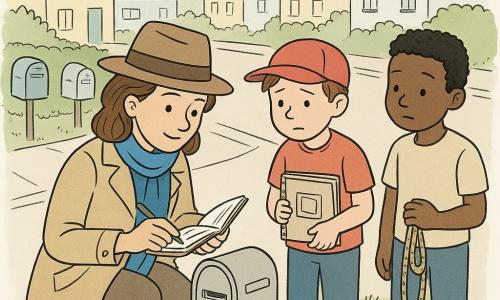
Outside the museum, Marcus crouched and looked for prints and small signs. He noticed a smear of wet mud near the back door and tiny shoe marks leading toward a low hedge. He drew out a small notebook and sketched the pattern of the footprints. The prints were narrow, like someone who ran quickly. He made a careful note: "Narrow soles, small stride."
A boy on a bicycle rode past and waved. Marcus watched how the boy held the handlebars loosely, the left thumb rubbing the grip. Gestures mattered, and so did timing. Marcus checked the museum clock. Five minutes before the bell was last seen on the security feed. He had to think backwards from that moment.
"Did anyone see someone strange?" Marcus asked Mrs. Perez quietly.
She thought. "Only Mr. Hobb, the night cleaner. He left at nine. He said he locked up."
Marcus wrote, "Mr. Hobb: leaves at 9." He liked to make small, neat lists. Each item was a step in a path. He thanked Mrs. Perez and promised to return before dinner. He walked toward the alley behind the museum, watching hands and footsteps, listening for small sounds—an answered whistle, the creak of a gate.
Chapter 2
In the alley Marcus found a clue that felt almost like a sentence in a book: a red thread stuck under a nail. It was thin and bright. He held it up to the light, tracing its path. Thread could come from a sweater, a hat, or a scarf. He smelled nothing. He rubbed his fingertips along the wall and found a faint scratch where a ladder might have leaned.
He followed the scratch to the delivery gate. The gate had been locked with a simple padlock. The padlock looked new compared to the weathered gate. Marcus crouched and examined the padlock's edge. Tiny metal shavings lay on the ground. Someone had used a file, then stopped. He noted, "File marks, stopped quickly."
Marcus thought of the narrow prints and the stopped file work. Perhaps the thief was in a hurry, perhaps interrupted. He went to the back windows. One window had been left a crack open. Inside, rows of old toys and school things slept on shelves. The bell's space had an empty cushion of felt.
At the corner of the room sat a small jar of marbles. One marble had rolled slightly away. Its glass caught the light and showed a tiny reflection: a folded hat with a patch. Marcus smiled; sometimes clues mirrored more than they showed at first glance. He picked up the marble and put it in his pocket. It was important to keep objects safe.
Outside, a woman watered her front garden. Marcus watched how she held the hose with gentle, careful hands, like someone used to tending things. She waved when she saw him. "Evening, detective," she called.
He paused and listened to her answer. "Have you seen anything odd tonight?" he asked.
She shook her head but then pointed to a small shed across the lane. "I heard clinking near the museum, and then a voice. I thought it was Mr. Hobb, but it sounded... different." Her fingers tapped her chin. "And this morning I found twigs on my doorstep. Funny, I thought."
Marcus thanked her and wrote, "Neighbor: heard clinking; twigs on doorstep."
He was starting to knit the pieces together: narrow prints, a red thread, a stopped file, a different voice, and twigs on a doorstep. Someone had been careful but not careful enough to hide those small, telling slips.
Chapter 3
The next morning Marcus visited Mr. Hobb at his small flat above the bakery. Mr. Hobb's hands were rough and quick, like someone who had used tools for years. He was surprised but cooperative.
"I locked up, like always," Mr. Hobb insisted. He rubbed his thumb along the edge of a flour-smeared newspaper. "I leave at nine." His thumbs made short, nervous motions.
Marcus listened to these gestures while Mr. Hobb told his schedule. He looked for signs of hurry. Mr. Hobb's shoes were muddy, but only on the heels. Marcus remembered the narrow prints led away from the museum, not toward it. He asked, "Where were you between nine and ten?"
Mr. Hobb frowned and said, "I sat by the bakery window and watched the street." Marcus peered at the window. There was a small smear on the glass, like a child's sticky finger. He asked, "Did you see anyone near the hedge?"
"No," Mr. Hobb answered slowly. His hands smoothed his apron. Marcus wrote down, "Mr. Hobb: at bakery, no sign of thief."
Still, Marcus wanted to test one loose idea. He walked back to the alley and measured the length of the narrow stride with his own feet, comparing it to the baker's large boots. The prints didn't match. He smiled quietly; this was why he measured, not guessed.
At noon, Marcus sat on a bench near the schoolyard. Children's laughter rose like bubbles. He watched the way a teacher put a hand on a child's shoulder and how another child chewed a shoelace. Observing little acts of care kept him patient. A small boy came to the bench holding a cookie, his left hand crumbed. He looked up at Marcus, curious.
"Did you see anyone near the museum last night?" Marcus asked, gently.
The boy shook his head but then pointed to a man across the street helping an old woman with her grocery bag. The man had kind shoulders and quick hands. He was the helper of the street—always there when someone needed a hand.
Curiosity nudged Marcus toward the man. He watched the helper tie a string back onto a grocery bag. The man's hands were steady, but Marcus noticed a faded red thread on the cuff of his coat. Marcus's heart beat a little faster. It matched the thread he had found in the alley.
Marcus approached and under his breath he said, "Hello." The man smiled warmly and offered Marcus a small, tin whistle that had fallen from the grocery bag. "Found this by the curb," he said. His voice was soft.
Marcus listened to the man's tone and watched his hand gestures. Everything about the man said helpful and kind. But the thread was a clue, and clues needed to be followed. Marcus kept his voice calm. "Did you walk by the museum last night?"
The man nodded. "Yes, I was taking the long way home. Heard a clink and thought someone dropped something. I looked, but then the lights switched back on. I paused to help Mrs. Gladstone with her bags. I would never take anything." He touched the whistle; his hands trembled a little as if to show he kept small things safe.
Marcus had to decide: trust the helpful stranger or keep testing the clues. He chose both. He thanked the man and watched him walk away, noting how his shoulders moved and the way he cradled the whistle. Marcus thought: people can be helpers and still make mistakes. Sometimes an honest person finds an object and keeps it safe, not knowing why it matters.
Chapter 4
At the museum that afternoon Marcus sat with the security footage again. He watched the last hour when the bell was seen. The footage showed a shadow near the gate—small, quick. The shadow bent near the padlock, then straightened. For a full minute a person stood still, then walked away. Marcus paused the screen at the shadow's outline. He compared it with the helper's coat and the baker's boots. The outline's shoulders matched neither exactly.
He replayed the moment when the lights flicked back on. A man in a dark jacket hurried past the camera, helping a neighbor who had slipped. He had looked helpful, even heroic. Marcus felt a small twist of understanding. The helpful stranger had indeed helped as the old woman slipped. But his coat sleeve had brushed against the hedge where the red thread caught. He had not taken the bell. He had been in the wrong place at the wrong time—helping and leaving a thread.
Marcus went back to his notes and crossed the helper's name with a question mark of trust. He paced slowly, liking the rhythm. Then he checked the padlock again. The file marks had stopped quickly. That suggested someone tried and then gave up. Who would try and then give up?
He reviewed the list: narrow prints, stopped file, thread, twigs on doorstep, and the small marble from the toy room. The marble had rolled toward a tiny door in the museum's back room—a secret cupboard where volunteers stored personal items. Volunteers! Marcus asked the volunteers who had keys. One name came up: Eli, a volunteer who mended ribbons and loved to collect small bells from flea markets. His hands were quick and clever with tools.
Marcus found Eli at his workshop behind the bakery. Eli's hands moved like a song. He was nervous when Marcus asked about the missing bell. "I borrowed a ladder to see the bell," Eli admitted finally. "I thought it would make a sweet chime for my birdhouse project. I took it by mistake and hid it thinking to fix it later. But when I saw the padlock with the new file marks, I panicked and left it in my shed."
He led Marcus to a small wooden shed where, under a pile of rags, sat the brass bell, a bit dusty but whole. Eli's face reddened. "I was wrong. I thought it would be a small thing, and then it grew into a problem."
Marcus listened to Eli's apology and watched how he wrung his hands. Eli's mistake came from curiosity and poor choices, not malice. Marcus felt the rules of careful thinking: measure, check, and then act. He asked Eli to help put the bell back. Eli agreed and moved with steady hands to fix what he had undone.
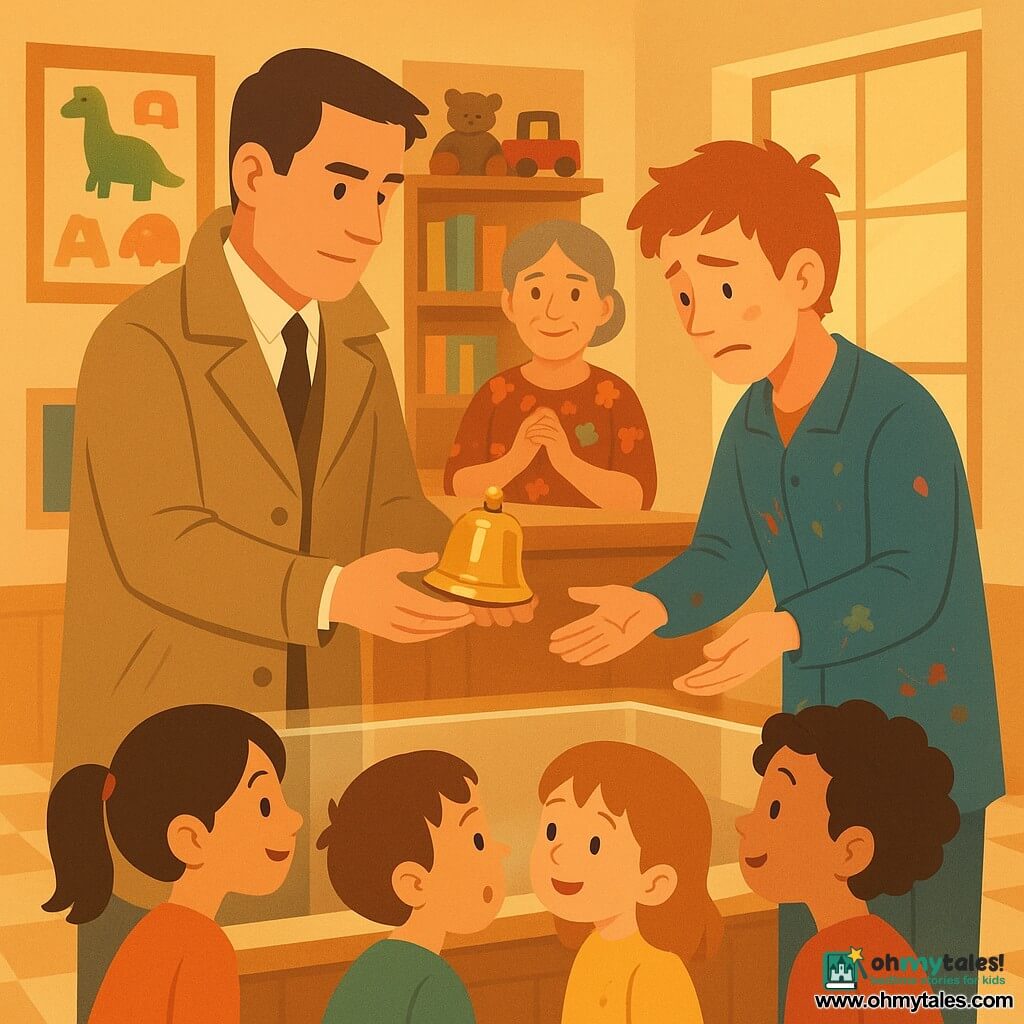
They returned the bell to the museum together. Mrs. Perez smiled with relief and hugged the bell like a lost friend. The helper was thanked for his kindness. Mr. Hobb brought fresh pastries as thanks for being honest about his routine. The town felt lighter, like a room after windows have been opened.
Marcus wrote the last line in his neat notebook: "Case closed. Care, not haste." He thought of the red thread that had pointed to the helper and how a single detail can lead to worry if not checked. He thought of the stopped file, the narrow prints that were from a cat slipping through, and the marble that freed the truth.
Outside, the sun made the bell glint. Children pressed their noses to the museum glass and called for a ring. Eli lifted the bell and gave it a gentle knock. It sang—a bright, honest sound that made everyone smile.
Marcus watched the way people clapped and waved. He felt the town's small rhythms return. He had listened, measured, and kept going until the answer came. He liked that work: quiet, exact, and kind.
He closed his notebook and said, softly to himself, "All is well." Then, smiling at the children, he added, "Tout va bien."