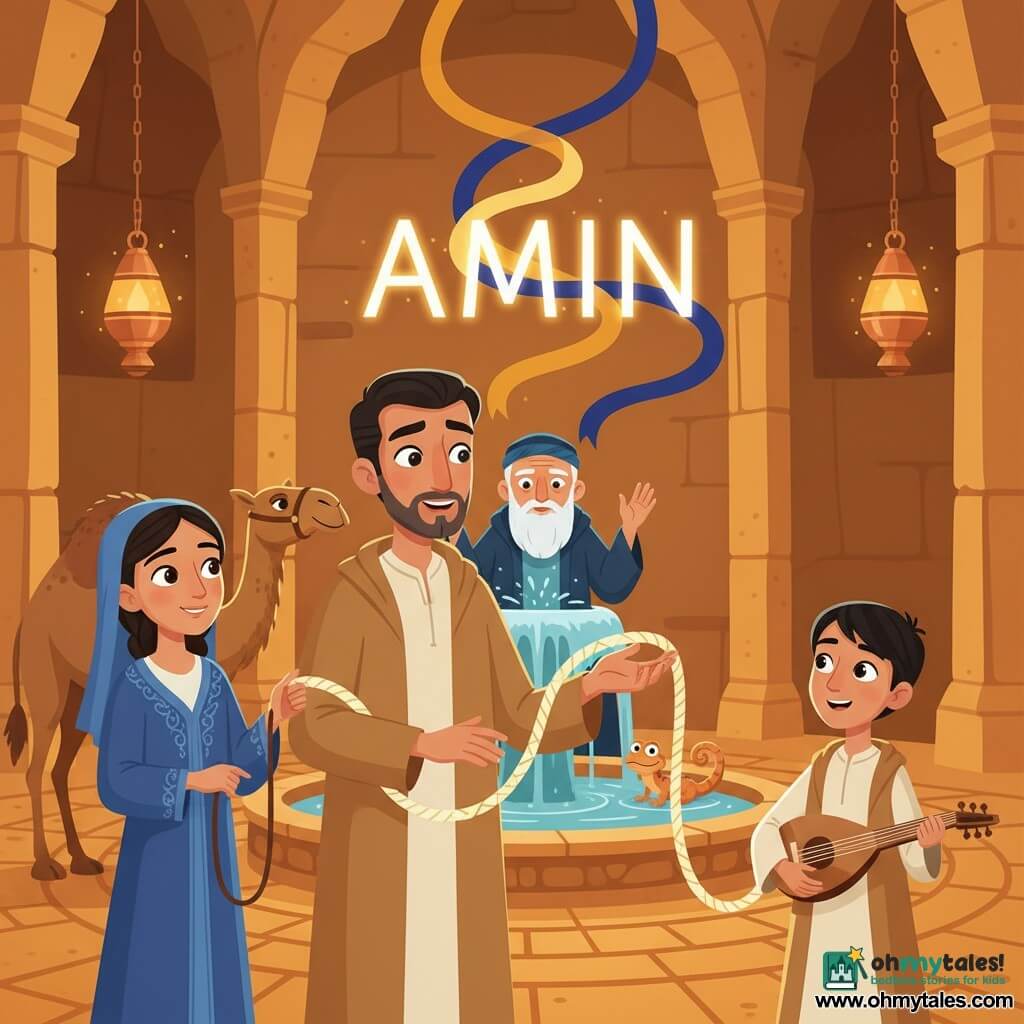
Chapter 1: The Man Without a Name
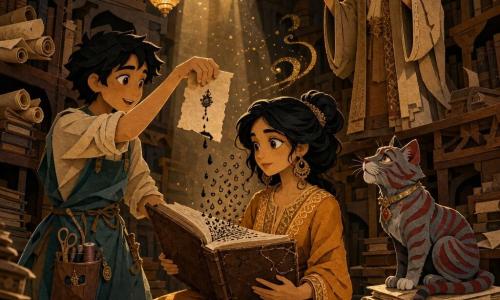
In the city of saffron wind and silver minarets, there lived a man who owned two things: a clean coat and an empty place where his name should have been.
People called him whatever fit the moment.
“Hey, you!” shouted a spice-seller.
“Brother!” waved a baker with flour on his eyebrows like pale wings.
“Sir!” said a child who wanted a story.
The man smiled each time, because he had learned to carry the missing name like a covered bowl—carefully, so no one would see it was hollow.
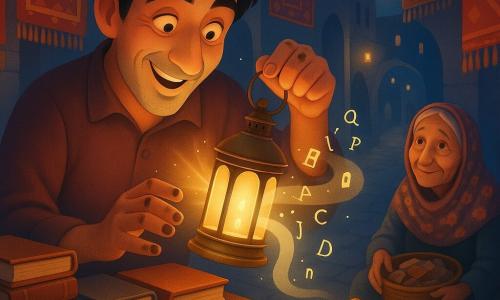
At night he slept in a small room above a teahouse. The teahouse was famous for its tales. The old storyteller there, Uncle Rafiq, spoke as if words were lanterns he could light with his tongue.
One evening Uncle Rafiq tapped the table. “Listen well. Some doors are not made of wood. They are made of kindness.”
The man leaned in. “And if someone lost his name,” he asked quietly, “could kindness find it?”
Uncle Rafiq's eyes gleamed like coins at the bottom of a fountain. “A name is a rope,” he said. “It ties you to your own heart. If your rope is cut, you must weave a new one—strand by strand—out of what you do.”
The man swallowed. “Then tell me where to begin.”
Uncle Rafiq reached under the table and brought out a small brass compass. It was scratched and dull, the kind of object you might ignore… until it moved.
The needle did not point north. It pointed toward the man.
“This is a Courtesy Compass,” Uncle Rafiq whispered. “It does not seek places. It seeks respect. Follow where it trembles most. And remember: a clever mind can open locks, but a generous heart opens invisible doors.”
The man took the compass. It felt warm, as if it had been waiting in someone's palm for years.
“What is the price?” he asked.
Uncle Rafiq laughed softly. “Respect has no price. Only practice.”
The compass needle quivered, then swung toward the city gate, toward the desert where the moon lay like a white coin on black velvet.
So the man without a name packed bread, dates, and a small skin of water, and he stepped into a world of stories that seemed to reach out and take his hand.
Chapter 2: The Gate of Whispering Sand
Beyond the city, the desert began. It did not shout; it whispered. The sand slid like silk, and the wind wrote secret letters that vanished as soon as they were read.
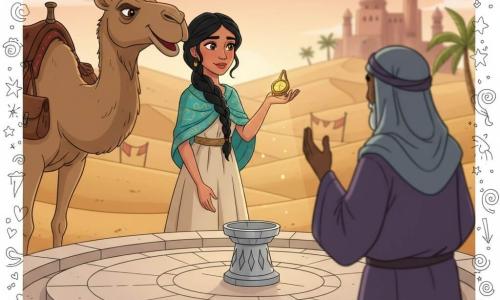
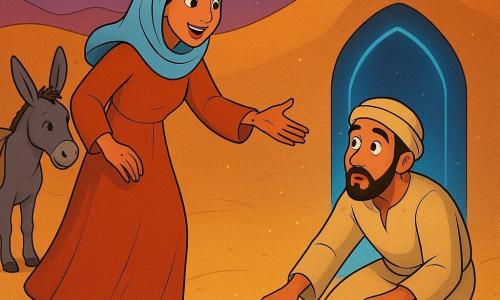
By midday the man saw a caravan stopped in a shallow hollow. Camels knelt like tired ships. A young woman argued with an older merchant whose beard was as strict as a broom.
“My father promised!” the young woman said. “He said I could lead my own camel.”
The merchant huffed. “Girls lead sewing needles, not caravans.”
The man felt the Courtesy Compass grow warm in his pocket, as if it disliked the way the words had been thrown.
He stepped forward, careful as a guest entering a stranger's home. “Peace to you,” he said. “May your journey be light.”
The merchant glanced at him. “Peace. Unless you want to buy salt, keep walking.”
The young woman's jaw clenched. The camel beside her rolled its eyes as if it had heard this argument a hundred times and was bored of it.
The man spoke gently. “Sir, a camel does not care who holds the rope. It cares whether the hand is steady.”
The merchant snorted. “And what do you know?”
“I know,” said the man, “that respect is a kind of water. Without it, everyone grows thirsty.”
The merchant frowned. The young woman stared at the man as if he had pulled a bright scarf from his sleeve.
The camel suddenly sneezed. A cloud of sand puffed into the merchant's face. He blinked, sputtering.
The man hid a smile. Even the desert, it seemed, had a sense of humor.
He turned to the young woman. “What is your name?” he asked.
“Zahra,” she said, shoulders straightening. “It means ‘flower.'”
“A flower can guide a caravan,” the man said. “It can also teach it to be gentle.”
The merchant wiped his beard. Perhaps the camel's sneeze had cleaned his pride a little. “Fine,” he grumbled. “Let her try. If the camel bolts, it is your fault, stranger.”
The man bowed. “If it succeeds, it is her skill.”
Zahra took the rope. Her hand was firm, her voice calm. The camel rose and stepped forward obediently, as if it had been waiting for someone to trust.
The merchant watched, surprised.
Zahra shot the man a grateful look. “And what do they call you?”
The man hesitated. He could not say his own name because it was missing like a page torn from a book. “They call me… friend,” he said.
Zahra smiled. “Then, Friend, may your road be kind.”
As the caravan moved on, the Courtesy Compass cooled, satisfied. The needle swung again, pointing deeper into the dunes, toward a distant shimmer—like a mirage, or a secret.
Chapter 3: The Invisible Door
Near evening, the man found the shimmer. It was not water. It was a tall, plain cliff of stone, rising from the sand like the back of a sleeping giant.
There were no markings, no cracks, no obvious entrance. Just rock and silence.
“Either my compass is broken,” the man muttered, “or the world is teasing me.”
He placed his palm on the cliff. The stone felt ordinary—cool and stubborn. Yet the compass needle trembled wildly, as if it smelled something unseen.
A voice came from the sand at his feet. “You are touching it wrong.”
The man jumped back. A small lizard perched on a stone, looking at him with bright, judgmental eyes.
“A lizard talks?” the man said.
The lizard lifted its tiny chin. “A man without a name is surprised by a talking lizard? How precious.”
The man blinked. “How do you know about my name?”
The lizard's tail flicked. “The desert hears what people don't say. It is very nosy.”
The man sighed. “Then tell me, Nosy Desert, where is the door?”
The lizard hopped closer. “It is here,” it said, tapping the air with one claw.
The man frowned. “That's nothing.”
“Not nothing,” the lizard corrected. “Invisible.”
The man reached out again, slower this time. His fingers met… resistance. Like pushing against a thin curtain of cool water.
His breath caught. “There.”
The lizard nodded. “The door opens for those who greet it properly.”
The man straightened his coat, as if he were about to meet an important guest. He bowed toward the empty air. “Peace to you, Door. I ask permission to enter. I mean no harm.”
For a moment nothing happened. Then the air rippled. A faint outline appeared—a shape like an archway drawn with moonlight.
The door sighed open without a sound.
The lizard hopped onto the threshold. “Remember,” it said, “magic is like a cat. It approaches those who don't grab.”
The man laughed softly. “Wise words from such a small throat.”
“My throat is small,” said the lizard, “but my patience is enormous. Now come.”
Inside was a passage lit by floating lamps that looked like captured fireflies. The air smelled of cinnamon and rain.
At the end of the passage lay a hall with a fountain in the center. The water rose and fell in slow loops, spelling letters that vanished before they could be read.
Across the hall sat an old man in a robe the color of midnight. His beard was white as salt. His eyes were sharp as needles.
“Welcome,” the old man said. “I am the Keeper of Unspoken Things.”
The man swallowed. “Then perhaps you keep my name.”
The Keeper tilted his head. “Perhaps. Or perhaps you misplaced it like a careless sock.”
“I did not mean to lose it,” the man said, heat rising in his cheeks. “I simply woke one day and it was gone.”
The Keeper's gaze softened a little. “Many names are lost that way. People treat them like stones in their pockets—until the pocket tears.”
The lizard lounged by the fountain. “Tell him the rules,” it said, yawning.
The Keeper lifted one finger. “Your name is not a prize. It is a promise. To receive it, you must show respect where it is difficult, generosity where it is inconvenient, and cleverness without cruelty.”
The man nodded. “I will try.”
“Trying is a door handle,” said the Keeper. “But you must turn it.”
The fountain's water looped once, and a small glass bottle rose from its center. Inside the bottle swirled a thin ribbon of light, like a trapped dawn.
“Three strands,” the Keeper said. “Bring me three strands of respect, and your name will return to you. The first strand you have already woven, though you may not know it.”
The man's heart lifted. “I have?”
The Keeper smiled faintly. “Zahra's gratitude is a thread. It is tied to you now.”
The man touched his chest, as if he could feel the thread there—warm and gentle.
“Go,” the Keeper said. “And watch your steps. The next strand waits in a place where words can bite.”
Chapter 4: The Market of Sharp Tongues
The invisible door released the man back into the desert, and the desert, as if bored of being empty, soon placed a town in his path.
It was a market town where every stallholder seemed to be in a hurry to win an argument. The air was thick with shouting. Even the chickens looked offended.
The Courtesy Compass tugged him toward a cloth tent painted with laughing moons. Inside, a crowd had gathered around a raised platform.
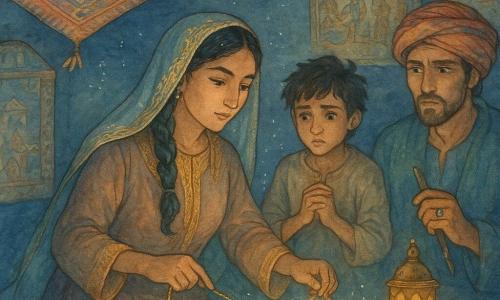
On the platform stood a boy about ten, thin as a reed, holding a lute with one string. Beside him stood a tall man with a shiny vest and a smug smile.
“The rules are simple!” the tall man announced. “If the boy can make you laugh, he eats tonight. If he fails, he works for me a week. Fair!”
The crowd murmured. Some looked amused, others uncomfortable. The boy's face was brave, but his fingers shook.
The man without a name stepped forward. “It does not sound fair,” he said.
The tall man arched an eyebrow. “Who are you to judge? Everyone agreed.”
“Everyone is not the same as right,” the man replied.
The tall man's smile sharpened. “Ah. A hero. Then you make them laugh. Take his place.”
The crowd chuckled. The boy looked terrified.
The man glanced at the boy. “What is your name?” he asked softly.
“Farid,” the boy whispered. “It means ‘unique.' But I feel… very common.”
The man nodded. “Unique things often hide in plain sight.”
He stepped onto the platform. His stomach fluttered like a trapped bird, but he lifted his chin.
“I will not take his place,” he said. “I will stand beside him.”
The tall man scoffed. “Then you both lose.”
“Unless,” the man said, “we change the game. Respectfully.”
The tall man leaned in. “You can't change a game in my market.”
The man smiled. “Watch me.”
He turned to the crowd. “Friends,” he called, “may I ask you a question? When you laugh at someone, does it warm your belly or cool it?”
A woman in the front crossed her arms. “Depends,” she said. “If they deserve it, it's warm. If they don't, it tastes like ashes.”
The man nodded. “Then let us choose warm laughter. Let us laugh at pride, not hunger.”
He picked up Farid's one-string lute. He plucked it. It twanged like an annoyed mosquito.
He looked at the tall man's shiny vest. “Sir,” he said politely, “your vest is so bright I think it just tried to sell me something.”
A ripple of laughter ran through the crowd—small at first, then growing.
The tall man frowned. “Insulting me is not polite.”
The man shook his head. “Not you. The vest. It seems ambitious.”
More laughter. Even the chickens clucked as if they approved.
The man continued, gentle and quick, tossing jokes like soft dates, not stones. He made fun of the wind for always interrupting, the marketplace for arguing with itself, and himself for having the kind of face that looked serious even when thinking about pudding.
Farid's shoulders loosened. He began to pluck the one string in rhythm. It sounded like a bouncing ball.
Soon the crowd's laughter was honest and warm, like sunlight spilling onto cold tiles.
The tall man's smug smile wilted. He tried to speak, but a child shouted, “Let the boy eat!”
Others joined. “Let him eat!”
The tall man raised his hands. “Fine, fine! Take bread. Take soup. Just stop laughing at my vest!”
The man bowed. “Thank you, sir. Your generosity is brighter than your clothing.”
The crowd laughed again, and the tall man, caught between pride and the mood of the people, grunted something that might have been a reluctant chuckle.
Farid stared at the man as if he had just watched a knot untie itself. “Why did you help me?” he asked when the crowd dispersed.
“Because hunger is a rude thief,” the man said, “and I don't like its manners.”
Farid smiled. “What is your name?”
The man paused. “I'm still looking for it.”
Farid's eyes widened. “Then I hope you find it. You deserve a good one.”
As the man walked away, the Courtesy Compass warmed again. In his pocket, he felt something like a second thread tie itself to his heart—made of warm laughter and a boy's relief.
Two strands.
Chapter 5: The Night of the Jinn's Riddle
The compass led him to a dried riverbed where stones lay like sleeping turtles. Night fell, and the sky poured out stars as if a bag had ripped.
He built a small fire. Its flames danced like orange ribbon.
From the darkness came a voice, smooth as oil. “That is my riverbed.”
The man turned. A figure stood beyond the firelight—tall, smoky, with eyes like blue coals. A jinn, wrapped in a cloak of moving shadow.
The man's mouth went dry. Stories about jinn were everywhere: some were generous, some were cruel, and most were unpredictable, like wind with opinions.
He stood up slowly and bowed. “Peace to you,” he said. “I did not know the riverbed belonged to anyone.”
“It belongs to me tonight,” the jinn said. “Tomorrow it may belong to a goat.”
The man swallowed a laugh. “Then I am your guest, and I thank you for allowing me to rest.”
The jinn tilted its head. “A polite human. That is rare. Like a quiet drum.”
The Courtesy Compass in the man's pocket burned hot, as if saying, This is the difficult place.
The jinn circled the fire without making footprints. “I have a riddle,” it said. “Answer it, and I will give you what you seek. Fail, and I will take your shadow. You can walk without a shadow, but you will look ridiculous.”
The man considered his options. Running from a jinn felt like trying to outrun a thought. He nodded. “Tell me.”
The jinn's smile flashed. “What has no mouth, yet can swallow insults; no hands, yet can build bridges; no eyes, yet can open doors?”
The man stared at the fire. The flames snapped, as if impatient.
He thought of the caravan. Zahra's steady hand. He thought of Farid's hunger and the market's sharp tongues. He thought of the invisible door that opened when greeted kindly.
He looked up. “Respect,” he said.
The jinn blinked. “Hm.”
“Respect can swallow an insult without spitting it back,” the man continued. “It can build bridges between strangers. And it opens doors you cannot even see.”
The jinn's blue eyes narrowed, then widened. It clapped once, and the sound was like a bell underwater.
“Correct,” it said, sounding almost… pleased. “You are clever, but not sharp-edged. I dislike sharp edges.”
The jinn reached into its cloak and pulled out something that looked like a third thread—this one dark and shimmering, like night woven into silk.
“Your third strand,” the jinn said. “But listen, human-without-name. Many people think respect means bending until you break. That is not respect. That is fear dressed up in polite clothing.”
The man nodded slowly. “Then what is respect?”
“It is seeing another being clearly,” the jinn said. “And seeing yourself clearly too.”
The jinn flicked the thread toward the man. It drifted into his chest like a cool breath.
For a moment the man felt all three strands tighten—gratitude, warm laughter, and clear sight—braiding themselves into something stronger.
The jinn leaned closer. “Now go to your Keeper. And keep your shadow. It suits you.”
With that, the jinn dissolved into the night, leaving only the stars, blinking as if they had been listening.
Chapter 6: The Name Returns Like Dawn
The man found the cliff again by following the compass, which now felt calm, like a satisfied cat. He pressed his hand to the invisible door and bowed.
“Peace,” he said. “Thank you for opening before. May I enter again?”
The door rippled and sighed open.
Inside the hall, the Keeper of Unspoken Things waited beside the fountain. The lizard lounged on a warm stone, pretending not to care.
“You have returned,” the Keeper said.
“I have brought three strands,” the man replied. “Though they feel less like objects and more like… lessons.”
The Keeper nodded. “That is the correct feeling.”
The fountain rose, and the three strands appeared in the air above it: one gold like gratitude, one amber like laughter, one deep blue like honest night.
The Keeper lifted his hands. The strands twisted together, weaving into a single cord. As it formed, the fountain's water began to spell letters more clearly, looping them again and again until they held steady.
The man leaned forward, heart thundering.
The letters shone: A M I N.
“Amin,” the Keeper said, voice gentle. “It means ‘trustworthy.'”
The man whispered it. “Amin.”
The sound fit him like a well-made coat. Not too tight, not too loose. His chest warmed as if a lamp had been lit inside him.
The lizard sniffed. “Not bad,” it said. “Better than ‘Hey, you.'”
Amin laughed—truly laughed—and the hall seemed brighter for it.
The Keeper stepped closer. “Remember,” he said, “a name is not a crown. It is a compass. If you carry it with pride alone, it will slip away again. Carry it with respect, and it will stay.”
Amin bowed deeply. “You have my thanks.”
“Use them well,” the Keeper replied.
Amin left through the invisible door. The desert greeted him like an old friend, and the city's distant lights winked on the horizon.
As he walked, he passed a small group of travelers arguing over directions. One boy said, “We're lost!”
Amin approached. “Peace,” he said. “May I help?”
They looked at him. “What is your name?” the boy asked.
Amin smiled, feeling the word rise cleanly from his heart, like dawn over a quiet roof. “My name is Amin,” he said. “And if we speak to each other with respect, I think we will all find our way.”