1. The Sea That Sang
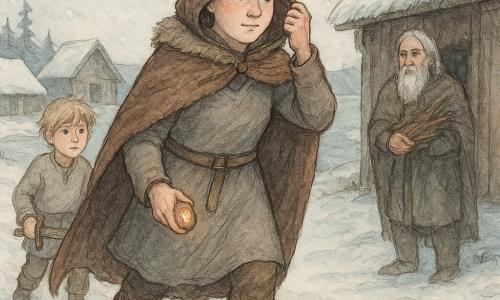
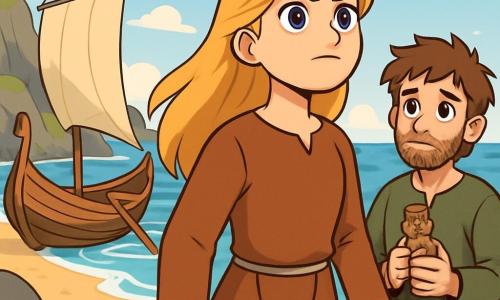
Soren woke before the sun, as light as a gull and as restless as the surf. The village still slept in the hush between tides, wooden houses stacked like driftwood on the shore. He could hear the sea singing its old songs—the long, low pull of voice that remembers waves and winter and the first oars. His father mended nets; his mother braided ropes. Soren's hands wanted to make something else: a flag.
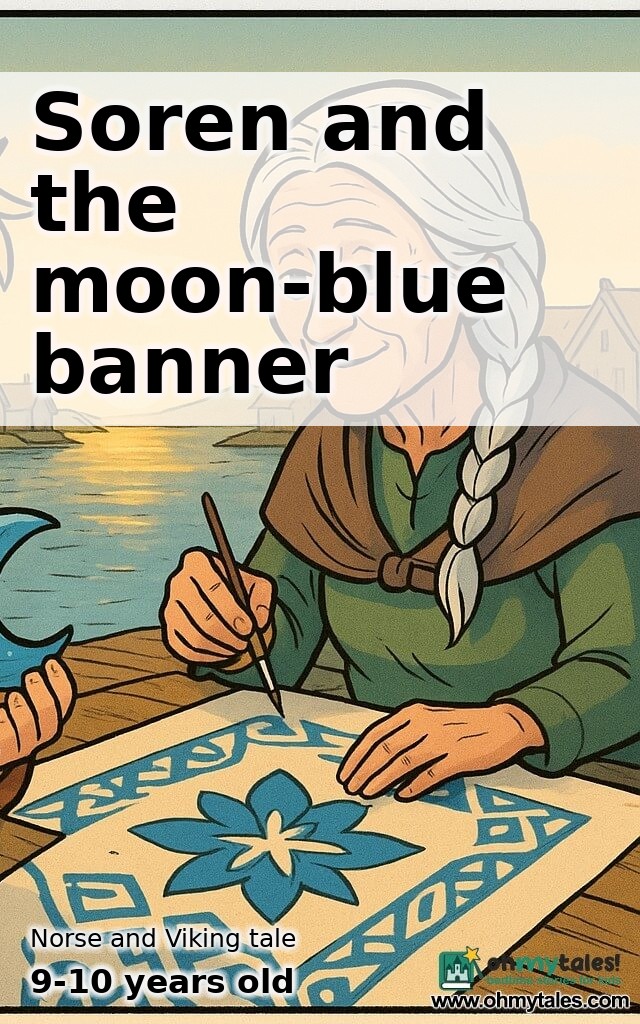
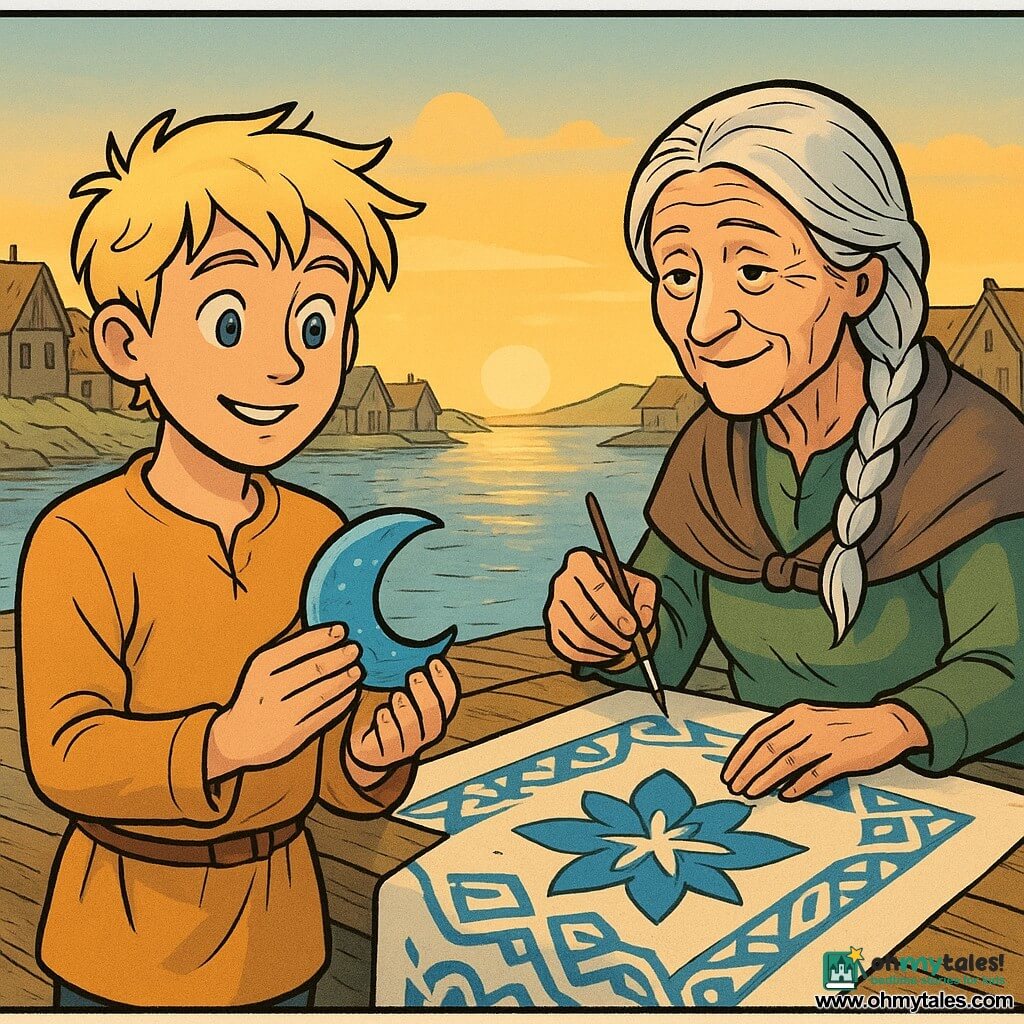
Old Halla, the sail painter, said banners could gather hearts as a hearth gathers warmth. She wanted a moon-blue pigment, the color of a clear night when the moon slips a silver coin into the sea. It was rare, made from a stone that sleeps under cold cliffs or from shells that hold moonlight in their curves. Whoever owned moon-blue had a way of drawing eyes and softening furrowed brows.
Soren promised. He would find the pigment and bring back a banner that made the village kinder to one another. So he stepped into the world, a young oar-man with a pocketful of wishes and a mind full of listening. The sea's song followed him like a friend.
2. The First Boat
The first boat Soren met rode in at noon, its sail patchwork and flags thrumming like a flock of starlings. A crew of traders hopped down, voices like clinking coins. They bartered with the villagers—salt for wool, iron for fish. Soren watched them from the quay, feeling small as a pebble.
He asked the captain where moon-blue might be found. The captain tapped his beard and said the color was only for the proud and the strong, for those who took what they wanted with a grin. "Strength owns the sea," he said, voice rough as a rope. He meant power the way a hammer means nails.
Soren felt a hot pinch of anger. He thought of Halla's hands, gentle as moss. But he remembered to listen. Instead of answering with sharp words, he asked questions: where had the captain seen such blue, what did the blue look like, what did it do when it was held up to the wind? The captain, unused to being heard, found himself telling stories: a cliff in the far fjord where stones held the moon like trapped bees; a reef where shells sang when the tide ran out.
From the trader he learned a direction and a warning—pride often sat before storms. He left with a morsel of information and a better map in his head, which was more useful than the trader's boast.
3. The Lantern Boat
A lantern boat came at dusk, its hull painted with small suns. The crew glowed with songs and jokes, and they offered lantern-light for news. They told of a hermit in a lap of rocks who ground stones with the patience of a millstone. "Patience grinds what anger cannot," crooned the steward, and his laugh was thin as smoke.
Soren rowed with them for a while, sharing bread and listening to the steward's soft truth: some treasures are not fought for but asked for, like fish nudging a hand. One man on the lantern boat, a quiet fellow named Eirik, showed Soren a small polished shell that shone faintly blue. "It keeps the hush of night," Eirik said. "But it needs care. You cannot snatch moon-blue from its place without listening to what keeps it safe."
When Soren asked how to listen, Eirik pointed to his chest. "Not always with ears," he said. "Feel the pause between heartbeats. The world speaks there." Soren folded the phrase into his pocket like a warm stone.
4. The Storm and the Old Rock
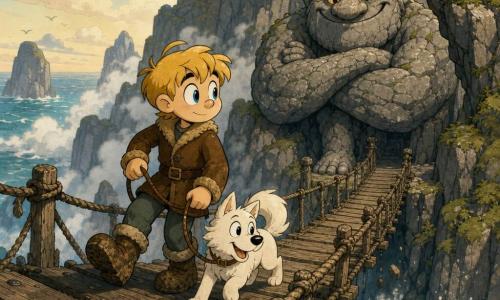
Soren sailed alone toward the fjord where the cliffs cut the sky like the teeth of a giant. The wind took his sail and turned it into music. He arrived as clouds unrolled like wool. Waves beat the cliffs as if learning a new dance.
He found the hermit on a ledge of rock. The old man had hands like cracked wood and eyes that held weather. He ground a pebble with a small stone, breathing as steady as the tide. "You want the blue," he said without surprise. "Many want colors. Few learn their names."
Soren told him that Halla wanted a banner to gather hearts, to make the village gentler, to make them listen. The hermit looked at him long and then sent him to a cave where the moonlight pooled on black sand. "There, blue keeps its own counsel," the hermit said. "But remember: power given to a banner may sway like reed in a storm. The heart that carries it must be steady."
A storm came while Soren searched the cave, rain like needles and wind that sang sharp songs. He sheltered under a ledge and waited. In the hush between thunder, he noticed the small movements: a crab tucking into its shell, a gull pressing its wing to the wind. He hummed the sea song in his head and remembered Eirik's words—listen not only with ears.
When the clouds passed, he found a crescent clamshell half-buried in black sand. Its inside shone moon-blue, faint and true. He cradled it like a secret.
5. The Return and the Choice
Soren returned to the village with the shell tucked in cloth. News of moon-blue had spread like spice on the wind. The trader's captain had come back, glancing at the shell with hungry eyes. "Give it to me," he said, voice like a closing door. Power tempted him like a bright coin.
Soren felt the old hot pinch, the want to prove himself. He remembered the hermit's warning: the heart that bears power must be steady. He thought of Halla's soft hands and of the village round the fire, of the children who tangled ropes and made boats of bark.
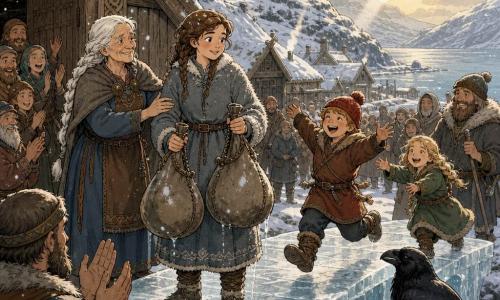
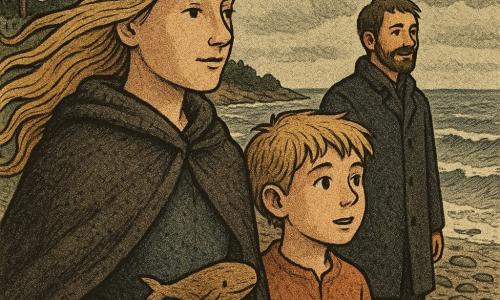
He did not give the shell to the captain. Instead, he held a small feast by the quay. He invited the trader, the lantern boat folk, the hermit, Eirik, his parents, and the whole village. Soren told them the story of how the blue had been found, not as proof of his courage but as a tale with the quiet pulse of truth. He laid the shell on a plank and asked each person—one by one—to touch it and tell what they heard.
At first, hands were quick and sharp. The captain wanted to take it and make a banner to hang from his mast, to bully other boats into silence. But when he touched the shell he heard, not command, but the hush of waves. He remembered a storm he had feared as a boy. His face softened as if frost were melting.
One by one, the villagers spoke: the fisherwoman heard her father's laughter; the old woman heard the lullaby she'd sung as a girl; a child heard the bell that calls the people to help one another. The blue did not make them obey but showed their best listening. It gathered small, ordinary longings like beads on a string.
6. The Banner That Gathered Hearts
Halla painted the banner with careful strokes. She mixed the blue from the shell with oils and ash, and it glowed like a calm moon in a clear pool. She stitched the cloth with a song; she told Soren that a banner that gathers hearts does not hold power in its threads but in the hands that raise it.
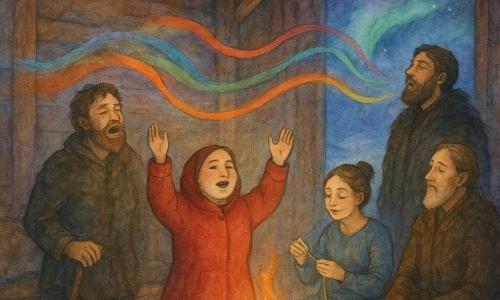
They raised the moon-blue banner at the midsummer harvest, and as it unfurled, it cast a hush like the one before a story. People who walked past found their steps slower and kinder. Disputes cooled like embers. The captain, who once prized strength like armor, helped repair a child's broken skiff. The traders agreed to share fish when a storm took more than usual. The village listened to one another more, like oars moving in the same rhythm.
Soren stood beside the mast, his chest full as a tide pool. He had brought the blue, yes, but what mattered was what everyone did with it. The banner had the color, but the village had the choice. It was small things—mending a net, telling a story, sharing bread—that became the true magic.
When the moon rose that night, it hung over the sea like a slow coin, and the banner swayed, catching its light. Soren listened to the sea-song and felt that he, too, had learned to listen—not only to stories of cliffs and captains but to the pauses between words, the place where kindness grows.
The moon-blue banner flew for many seasons, and when its color faded, the memory of how it gathered them stayed. Soren became a listener in his village, a young man whose quiet questions taught people longer and better ways to care. The sea kept singing, as it always would, and the village kept listening.