Mia woke up to music. Drum-dum, drum-dum. Flutes trilled like birds. She sat up in her small bed and clapped. Today was carnival day. Today the town would sing and dance and sparkle.
Mia was three. She had small hands and a big smile. She put on her red shoes. She put on her polka-dot dress. She put a little flower in her hair. “Ready!” she said. Her mother smiled. “Ready,” said Mother, and tied a ribbon on Mia's hair that shone like a tiny sun.
Outside the houses were painted with bright flags. Blue flags. Yellow flags. Pink flags. They waved and waved in the gentle wind. The street smelled of sugar and oranges. Children laughed. Band music floated like a cotton cloud.
Mia had a special job. She would make a thank-you board for the carnival. “A thank-you board?” asked Mia. “Yes,” said Mother. “To thank everyone who helps the town sing and dance.” Mia liked the word thank-you. It sounded kind and warm.
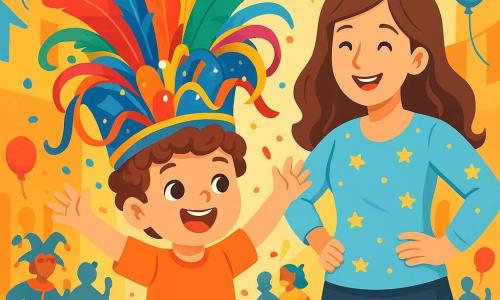
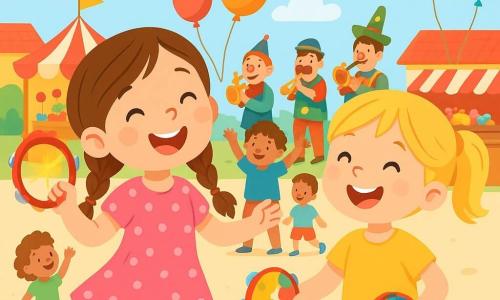
They walked to the town square. The square was full of color. A big banner said WELCOME and had stars and glitter. A woman in a sparkly hat twirled. A man with a tambourine jiggled. Little frogs in costumes hopped in a line. “Ribbit-ribbit!” they sang. Mia giggled.
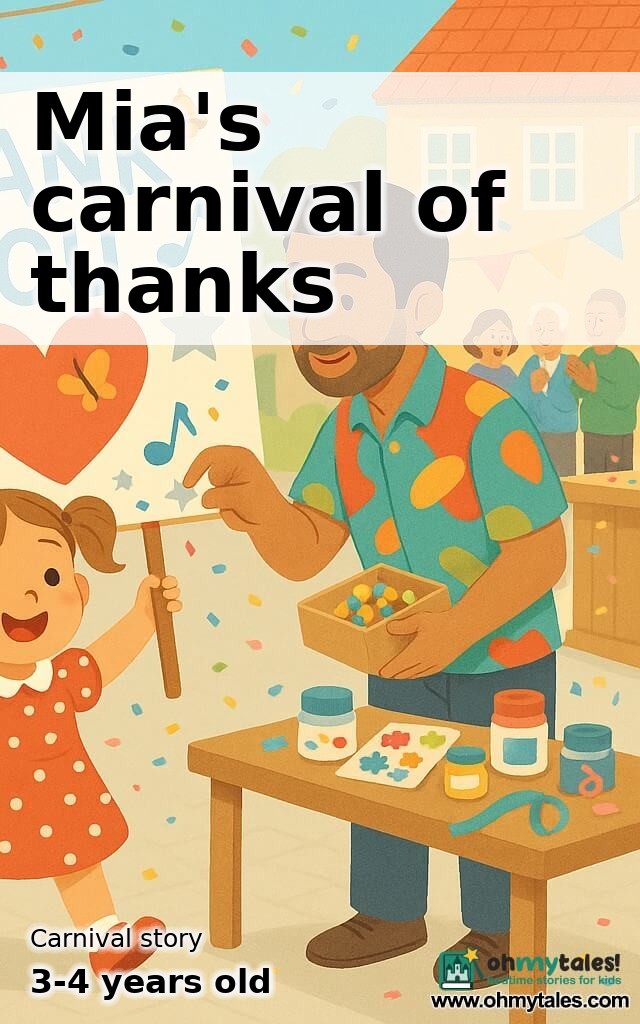
At the craft table, there were papers, paints, stickers, and ribbon. Mia sat on a small chair. The table was her stage. She tapped the brush on a paint pot. Tap-tap. The brush made a soft sound like a tiny bell.
“First, what color?” asked the helper, a friendly man named Jorge. “Red!” said Mia. “Red like my shoes.” Jorge smiled and handed her a large sheet of cardboard. It was big enough to hold many smiles.
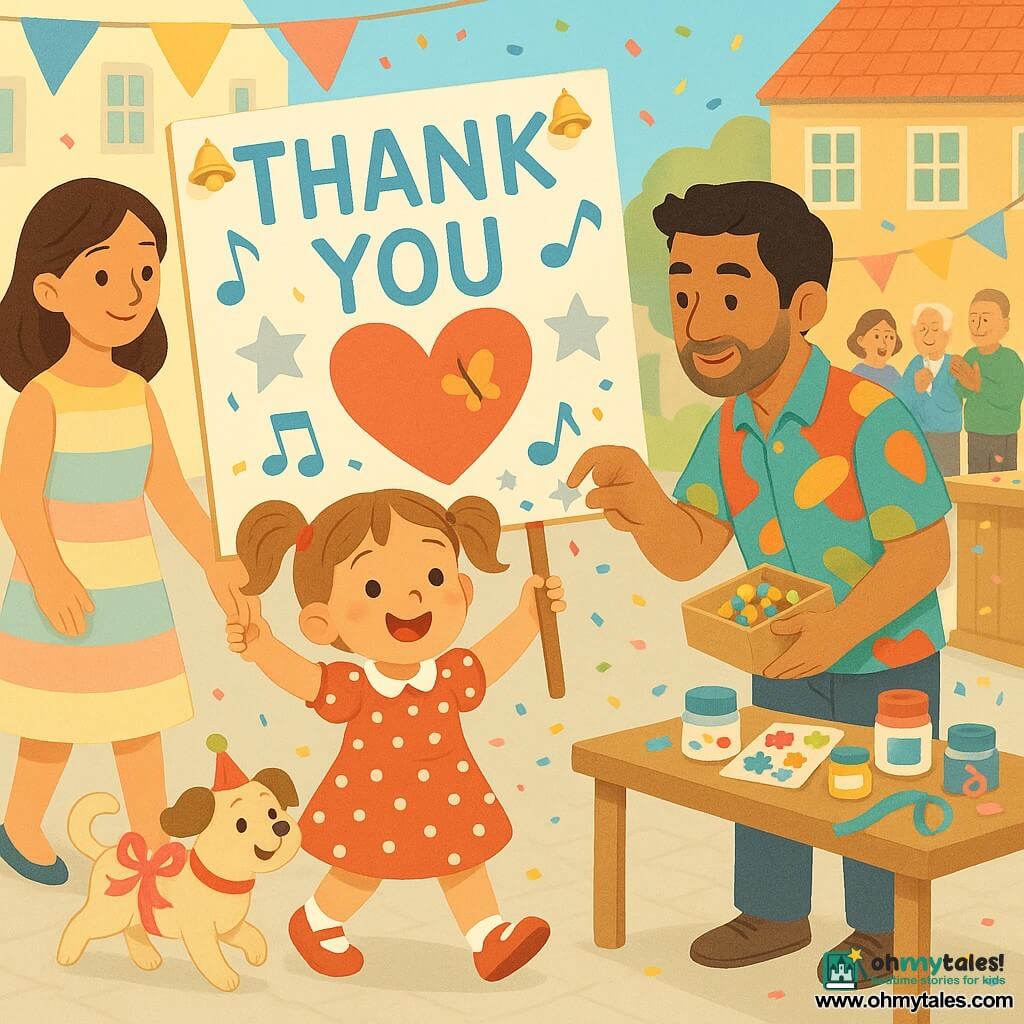
Mia dipped her brush. Swish-swish. She painted a big red heart. The heart was warm and round. She painted blue music notes next to it. Plink-plink went the brush. She painted yellow suns that looked like laughters. She sprinkled small silver stars like little kisses. “Stars!” she clapped. “Stars for magic.”
Children walked by and peeked. “Ooh!” they said. “Pretty!” Mia waved. She stuck on stickers—balloons, cupcakes, tiny drums. She glued a small feather that tickled her hand. “Tee-hee,” she giggled. The helper spelled the words with big, friendly letters. T-H-A-N-K — Y-O-U.
Mia wanted to say thank you to many people. She painted a smiling baker. He had flour on his nose and a warm loaf in his hands. She painted the florist with petals in her hair. She painted the bus driver who beeped hello. She painted the parade dog with a ribbon tail. As she painted, the music kept dancing around them.
“May I add a surprise?” asked Jorge. He reached into a box and pulled out tiny bells. “Yes!” said Mia. She stapled the bells to the bottom of the board. Every time someone walked, the bells would sing gentle chimes. Ding-ding, ding-ding. The sound made her bounce.
“Who will we thank first?” asked Mother as she watched Mia work. Mia thought. She thought of friends and helpers and laughter. “Everyone who smiled,” she said. “Everyone who danced.” Mother thought that was perfect. “Everyone who shared,” Mia added, voice soft and bright.
A young girl in a clown hat came by and gave Mia a paper mask with a rainbow. Mia put the mask on the board. “For color!” she said. An old man with a trumpet played a soft tune and offered a tiny ribbon. Mia tied the ribbon to the corner. People whispered little thank-yous to each other as they walked by. The square felt like a warm blanket.
The band started a slow song. Tambourine and flute hummed close. Mia stood up and held her board high. The painted letters looked jolly and kind. “Thank you!” she sang with the crowd. “Thank you!” echoed back. The bells on the board chimed. Ding-ding. The sound floated up like soap bubbles.
They began a gentle parade. Kids in costumes marched in a rainbow line. Mia walked near Mother and held the board carefully with both hands. A tiny butterfly landed on the red heart. Mia watched it with soft eyes. “Hello, little butterfly,” she whispered. The butterfly flicked its wings like a small flag.
Along the route, people clapped. “Thank you!” they said to bakers, to artists, to helpers. A baker tossed a small bun to Mia. She took it and laughed. “Merci!” she said, but then she remembered and said, “Thank you!” with a grin. The musicians played a cheerful tune and the sun shone like a gold coin.
At the end of the stroll, they reached a small stage. The mayor bowed and patted a drum. He said a few gentle words. “We are grateful,” he said. “We are happy.” Mia looked at her board. Her heart beat like a little drum. She walked to the front and held the board up. The crowd hummed like bees.
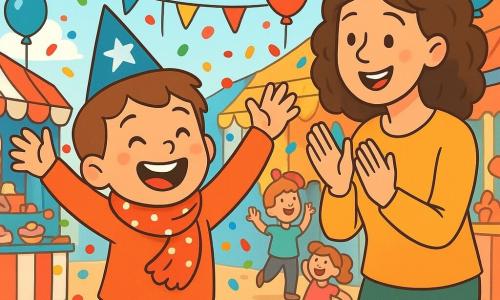
“Who helped make the carnival?” asked Mother softly. “Everyone!” Mia shouted, voice bright and proud. “Everyone who smiled! Everyone who danced! Everyone who shared!” The crowd laughed and cheered. The bells sang ding-ding. Confetti popped like tiny flowers from canons. Soft paper petals drifted down and landed on Mia's hair and shoulders.
Later, Mia and Mother sat on a bench under a maple tree. The carnival music softened to a calm lullaby. Mia's fingers traced the painted heart. The colors had tiny smudges where she had pressed too hard, and that made it look even better to her. “It's perfect,” said Mother. “Perfect,” agreed Mia.
“Will the board stay here?” Mia asked, a little sleepy. “The board will stay in the square,” said Mother. “So everyone will keep seeing your thank you.” Mia smiled and yawned. She was warm and full of joy.
That night, Mia wore her ribbon and red shoes in a small bed of blankets. Outside, the last music notes floated like stars. The town sighed happily. Mia thought of bakers and flowers and a dog with a ribbon tail. She dreamed of bells that ding-dinged gently and of dancing confetti.
She held a tiny picture in her hand—a scrap she had cut from the board. It said THANK YOU in her own little prints. She breathed in and then out. The day had been bright and kind. Her last thought was a small, happy one: “Thank you,” she murmured, and fell asleep smiling.