Part One: The Singing Station
Beneath bright glass towers and slow-moving trams, the city hummed like a contented whale. At the heart of the old district, where neon vines curled around lamp posts, there were tunnels that sang. On rainy nights they sounded like lullabies; on busy afternoons they sounded like a choir of bells. The tunnels belonged to everyone who listened.
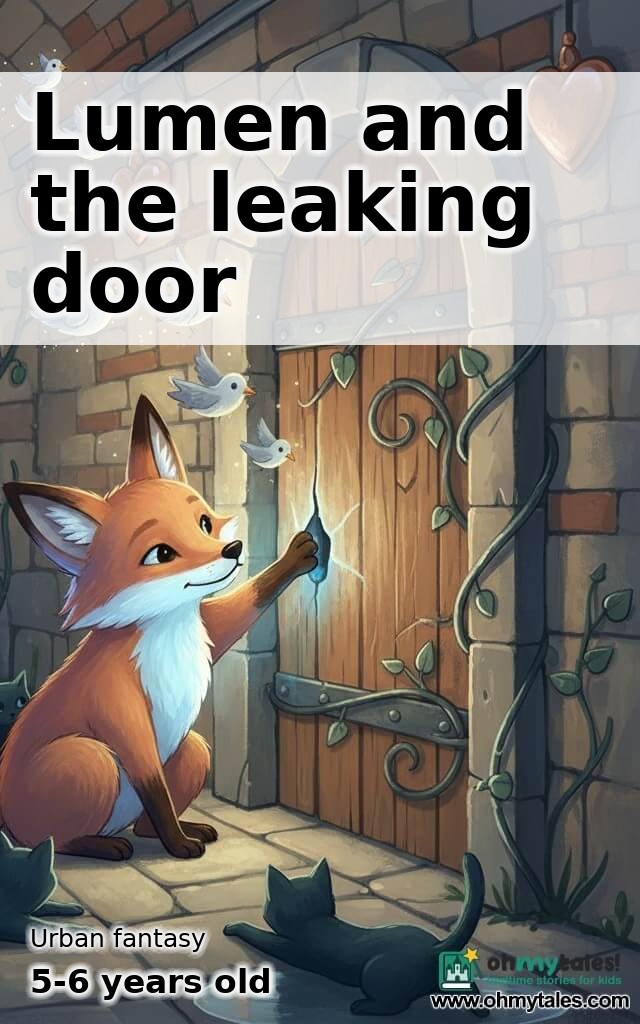
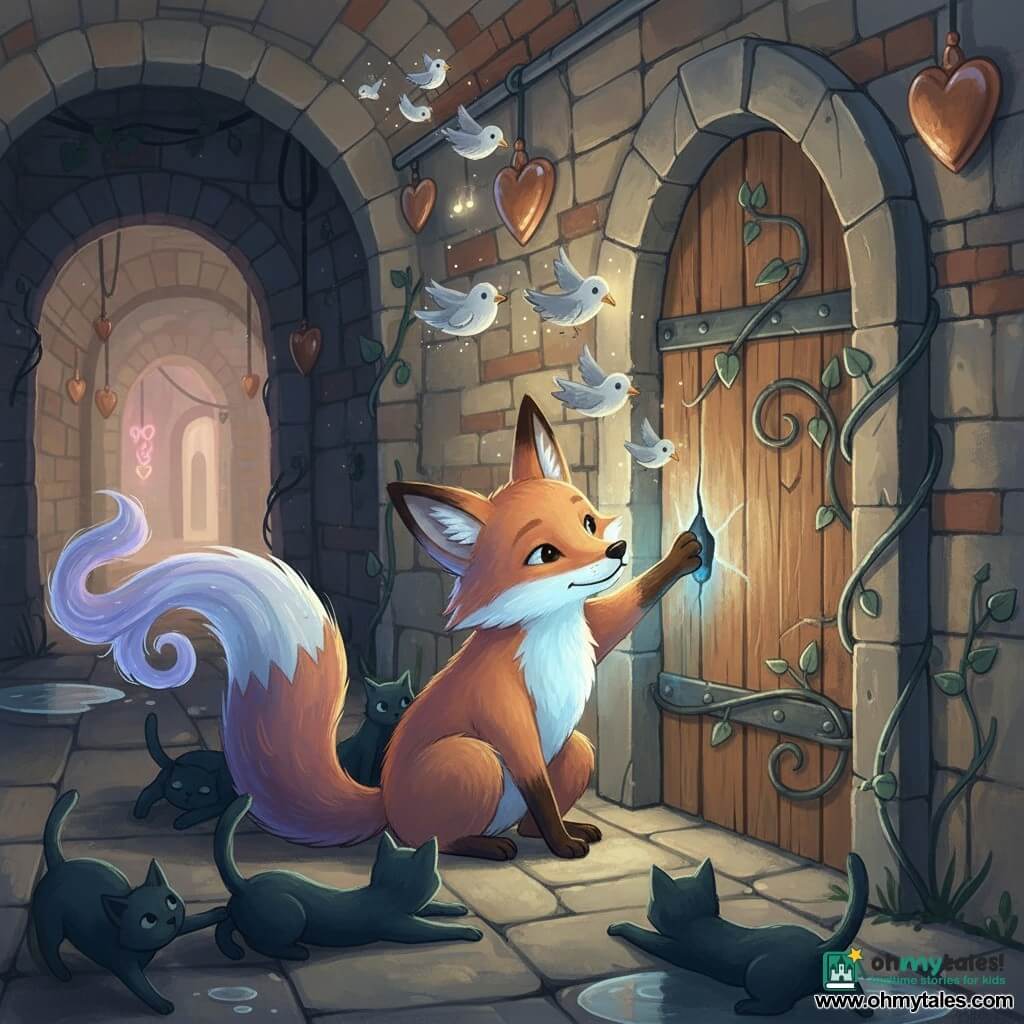
Living above one of these tunnels was a small creature called Lumen. Lumen was not a person. Lumen was a lantern fox — a soft, fox-shaped being made of paper skin and a warm blue light in its chest. Its tail unspooled wisps of glow that smelled faintly of lavender. Lumen's ears were sharp as bookmarks and its paws made no sound on the city stones.
"I keep the dark tidy," Lumen would say, when pigeons asked. (Pigeons sometimes asked.) It loved to walk along the edge of the tunnels and whisper to the shadows that peered out like curious children. Shadows were shy here. They worried when doors leaked light or when pipes hummed too loudly. Lumen had a quiet way of soothing them with stories about constellations that rode streetcars and moonbeams that paid for their tickets.
One evening, the air tasted of copper and sweet orange peel. The singing tunnels grew a little thin, as if someone had pulled a thread. Lumen felt a cold draft beneath the cobbled steps. Something was wrong. It padded down the stair that led to Tunnel Nine-Two, the oldest tunnel with stones that remembered rain.
Near the mouth of the tunnel, shadows huddled like lost mittens. They flickered and trembled.
"Why are you shivering?" Lumen asked, voice like a bell in a teacup.
A tall shadow, skinnier than the rest, stuttered. "A door… it leaks. Not light. Not water. It drops... sighs. The sighs make our edges fray."
Lumen tilted its head. A leaking door in the tunnels was a serious thing. Doors were meant to be firm and certain. When a door leaked, it let in doubt. Doubt crept into corners. Doubt taught shadows to wriggle away from steady things.
"I will close it," Lumen promised, soft as moth wings. "Stay close to the singing stones. I will not be long."
The shadows breathed a hush like rain. The singing in Tunnel Nine-Two slowed, like someone listening for a story.
Part Two: The Leaking Door
Lumen followed the draft like following a tune. It smelled of old keys and cold pennies. The further it went, the louder the tunnel sang, but the song now had a new note — a thin, lonely whistle like a teardrop rolling on glass.
When Lumen reached a side passage, there it was: a door that did not belong. It was half-metal, half-ivy, with hinges that looked as if they had learned to yawn. From beneath the crack at its base leaked a stream of soft grey things. They were not water. Not air. They were sighs given shape: folded like paper birds, floating down the corridor.
"Hello," murmured a sigh-bird as it passed. "We're small. We're tired."
Lumen crouched. Its light warmed the paper birds so their wings waved steady for a moment. "Why do you fly out?" Lumen asked.
"We have nowhere to go," one answered. "The room behind that door used to hum with stories. Now it mutes. The door forgets to close. We leak and get lost in the rafters. The tunnel grows thin."
Lumen's tail glowed darker. Responsibility was a word that felt like a cloak — heavy, sure, and warm. Lumen knew that doors that forgot to close must be closed with care, not force. A closing too harsh might ring the whole tunnel like a bell cracked.
It peered at the hinges. They yawned because the latch was made from a soft thing: a promise that had been stretched thin by time. The promise said, long ago, "Keep safe the sighs." No one had repeated it lately.
"Promise?" Lumen asked, almost to itself.
"You must remind the door," whispered a bright tiny sigh-bird. "Tell it why we keep things inside."
Lumen nodded. It stepped close and pressed its paper muzzle against the seam. It breathed in. It remembered the city faces it had seen in moonlight — the tram that coughed, the bakery that sang, the clocktower that blinked like an old friend. It thought of warm hands that never belonged to it but that fed the lantern fox scraps of kindness: a forgotten scarf turned into a nest, a child's giggle folded into a mitten-shaped comet.
"Door," Lumen said, voice low like a lullaby. "You keep stories safe. Close so the sighs can rest where they belong."
Nothing happened at first. The door twitched like an ear. Then it sighed back a small, rusty sound. "I was loose because I forgot," it admitted, in a creak of old wood and metal. "Years are tricky. I thought I had to let go."
"You are not alone in letting go," Lumen replied. "You are part of the tunnel, part of the singing. Close with me. Let the sighs remember their nest."
Lumen walked the length of the seam, pressing its glowing tail along the edges, weaving warmth into the metal and ivy. It hummed a tune learned from the stones — a tune that smelled of rain and lemon peel and old books. Slowly, like a shy curtain being drawn, the door began to settle. The leaking sigh-birds fluttered and turned, choosing to fold themselves back into the room.
A small sigh-bird, the faintest of them, lingered by the threshold. "I forgot a lullaby," it confessed. "Now I can't finish my song."
"Sing it with me," Lumen invited. "I will hold the tune."
They sang together. Lumen's voice was a soft blue thread; the sigh-bird's was a silver bead. The tune wove back into the room, into boxes of forgotten promises and jars of moon-milk. When the last note slipped home, the door clicked as gently as a bead finding its place.
The tunnel sighed a full, round sigh. The singing stones swelled with a chorus so warm that the shadows stopped trembling and stretched like cats by a fire.
Part Three: The Promise Kept
The shadows gathered around Lumen and the door. "You closed it," they said, their shapes knitting together like blanket patches. "You kept the promise."
Lumen blinked its paper eyes. "I only reminded it," it said. "We all help keep the city steady."
The door, now steady and content, hummed a small tune of gratitude. "Thank you," it said, the words like keys turning in locks. "I will not forget again."
From then on, Lumen patrolled the edges of the tunnels with an extra pocket of light in its chest. When a lamppost drooped or a pipe sneezed sticky steam, Lumen would whisper to the thing and mend its worry. Shadows learned to come when they were afraid. Sigh-birds nested where their songs belonged. The singing tunnels grew richer, as if someone had added a warm bassoon to the choir.
One night, a new shadow came, smaller and more jagged than the rest. It trembled where the stair met the square. Lumen padded over and nudged it gently.
"I am afraid I'll be forgotten," the little shadow said.
Lumen curled its tail, warm and bright. "Then you must promise to remember to stand strong," it said. "And I will promise to help you when your edges fray."
They made the promise together. It was small. It was honest. The shadow smoothed out and shone a little.
Responsibility in the city was like a lantern: it was something you carried to help others see, not a burden to hide. Lumen taught that by example. It closed doors carefully, kept promises like buttons sewn on, and reminded the old things to rest. The tunnels kept singing, and the city listened with a softer heart.
At bedtime, when the trams folded into the night and the neon vines blinked down, the lantern fox curled on the window ledge above Tunnel Nine-Two. It hummed to the stones below, who hummed back like a grandmother's reply. The shadows settled in their places, the sigh-birds slept in their jars, and the city breathed, confident and warm.
And Lumen, with its paper ears and lavender tail, kept its light steady — not because it could not flicker, but because it chose every night to be the one that helped others find their way home.