Chapter 1 — The Man of Mist
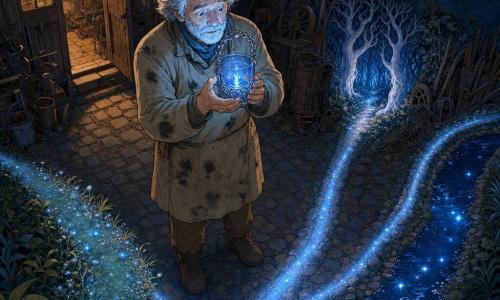
In a valley where mornings wore shawls of silver fog and nights tucked stars like letters into the sky, there lived a man named Elias. He walked with pockets full of memories and eyes that seemed to hold a small, steady lamp. People in the village said he carried the hush of old stories in his chest, and sometimes children followed him to hear the soft rattle of his laughter like pebbles in a jar.
Elias loved the place between the mist and the light, where shapes blurred into dreams. He had been a keeper once, though not of crowns or coins. He guarded an old library made of willow and moonstone, where scrolls hummed like bees and maps sighed like old sailors. The knowledge there was not only words but the sort that warmed the back of the neck and could mend a torn promise. The villagers called it the Archive of Echoes.
Time had shaped Elias into a man lined by nostalgia. He missed the sound of pages turning by candlelight, the way the ink smelled of rain and rosemary. "Memory is like a lamp," he would tell the children. "If you do not cover it and carry it carefully, the wind will blow the flame into shadow." His greatest worry was that the wisdom kept in the Archive—stories that taught honesty, songs that healed quarrels, recipes for making sunflowers laugh—might be forgotten and drift away on the breath of living forgetfulness.
One dawn, when the mist was thick as spun sugar and the first light stuck to the ground like wet birds, Elias found a trembling letter on his doorstep. No seal, no name—only a single sentence written in ink the color of twilight: The glass that holds truth is clouding. Protect what lets the light in. Beneath the sentence, a little mark like a crescent moon smiled up. Elias folded the paper like a map and felt the old ache he had always kept for things that must be kept.
He rose and took his lantern. "Come," he said to himself as if leading a friend, and the mist bent to his step as if to listen.
Chapter 2 — The Path of Mirrors
The path to the Archive wound through a wood where trees grew tall as questions. Branches threaded the sky; between them, the air shivered with illusions that played like children behind glass. Elias walked slowly, each footfall unfolding a line of memory. He met mirrors hung on trunks—polished leaves that reflected not faces but feelings. Some mirrors showed him a boy laughing under a plum tree; others showed him a harbor of empty boats. He pressed his palm to one and felt it warm like a living thing.
"Not all reflections are plain," murmured a mirror that wore the face of an old woman in the bark. "We hide truths to keep them safe."
Elias remembered the words on the letter. He had always known that some knowledge sought shelter from careless minds. Yet as he passed, an odd sense of sadness wrapped around him like a shawl. "Why do you shiver?" asked a mirror that held a poem inside it.
"I fear the Archive will lose its voice," Elias said. "The world forgets gently, like a tide."
A small mirror, no larger than a coin, blinked at him. "Then be the tide's keeper," it said. "Not to stop it, but to guide where it leaves shells."
Elias smiled, though his teeth chilled. He thought of guiding rather than stopping. It was a softer task—one that sounded like honesty itself.
At the wood's heart, light threaded the mist and formed a ring of pale stones. There stood a willow with branches like long hands. Draped on one was a cloak of letters—pages sewn together by moonlight. Within the cloak, hidden, the entrance to the Archive breathed. Elias lifted the cloak and entered, feeling the warmth of the place step into his bones.
Chapter 3 — The Archive's Secret
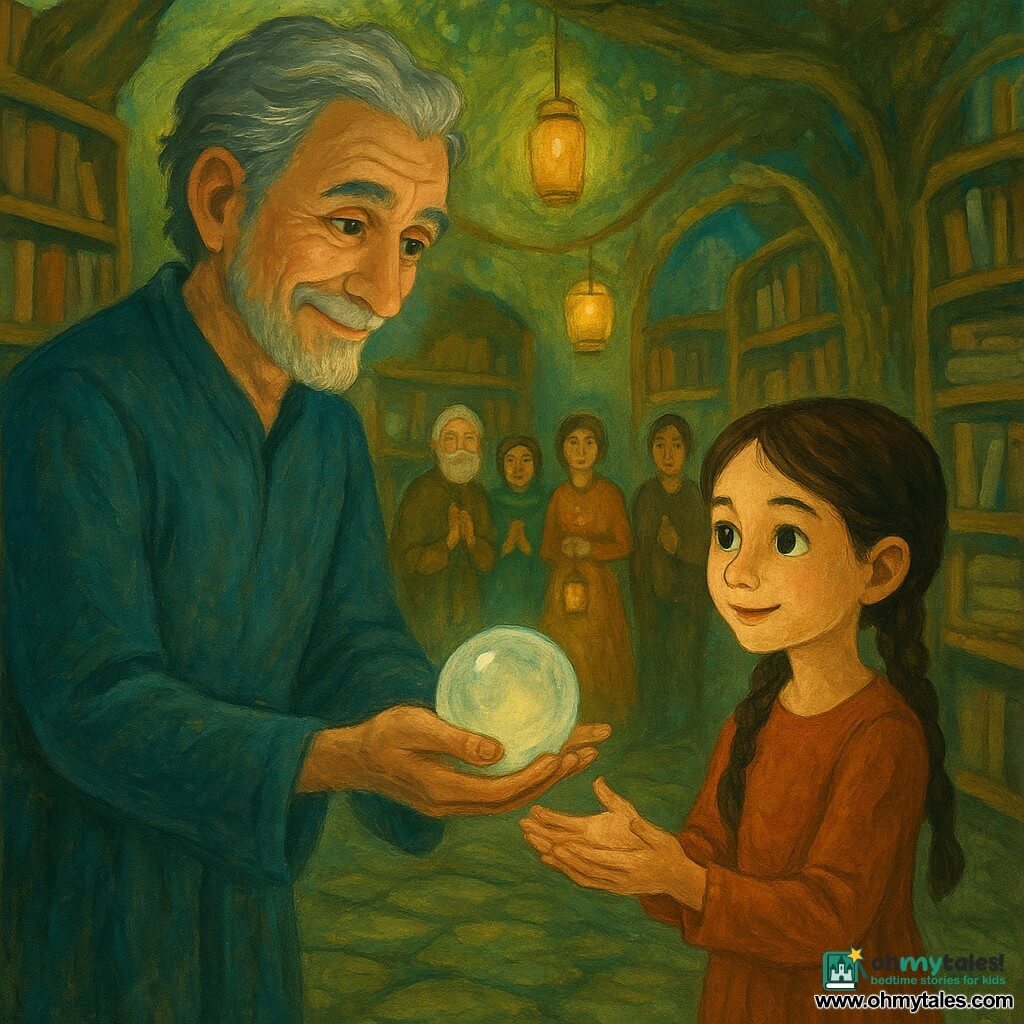
Inside, the Archive was quiet as held breath. Shelves curved like waves; each scroll hummed a different tone. Elias ran his fingers along bindings. A lamp floated nearby, a small sun that circled like a faithful bird. In the center of the room stood a crystal—clear, gentle, and round as a tear. The people called it the Glass of Witness. It was the Archive's heart, the thing that kept truth bright: any knowledge placed before the glass shone clearer, and falsehoods looked fuzzy as fogged windows.
Elias set the letter from his doorstep by the glass. It trembled as if reading itself. The crystal pulsed, and images swam within: children sharing bread, an old argument healed, a song taught by a grandmother to a child. The Glass made the past and future sit together like old friends.
But as Elias watched, a shadow passed through the Archive, sliding between the shelves like spilled ink. He smelled smoke—thin and cold. A voice, soft and slippery as quicksilver, whispered, "You cling to memories. They are heavy things."
"Memories keep the world honest," Elias said, bracing the lamp. "They are not weights but anchors."
The shadow laughed. "Anchors sink," it said. "Let go, and you will float free."
Elias felt the longing again—the wish to release the ache and drift. He had often imagined a life without the duty of keeping the old songs. Yet when he looked at the Glass, he thought of truth like a seed that needed tending. He placed his hand over the crystal, warmth spreading through his palm into the Archive.
"Why are you nostalgic?" asked a voice like paper turning gently.
"Because I remember what the world can be when people are true to one another," Elias answered. "And I fear forgetting would dim the light for everyone."
"Then promise," the paper whispered. "A promise is a small bridge."
Elias thought of the children who followed him, the village, the lilac nights. "I promise to keep and to share," he said. "To be honest with myself and others."
The Glass glowed. The shadow hesitated, then thinned, like a cloud eaten by dawn.
Chapter 4 — Tests of the Heart
Word of the man's promise spread as quickly as a silver gossip. It came to the ears of the Fog-Merchant, a trader who sold illusions braided with sweetness. He arrived with a cart full of glass jars that held tiny, perfect memories—smiles that never faded, afternoons trapped at their brightest hour. "Sell your sorrow," he purred. "Buy a perfect day. Leave the tending to me."
Elias touched the jars. They were lovely; their light felt like syrup. "Would you give a village a single endless spring morning?" the merchant asked. Children would laugh forever, the wind would never chill, and no grief would enter any room.
Elias thought of truth, which sometimes hurt like rain but helped seeds grow. "No," he said, voice steady. "To remove sorrow is to remove the depth that gives joy its color."
The Fog-Merchant's smiles thinned. "Then let me trade you his pride," he offered, pointing to a jar with an image of the Archive aglow without Elias. "Or a jar that will make you forget the ache of your duty. Imagine the freedom."
Elias clutched his lantern. He remembered the mirrors and the coin-sized one that said to guide the tide, not stop it. "I will not buy an endless day if it means losing truth," he said. "If people cannot feel the full range of their hearts, how will they learn to be sincere?"
A child from the village—Mara, who had once followed Elias to fetch lost kittens—stepped forward. "What if we share the memories?" she asked. "Not sell them, but tell them at feasts? Then no one is alone with pain." Her eyes were clear as the Glass.
The Fog-Merchant laughed and filled a jar with whispering smoke; it scuttled away like a mouse. But something had changed. Villagers began to gather in the square, carrying old scarves and recipe notes and songs. They came to the Archive where Elias taught them how to fold a story so it would not break and how to speak the truth with kindness.
One night, a tremendous fog rolled through, thick as unspoken words. It tried to smother the lanterns outside and seep through the cracks. It shaped faces that begged to be believed. "Give us a simpler tale!" it hissed. "Hide complicated truths. Make the world easy."
Elias stood by the Glass. He remembered his promise. "We will not smooth every corner," he said. "We will teach how to light a lamp."
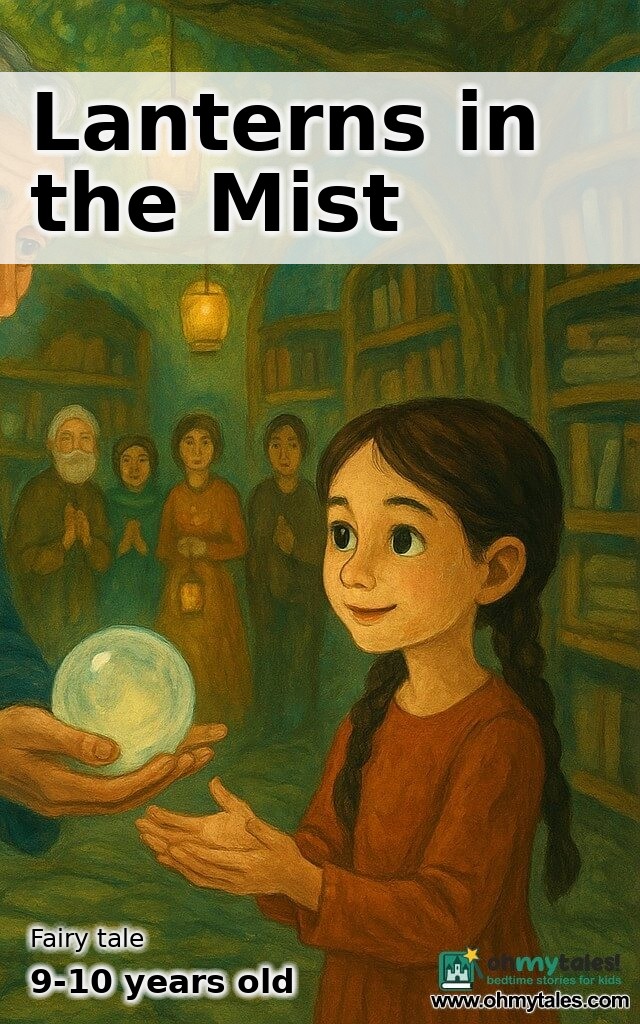
He handed the Glass to Mara and the oldest baker and the shoemaker's son. "Hold it," he said. "Keep it honest." Together they placed panes of true memory before the Glass, and its light pushed against the fog like dawn on a shutter. The fog thinned; the strange faces uncurled and fell apart into harmless mist.
Chapter 5 — The Garden of Lasting Light
Seasons tilted as they always do. The Archive became a place of coming and staying. People brought stories not to lock them away but to plant them in the world's garden. Children learned that secrets meant different things depending on whether they protected or hid. They learned that sincere apologies are seeds that grow into bridges. Elias still walked through mist and light, but his step was less weighted by solitude. He taught with hands like open maps, and sometimes he laughed until the lamps trembled.
One evening, as a ribbon of twilight braided through the willow branches, a messenger returned to the village—a swallow with a crescent mark. It carried a small paper: Peace tends the garden when truth is watered. The message was short as a sigh.
Elias went to the Archive and sat before the Glass. The crystal reflected the village: people mending fences together, children reading aloud, old friends sharing a stew that tasted like clover and honesty. In the Glass, the past and future seemed braided into a single string of light. He felt nostalgia then, but it glowed like embers—not a weight, but warmth.
A child tugged at his sleeve. "Will you ever leave?" she asked.
"Perhaps my feet will follow other paths," Elias said, "but I will always come back. Memory is not a thing you own. It is something you keep safe with others."
He taught the villagers to make small lanterns from paper and truth; they would carry them when fog grew thick in the valley. These lanterns burned with a gentle flame, neither too bright to blind nor too faint to fade. They were symbols—promises of sincerity and caretaking. People found it easier to speak honestly when their lanterns glowed; the light did not judge but clarified.
Years later, when Elias felt the slow tide of time ask him for a gentler pace, he laid the key to the Archive in the hands of Mara and the community. "Protect what lets the light in," he told them, the letter still folded in his pocket like a warm pebble. "Guide the tide; do not dam it. Keep truth gentle and brave."
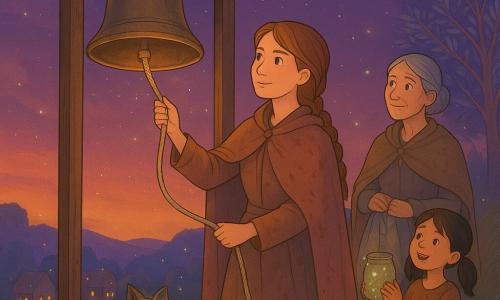
They promised. Promises, like bridges, were now everywhere—in lullabies, in market bargaining, and in the way neighbors returned borrowed sugar. The Glass of Witness continued to shine, tended by many hands. Illusions still came sometimes, carrying easy answers in pretty wrappings, but the village had learned to look for the weight of truth beneath any gift.
One dawn, not unlike the one at the story's start, Elias took his lantern and walked beyond the willow to a hill where the mist sampled the light like a child sampling honey. He sat and listened to the valley breathe, to the Archive's pages hum. His heart, once heavy with longing, had become a quiet lantern itself—steady, warm, honest.
The world in that valley did not promise endless joy without sorrow. Instead it promised the steadiness of people who kept one another's truths safe. Where light met mist, the Archive's knowledge grew like ivy—winding, gentle, and strong. Elias watched as the village lit their little paper lamps and carry them between houses, each flame a small, sincere promise.
"Goodnight," he whispered to the mist and the village and the Archive.
"Goodnight," the valley replied, in a thousand small sounds: a door closing softly, a child's breath, an old friend's chuckle. Peace, like a long and patient tree, grew. And in the Archive the Glass kept its clear, honest glow, reminding everyone that truth, tended by sincere hearts, can turn loneliness into a bridge and shadow into a room full of light.