Chapter One — The Kingdom of Bells
In a kingdom like a music box, the roofs were sugar and the streets were ribbons. Little bells hung on every window. In the morning the bells sang and the whole town woke with a smile. The shops smelled of warm wood and paint. Inside, craftsmen laughed and tapped and made toys that seemed to breathe.
The prince lived in a wooden tower at the edge of the workshop lanes. He was small for a prince and gentle as a feather. His name was Prince Emil. He had hair the color of straw and eyes like warm sunlight. He loved to watch the makers. He loved the clink of hammers and the whisper of paper.
But Prince Emil carried a quiet dream in his heart. "I wish I could walk without a sound," he told the moon one night. "I wish I could step like soft snow, like a secret." The moon listened and made a silver promise in the sky.
The prince tried to be silent. He tiptoed past toy soldiers, past dancing dolls, past a rocking horse that creaked like a sleepy old tree. Yet every step he took made a tiny sound, a little bell in his own shoes. The people loved his jingles and giggled. The prince smiled, but his wish hummed like a hidden bell inside him.
One afternoon, he met Mira, the smallest tinkerer, who wore two different buttons for earrings and a pencil behind her ear. She spoke in quick little bursts. "Why do you frown, Your Highness?" she asked, peering at his shoes.
"I want to walk without a sound," said Emil. "I want my feet to tell no stories."
Mira tapped her chin. "Maybe you need new shoes. Or a secret spell. Or a plan made of starlight."
Emil's eyes lit up like lanterns. "Will you help me?"
"Of course," said Mira. "We will build quiet like a blanket."
Chapter Two — The Little Workshop Plan
They gathered the makers in a cozy room where wooden toys leaned on shelves like sleepy friends. The tinkers and stitchers and painters crowded around. "We will weave silence," the prince declared, bowing to a tiny drummer toy.
A bellmaker brought a piece of blue glass that chimed softly. A shoemaker offered lamb's wool the color of clouds. An old carpenter, whose beard smelled of sawdust and kindness, placed a small brass latch on the table. It clicked like a secret. "Locking and opening teaches patience," he said.
Mira sketched with a brown pencil that squeaked a little as she worked. Her fingers drew slippers soft as whispers. "We will make shoes that hush," she said. "And a path that listens." The makers hummed and set to work. They cut, stitched, and painted like a choir of busy birds.
Prince Emil helped where he could. He pressed soft soles, tested thread, tasted the sparkle of a paint drop (it was sweet and smelled like pears). But when he tried the shoes, they still made a small sound. "They sound like heartbeats," he sighed.
That night, the prince sat under a bell tree and listened. The town bells told stories of the day. He felt discouraged, small as a seed. Mira sat beside him and plucked a loose thread from his sleeve. "Sometimes silence is not only about sound," she said. "It is about carefulness. It is about gentle choices."
Emil thought of the latch on the carpenter's table. He remembered the click that taught patience. "Maybe silence needs a little lock," he whispered. He imagined a latch on his steps that would close the noise like a door.
The next morning, the makers trimmed a ribbon of moonbeam and braided it into the soles. They stitched on wool so soft that the prince's feet felt like floating feathers. They fit a tiny latch under each heel — a small brass thing that could press gently against the ground. The latch did not lock the foot. It held only a promise: when the prince wished to be careful, the latch would remind him.
Chapter Three — The Walk of Quiet Courage
Emil walked at dawn to test his new shoes. He felt like a cloud stepping on the world. The first step was a hush. The second was a whisper. He smiled. People peered out of windows. The toymakers put their hands to their mouths. Even the wind seemed to tiptoe.
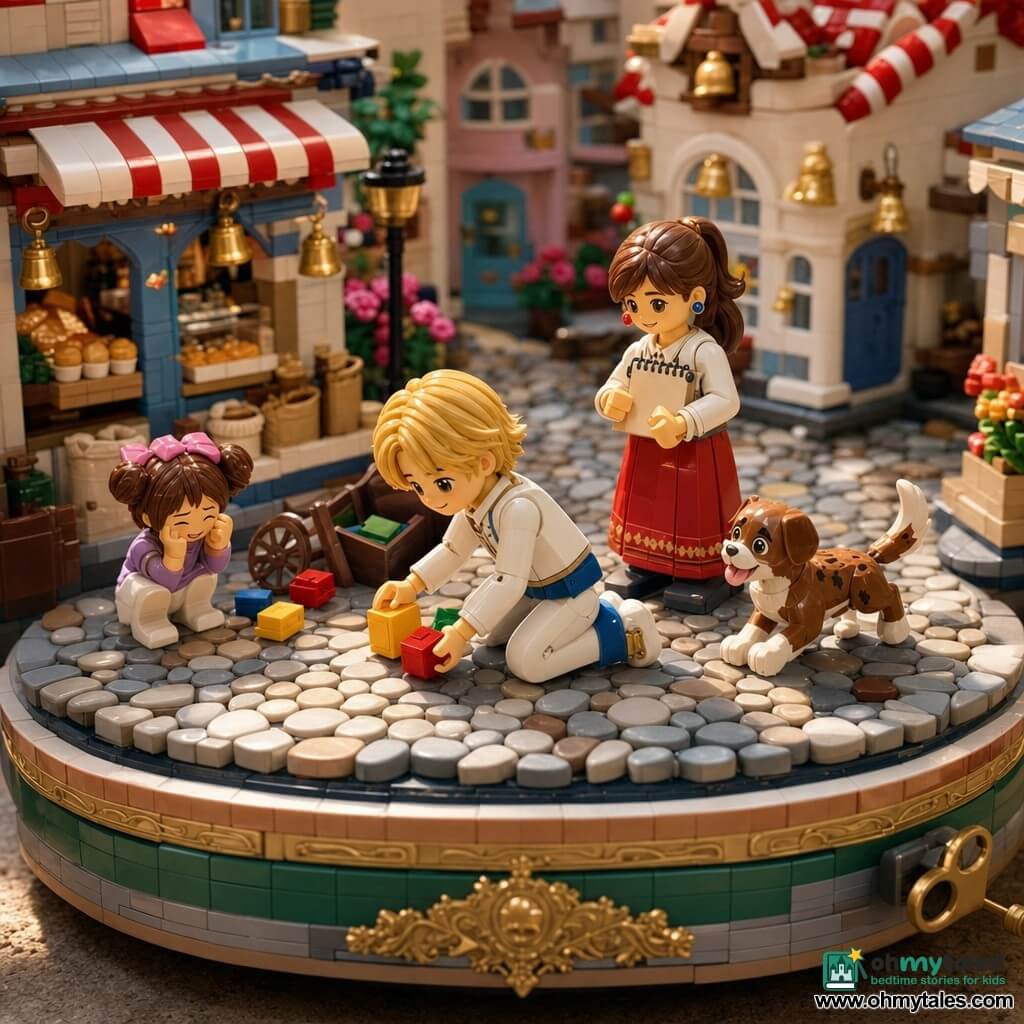
Then, by the bakery, a small wagon rolled away with a clatter and a cry. A puppy had leapt and chased it. A little girl screamed, and the wagon's contents—wooden blocks painted like tiny suns—tumbled into the street. The noise woke the town bells into a clumsy song.
Emil's heart beat faster. He could run and help quickly. But he remembered Mira's words about carefulness. He remembered the latch under his heel, a promise to be gentle. He took a deep breath and stepped forward. Each step was slow and steady. The latch clicked softly, a sound like a tiny key opening a garden gate. The puppy stopped and wagged its tail. The blocks lay like bright clouds. Emil knelt and picked them up with hands that shook a little, and he put them back in the wagon one by one.
"Thank you," the baker said, wiping flour from her cheeks.
"You were so brave," the little girl said, hugging Emil's knees.
Emil felt warm inside, like the sun had tucked a blanket around him. He realized bravery could be gentle. He had helped without rushing. He had chosen careful steps over loud haste, and that had made all the difference.
Word of the prince's quiet walk spread like dandelion fluff. People began to leave tiny bells on their doorsteps to sing their thanks. Children practiced tiptoeing, and the town found a new kind of music—the soft music of kindness.
One evening, the old carpenter came to the prince's tower with a small wooden box. He set it on the prince's table and opened it. Inside was a tiny latch, polished and shy.
"This latch is for you," he said. "Not to hold your feet, but to seal what you learn. When you place it on something, you promise to be gentle, to listen, and to make."
Emil took the latch. It fit perfectly in his palm, warm like a cooked apple. He remembered the day the puppy ran, the blocks, Mira's sketch, the makers' laughter. He felt a quiet courage bloom like a lamp in his chest.
That night, Emil walked to the old toy chest where he kept letters and small treasures. He opened the lid and placed the tiny latch on the edge. It clicked softly and the chest seemed to breathe. Emil whispered, "I promise to be careful and to make beauty. I promise to keep soft the world."
The latch held the promise like a key holding night and day together. It did not close the chest forever. It simply showed that in this kingdom, where bells and laughter lived, there was also room for quiet courage and careful hands.
Mira danced into the room and hugged the prince. "You found more than silence," she said. "You found a way to step with your heart."
Emil smiled and hugged back. He knew now that his dream had been partly about sound and partly about being gentle with the things and people he loved. He learned that creativity was a kind of gentle magic—making with care so the world kept singing.
As the moon climbed like a silver ladder, the town slept with tiny bells at their doors. The prince closed the toy chest and left the little latch shining on the lid. Outside, the workshop lanes breathed softly, like a lullaby. Inside Emil's heart, a new song began: a quiet, brave song that would ring like a bell, but hush when needed, and always open like a small, bright latch on a treasure box.