Morning Sun and Mixed-Up Crayons
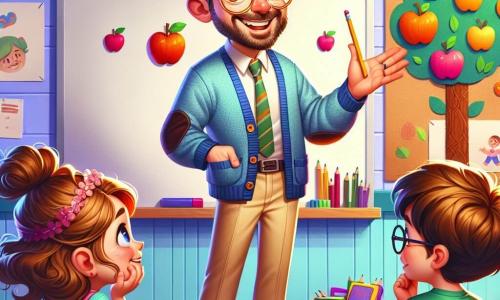
Mr. Rowan opened the classroom window and a little bird hopped on the sill like a tiny visitor. The room smelled like warm toast and paper. Today he had a plan: to help every child feel they belong and to show that different ideas make the class stronger.
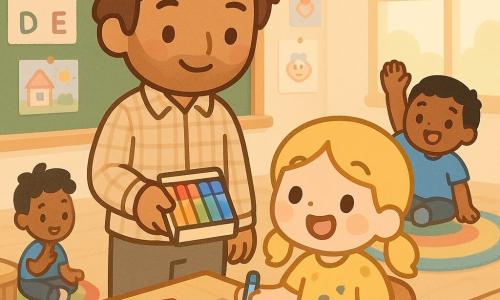
"Good morning, explorers!" he said, smiling. The children answered in a chorus. They sat in a circle on a rug with crayons poking out of pockets and hands already eager to draw.
"Today, we will make a map of our classroom," Mr. Rowan said. "But first, tell me what a map is."
Amina raised her hand. "A map shows where things are," she said. "Like a treasure map."
"Exactly," said Mr. Rowan. "Now, tell me why a map could be different for everyone."
"I like the reading corner," said Tomas. "So my map would have a big tree there." He tapped his chest proudly.
"But I don't like the tree," whispered Mei. "I like the window."
"Different places matter to different people," Mr. Rowan nodded. "That makes each map special. How about we draw our maps and then make one big class map?"
They giggled, agreed, and started. Some drew the classroom as a spaceship; some drew it as a garden; some drew the teacher's head as a mountain. Mr. Rowan moved gently between them, praising small ideas and asking soft questions. "Why did you put the window here?" he asked Mei. "Because the light helps me read," she whispered. "Aha," he said. "Light helps Mei read. That is useful for our class map."
The Puzzle of Listening
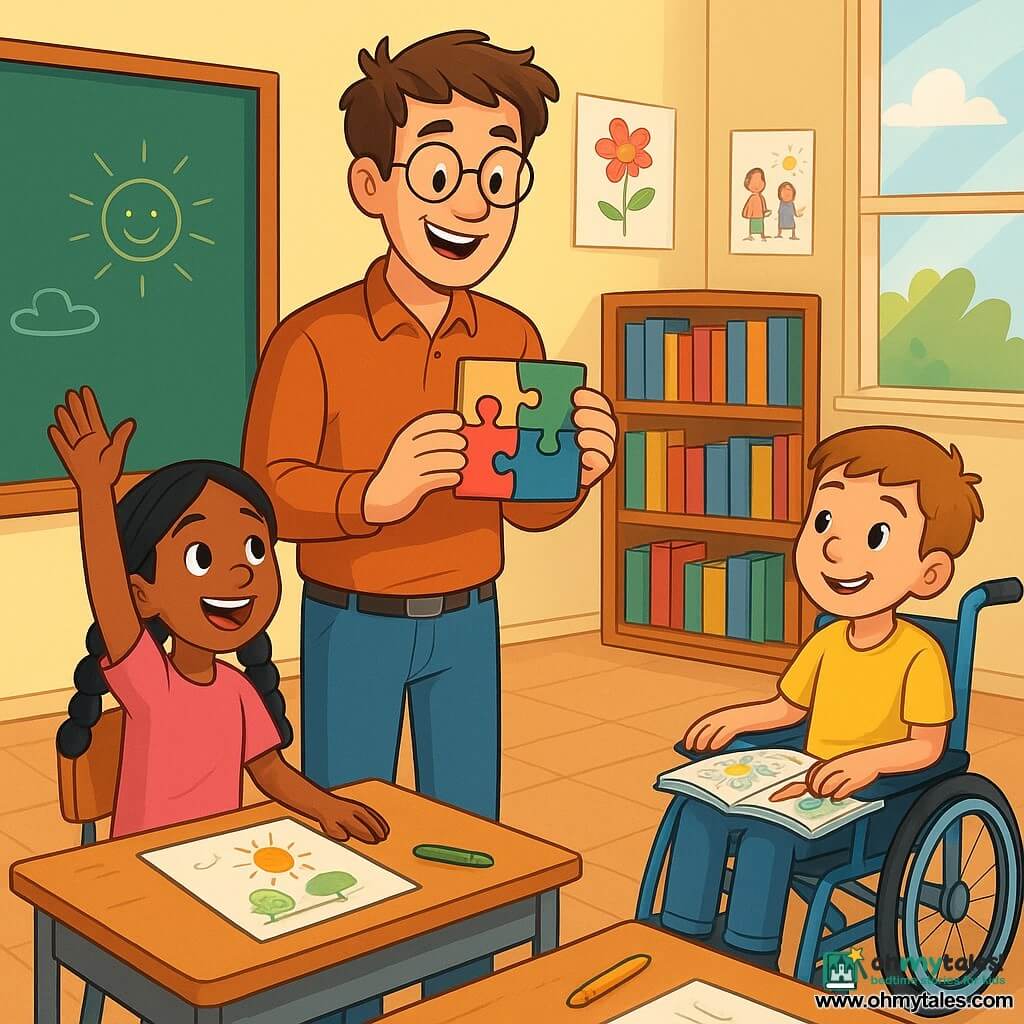
At story time, they gathered around. Mr. Rowan pulled out a box of puzzle pieces. "Let's build a story puzzle," he said. He put one piece on the floor and asked, "What do you think this piece wants to be when it grows up?"
"An elephant," said Sam, laughing.
"A tunnel," guessed Noor with a wide grin.
"A bridge," offered Amina.
Instead of saying which was right, Mr. Rowan asked, "Can you tell me why you think that?" He smiled like it was the best question in the world. Each child explained their idea, and each reason was different but good. They tried the pieces together in many ways until a picture began to show: a classroom filled with plants, books, and laughing faces.
"Look," Mr. Rowan said quietly, "we build better pictures when we listen to each other and test our ideas." He tapped a piece and then sat down to give space. Some children wanted to test more ideas, others wanted to check the edges of the puzzle again. Everyone had time.
During a break, Hugo, who used a wheelchair, wanted to put a sticker on the map. Mr. Rowan tipped his head and said, "Tell me where you think the sticker should go." Hugo pointed to the lower shelf by the window where storybooks rode in a row. "Good choice—books for everyone," Mr. Rowan said. "How can we make sure everyone can reach those books?" The class thought. Mei suggested a step-stool. Tomas suggested a basket that could be moved. They tried both and found the basket was easier.
"See?" said Mr. Rowan. "Different ideas help make better plans."
A Question and a Quiet Answer
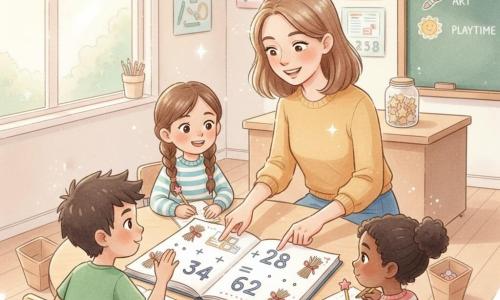
In math, the class counted seeds from the school garden. "We have a hundred seeds," said Mr. Rowan. "Now, how can we share them fairly?"
"Cut them in half!" shouted Sam.
"Wait," Mr. Rowan said. "Why should we share like that? What happens if some plants need more seeds than others?" He handed out small cards and a pencil. "Write or draw your idea. Then we will compare."
Hands flew up with notes: share by rows, share by height, share by need. Mr. Rowan read them all aloud with calm, gentle voice. "We are using our thinking like gardeners," he said. "We check, we listen, and we choose together."
They decided to plant by need. Some plants got more seeds because they were hungry for sunlight. Some got fewer because they were slow growers. The children measured, counted, and agreed. They learned that fairness can mean different things, and that asking "why" helps make better choices.
Home Time and Small Goodnights
As the day folded like a warm blanket, parents arrived, backpacks zipped, and shoes were found. Mr. Rowan knelt by each child, listened to the day's proud moments, and watched the children share what they had learned.
"Mr. Rowan," said Amina, tugging his sleeve, "you always ask why."
"I do," he answered, smoothing her hair. "Asking why is like turning on a lamp. It helps us see better."
"No matter who you are?" asked Hugo. "No matter how you move or where you come from?"
"No matter what," Mr. Rowan replied, and his eyes were soft as the moon.
The lights dimmed. The big class map hung by the door—part garden, part spaceship, part puzzle. Every child had placed a little scribble or sticker, and together it looked wonderful.
"Tomorrow," Mr. Rowan said, "we will add more. We will keep asking, listening, and making room for each other."
The children waved goodbye and walked out with pockets full of crayons and heads full of new questions.
Mr. Rowan closed the window; the little bird had gone. He looked at the empty chairs, the baskets, the map, and the puzzle pieces waiting patiently for the next day. He put his hand to his heart, thinking of the bright faces who had taught him as much as he had taught them.
Standing in the warm hush, he breathed in all the small quiet lessons of the day—patience, kindness, careful questions, and the joy of learning together. He smiled and, with a soft, silent whisper to the empty room and to every school like it, he gave a small, gentle good night to all the teachers everywhere: a silent "Good night" to all teachers.