Morning Circle
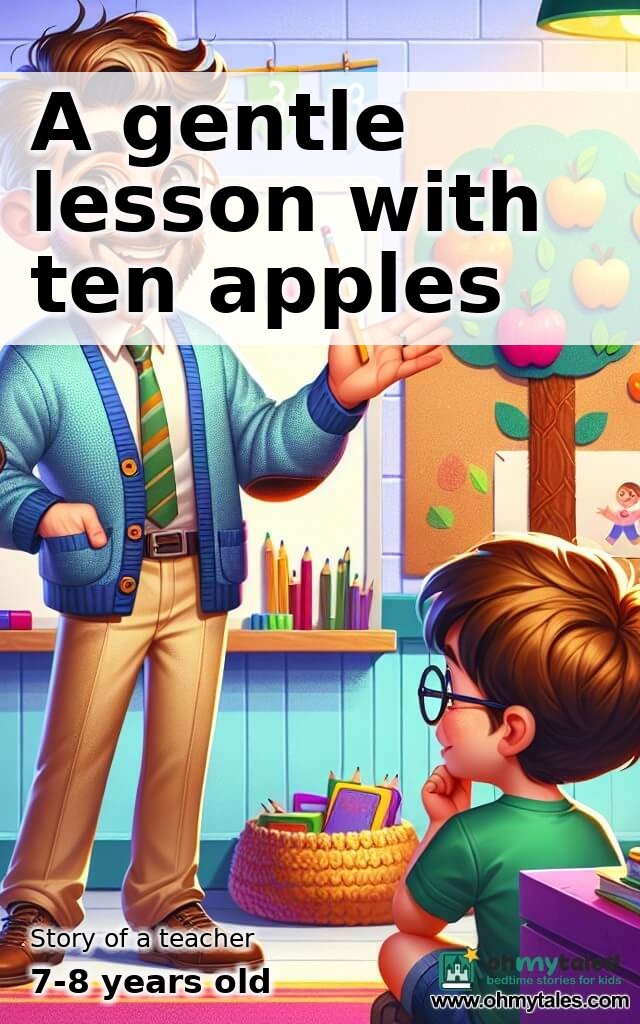
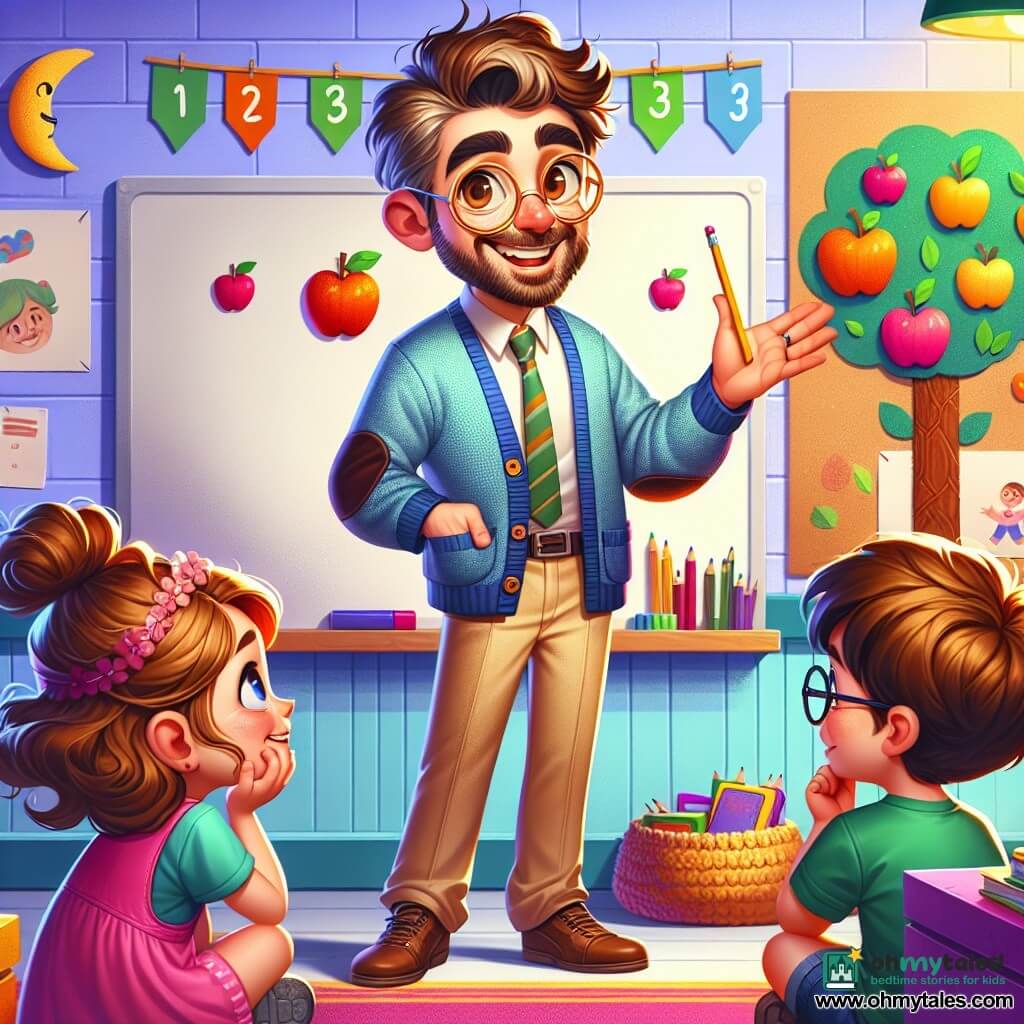
Mr. Rowan walked into the classroom with a small bell in his hand. The bell made a soft, friendly chime that sounded like a tiny bird saying hello. He smiled at the rows of bright backpacks and the little chairs that waited like open arms. Sunlight spilled over the play rug where the children sat in a circle. The room smelled of crayons and warm glue sticks, a smell that always felt like a hug.
“Good morning,” Mr. Rowan said in his calm, gentle voice. He had tidy hair, a cardigan with elbow patches, and a laugh that made everyone feel brave. He was the teacher of the class, and his favorite part of the day was the morning circle. They had a quiet ritual: a bell, a hug of words, and then a song that everyone hummed together.
Today, Mr. Rowan held up ten bright paper apples pinned to a little cardboard tree. Each apple had a number from one to ten. The children counted out loud, fingers wiggling. “One, two, three…” Their voices joined like a little choir. Mr. Rowan loved numbers because they helped tell stories about things that moved, changed, and grew.
He told a simple story about the apples. “Imagine these apples are on our table for a picnic,” he said. He drew a small picnic blanket on the whiteboard and stuck the ten apples on it. The children leaned forward. Stories were soft blankets that made learning cozy.
The morning had gentle sounds: the clock ticking, a paper airplane tapping the window, tiny shoes whispering on the floor. Mr. Rowan explained that today they would learn something helpful: how to take away apples when friends eat them and still know how many are left. He called this “subtraction,” a word that sounded like a quiet helper. He said, “Subtraction tells us how many are left after some are taken away.” The children nodded. Some faces were curious, some thoughtful, and one small boy named Nate looked a bit unsure.
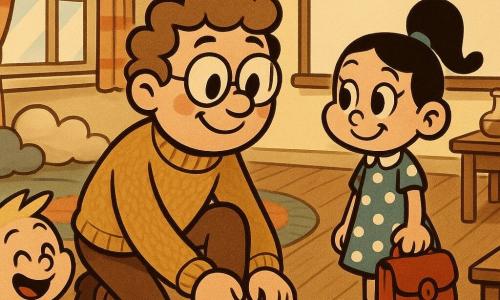
Mr. Rowan noticed Nate. He knelt down beside him so his eyes were level with Nate's. “We all learn at our own steps,” he murmured. “It's okay to be unsure. We'll take gentle steps together.” Nate smiled like a tiny sun.
They clapped hands to their rhythm, and the bell sang again. Mr. Rowan's way of teaching began with something everyone could touch and count. He believed that learning should feel safe, like holding a favorite blanket. The class felt ready to follow him through the story of the apples, and the morning circle ended with a promise: today they would learn how to take away apples and still smile.
The Missing Apples
Mr. Rowan plucked three paper apples from the picnic tree and placed them in a little paper basket. “Now,” he said, “three friends came to the picnic and each ate one apple.” He took the apples away and set them on the side. The children watched closely. Some copied him with their fingers, pretending to pick apples from the air.
“How many apples are left on the blanket?” Mr. Rowan asked, and the class counted together slowly, pointing one by one. “Ten… nine… eight… seven… six… five… four… three… two… one.” When they reached one, their fingers paused as if waiting for a drumbeat. “There are seven apples left!” they cheered.
Mr. Rowan clapped softly. “That's subtraction,” he said. “We had ten apples. We took away three apples. Ten minus three equals seven.” He wrote the numbers on the board with big, round letters. The sign looked friendly: 10 - 3 = 7. He said the words slowly so the numbers could wiggle into their minds.
He taught a gentle trick. “You can take away by moving the apples,” he said. He slid the paper apples, one by one, away from the blanket, counting each move. When children could not touch actual apples, they could move stones, use crayons, or press buttons on a counting frame. Mr. Rowan showed three ways to find the answer: touch and move, count back on your fingers, or use a number line drawn like a small ladder.
He drew a ladder with ten rungs on the floor of the board and jumped his finger along it. “Start at ten,” he said, placing his finger on the top rung, “then step back three rungs.” The children loved stepping back with their eyes. When his finger landed on seven, they cheered again. The ladder trick looked like a small adventure.
A little girl named Maya frowned. “But what if I forget which apple I took?” she whispered. Mr. Rowan sat beside her and whispered back with a smile, “That's why we make a mark. We draw a tiny dot where the apple was. If you make a mark each time, you can always see.” He handed her a crayon and she dotted the board. The mark helped her feel steady.
They practiced with different stories. Sometimes they had ten cookies and two friends ate them. Sometimes they had five toy cars and three were sent to the garage. Each story used the same gentle steps: see how many you have, take some away, and count what remains. The practice felt like a game played with thoughtful hands.
Mr. Rowan praised small steps. “Great thinking,” he said to Nate when he counted back on his fingers. He told the class that being kind to themselves while learning was as important as solving problems. Every time someone tried, the class celebrated with a soft clap. The room felt like a team, and subtraction started to feel like a friendly puzzle instead of a scary wall.
The Quiet Corner
After the lively practice, the class moved to the Quiet Corner. The Quiet Corner was a soft space with cushions, a lamp shaped like a moon, and a shelf of books that smelled like adventures. Mr. Rowan liked to leave room for feelings and questions there. Learning was not only about numbers; it was about how hearts felt while learning.
Maya went to the Quiet Corner holding three small wooden apples. She said, “I feel a little worried I'll make a mistake later at home.” Mr. Rowan sat on the cushion opposite her and folded his hands in a calm way. “Mistakes are part of learning,” he said softly. “They tell us what we need to try again. They are friendly signs that say, ‘Try once more.'”
He told a tiny story about a painter who mixed colors. The painter would make a color that was not quite right and then add another color until it looked just right. “Math is like mixing,” Mr. Rowan said. “If the answer doesn't look right yet, you can try another way.”
He taught a quiet breathing trick for when numbers felt wobbly. “Breathe in like you are smelling a sweet pie,” he said, smiling. “Breathe out like you are blowing on your spoon.” They breathed together. The simple rhythm made busy thoughts float down like leaves. Nate squeezed his hands into his lap and felt calmer.
They practiced subtraction slowly with the wooden apples. Mr. Rowan made a story about a fox who liked apples and politely asked for three. They moved three apples to the fox basket and then counted how many stayed. Each move was gentle. Each question was answered with patience. “You can always ask for help,” Mr. Rowan said. “Asking is brave.”
He also taught a helpful phrase: “I don't know yet.” It sounded small and brave, like a kitten. “Say it when you need time,” he advised. “You are not stuck; you are learning.” The children repeated the phrase quietly, and it felt like a warm blanket.
Before they left the Quiet Corner, Mr. Rowan asked everyone to put one kind thought into the class jar. Some children wrote “I tried,” others wrote “I helped a friend,” and Nate put down “I'll try again.” Mr. Rowan said, “We collect kindness like stars. They shine when we look back.” The jar glowed with their small papers as if tiny stars had landed in it.
Night Light Lesson
The afternoon settled like a soft story. Mr. Rowan gathered the children for a final routine. They tidied the room, put the paper apples back on their tree, and sang a calm song about numbers and friendship. The classroom lights dimmed until the moon lamp in the Quiet Corner hummed a sleepy glow.
Mr. Rowan told one last bedtime-like tale about subtraction. “Think of subtraction as a gentle forest path,” he said. “You start at your house with ten lanterns. If you give three to friends on the way, you still have seven to light your own path.” He drew lanterns and used slow, warm colors. The children imagined carrying lanterns and sharing light.
They practiced one more problem together, quietly and kindly. Mr. Rowan guided them through the steps: look, take away, count what's left. When a child made a mistake, he smiled and said, “Let's try another way.” No one felt rushed. Learning was soft and patient, like pages turning in a favorite book.
At the end of the day, Mr. Rowan read a short book about a teacher who taught with kindness. His voice was low and sweet. There were a few small dialogues, like a whisper between a child and a teacher. “I tried,” one child said. “That is wonderful,” Mr. Rowan whispered back. The words were gentle threads that stitched their day together.
He tucked the classroom into its night routines. Chairs turned upside down on tables looked like sleepy trees. The bell made one last tiny chime. Mr. Rowan reminded them of the little ritual: a smile, a deep breath, and one kind thought for tomorrow.
As the children left with coats zipped and scarves wrapped, parents waved. Nate hugged Mr. Rowan and whispered, “Thank you. Numbers don't scare me as much now.” Mr. Rowan's eyes crinkled. “You did the brave thing today,” he replied. “You tried and helped others try too.”
When the classroom was empty, Mr. Rowan sat for a moment at his desk. He counted the small papers in the kindness jar and found his own heart a little fuller. Teaching, he thought, was like planting seeds in a garden. Each seed might take time to grow, but with gentle care it would sprout green and strong.
He turned off the moon lamp and stepped out into the cool evening. The school building hummed a soft goodbye. Mr. Rowan walked home slowly, the bell tucked in his pocket. He thought about the bright paper apples, the ladder on the board, and the tiny kindnesses that glowed in the jar. He smiled, ready to come back tomorrow to teach again with the same gentle steps.
At home, he laid out a small stack of storybooks for the next day and whispered to the quiet room, “Good night, little learners.” The world felt gentle and bright, full of small, brave steps, ready for another day of learning together.