Morning at School
Maya woke up with the sun touching her cheek. She put on her blue dress and her red shoes. At five years old, she liked to skip to school and count the birds on the way. Today she held a small sticker in her pocket. Her teacher, Miss Lila, had given it to the class for being kind during circle time.
At school, the children played quietly at first. Maya sat on the mat and showed her sticker to her friend Tom. "Look," she said, smiling. Tom smiled back.
During free play, a few older children came to the corner behind the shelter, the small roof where the class kept their bikes. The corner was shaded and quiet. Maya liked that place. She liked the way light fell through the leaves and made small dancing spots on the ground.
"Come play with us," one boy said. Maya walked over. She wanted to be included. For a moment, they all laughed and built a make-believe house from sticks. Maya felt happy.
Afternoon Shadows
A few days later, the laughter changed. At first it was small things. Someone hid Maya's crayon. Another time, a child rolled their eyes when she spoke. These things made Maya's chest feel tight. She tried to keep playing. She tried to forgive.
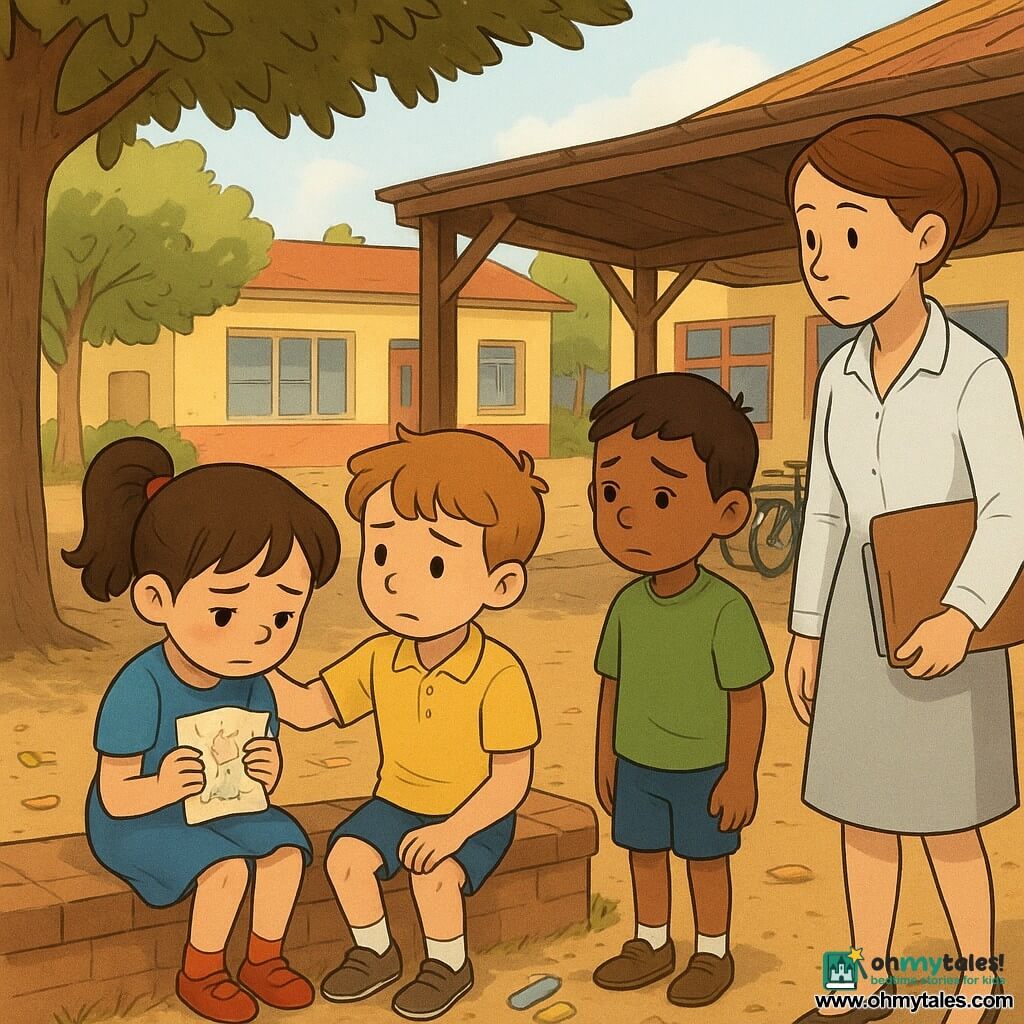
One afternoon, behind the shelter, Maya sat on a low wall. She was drawing a small flower when a boy knocked her drawing out of her hand. The paper slid into the dirt.
"Why did you do that?" Maya asked, voice small.
He shrugged. "It's funny." Then some children laughed. They made jokes about her dress and about the way she held her crayon. Maya's cheeks burned. Her hands shook as she picked up the soggy paper.
Maya felt confused. She had wanted to forgive the small things. She had wanted to still be friends. But now she felt like a little cloud had covered the sun. She did not trust that the laughter was kind. She felt alone even when others were near.
That night, she told her mother. "I don't like how they laugh," she whispered.
Her mother hugged her. "You can tell someone at school, love. Telling helps. We can also find helpers who listen." Maya nodded. She wanted to trust again, but she felt scared.
The Turn of the Whisper
The next day, Maya took a deep breath and walked into the classroom. During playtime, she stayed near the shelter, watching shadows and counting the leaves. Tom came, sat beside her, and said, "Are you okay?"
Maya looked up. "They laugh at me," she said. Her voice was soft, but honest.
Tom frowned. "That's not nice." He thought for a moment, then reached out. "Let's tell Miss Lila together."
They found Miss Lila near the art shelf. She listened with gentle eyes. "Thank you for telling me," she said. "You were very brave, Maya. Tom, thank you for being a friend."
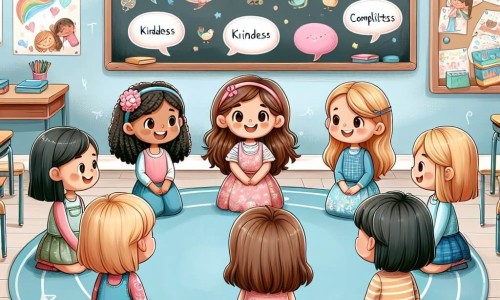
Miss Lila did not scold right away. She asked for names and what had happened. She invited the children who had laughed to join them on the mat. The children shuffled in, looking surprised.
Miss Lila spoke to the whole group. "Sometimes, people think teasing is funny, but it can hurt. We learn how to be kind. We also learn how to fix things when they go wrong." She asked the children what they could do when someone felt sad.
Hands went up. "Say sorry." "Help them." "Tell a teacher." When it was their turn, the children who had laughed looked down. One small boy, Jonah, said in a quieter voice, "I didn't think she would be sad."
Maya felt a twist in her chest. She wanted to forgive. She wanted to trust that they would not laugh again. She also remembered how it felt to be hurt. Her voice trembled but stayed steady. "It did make me sad," she said. "Please don't do it again."
Jonah's eyes filled. "I'm sorry, Maya. I will not do it again."
Miss Lila smiled. "Thank you, Jonah. Saying sorry is good. Keeping our promise is important too."
New Rules, New Sun
Miss Lila and the children made a little plan. They wrote simple rules on a big sheet of paper with crayons. Maya helped draw a sun. The rules were short and clear: "No teasing. Tell a grown-up. Help a friend." They hung the paper by the door and by the shelter where the shadows played.
At recess, the children practiced. When someone said something hurtful, another child would step in and say, "Stop. Are you okay?" When a problem began, a helper wore a green wristband. Maya felt safer seeing the band on Tom's wrist. Jonah watched, learning how to be gentler.
One day, as children ran under the shelter, a girl knocked a block tower away and laughed. A boy stepped forward, put his hand out and said, "That's not nice. Let's rebuild." The laugh faded. The children built together. Maya helped lift a block and smiled at the helper.
Days passed. Maya still felt a little wary sometimes. Trust takes time. But the cloud that had covered her sun grew thinner. She saw how words could mend things when people listened. She watched how friends could protect one another.
At home, Maya told her mother about the rules on the paper and about the green wristband. "It helps," she said, drawing the sun again.
Her mother kissed her forehead. "I'm proud of you for speaking up and for forgiving," she said.
Maya learned that forgiving didn't mean forgetting. It meant giving a second chance when someone truly tried to be kind. It also meant asking for help when the cloud returned.
Weeks later, the children had a small ceremony. Miss Lila read the rules aloud. Each child promised to be kind and to speak up. They clapped and danced a little. The sun on the paper seemed to shine brighter.
Maya stood by the shelter and watched her friends. Jonah and Tom ran and laughed, but the laughs were different now. They were lighter, not sharp. Maya felt her heart fill with a warm, steady light.
Before bed, she put her sticker next to her pillow. She thought of the new rules and the helpers. She thought of telling and forgiving, and of asking for help when she needed it. She felt small but strong.
"Good night, sun," she whispered, and the little light on her ceiling seemed to nod back.