Chapter 1: The Little Clinic with Big Dreams
Maya Bell always said her clinic sounded like a tiny forest trying to whisper secrets.
There was the soft whirr of a heat lamp. The gentle tick-tick of a terrarium misting system. The occasional dramatic sigh of an animal who felt very misunderstood.
Maya was a veterinarian—young, calm, and a little dreamy in the way she watched living things. She didn't just see pets. She saw whole worlds.
Most of her patients were “new pets,” the kind that didn't bark or purr on command: rabbits with fussy teeth, guinea pigs who believed they were royalty, parrots with opinions, geckos with sticky toes, and the occasional hedgehog who rolled into a ball like a spiky secret.
On a rainy evening, Maya hung her yellow coat on a hook and checked the appointment list. Three names were circled in blue marker:
—Pip (cockatiel): “suddenly quiet”
—Noodle (leopard gecko): “not eating”
—Juniper (dwarf rabbit): “limping after a jump”
Maya smiled at the list the way someone smiles at a map before an adventure.
“Okay,” she told the clinic, as if the walls were listening. “Let's help some tiny heroes.”
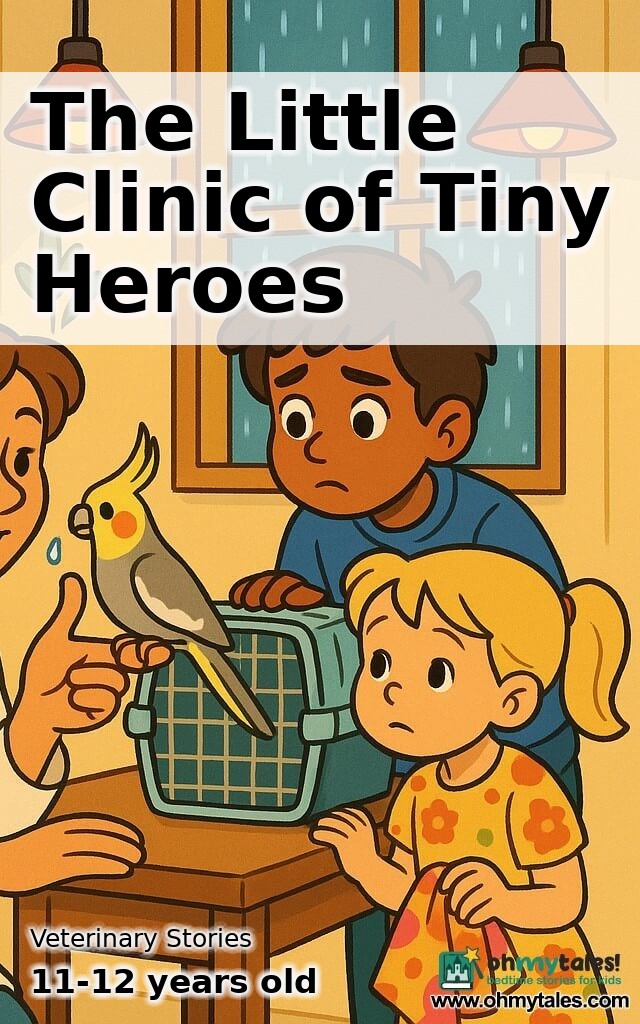
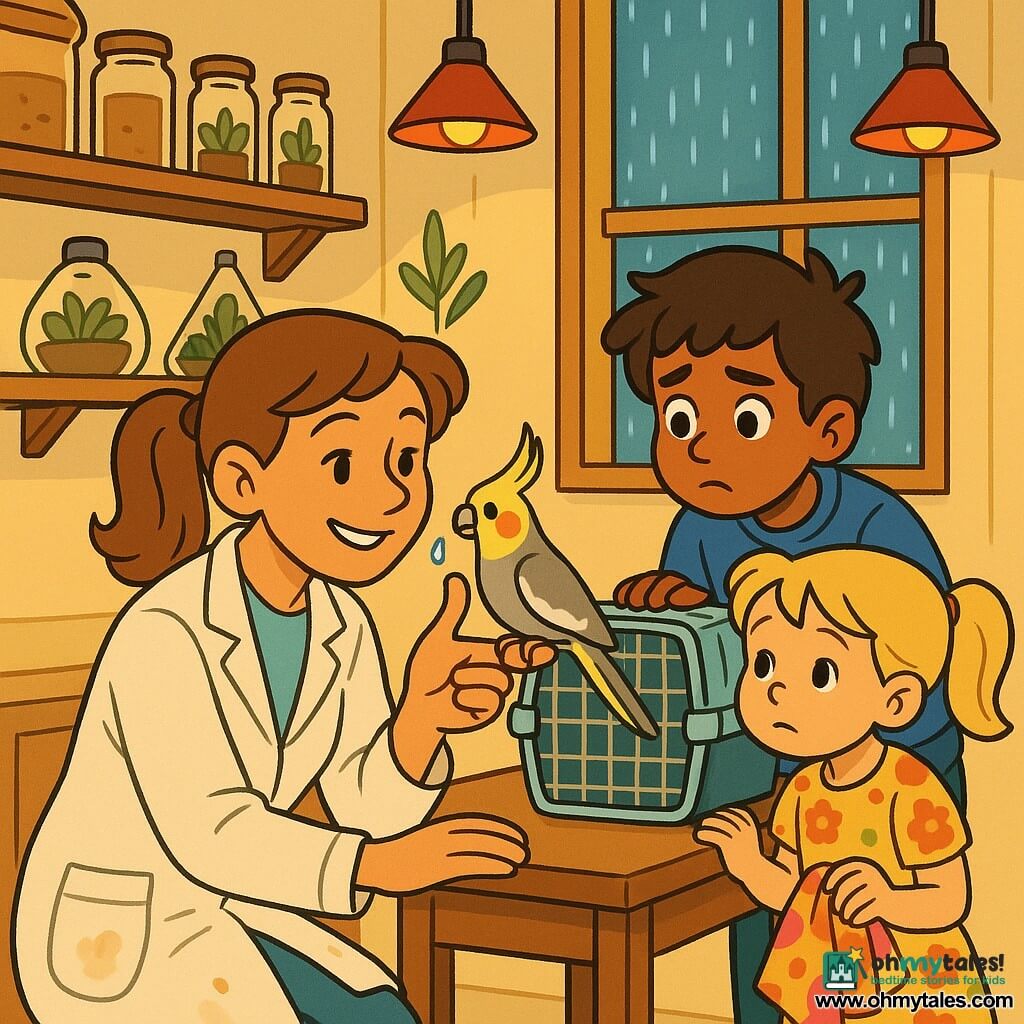
The doorbell chimed. A boy and his little sister stepped in, holding a travel cage like it contained a treasure.
Inside, a gray cockatiel sat fluffed up, crest half-raised, eyes half-closed.
“Hi,” Maya said softly. “You must be Pip.”
The boy swallowed. “He usually sings in the shower. Like… loudly. Now he's just… sitting.”
Maya crouched to their level. “You did the right thing bringing him in. Birds are experts at hiding problems. In the wild, looking sick can be dangerous, so they try to act normal until they can't.”
The little sister blinked. “So he's… pretending?”
“More like… being brave,” Maya said. “But we don't want him to be brave alone.”
Pip tilted his head, as if he'd heard his name and wanted to confirm the gossip.
Maya led them toward the exam room, her steps light and steady. Outside the window, rain tapped on the glass like impatient fingers.
Inside the clinic, the forest-whisper sounds continued, and Maya's dreaminess sharpened into focus—the kind of focus that could make nervous hands relax and scared hearts beat a little slower.
Chapter 2: Pip and the Mystery of the Silent Song
Maya washed her hands and spoke while she worked, because she believed knowledge was comfort.
“First,” she said, “I look. Then I listen. Then I gently check.”
She opened Pip's cage slowly. “Hello, Pip. I'm Maya. I promise I'll be careful.”
The cockatiel stepped onto her finger with surprising politeness.
The boy leaned forward. “He likes you.”
Maya smiled. “He's telling me he's curious. That helps.”
She checked Pip's eyes, nostrils, and feathers. Then she listened to his breathing, close enough to hear the faint, delicate sound of air moving.
“Do you notice any sneezing? Tail bobbing when he breathes?” she asked.
The boy shook his head. “Just… quiet.”
Maya turned Pip gently, feeling his chest muscles. “Has he been eating and drinking?”
The little sister said, “He throws food. Like it's rude.”
“That's normal,” Maya said, “but the question is whether he's actually swallowing enough.”
She checked Pip's beak and mouth. Pip made a tiny grumpy sound, like a squeaky door.
Maya's eyebrows lifted. “Ah.”
“What?” the boy asked, alarm rising like a balloon.
“Good news,” Maya said quickly. “I think we found something small and fixable.”
She showed them Pip's tongue and the inside of his beak with a little light. “See that? There's a bit of irritation. Sometimes it happens if the diet is too heavy in seeds and not enough in pellets, vegetables, and calcium sources.”
The boy frowned. “But he loves seeds.”
“Most cockatiels do,” Maya said. “Seeds are like candy. Delicious, but not a full meal.”
Pip gave a tiny offended chirp, as if to say, I resent this accusation.
Maya chuckled. “Pip agrees with you. Still, his body needs more variety.”
She explained how birds need balanced nutrition for their feathers, muscles, and immune system, and how a sore mouth could make singing feel like rubbing a scratch.
“So he stopped singing because it hurt?” the little sister whispered.
“Possibly,” Maya said. “And if he feels tired, he may save energy. We'll treat the irritation, and I'll give you a plan to shift his diet slowly. No sudden surprises—birds can be very suspicious.”
The boy let out a breath. “I thought… I don't know. I thought he was sad.”
Maya's voice softened. “It's normal to worry. But when pets change, we look for reasons. Feelings matter, but bodies matter too.”
She handed them a paper with a simple feeding schedule and a list of safe vegetables. “No avocado,” she added firmly. “It's toxic to birds.”
The little sister's eyes widened. “Even if it's mashed?”
“Even if it's mashed,” Maya said. “Nature makes some things safe for humans and dangerous for animals. Part of caring is respecting those differences.”
Pip shook his crest as if he approved of the word “respect.”
Maya returned him to his cage with a gentle scritch under the chin. “Now,” she said, “let's see who's next on our quest.”
Chapter 3: The Spilled Water and the Gecko Who Wouldn't Eat
Noodle the leopard gecko arrived with a girl wearing a hoodie that said SPACE EXPLORER in glittery letters. She carried a plastic container lined with paper towels. Inside, Noodle lay like a sleepy, spotted comma.
“My gecko is broken,” the girl announced.
Maya hid a smile. “Geckos aren't machines. But they can have problems. Let's investigate.”
As Maya guided them toward the reptile exam area, the girl's dad set a water bottle on the counter. It wobbled, tipped, and—glug—poured a bright puddle onto the floor.
It happened fast, like a tiny wave.
Maya reacted even faster. She grabbed a stack of towels, dropped to her knees, and mopped it up right away.
“Oops,” the dad said.
“No worries,” Maya said, pressing the towel down. “Water on the floor is a slip waiting to happen. In a clinic, we keep everyone safe—people and pets.”
The girl pointed. “You did that like a ninja.”
“A very practical ninja,” Maya said, standing and tossing the wet towels into a bin. “Okay, tell me about Noodle.”
The girl hugged her container. “He's not eating. He just stares at his crickets like they're embarrassing.”
Maya's eyes warmed. “That's a vivid description.”
She asked questions in a steady rhythm:
“What's his temperature on the warm side?”
“Do you have a heat source at night?”
“When was his last shed?”
“Has his poop changed?”
“Any new decorations or loud noises near his tank?”
The dad blinked. “That's… a lot.”
Maya nodded. “Reptiles depend on their environment to run their bodies. If the temperature or humidity is off, their digestion slows down—sometimes so much they stop eating.”
In the exam room, Maya weighed Noodle with a small scale. She checked his eyes for stuck shed, his toes for tight skin, and his belly for any unusual lumps.
Noodle blinked slowly, like a creature who had all the time in the universe.
Maya shone a light along his sides. “He looks a little dull in color,” she murmured. “When was his last shed?”
The girl's face scrunched. “Um… maybe two weeks? He got pieces stuck on his toes, but I pulled them.”
Maya's voice stayed gentle but serious. “I'm glad you tried to help, but pulling can hurt. It's better to soak gently or raise humidity in a controlled way. Stuck shed can act like a tight sock. It can cut off circulation.”
The girl looked horrified. “Did I hurt him?”
Maya shook her head. “You cared. Now we'll learn a safer way.”
She showed them Noodle's toes. “See how the skin is a bit tight here? Not awful, but enough to bother him.”
Maya explained the basics: a warm hide for digestion, a cool side for choice, calcium dusting for strong bones, and a shallow water dish. She also explained that geckos sometimes stop eating before shedding, or when stressed, or when their enclosure is too cold.
“Nature built him to listen to heat,” Maya said. “Not to the clock.”
The girl nodded slowly, absorbing each word.
Maya prepared a small, warm soak in a shallow container. “We'll soften the stuck shed. Then we'll check his setup. I'll give you a simple chart—temperatures, humidity, feeding—so you can be Noodle's weather wizard.”
Noodle, in his warm soak, looked slightly less like a comma and more like a curious question mark.
The girl giggled. “He's a noodle in soup.”
Maya laughed too. “Exactly. A very important noodle.”
Chapter 4: Juniper the Rabbit and the Jump Gone Wrong
Juniper arrived in a carrier that had more stickers than plastic. Her owner, a quiet boy with freckles, held it like it contained a fragile moon.
“I think she hurt her leg,” he said. “She did this big jump off the couch like she was… flying.”
Maya peeked in. Juniper was small, cinnamon-brown, with ears that looked like two soft leaves. She sat with one paw slightly tucked, eyes wide and shiny.
“Rabbits can be brave and clumsy,” Maya said. “Just like humans.”
She brought Juniper to the exam table and laid a towel down so Juniper wouldn't slip.
“Rabbits feel safer when their feet have grip,” Maya explained. “Slippery surfaces can scare them.”
Juniper's nose twitched rapidly. Maya spoke in a soothing murmur, letting Juniper sniff her fingers.
Then she checked Juniper's posture and movement, watching carefully. “Is she eating normally? Any changes in her poop?”
The boy nodded. “She ate, but… less. And she's grumpy.”
“That makes sense if she's sore,” Maya said. “Rabbits also have delicate digestion. Stress and pain can slow their gut, and that can become serious. So we take limps seriously.”
Maya palpated Juniper's leg with gentle hands, feeling joints and bones. Juniper flinched slightly at the ankle area.
Maya didn't rush. She paused, let Juniper breathe, then continued with careful pressure.
“I think it may be a sprain,” Maya said, “but to be sure we might need an X-ray. The good part is: rabbits can heal very well with rest and proper care.”
The boy's shoulders eased a little. “Will she need a cast?”
“Sometimes,” Maya said. “Sometimes not. If it's a sprain, we focus on pain relief, limiting movement, and making the home setup safe.”
She pointed to the carrier. “At home, keep her in a smaller space for a bit—like a playpen—so she can't jump off furniture. Soft bedding, low litter box, food and water close by.”
The boy looked guilty. “But she loves the couch.”
Maya's eyes were kind. “I know. But loving something doesn't always mean it's safe. Part of respect for animals is building a home that fits their bodies.”
Juniper sniffed Maya's sleeve, then gave a tiny chin rub against it, as if leaving a note: You may continue.
Maya grinned. “That's a rabbit compliment.”
The boy almost smiled. “She likes you too.”
“Juniper likes calm,” Maya said. “And she likes people who listen.”
Maya arranged an X-ray. While they waited, she explained how rabbits' teeth grow constantly and why hay is essential—like a natural toothbrush and digestion helper.
“Hay is not just food,” Maya said. “It's a job rabbits do all day: chew, grind, and keep everything moving.”
The boy nodded, eyes thoughtful. “So… being a rabbit is a full-time career.”
“Exactly,” Maya said. “And being a good rabbit owner is one too.”
Chapter 5: A Night Visit and the Hedgehog Who Hid a Secret
The rain outside softened into a drizzle. The clinic lights glowed warmer as evening settled in.
Maya was filing notes when the doorbell chimed again—gentler this time, like a question.
An elderly woman entered with a shoebox that had air holes carefully punched in the lid.
“I'm sorry,” the woman said. “I found him near the community garden. He was wandering in circles.”
Maya's expression shifted to focused concern. “You did the right thing bringing him.”
Inside the box was a hedgehog, curled into a prickly ball, trembling faintly.
Maya spoke softly. “Hello, little one. You're safe here.”
The woman wrung her hands. “I didn't know what to do. I gave him milk.”
Maya nodded without scolding. “People often think milk helps. But hedgehogs—and many wild animals—can't digest it well. It can upset their stomach.”
“Oh dear,” the woman whispered.
“We'll help him,” Maya said, placing a towel over the exam table and lifting the hedgehog carefully with gloved hands.
Maya examined him: his weight, his skin, his eyes, the condition of his spines. She noticed something: a tight thread tangled around one foot like a tiny trap.
Her voice sharpened with quiet urgency. “There it is.”
“What?” the woman asked.
“A thread,” Maya said. “From a garden net or fabric. It's cutting into his foot.”
Maya's tools clicked lightly as she snipped the thread away. The hedgehog uncurled a little, revealing a pointed nose and eyes like shiny beads.
Maya cleaned the area and applied a soothing ointment. “This is why we keep gardens tidy,” she said, looking at the woman and then at the clinic window where the community garden lay dark and wet. “Loose string, plastic rings, netting—small animals can get caught. Respecting nature includes cleaning up our human leftovers.”
The woman nodded, eyes wet. “I'll tell the garden club.”
Maya offered a small smile. “That would help more animals than we'll ever meet.”
She checked for dehydration. “He's a bit dry. We'll give him fluids and warmth. Not too hot—just steady.”
The hedgehog sniffed the air, then sneezed, an absurdly tiny sound.
Maya laughed under her breath. “Bless you.”
The woman's shoulders lowered, as if she'd been holding her breath since the garden.
“Is he… a pet?” she asked.
Maya shook her head. “He may be wild, or an escaped pet depending on where you live. Either way, he needs care first, and then we'll decide the safest next step. Sometimes that means working with a wildlife rescue.”
The woman looked relieved to have a plan.
Maya glanced at her clock. It had been a busy evening—Pip's sore beak, Noodle's shedding troubles, Juniper's limp, and now a hedgehog with a thread-trap.
Yet Maya didn't feel tired in a heavy way. She felt the way she did after reading a good book: full of scenes, full of meaning.
Chapter 6: Gentle Goodbyes and Relaxed Faces
The next day, the rain had washed the world clean. The clinic smelled faintly of soap, hay, and warm light.
Pip's family returned first. The boy opened the travel cage, and before Maya could even say hello, Pip chirped—a bright, eager sound that bounced off the walls.
The little sister gasped. “He's talking again!”
Maya leaned closer. “How's the new food plan going?”
The boy grinned. “He tried a piece of broccoli and acted like we betrayed him. But he ate some pellets!”
Pip whistled, as if adding, I endured it heroically.
Maya checked his beak. The irritation had already improved. “Keep going slowly,” she said. “Offer variety. Praise curiosity. And remember—fresh water every day.”
They left smiling, their faces softer than when they'd arrived, like someone had untied a knot.
Next came Noodle. The girl in the SPACE EXPLORER hoodie marched in with a notebook.
“I made a chart,” she announced, slapping it proudly on the counter. “Warm side: 90. Cool side: 75. Humidity box: check. And I didn't pull any shed. I used a damp hide like you said.”
Maya flipped through the notebook. “This is excellent.”
Noodle, now brighter in color, stared out from his container with calm alertness.
“And,” the girl added dramatically, “he ate two crickets. Not embarrassed. Just… powerful.”
Maya laughed. “A powerful eater. I love it.”
They reviewed gentle handling and safe enclosure rules: no loose threads, no sharp décor, and always wash hands—especially after touching reptiles.
“Why?” the girl asked, though she already looked like she knew the answer.
“Because reptiles can carry bacteria that don't bother them but can bother us,” Maya said. “Handwashing protects everyone. Respect goes both ways.”
The girl saluted. “Respectful space explorer.”
Juniper came last. The freckled boy carried her more confidently. Juniper's ears were up; her eyes looked less worried.
Maya reviewed the X-ray results. “No fracture,” she said. “It's a sprain.”
The boy's relief was so obvious it was almost loud. “So she'll be okay.”
“She will,” Maya said. “With rest, pain relief, and a safe setup.”
Juniper shifted on the towel and took a small hop—careful, controlled, not a superhero leap. Maya watched with satisfaction.
At the end of the afternoon, the elderly woman called about the hedgehog. A wildlife rescue had agreed to take him once he was fully stable.
“He ate,” Maya told her over the phone. “And he's warmer. His foot looks better already.”
“Oh, thank goodness,” the woman said, her voice lighter. “I'm going to the garden tomorrow. I'll pick up every stray string I can find.”
Maya looked out at the trees beyond the parking lot. The leaves shivered in a mild breeze, shiny from the rain.
“That's a wonderful idea,” Maya said. “Nature gives us so much. We can be gentle back.”
When the clinic finally quieted, Maya wiped down the counters, checked the terrariums one more time, and listened to the soft, comforting sounds—the tiny forest of her work.
She thought of Pip's returning song, Noodle's steady warmth, Juniper's careful hop, and a hedgehog freed from a thread.
As she turned off the lights, she pictured all the people who had come in with tight, worried faces—and left with shoulders lowered and eyes calmer.
It wasn't magic. It was care: questions, patience, gentle hands, and respect for every small life.
Maya locked the door and walked into the clean night air, dreaming forward to the next day's mysteries—ready to listen to the whispers again.