Chapter 1: The Last Appointment
Dr. Milo Hartley loved the hour when the clinic grew quieter, like a library that still smelled faintly of hay and hand soap. His sign said HARTLEY VET—EXOTIC PETS WELCOME, and he meant it. Not everyone knew what “exotic” really meant. No, he did not treat lions. He treated the animals people could cuddle, carry, or accidentally tuck into hoodie pockets: rabbits, guinea pigs, rats, hamsters, reptiles, birds, and the occasional surprisingly dramatic ferret.
Tonight, the sky outside the windows was turning the color of blueberry jam. Milo rolled his shoulders, checked his schedule, and smiled at the final name.
“Maple. Sugar glider. Not eating.”
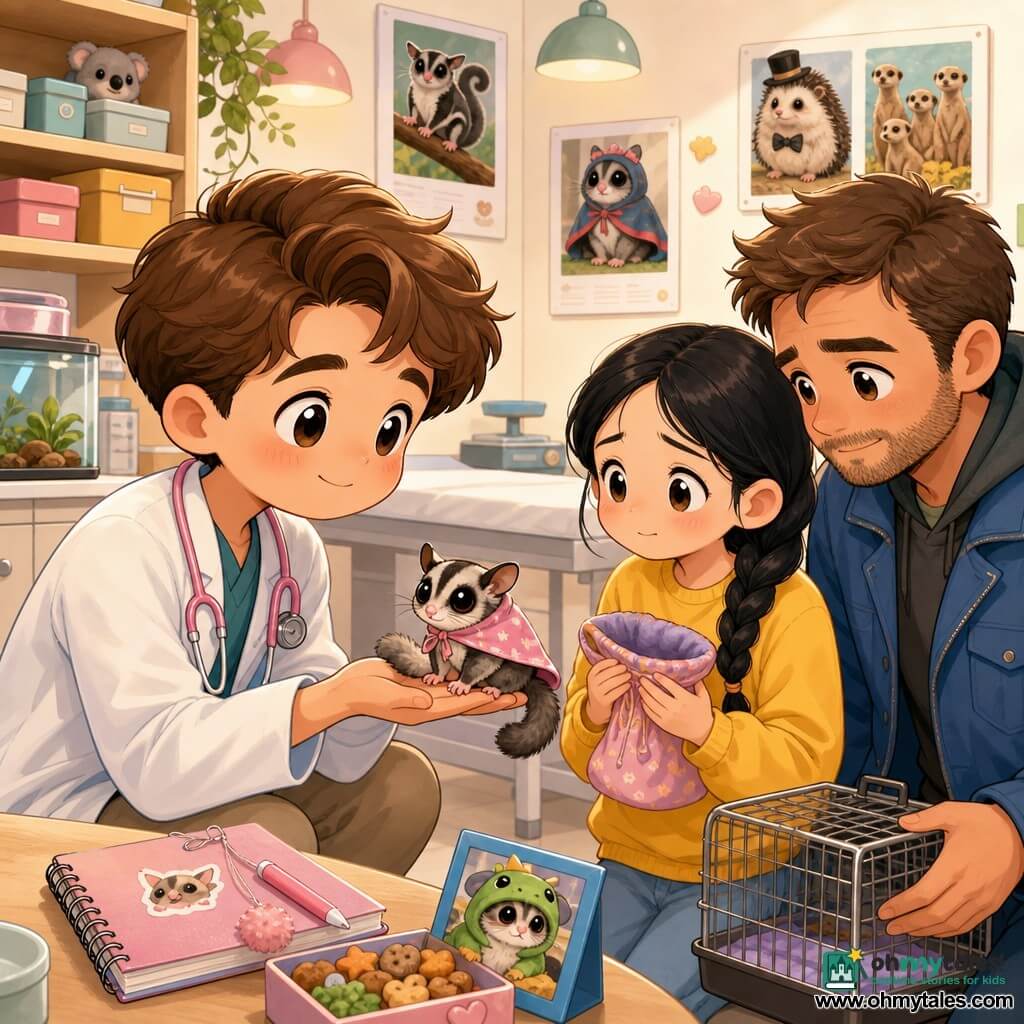
A girl about twelve stepped inside, holding a small travel pouch close to her chest as if it contained a secret. Her dad followed, carrying a tiny cage and a nervous expression.
“Hi,” the girl said, trying to sound brave. “I'm Nia. This is Maple.”
Milo softened his voice the way he always did for worried kids and worried animals. “Hi, Nia. Hi, Maple. I'm Dr. Milo. Let's take a look together.”
In the exam room, he washed his hands and explained what he was doing as he did it. “Exotic pets can be small, but their needs are big. When they stop eating, we act quickly, because they don't have much extra energy stored up.”
Nia watched his hands. “Is she… mad at me?”
“Not mad,” Milo said. “Animals don't usually do ‘mad' the way humans do. They do ‘scared,' ‘sick,' ‘cold,' or ‘not sure what's happening.' We'll figure out which one.”
He asked Nia to open the pouch. A pair of shining eyes peeked out. Maple's fur was gray like storm clouds, her nose pink as a pencil eraser. She clung to the fabric with tiny hands.
Milo didn't grab. He offered his hand like a polite invitation and let Maple sniff his fingers. “Hello, brave one.”
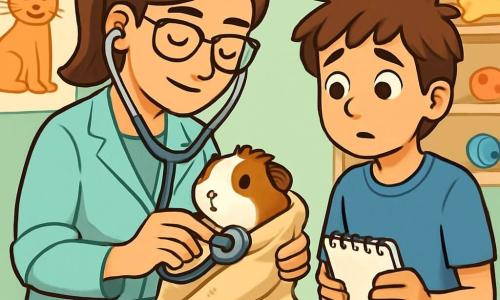
He weighed Maple on a small scale. Then he listened to her chest with a stethoscope no bigger than a bracelet. “Her breathing sounds okay,” he said. “Now I'm going to check her mouth.”
Maple tried to wiggle away, but Milo supported her gently, keeping her body close so she felt secure. “Sugar gliders are marsupials,” he told Nia. “That means they carry babies in a pouch, like kangaroos. They're also nocturnal—night animals. Sometimes they don't eat well if their routine changes.”
Nia's dad cleared his throat. “She's been sleepy all day. And she won't touch her food.”
Milo nodded. “Can you tell me what she eats?”
Nia rattled off the menu with the seriousness of a chef. “Fruit. Yogurt drops. Sometimes mealworms. And I give her sunflower seeds because she looks so happy.”
Milo smiled, but his eyes stayed thoughtful. “Sunflower seeds are like… potato chips. Delicious, not ideal as a main meal.”
Nia's cheeks turned pink. “I didn't know.”
“That's why you came,” Milo said. “That's what I'm here for.”
He examined Maple's teeth and gums. Then he looked under her tail, checked her skin for dehydration, and felt her belly very gently. “She's a bit dehydrated,” he said. “And I'm feeling some tenderness.”
Nia's voice went small. “Is it my fault?”
Milo sat on the rolling stool so his eyes were level with hers. “It's your job to learn. It's my job to help. And Maple's job is to be Maple.”
He suggested a simple plan: fluids to help her feel stronger, and a test to look for parasites—tiny hitchhikers that can upset small animals' stomachs. He also asked questions about her cage: temperature, size, toys, sleeping pouch, and whether she had a companion.
Nia looked down. “It's just her.”
Milo kept his tone gentle. “Sugar gliders are social. They do best with a friend. But we can talk about that after we help her feel better.”
As Milo prepared a tiny syringe of warm fluid, he spoke in a calm, steady rhythm. “I'm going to give her a little boost under the skin. It's like storing water in a backpack. Her body can use it slowly.”
Nia leaned closer. “Does it hurt?”
“Like a quick pinch,” Milo said. “I'll be as careful as possible.”
Maple squeaked, a soft complaint, then settled against Milo's hand as if she had decided he was annoying but not dangerous.
When it was done, Milo handed Nia a small paper with notes. “Tonight, keep her warm,” he said. “Offer a balanced diet—less sugary treats, more protein and calcium. And call me if she gets worse.”
Nia nodded, squeezing the paper like it was a promise.
Milo walked them to the front desk. The hallway lights hummed quietly. On the wall hung photos of patients: a rabbit in a bow tie, a bearded dragon wearing a tiny paper crown, a rat perched on a miniature skateboard.
Nia paused at the photos. “Do you really see all kinds of pets?”
“All kinds that fit through the door,” Milo said.
Nia smiled for the first time. “Thanks, Dr. Milo.”
After they left, Milo glanced at the clock. Closing time.
But the clinic wasn't done teaching him yet.
Chapter 2: The Hedgehog With the Sneezes
Milo had just started tidying the exam room—wiping the table, restocking cotton pads—when the bell above the front door jingled again.
He peeked into the lobby and saw an older woman holding a shoebox with air holes. She looked like someone who apologized even to furniture.
“I'm so sorry,” she said at once. “I know you're closing. But Mr. Pickles is… sniffling.”
“Bring Mr. Pickles in,” Milo said, because he was the kind of person whose “closing time” stretched for emergencies and sniffles that sounded suspicious.
In the exam room, the woman opened the box. Inside, a hedgehog curled into a spiky cinnamon bun. A tiny nose poked out and sneezed—an adorable “tch!” that still made Milo frown slightly.
“What's your name?” Milo asked.
“Mrs. Dalca,” she said. “And this is Mr. Pickles. He's normally brave. But today he won't come out, and he keeps… doing that.” Another sneeze proved her point.
Milo nodded, already building a list of possibilities. “Sneezing can be dust, dry air, irritation from bedding, or an infection. Hedgehogs are sensitive to cold drafts too. Let's start with the basics.”
He asked what bedding she used. Mrs. Dalca's eyes darted away. “I switched to… cedar shavings. They smelled so clean.”
Milo's face stayed kind. “Cedar smells clean to us, but it can irritate small lungs. Think of it like walking around in strong perfume all day.”
Mrs. Dalca looked horrified. “Oh dear.”
“It's okay,” Milo said. “You didn't know. We'll fix it.”
He lifted Mr. Pickles with a towel, letting the hedgehog hide his face while Milo examined him. Milo listened to his lungs, checked his eyes, and looked for crust around his nose.
“He's a little wheezy,” Milo said. “I think the bedding is part of it. We'll also check his temperature.”
Mrs. Dalca blinked. “How do you take a hedgehog's temperature?”
“Very carefully,” Milo said, and he let her laugh because laughter helped people breathe easier too.
He explained that he would send her home with safer bedding suggestions—paper-based or fleece liners—and instructions to keep Mr. Pickles warm. If the sneezing continued after the change, Milo would consider medicine. But for now, the best treatment was removing the irritant and monitoring.
Mrs. Dalca leaned forward. “I was afraid you'd tell me I was a terrible owner.”
Milo shook his head. “Terrible owners don't show up. You did. That's what matters.”
Mr. Pickles sneezed again, then uncurled just enough to glare at everyone in the room as if he had been personally offended by air.
Milo chuckled. “That look says, ‘I would like my lungs to file a complaint.'”
Mrs. Dalca smiled, shoulders loosening. “Thank you, Dr. Hartley.”
When she left, Milo wrote quick notes in the file and placed a reminder to call her tomorrow. Exotic-pet medicine, he often thought, was part doctor, part detective, and part teacher.
He turned off the exam room light. The clinic was finally settling.
Then his phone buzzed.
Chapter 3: The Tiny Emergency
The message on Milo's clinic phone was short: “Found baby bird on sidewalk. Still breathing. What do I do?”
Milo called immediately. A boy answered, breathless, like he had been running.
“Hello? I'm Theo,” the voice said. “I'm outside the bakery on Pine Street. There's this little bird and it's… so small.”
Milo's mind clicked into careful mode. “Okay, Theo. First: good job calling. Second: don't feed it bread or pour water in its mouth. Birds can choke easily.”
“I didn't!” Theo said quickly. “I just put my hoodie around it.”
“Great. Can you tell if it has feathers or if it's mostly pink skin?”
“Feathers. Kind of fluffy. It's… blinking.”
“Then it might be a fledgling,” Milo said. “Those are young birds that leave the nest before they can fly well. Parents usually still feed them on the ground. Are there cats around?”
Theo lowered his voice. “There's a cat staring like it's planning something.”
“Alright,” Milo said. “We need to move the bird somewhere safe but close. Is there a bush or low tree nearby?”
“Yes. A little tree next to the bakery sign.”
“Perfect,” Milo said. “If the bird seems alert, place it in the tree branches or a bush. Then back away. Watch from a distance for ten minutes. If an adult bird comes, that's ideal.”
“And if no one comes?”
“Then we'll help more,” Milo said. “If it looks injured—bleeding, wing hanging strangely—or if it's cold and weak, bring it to the clinic. Use a small box with holes, line it with a soft cloth, and keep it warm and quiet.”
Theo swallowed loudly. “I can do that.”
Milo stayed on the call as Theo moved. He heard footsteps, a faint “shoo!” at the cat, and then Theo's whisper: “Okay. It's in the tree.”
“Good,” Milo said. “Now step back.”
They waited. Milo listened to the street sounds—cars, voices, the bakery doorbell. Then Theo gasped.
“I see a bigger bird! It's… feeding it!”
Milo let out a slow breath. “Then you just saved that bird the best way possible—by giving its parents a chance.”
Theo sounded proud and relieved at the same time. “So I'm like… a bird bodyguard.”
“Exactly,” Milo said. “And you did the hardest part: you didn't panic.”
When the call ended, Milo stood still for a moment, feeling the quiet settle again. This was the secret heart of his job: sometimes the best care was knowing when to intervene—and when to step back.
He checked the waiting room. Empty. He checked the kennel room. Calm. The clinic's small patients were resting: a rabbit after a dental trim, two guinea pigs recovering from a check-up, and a lizard with a bandaged toe who looked permanently unimpressed by everything.
Milo wrote one last note for tomorrow: “Check on Maple. Call Mrs. Dalca. Restock critical care food.”
Then he reached for the front door keys.
Chapter 4: Closing the Clinic
Milo moved through the clinic like a careful lighthouse keeper, making sure every light was off where it should be and on where it needed to be. He checked the refrigerator where medicine was stored—temperature steady. He checked the incubator used for tiny, fragile patients—off. He checked the oxygen tank—full.
He whispered, mostly to himself, “Locks, lights, life.”
In the lobby, he paused by the donation jar labeled “Rescue Fund.” A few coins clinked inside. Someone had taped a note to it: THANK YOU FOR HELPING THE SMALL ONES.
Milo felt that warm pinch behind his ribs that meant he cared a lot and was trying not to look too mushy about it.
He gathered the day's leftover supplies: a roll of bandage, a new packet of syringes, and a tiny bag of powdered critical care food. He didn't usually bring clinic things home, but the powder would be useful for his own pets if needed—and it reminded him to stay prepared.
At the door, he looked back one more time. The clinic smelled like clean towels and faintly like apples, because someone earlier had brought a rabbit who insisted on being fed apple slices during his exam.
Milo placed his hand on the door handle. He closed the clinic door slowly, gently, with a soft click, as if he didn't want to startle the night.
Outside, the air was cooler. The streetlights flickered on. Milo locked up, tucked the keys into his pocket, and started walking home with his bag swinging at his side.
He thought about Maple, about Mr. Pickles, about the baby bird and Theo's brave hoodie.
So many animals depended on humans. Not because animals were helpless—but because humans had built a world of roads and houses and cages and schedules. The least humans could do was learn how to care with both knowledge and kindness.
Milo smiled to himself. Tomorrow he'd teach more people. Tomorrow he'd listen, explain, and help.
Tonight, though, he had another mission.
He had animals of his own waiting at home.
Chapter 5: The Home Check
Milo's apartment wasn't huge, but it was thoughtfully arranged, like a puzzle where every piece had a purpose. A tall cage stood by the window, covered halfway with a cloth to create a cozy dark space. A glass terrarium sat on a sturdy table with a thermometer stuck to the side. A small basket of chew toys waited near a rabbit pen.
The moment Milo stepped inside, he was greeted by a chorus of sounds.
A rabbit thumped once, as if to say, You're late.
A pair of rats rattled a toy bell with suspicious enthusiasm.
From the terrarium, a leopard gecko blinked slowly, like a sleepy teacher.
“Hello, everybody,” Milo said, hanging his jacket. “Yes, yes, I missed you too.”
He set his bag on the counter and washed his hands—always, before touching any animal. Then he started his evening routine, but tonight he did it with extra care, inspired by the day's lessons.
First, he checked the rabbit pen. “Juniper,” he said to the rabbit, who had ears like two exclamation points. “How's your hay?”
Juniper hopped to the hay pile and buried his face in it. Milo nodded approvingly. “Unlimited hay. Good for teeth, good for digestion. You're basically a fuzzy lawnmower with feelings.”
Juniper chewed loudly, which Milo chose to interpret as agreement.
Next, he walked to the rat cage. “Pip. Pepper. Any complaints?”
Pip climbed onto Milo's sleeve like a pirate boarding a ship. Pepper followed, sniffing Milo's fingers for evidence of snacks.
Milo checked their water bottle for drips and their food bowl for balance. “Rats need enrichment,” he murmured, adjusting a hanging rope. “Things to climb, things to chew, things to explore. Smart little brains.”
Pepper grabbed a cardboard tube and dragged it away like a trophy. Milo laughed softly. “Alright, alright. Clearly you're busy.”
Then he approached the terrarium. “And you,” he said to the leopard gecko, “are you warm enough?”
He checked the temperature gauge: warm side and cool side both correct. He peeked under the hide where the gecko liked to nap. The gecko blinked again, unbothered.
“Reptiles,” Milo said kindly, “are like tiny dragons powered by the sun. They need the right heat to digest, move, and stay healthy.”
He remembered Mr. Pickles and the cedar shavings. He walked to his closet and glanced at his stored bedding supplies. Paper-based bedding. Fleece liners. No strong-smelling wood.
“Good,” Milo said.
Finally, he went to the tall cage by the window. Inside, a pair of small parrots—green-cheek conures—tilted their heads.
“Good evening, Captain,” Milo said to the first bird.
The conure let out a squeaky sound that might have meant hello or might have meant I demand grapes.
“And good evening, Noodle,” Milo said to the second, who fluffed up like a feathered pom-pom.
Milo checked their perches—different sizes to keep feet healthy. He checked their food—pellets, vegetables, a little fruit. He checked their water—fresh. Then he paused, looking at the cloth cover.
“Sleep matters,” he said softly, mostly to himself. “Especially for nocturnal animals, and especially for animals that get stressed.”
His thoughts returned to Maple, the sugar glider. Routine. Warmth. Companionship. Balanced diet.
Milo opened a drawer and took out a notebook labeled HOME HABITAT CHECKS, because he was the type of person who made lists and then made lists about his lists.
He wrote:
- Check for drafts near cages.
- Double-check heat sources and thermometers.
- Review diet charts for each species.
- Replace any worn toys (choking hazards).
- Confirm hiding spaces: every small animal needs a safe “cave.”
When he finished, he leaned back in his chair. The apartment was quiet now, filled with soft rustles and tiny sleepy breaths. Milo felt the day settle into something peaceful.
He pictured Nia going home, worried but hopeful, adjusting Maple's food, making the cage warmer, planning to learn more. He pictured Mrs. Dalca throwing out the cedar shavings with a dramatic, offended huff on Mr. Pickles' behalf. He pictured Theo keeping a respectful distance from the little tree, proud of doing the right thing.
Milo stood and switched off the brighter lights, leaving only a warm lamp glowing in the corner. He walked past each habitat one more time, not because he had to, but because care was a habit, and habits made animals safer.
At the rabbit pen, Juniper was already loafed like a sleepy bread roll.
At the rat cage, Pip and Pepper had curled into a soft knot of tails.
In the terrarium, the gecko had vanished into his hide.
The conures tucked their beaks into their feathers.
Milo whispered, “All good.”
He headed toward his own bedroom, feeling the gentle tug of one final thought—an urge, like a quiet promise.
Tomorrow he would be back at the clinic, ready to heal and teach again. But tonight, before sleeping, he wanted to double-check one more thing: that his home was still the best place it could be for the animals who trusted him.
Because being a veterinarian wasn't only about medicine and stethoscopes.
It was about the everyday kindness of making sure every small life had what it needed to feel safe, comfortable, and loved.