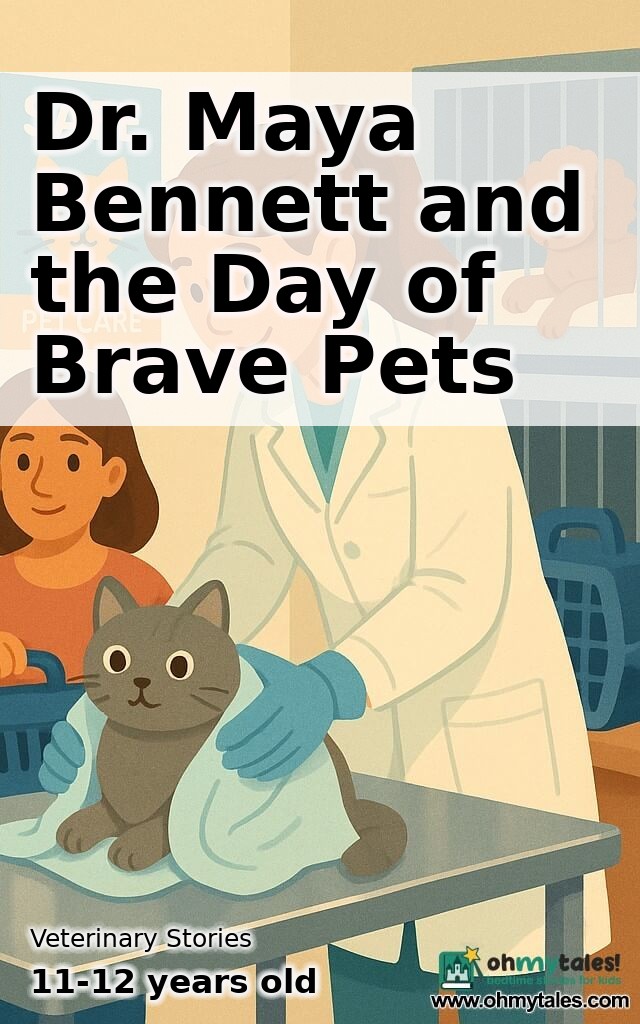
Chapter 1: The Bell Above the Door
The little bell above the clinic door rang like a tiny triangle in a school band—clear, sharp, impossible to ignore.
Dr. Maya Bennett looked up from her desk. She was a city veterinarian, which meant her patients came in all shapes and sizes, but most of them arrived in carriers, strollers, or arms that were trying very hard not to shake.
“Good afternoon,” she said, slipping on a warm smile the way she slipped on clean gloves—carefully and on purpose.
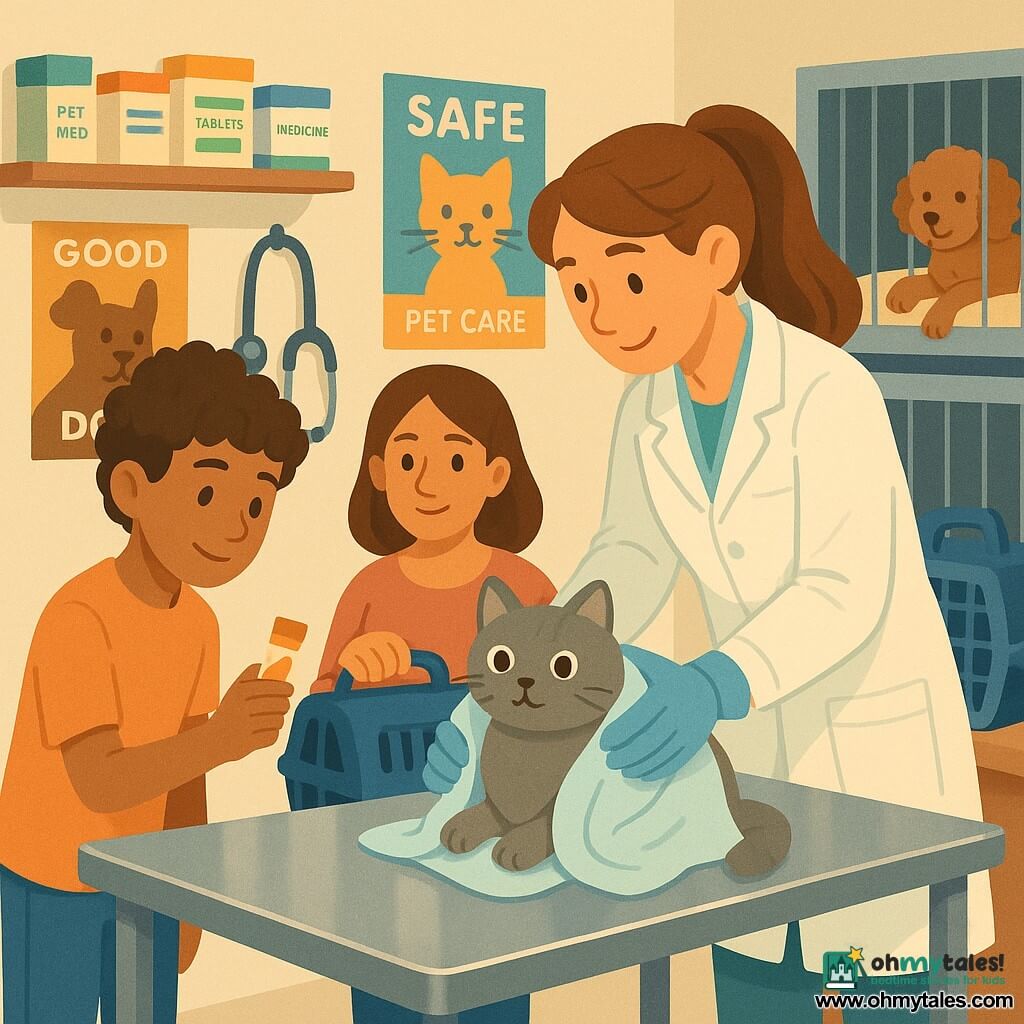
A boy about twelve stepped in first. He had curly hair, a backpack, and the worried face of someone who'd just remembered a homework assignment… times ten. Behind him, a woman guided a bulky cat carrier like it was a precious suitcase.
“This is Captain Pancake,” the boy announced, as if introducing a celebrity.
The carrier vibrated with a deep, offended growl.
Dr. Bennett walked around the counter and crouched to the boy's eye level. “Captain Pancake sounds like a brave name. I'm Dr. Bennett. And you are?”
“Leo,” the boy said. “He's not… um… brave today.”
“No shame in that,” Dr. Bennett replied. “Even heroes get nervous in new places.”
Captain Pancake made a noise that could only be described as a tiny dragon practicing for a big role.
Maya straightened and pointed to a bright poster on the wall: a cartoon dog wearing goggles and a seatbelt. Underneath were the words: SAFETY FIRST—FOR YOU AND YOUR PET.
“In our clinic,” she said, “we follow safety rules. They're not to boss you around. They're to keep everyone safe—pets, owners, and the staff.”
Leo nodded quickly.
“Rule one,” Maya continued, “is that carriers stay closed until I say it's time. Cats are fast. And a panicked cat in a waiting room can turn into a furry pinball.”
The boy's mouth twitched. “Captain Pancake would absolutely do that.”
“Captain Pancake has the spirit of adventure,” Maya said, and she heard Leo's mom let out a small, relieved breath.
From the back room, a dog barked. A phone rang. The clinic smelled like hand sanitizer and peppermint treats.
It was going to be a busy day.
Chapter 2: The Listening Game
In Exam Room Two, Captain Pancake's carrier sat on the table like a suspicious lunchbox. Dr. Bennett moved smoothly, setting out tools in a neat line: stethoscope, thermometer, otoscope, a little flashlight.
Leo leaned forward. “Do you, like… already know what's wrong just by looking?”
“Sometimes I get clues,” Maya said. “But being a vet is a lot like being a detective—except my witnesses don't speak English. They speak in sneezes, limps, and very dramatic stares.”
Captain Pancake pressed his face to the grate and stared as if he were judging everyone's life choices.
Maya washed her hands at the sink for a full twenty seconds, rubbing between her fingers. “This is another safety rule,” she explained. “Clean hands protect animals with weak immune systems—and protect us, too.”
Leo watched her carefully, as if timing her with an invisible stopwatch.
“All right,” Maya said, drying her hands. “Let's meet our captain.”
She opened the carrier slowly, keeping one hand on the door and one hand ready with a towel. “A towel can help a nervous cat feel secure,” she explained. “Like a blanket fort, but portable.”
Captain Pancake tried to reverse out of existence. Maya gently draped the towel over his back, leaving his head free. His growl softened into a grumble.
“Whoa,” Leo whispered. “He's… calmer.”
“We're not forcing him,” Maya said. “We're offering him a hideout. Animals like choices.”
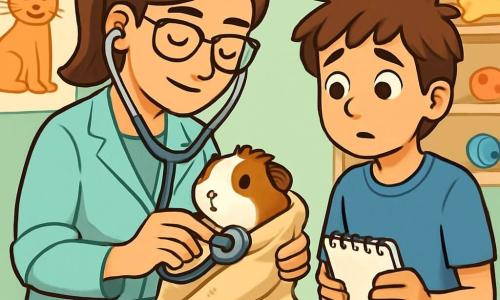
She listened to the cat's heart—quick but steady—then checked his breathing. “Good lung sounds,” she murmured.
“What are you listening for?” Leo asked.
Maya tapped her stethoscope. “Rhythm, murmurs, anything unusual. A heart is like a drummer in a band. If it gets off-beat, we want to know why.”
Captain Pancake's ears flicked at the word drummer, as if offended by the comparison.
Maya examined his eyes and mouth. “Teeth look fine,” she said. “No redness in the gums. That's good.”
Then she reached for the otoscope. “Now, ears. Cats can get ear mites—tiny parasites that itch a lot.”
Leo wrinkled his nose. “Ew.”
“Not ew,” Maya corrected gently. “Just nature. And it's fixable.”
Captain Pancake jerked his head away. His tail flicked like an irritated metronome.
Maya paused. “We don't wrestle,” she said, voice soft but firm. “Safety rule: if an animal is too stressed, we stop and change the plan.”
Leo blinked. “But… don't you have to get it done?”
“We do,” Maya said, “but safely. Stress can make animals bite or hurt themselves. So we use patience, gentle handling, and sometimes… snacks.”
She pulled out a tube of creamy treat. Captain Pancake's eyes widened with sudden interest, like someone hearing the ice cream truck.
Leo laughed. “He's bribable.”
“Many of us are,” Maya said. “Hold the tube for him, but keep your fingers behind it. Cats can get enthusiastic.”
Leo did as told. Captain Pancake licked with intense determination, and Maya peeked into his ears.
“There we go,” she said. “A little wax, a little irritation. No mites, though. That's good news.”
“So why is he scratching?” Leo asked.
“Could be allergies,” Maya said, “or mild infection. We'll take a tiny sample to check under the microscope.”
She lifted a cotton swab. “This doesn't hurt—just tickles.”
Captain Pancake looked deeply unimpressed, but he allowed it while licking the treat.
“Nice teamwork,” Maya told Leo. “You were calm. That helps him stay calm.”
Leo puffed up a little. “I can do calm.”
Maya smiled. Calm was a skill, and like any skill, it could be practiced.
Chapter 3: The Microscopic Zoo
In the lab nook, a microscope waited beside a small machine that hummed softly. Dr. Bennett placed the ear sample on a slide and added a drop of special stain.
Leo hovered at a respectful distance, hands tucked in his pockets like he was afraid they might suddenly cause trouble.
“Good safety rule,” Maya said, noticing. “Hands away from lab tools unless you're invited. Some chemicals can irritate skin, and some samples might carry germs.”
Leo nodded. “Got it. Invisible danger.”
“Exactly,” Maya said. “But also invisible wonder.”
She adjusted the microscope and slid the glass under the lens. “Want to look?”
Leo's eyes widened. “Can I?”
“Yes. One hand on the table for balance. Don't touch the lens.” She stepped aside.
Leo bent over carefully. “Whoa,” he breathed. “It's like… a weird desert.”
Maya laughed softly. “Ear wax can look like a landscape. Do you see any oval shapes moving like little boats?”
Leo squinted. “No… just blobs.”
“Blobs can still tell a story,” Maya said. “These look like yeast. Yeast can overgrow when the skin is irritated.”
Leo straightened. “So you can see the problem. Like for real.”
“That's the science part,” Maya said. “We use evidence. Then we make a plan.”
They returned to the exam room where Captain Pancake was now loaf-shaped and pretending he had never been nervous in his life.
Maya explained the treatment: ear drops, a gentle cleaner, and an allergy-friendly diet trial. She demonstrated how to hold the ear flap and place drops without poking the tip inside.
“Safety rule,” she reminded. “Never stick anything deep into an ear. Not a swab, not a finger, not a pencil—especially not a pencil.”
Leo looked horrified. “Who would—”
“People do surprising things when they panic,” Maya said. “That's why we teach calm steps.”
Leo's mom took the medicine bag. “Thank you, Dr. Bennett.”
Leo glanced at Captain Pancake. “We'll do it right, okay? No pencils.”
Captain Pancake blinked slowly, which in cat language was the closest thing to a serious promise.
As they left, the waiting room door opened again. The bell rang. This time, the sound was followed by frantic words.
“My dog ate my science project!”
Dr. Bennett's eyes flicked to the schedule on her clipboard. Busy day just leveled up.
Chapter 4: The Great Science-Project Mystery
The patient was a small, fluffy dog named Noodle. Noodle's owner, a girl around eleven with glittery sneakers, held the leash like it was an anchor in a storm.
“It was a model volcano,” the girl said, eyes shiny. “With baking soda and everything. He just—chomped it.”
Noodle wagged his tail as if proud of his achievement.
Dr. Bennett knelt and let Noodle sniff the back of her hand. “Hi, Noodle. I'm going to help you.”
To the girl, she asked, “Did the volcano have anything besides baking soda and vinegar? Paint? Glitter? Tiny rocks?”
The girl's face twisted. “Um. Some paint. And… a little plastic tree. And… I glued on beads.”
Maya nodded slowly. “Okay. That helps. Not to scare you, but some things can be dangerous in a stomach.”
Noodle burped. It smelled faintly like craft time.
Dr. Bennett guided them to the exam room. “Safety rule for humans,” she said, “is that if a pet eats something weird, you don't try home remedies without calling a vet. Some things make it worse.”
The girl bit her lip. “My uncle said to give him oil.”
Maya shook her head. “Oil can cause choking or lung problems if it goes down the wrong way. We do the safest option based on what was eaten and when.”
She took Noodle's temperature and checked his gums. “He looks stable,” she said, voice steady. “Now we need more information.”
She showed them the X-ray room through the window. “We might take an X-ray to see if anything is stuck. This room has special safety rules, because X-rays use radiation.”
The girl's eyes got big. “Like… superhero radiation?”
“Not the fun kind,” Maya said lightly. “That's why everyone wears lead aprons and stays behind barriers. Only trained staff are in the room, and we use the lowest dose we can.”
Noodle was placed on a padded table. A veterinary nurse named Omar helped gently position him. Noodle wiggled.
“Sometimes we use mild sedation,” Maya explained, “so the pet stays still and doesn't get stressed. Stillness makes a clearer picture. Clear pictures help us choose the right care.”
The girl whispered, “Will he be okay?”
Maya looked at her kindly. “We're going to do everything we can, and we're going to be smart about it. You did the right thing bringing him in quickly.”
The X-ray appeared on the screen like a shadowy map.
Maya traced a finger near the image—without touching the screen. “I see something here,” she said. “A little cluster. Could be beads or bits of plastic.”
The girl gasped. “My beads!”
“They're probably not having a great time in there,” Maya said. “The good news is they're in the stomach, not stuck in the throat.”
“So what now?” the girl asked.
Maya explained the options: monitoring if the objects were small and smooth, inducing vomiting if it was safe and recent, or endoscopy—using a camera to retrieve items—if needed.
“Endoscopy is like a tiny submarine with a grabber,” she said. “We guide it carefully so we don't hurt the throat.”
Noodle wagged again, unaware he might soon meet a submarine.
After checking timing and materials, Maya chose the safest plan. “We'll try a controlled way to make him vomit here,” she said. “Only because it was recent and the objects seem safe to bring up. We do it in the clinic, with the right medicine, and we watch him closely.”
The girl squeezed her hands together. “Okay.”
“Also,” Maya added, “after this, science projects should live on high shelves.”
Noodle's tail thumped. He looked like he strongly disagreed with that rule.
Chapter 5: The Waiting Room Storm
While Noodle was in the treatment area, the clinic's waiting room filled like a bus stop during a rainstorm.
A parrot in a carrier shouted, “HELLO! HELLO!” every thirty seconds. A nervous rabbit owner bounced one knee so fast it could've powered a fan. A toddler tried to convince a goldfish bag to “do a trick.”
And the television in the corner—usually set to a quiet nature channel—had been switched to a loud game show by someone who wanted “background noise.” The buzzer sounds and excited shouting ricocheted off the walls.
Dr. Bennett stepped out and felt the atmosphere immediately: pets tense, people louder, the parrot now yelling “NO! NO!” as if it had opinions about the game show.
Maya approached the TV and looked at the waiting room with calm authority, the kind that didn't need to be bossy.
“Hi, everyone,” she said. “I can see we've got a full house today. To help the animals stay calm, I'm going to turn the television off for a while.”
A man holding a panting bulldog frowned. “But it's just TV.”
Maya nodded. “For us, it's entertainment. For many pets, it's confusing noise—especially when they're already nervous. Lower noise means lower stress, and lower stress means fewer bites, fewer escapes, and safer care for everyone.”
She clicked the remote. The sudden quiet was like a blanket settling over the room.
The parrot paused, then said, in a gentler tone, “Hello.”
Someone chuckled. Even the rabbit owner's knee slowed down.
Maya continued, “If you'd like, we have books and puzzles on the table. And please remember: keep dogs on short leashes, carriers closed, and little fingers away from unfamiliar mouths. Even sweet animals can snap when scared.”
The toddler's parent pulled the child closer. “Hear that? We ask first.”
The bulldog owner shifted his grip and sighed. “Okay. That… actually helps.”
Maya gave a small smile. “Thank you.”
Back in treatment, Noodle successfully brought up a messy pile that looked like the saddest art supply store on earth.
Omar held up a tiny plastic tree with tongs. “Rescued,” he declared.
Dr. Bennett leaned over Noodle, checking his breathing and giving him a gentle pat. “Good job, buddy. No more volcanoes.”
Noodle blinked, drowsy but comfortable.
The glitter-sneaker girl peeked in, anxious. “Did he—”
Maya lifted the sealed container. Inside were beads, paint flecks, and the plastic tree. “Yes. We got the science project back.”
The girl's shoulders dropped like someone had unhooked a heavy backpack. “Oh my gosh.”
Maya added, “We'll still watch him for irritation, and you'll follow our instructions at home—small meals, plenty of water, and call us if he vomits again or seems tired.”
The girl nodded hard. “I will. And I'm putting my next project in a cabinet.”
“Excellent,” Maya said. “Science can be exciting without being edible.”
Chapter 6: Quiet Steps, Warm Lights
The afternoon rolled into evening.
Dr. Bennett treated a pigeon with a hurt wing that had been found near a subway entrance. She showed the finder how to hold a box safely—air holes, a towel inside, no squeezing.
She helped a senior dog with stiff joints, explaining how pain can hide behind slow walking and quiet eyes. She demonstrated gentle stretches and talked about medicine dosages with careful seriousness.
“Never guess,” she told one family. “Safety rule: the right dose matters. Too much can harm, too little can fail. Always ask.”
A kitten came in with a tiny cough. Maya listened, then taught the owners how to watch breathing rate at home by counting chest rises. “When you measure,” she said, “you're helping me help your pet.”
Between appointments, she wiped surfaces, washed hands, and changed gloves so often it felt like a rhythm: care, clean, care, clean.
At last, the final patient left. The bell above the door rang one more time, and then the clinic settled into a hush so deep Maya could hear the soft hum of the refrigerator that held vaccines.
Omar stacked fresh towels. “We survived.”
Maya let out a slow breath she hadn't realized she was holding. “We did. No bites, no escapes, no emergencies that turned into disasters.”
“Captain Pancake was my favorite,” Omar said. “His face said, ‘I own this building.'”
Maya laughed quietly. “He negotiated with snacks.”
She walked into the waiting room. The TV was still off. The chairs sat neatly. A forgotten puzzle book lay open on the table.
Maya turned off a few lights, leaving the lamps that made everything glow soft gold instead of bright white. The clinic looked gentler this way, like it was exhaling.
She checked the overnight kennel area. Noodle was awake now, tail wagging slowly, wearing the tired-but-safe look of a dog who had been through an adventure he did not fully understand.
“Hi, volcano eater,” Maya whispered. “You did well.”
Noodle sneezed and then looked pleased with himself.
Maya latched every kennel door. She checked the oxygen tank gauge and the emergency kit seal. She made sure the sharps container was closed.
Safety rules weren't exciting like stories about dragons or space travel. But they were a kind of quiet heroism—small choices that kept everyone protected.
When she returned to the front, Omar was washing the last of the bowls. The clinic smelled faintly of soap and clean laundry.
Maya sat for a moment behind the counter, listening to the calm.
She thought of Leo holding the treat tube just right. Of the glitter-sneaker girl learning not to panic. Of all the animals who had come in scared and left safer.
Outside, the city still buzzed—cars, voices, distant music. But inside the clinic, a soft relief spread through the rooms like warm tea through cold hands.
Maya clicked off the final overhead light and left only the night light glowing in the hallway.
“See you tomorrow,” Omar said, grabbing his jacket.
“See you tomorrow,” Maya replied.
As the door locked with a gentle snick, the clinic rested—quiet, cared for, and ready for whatever the next day would bring.