Chapter One: The Lantern Garden
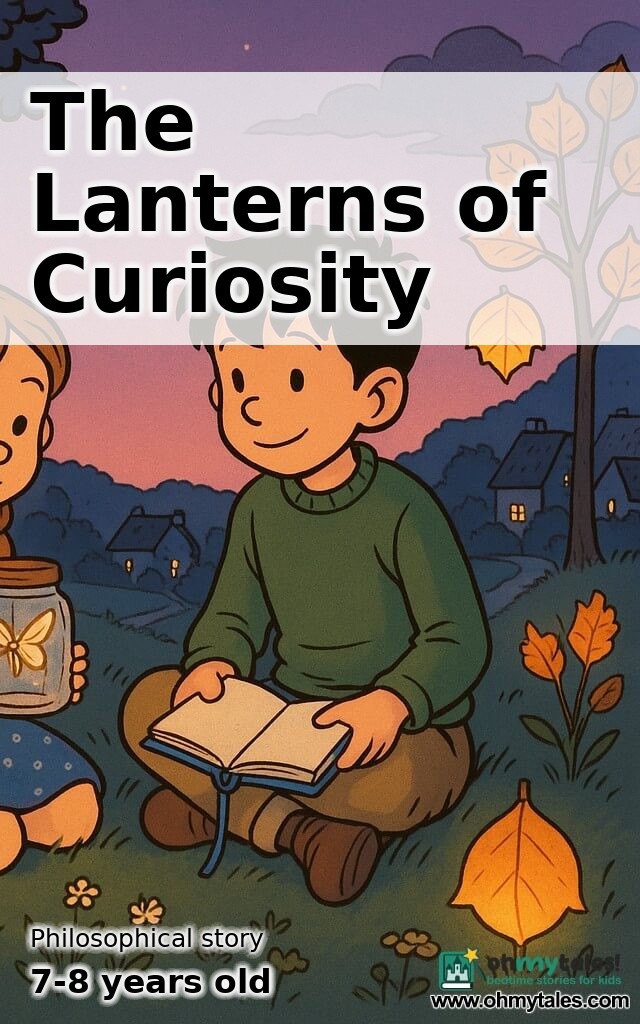
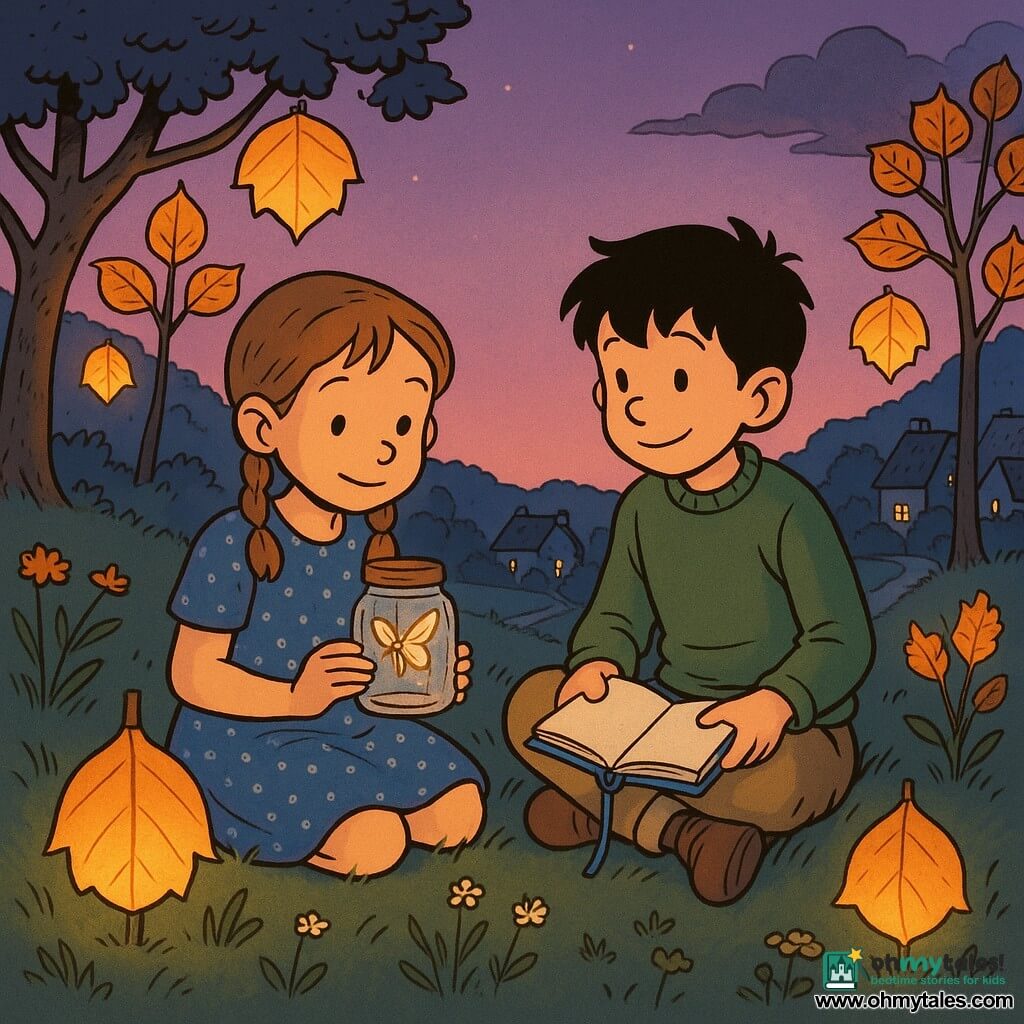
On a hill that smelled of warm bread and wild thyme, two children sat beneath a row of lantern trees. The lanterns were not lights at first; they were paper leaves that glowed when someone told the truth. The hill was small, but to Lila and Sam it felt like an island in the sky.
"Why do they glow?" Sam asked, tucking his knees like a sleeping fox.
Lila tilted her head. "Maybe leaves like to listen to honest things," she said. "Honesty is like sunlight. It makes colors true."
Sam looked at the town below, where roofs glanced like silver fish. "Sometimes I hear stories that sound shiny but aren't true," he said. "They tingle like bells but leave my hands empty."
Lila smiled. "Curiosity is our lantern. We can use it to see." She held up a small glass jar. Inside, a moth slept like a folded map. "We will be careful explorers."
A breeze came and the lantern leaves shimmered. One leaf glowed bright when a little girl from the village waved and shouted, "I found a cloud that tastes like strawberries!" The children laughed. The leaf was honest because it carried a child's wonder.
"But what if someone says 'The moon is a cheese wheel'?" Sam asked. "It sounds funny, but it's not true."
Lila's jar clinked softly. "Then we ask the moon," she said. "Or at least ask a question."
A sparrow landed on Sam's shoulder and peeped like a tiny bell. "Ask," it seemed to say.
They decided to practice. They would learn how to turn suspicion into a gentle lantern. They would learn how to tell a tale from a thing that really happened. It sounded like a quest, and quests are good for bedtime.
Chapter Two: The Market of Mirrors
The next day they walked to the Market of Mirrors. Each stall held a different kind of story. Mirrors for little tales, mirrors for big news, mirrors wrapped in ribbons. A woman with a hat like a teapot called out, "Come see! I have the fastest beetle in the world!"
"How will we know?" asked Sam, eyes wide. "How do we know if she is telling the truth?"
Lila picked up a small mirror. It showed not just a face but also a thought floating above it, like a tiny cloud. "We look for the roots," she said. "Roots tell us where a story grows from."
"What are roots?" Sam asked.
"They are the who, where, and how," Lila said carefully. "Who tells it? Where did it come from? How can we check?"
They practiced. The teapot-hatted woman said, "My beetle beat a wind last week." Lila asked, "Who saw the beetle beat the wind?" The woman named two people. "Can we meet them?" Sam asked. The woman hesitated. The mirror above her showed a little question mark.
A boy at the next stall sold seeds. He said, "These seeds bloom in one night." Sam's eyes sparkled. "Is there a count? Have you tried them at home?" Lila wondered. The stallkeeper flushed and said, "Not really." The mirror showed a small shrug.
"Stories that cannot show their roots might have thin stems," Lila whispered. "They fall when you touch them."
They found a stall with a wise old man polishing a mirror until it shone like a pond. He said, "I heard a story that the river sings to those who listen with one ear closed."
Sam put his hand to his ear and listened. Nothing sang. Lila asked, "Where did you hear that?" The man told them a name and a place. "Would you take me there?" Sam asked. He was quiet and then he smiled. "Yes," he said. "I will take you."
"You see?" Lila said when they walked away. "A story with a path is easier to follow. It leaves footprints."
They collected footprints. Some were fresh and bold, others were faint and shaky. The market taught them to ask for proof with gentle voices, like polishing a lantern to make it glow truer.
Chapter Three: The Story That Wouldn't Stay
On their way home a paper boat drifted along a stream and inside it sailed a whisper. The whisper said, "There is a dragon who eats laughter, and he lives near the willow." It sounded scary and made Sam's stomach curl like a ribbon.
Lila closed her eyes and held the moth jar. "Let's be calm," she said. "Curiosity is quiet, not loud."
They followed the stream where puddles kept small mirrors of the sky. The willow stood like an old friend, branches brushing the water. Sam's footsteps slowed. "What if it's true?" he whispered.
"Then we will learn," Lila said. "But first we ask the willow."
They sat and waited. A woman with hands like paper came by and said, "I saw the dragon last week." Her voice trembled like a leaf. Lila asked, "Who else saw it?" The woman pointed to a group of children who were playing marbles nearby. They shook their heads. The woman had only seen shadows and had felt frightened.
Sam breathed out. "So it was a shadow," he said.
"Or an idea wearing a coat," Lila added. "Ideas can put on clothes and look real."
They traced the story back to a boy who liked to tell tall tales. He said, "I said it to make everyone listen to me. I was lonely." His cheeks were small and red as cherries.
Lila sat close. "You can be heard in other ways," she said softly. "Tell us something true about the willow."
The boy's face brightened. "It hummed for me when I lost my marble," he admitted. "That was true."
"See?" said Sam. "It wasn't a dragon that eats laughter. It was a wish to be noticed."
The paper boat floated on, its whisper quiet now. The willow's branches touched the water like fingers that rock a baby. The lantern leaves in the hill below glowed a little when the children told the truth about what they had found.
Chapter Four: The Question Book
Back home, they found a small book on their doorstep. It was plain and tied with a blue ribbon. On the cover someone had written, "Questions." Inside, blank pages waited like nests.
Lila opened the book. "We will put our questions here," she said. "Questions are keys."
Sam held the book as if it were warm bread. "But how do we know which questions to ask?" he wondered.
They made a list. "Where did this come from?" Lila wrote. "Who told it?" Sam added. "Can I visit the place? Who else knows?" Each question was a small lantern. They practiced asking them with not-too-big voices.
That evening they met Mister Owl at the edge of the orchard. He wore a tiny pair of spectacles and spoke in a voice that folded like soft paper. "Questions are good," he said. "But remember to listen for answers, not just collect questions like stones."
"How will answers look?" Sam asked.
"Answers look like doors," Mister Owl said. "Some are open wide. Some need a small push. Some are painted with lies. Gently check the paint."
Lila nodded. "We will touch the paint with kindness."
They tried the questions on the moon. "Moon," they asked, "do you melt cheese at night?" The moon chuckled like a ripe pear. "No," it said, "I do not melt cheese. I keep stories safe." The lantern leaves on the hill blinked like sleepy stars.
The Question Book filled slowly. When they opened it later, each answer had a small drawing: a root, a footstep, a door. The drawings were simple and true, like their discoveries.
Chapter Five: The Goodnight Lantern
On the last night of the week, the lantern trees hung heavy with glow. The town had spun itself into a sweater of small lights. Lila and Sam climbed the hill and sat with the jar and the Question Book.
"Do you feel like we know how to find the truth?" Sam asked. He sounded tired in a good way.
Lila looked at the moth in the jar. It had woken and was walking on the glass. "We know how to ask," she said. "We know to look for roots and footsteps and doors. But some things remain soft and strange. That's okay."
Sam smiled. "So curiosity lights the dark without making it scary."
"Yes," Lila whispered. "Curiosity is like a soft lantern that lets you see until you can sleep."
They opened the jar. The moth flew out and hovered over the Question Book, scattering a few specks of light like tiny answers. "Will we always know?" Sam asked.
"Not always," Lila said. "Sometimes stories will sneak by, wearing fine coats. But we will ask with gentle hands. We will not grab or point or shout. We will listen."
A thin breeze moved the lantern leaves. One leaf flickered and shone bright, as if nodding. The two children listened to the town breathe, and to the soft sound of things being true.
They folded the Question Book and put it in the jar with a ribbon. "For other nights," Sam said.
Lila leaned her head on his shoulder. "We learned to turn fear into questions," she said. "We learned that some people tell tall tales because they need to be seen. We learned to ask kindly and check the roots."
The moth landed on Lila's hand and felt like a silent bell. "Goodnight," she said to the world, to the lanterns, to the willow, and to the moon. Sam echoed, "Goodnight."
Their lanterns glowed faint and steady. They walked down the hill like two small boats guided by a familiar star. The town looked softer, like a story told in a kind voice. The world did not change all at once; it simply seemed a little easier to understand.
That night, under a dome of quiet sky, questions rested in the jar and stories felt less sharp. Curiosity had taught them to ask, and in asking they had found a warm light that could turn fear into something they could hold.
"Goodnight," they whispered again, and the lantern trees nodded. Goodnight.