The Lantern's Call
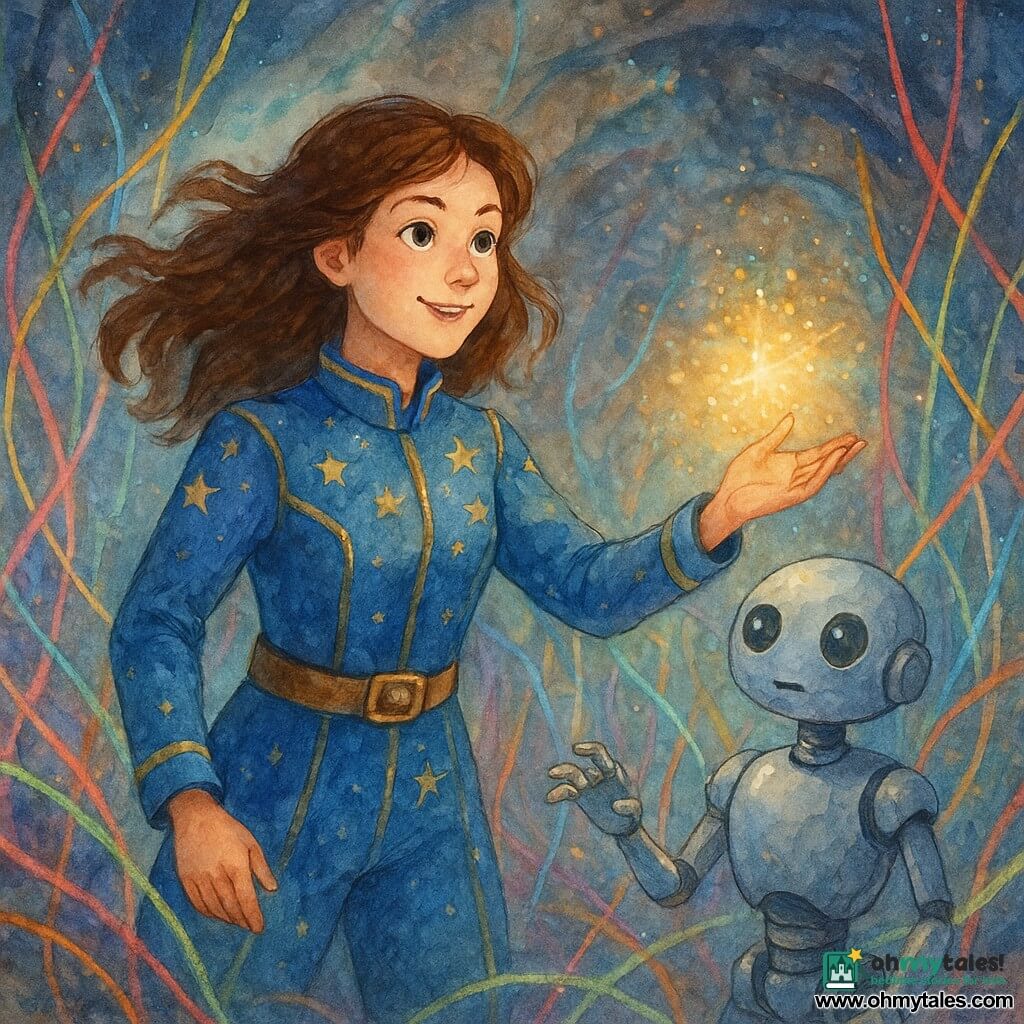
Captain Liora Starling stood at the glass sky of the Lantern Moth and watched the galaxy pour past like spilled pearls. The ship hummed, a living thing stitched together from brass filigree, starlight carpets, and reefs of glowing glass. Liora's hand rested on the rail, feeling the tiny thrumming of engines that sounded like a lullaby for brave hearts.
"Course set for Oria," said Jax, the ship's navigator, his voice a warm gear in the hull. "The charts show a dark spiral over the northern hemisphere."
Oria was a world of long shores and singing forests, where daytime smelled of citrus winds and night shimmered with silver moth-lights. It had always balanced its day and night with the Heart Loom, a vast web of woven light at the planet's core. But lately, the Loom's threads had begun to fray, and a storm of shadows curled across the sky like a hungry finger.
Liora remembered when she first met Oria's people, how they stitched songs into cloth and spoke to trees. She had promised, softly, to return if the balance faltered. Now she had. The Lantern Moth dipped its wings and prepared to land.
"hush now," Liora murmured to the ship, as if calming a friend. The crew—an odd, brave company of dream-weavers, engineers, and a soft-spoken robot named Loom—fell into their places. Together they would mend a world.
The Storm's Whisper
Down on Oria, the storm was quieter than anyone expected. It did not roar like thunder; it breathed. It moved like spilled ink across the horizon, swallowing the bright edges of rivers and leaving a chill where laughter had once been.
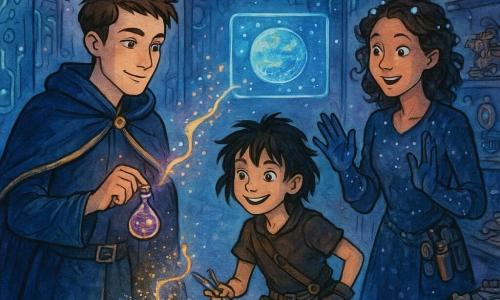
The villagers met Liora at the stone pier, their faces lit by lanterns that glowed like trapped constellations. Elders wrapped in woven sound-cloaks stepped forward; in their hands were fragments of light-thread, dull and trembling.
"We heard the Loom cough," said Elder Mira, her voice thin as paper but steady. "The heartbeat of day is losing its rhythm. Night grows long where it should not, and little things—moths, bettle-glints, the sound of morning—are caught halfway."
Liora stepped closer and listened. The air tasted metallic, and beneath it was a low, irregular thump—the failing pulse of the planet. She placed her palm over her own heart, feeling the familiar cadence of courage. Then she listened with new ears: to the hush between the wind's sighs, to the way the lamplight flickered like a question.
"We will help," she said. "But mending the Loom will need more than tools. It will need voices."
The villagers blinked. Voices—songs, stories, memories—were the Loom's old companions. It had been woven not only with light but with the songs of people, the small sounds that kept the balance steady. If those sounds were lost, the Loom's weave grew slack.
Threads of Trouble
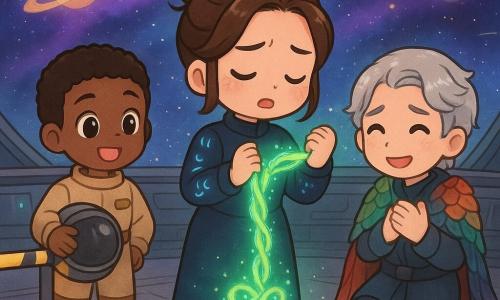
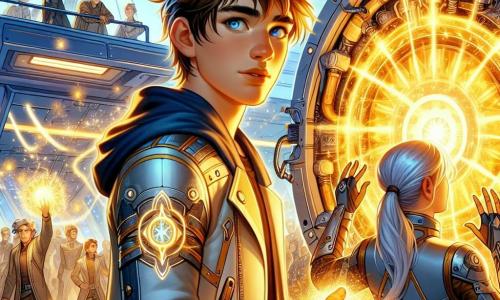
In the Loom cavern, deep under Oria, light-thread arched like a forest of glass. Liora and her crew carried lamps that hummed with safe, guiding magic. Loom, the robot, extended delicate metal fingers and plucked a frayed strand. The sound it made was like a cough from far away.
"These threads need tuning," said Tessa, the ship's repair-weaver, her hair braided with tiny circuit-beads. She ran her hand along a strand and felt it vibrate faintly. "It's not only broken; it's been stretched by a force from outside—something pulling rhythm away."
A shadowed shape slithered along the walls like spilled ink responding to music. The dark creature was not only absence of light; it was longing given a form. It moved toward the Loom strands, seeking to unravel them, to wrap the world in a night without promise.
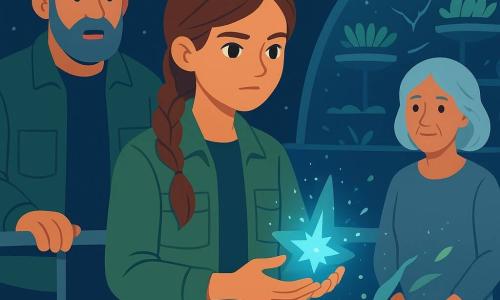
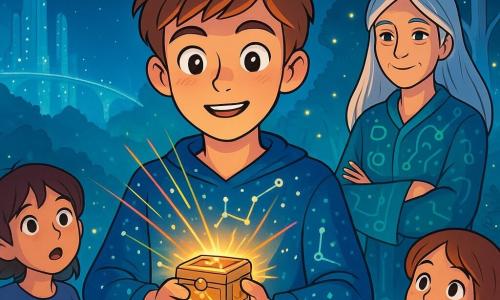
Liora stepped in front of the Loom and pulled from her pocket a small lantern—soft and alive. Inside flickered a moth made of copper and moon-glass, the ship's emblem. The moth's light was gentle and clever; it could coax hidden things to show themselves.
"Be careful," warned Jax. "It leans toward silence."
Liora lifted the lantern and spoke to the shadow, not with scolds but with a story. Her voice told of the first time she sailed past a comet that sang, of how her crew stitched a torn sail together with laughter and a borrowed lullaby. The shadow quivered. Stories had weight here. The tale sent a single bright thread through the cavern, and the Loom answered with a small, hopeful note.
But the shadow did not flee. It had reasons. It had been born where a lonely moon once lost its tune. To make the Loom whole, Liora realized, they must not only fight the shadow but listen to why it sought the threads.
The Heart's Song
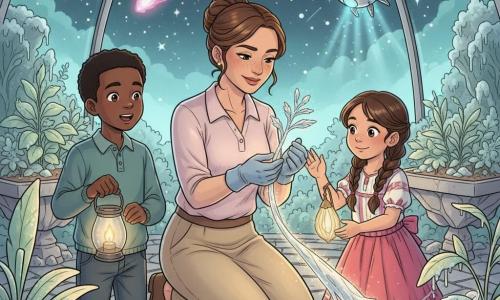
Outside the cavern, Liora gathered the villagers, her crew, and even the shy creatures of the forests—mothlings that glowed like spilled sugar, and river-sprites that hummed watery refrains. They formed a circle, palms touching, eyes bright.
"We will weave with you," Liora said. "We will sing the Loom awake again. But first we must ask the storm its name."
The shadow answered, not with voice but with memory. It showed them a flash: a town long ago where people forgot to sing to their lanterns, where children left doors open and promises unkept. The shadow had swallowed the leftover quiet, until it became a storm that hungered for song.
Liora did not push it away. She sat on a stone and told the shadow a new memory—of Oria's mornings, when the first call of gulls braided with the bells; of night markets where storytellers mended hearts with jokes and crumbs of truth. Her story was full of small, warm things. The villagers added their memories—a child's whistle, an old woman's recipe, a boy's silly rhyme that always made puppies prance.
As they spoke, their words wove. Light-thread responded, shining in colors that tasted of orange peel and spice. The Loom shivered, then pulsed. The shadow softened, folding inward like a timid cat.
"Sing with me," Liora whispered, and she led them in a slow, simple tune that matched the Loom's heartbeat. It was not a grand anthem, but a careful, honest song. When the whole circle joined—voices shaky, then steady—the Loom's threads hummed louder, stitching gaps together with sound.
Weaving Tomorrow
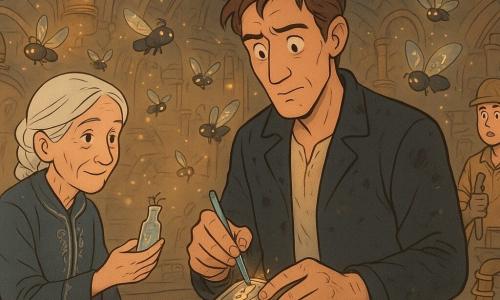
The storm did not vanish all at once. It let out one long, surprised sigh and then began to unspool itself like a ribbon. The shadow's edges frayed into glittering motes that the villagers caught in jars and released as new fireflies. The Loom, mended, shone like a clockwork sun.
Oria's day and night returned to their old, comfortable push-and-pull. Morning came with a bright breath and night brought its cool, whispering hush. The villagers danced, barefoot and laughing, and Liora watched them with a lightness she had not felt since she first left her homeworld.
"You taught us to listen," Elder Mira said, offering Liora a thread of gold as thanks. "You taught us that even silence has a story."
Liora tied the golden thread around her wrist and looked at her crew. Each of them had learned something: Jax had learned a new chart of feelings, Tessa had woven a small motor to hum a lullaby, Loom the robot had stored a thousand songs. The Lantern Moth blinked its lantern-eyes and readyed for the next sky.
Before they left, Liora lit her small copper moth and let it fly into the Loom cavern. It traced a path through the woven light, and the Loom hummed a new tune—one that held the sound of Oria's children skipping stones and the soft clink of cups at dawn. It was a stronger pattern now, stitched with many voices.
As the Lantern Moth rose, Oria's people waved. The planet gleamed below, a globe wrapped in balanced day and night. Liora felt the ship's engines purr, a contented purr, and knew they had done more than fix threads: they had reminded a world to speak back when the night grew hungry.
"Chart a course for the next call," she told her crew, voice bright as a star. The galaxy opened before them like a book, each page waiting for a listener.
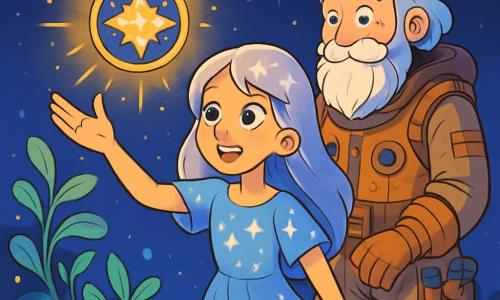
And somewhere in the dark between the stars, a small shadow curled up and listened to a story, and for the first time it hummed along. The Lantern Moth sailed onward, and Liora Starling, with her golden thread and copper moth, kept the promise she had made—to travel where the Looms were thin, to help stitch the songs back together, and to always, always listen.