Chapter 1: The Impossible Poster
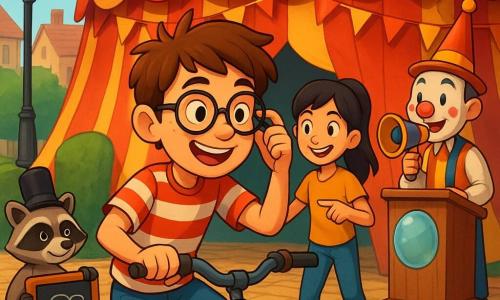
Leo arrived at the fablab with his backpack jingling and a grin that said trouble in the best way possible. The room buzzed with printers, lasers, and tools that looked like they belonged to inventors from a picture book. Tables were covered in bits of cardboard, wires, and mugs that claimed, “I survived Tuesday.”
Mrs. Kemp, who ran the fablab, waved a paper in the air. “We need a sign for the town festival,” she said. “Something huge. It has to say ‘WELCOME' in letters tall enough to be seen from the hill. Can anyone do it by Saturday?”
Everyone looked at the paper, then at the giant glue pot, then at the clock. It felt like the kind of thing labeled “impossible” on a calendar. Leo's toes wiggled. He loved “impossible” the way cats love boxes—an irresistible invitation.
“I'll try!” he said, though he had no idea how to make letters the size of doorways. He did have ideas and a small stack of courage. Mrs. Kemp smiled. “Careful,” she said. “It will take machines, time, and patience.”
Leo nodded. He'd bring machines, time, and something else: the exchange of services he planned to offer. He sketched his first plan—cardboard scaffolds with balloon lifts, and letters that folded like flowers. The problem was, he didn't have enough foamboard for the letters. Nor did he have a ladder tall enough to glue anything at hill height. But he had a bike, a knack for jokes, and a head full of wild plans.
Chapter 2: Trade for Tools
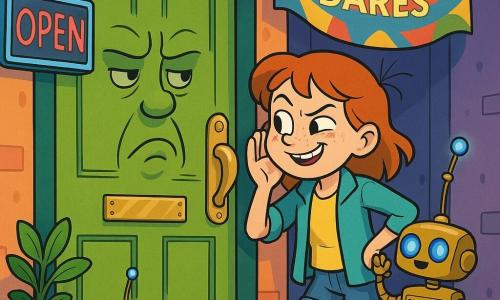
Leo set up a sign: “Trades Accepted: Help or Tools for Laughs & Repairs!” He thought this sounded respectable and maybe slightly dramatic. People stopped. Mr. Chen, the baker, traded him a roll of duct tape for a joke about doughnuts that made Mrs. Patel snort. Maya, a 14-year-old who loved robots, lent him a stack of foamboard in return for Leo promising to test her robot's sense of rhythm. The school art teacher handed over a ladder after Leo offered to fix the squeaky hinges of her cupboard (“Do you dare to enter the Cupboard of Howls?” he teased).
At the fablab, Leo met Jojo, a retired carpenter with hands that smelled of sawdust and stories. Jojo frowned at a tiny model in Leo's hands. “You'll need hinges that don't fall apart,” he said. Leo offered a deal. “If you teach me to make bolted hinges, I'll build you a birdhouse with a secret landing pad for your pigeons.”
Jojo laughed so loud a spool of thread jumped. “Deal,” he said. They got to work. Leo learned to mark exactly, to measure twice and not make jokes about rulers being shy. He tightened bolts until his fingers tingled. The birdhouse had a tiny flag. Jojo's pigeons behaved like royalty when Leo set the house down.
Each trade was a small victory, but the sign still seemed impossible. Leo had foamboard and a ladder, but he needed the letters to be light enough to float up a hill and stiff enough to face wind. Maya suggested a “fold-and-lock” technique she'd seen in a comic. Leo tried folding letters like origami, but they collapsed like tired chairs. He grinned, wiped glue off his nose, and thought about balloons again.
Chapter 3: The Balloon Ballet
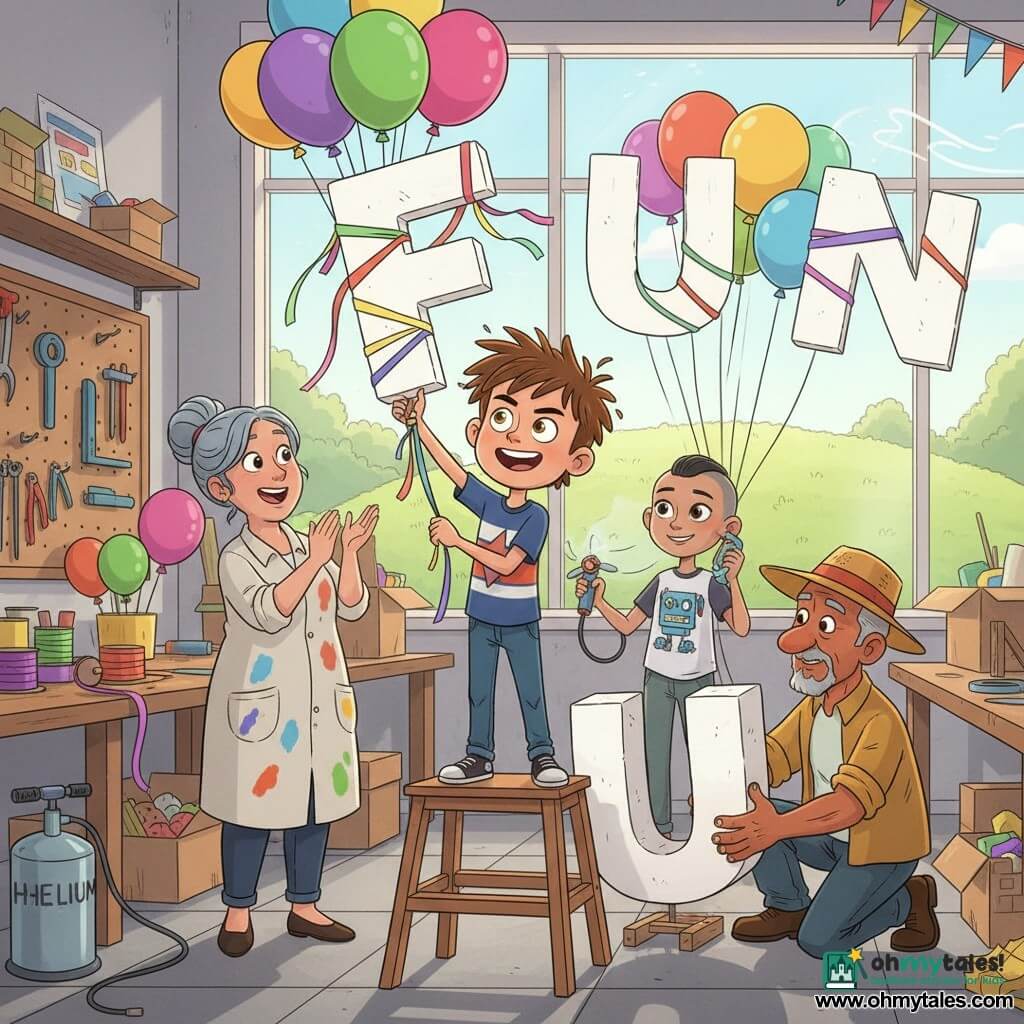
Leo filled the lab with balloons—big ones, small ones, colors that made the room look like a parade. “Helium?” Mrs. Kemp asked. The tank hissed and sputtered like a sleepy dragon. Leo tied strings to foamboard letters, then tied more balloons. The first letter rose, wobbled, and did a shy forward roll into the mop bucket.
“That's a pratfall,” Leo declared, helping it out. “It's comic timing.”
He added counterweights: a strip of recycled metal at the bottom of each letter for balance, and a fold so the letters could pop into a stable shape when lifted. Jojo taught him how to reinforce joints with little wooden ribs. Maya programmed a small fan that nudged the letters into facing the right way when the wind tried to pirouette them.
On Thursday, the test run began. String by string, the letters floated up the hill like a chorus practicing for a show. The town watched from windows and benches. A squirrel hopped across “W” and looked remarkably impressed. For a while everything was perfect: the letters bobbed, the crowd cheered, and Leo felt like the conductor of a silly, floating orchestra.
Then the wind played its joke. A gust sent the “O” spinning like a coin in a fountain. The “L” leaned on “C” like a friend leaning for support. A ruckus of helium and foamboard threatened to turn the welcome into a very confusing puzzle.
Leo dashed. He climbed the ladder—twice, then three times—tugged and tied, and improvised with duct tape and a braided rope he'd made from old T-shirts. “Hold still!” he called, which made the letters wobble with embarrassment. He held his breath, then let it out in a whoosh that seemed to steady the “M.” The “E” finally gave a tiny sigh and stood proud.
At the top of the hill, Mrs. Kemp gave him two thumbs up and then, suddenly, a giggle. “You've done it, Leo. You turned an impossible into a parade.”
Chapter 4: A Small Step That Counts
On Saturday, the festival morning was bright as a lemon. The letters stood tall and slightly theatrical, each one wearing a bow of sunlight. Children pointed. Dogs tilted their heads. The mayor applauded and declared the sign the most cheerfully bouncy she had ever seen.
But the real success was quieter. Leo put his bike in the corner and sat on a bench, breathing hard and smiling like a champion of tiny triumphs. Mrs. Kemp handed him a small envelope. Inside was a thank-you card with a sticker that read: “Initiative Champion.”
People asked about his trades. He told them about the ridged hinges, the pigeon-approved birdhouse, and the ladder that once belonged to a cupboard of howls. He explained the balloon ballet and how Maya's fan made letters face the crowd. Everyone clapped. Jojo winked and pocketed the tiny flag from the birdhouse.
Leo walked to the hill's edge and looked at the letters. They seemed to wave. He thought about the list of things he'd feared were impossible—big letters, missing materials, a blustery wind—and how each became a game. He remembered the exchanges: jokes for foamboard, a promise for a ladder, a birdhouse for lessons. Each trade had moved the plan forward by a small, steady step.
Before the crowd dispersed, Leo knelt down by the kids' craft table. He took one foamboard scrap and folded it slowly, showing a little boy how to make a tiny letter that would hold. The boy's eyes lit up.
“You can make a whole alphabet,” Leo said.
“Can I?” the boy asked.
“Yes,” Leo replied, and then he added, “One fold at a time.”
When Leo walked home, he didn't feel like the boy who had fixed a problem with a flurry of balloons. He felt like someone who had learned how to start. The sign still bobbed in the distance, perfect in its imperfection. It wasn't a miracle. It was a bunch of small steps, trades, laughs, and a stubborn kind of hope.
At dinner, Leo put his hands on the table and told his parents about the pigeon landing pad. His mom laughed, his dad pretended to be a pigeon, and Leo tucked that evening into his memory like a polished pebble. He had transformed an “impossible” into a parade, and he had traded services, learned tools, and, most importantly, taken a small step that counted.
That little fold, that tiny repair, that promise kept—those were the real treasures.