Chapter 1: The Quiet Click
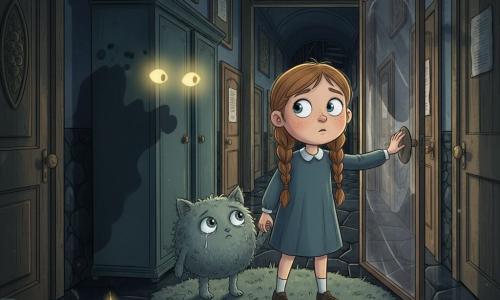
Ethan stood in the dark hallway, his small hand on the brass knob. The house had always made noises—pipes sighed, floorboards complained—but tonight the sounds felt alive, like breath moving through the rooms. Beyond the door at the end of the corridor, a long room hummed with low, restless creaks that skittered across the wallpaper like tiny feet.
He closed the door carefully. The click was soft, decisive. The sound landed in the silence like a pebble in a pool; the ripples that followed stretched into the corners of the house. He did not slam it. He never slammed doors. His mother had taught him that closing things gently kept both things and people safer.
"You're sure about this?" he whispered to the dark, though he knew no one answered. His voice was small, steady—an anchor.
The hallway agreed with a slow groan, the old boards settling under their own memory. Light from the street lamp made a narrow stripe on the rug. Past that stripe, the shadows gathered in listeners: paintings with eyes, a grandfather clock that seemed to inhale. Ethan felt a finger of cold climb down his spine. He pulled his cardigan closer and stepped away from the door, keeping his hand tucked in his pocket where his folded map lay: a scrap of paper he had found beneath the attic floorboards earlier that day. The map had been drawn in a shaky hand, marking places in the house he had never noticed before.
"Remember," his mother had told him that afternoon, "you check, you think, then you close. Don't rush." Ethan had promised. He kept promises.
At the far end of the hallway, a series of faint creaks answered him—like shoes creeping in a room made for whispers.
Chapter 2: The House of Creaks
Ethan followed the map's jagged line, moving through rooms that sounded as if they were telling each other secrets. Doors sighed as he passed, and every step made the house speak back in creaks. The map led him to the nursery with the faded moon mural and a tiny wooden chest with a keyhole shaped like a crescent.
"What's behind you, Ethan?" a hushed voice seemed to ask, but when he turned, there was only the rocking horse with paint worn to the grain.
He crouched by the chest, listening, heart steady. He remembered the rule: listen first, then act. The key that would fit the chest had been nowhere to be found, but the map had a note in the corner: under the loose board by the hearth.
By the hearth, the stones held warm ghosts of heat, and as Ethan lifted the loose board, a drawer slid out as if it had been waiting a century. Inside lay a small iron key and a scrap of folded paper with one line: The door that closes opens another.
Ethan stared at the words. The hallway hummed. "So closing this door did something," he murmured, remembering the click he had made at the start.
He held the key like a compass. The map's line curved toward the attic stairs, a place he had only been once in daylight, when the world felt safe. The house's creaks grew more articulate as he climbed—long, drawn-out notes like an uneasy choir.
At the attic door, he paused. The knob felt colder than the others. On the other side, the creaks were louder, as if the house were breathing through holes in the rafters.
"Are you coming?" Ethan asked the shadows.
A whisper moved across the old trunks, a sound like paper sliding. "Careful," it seemed to say. "Remember." The whisper was the house's warning and its plea.
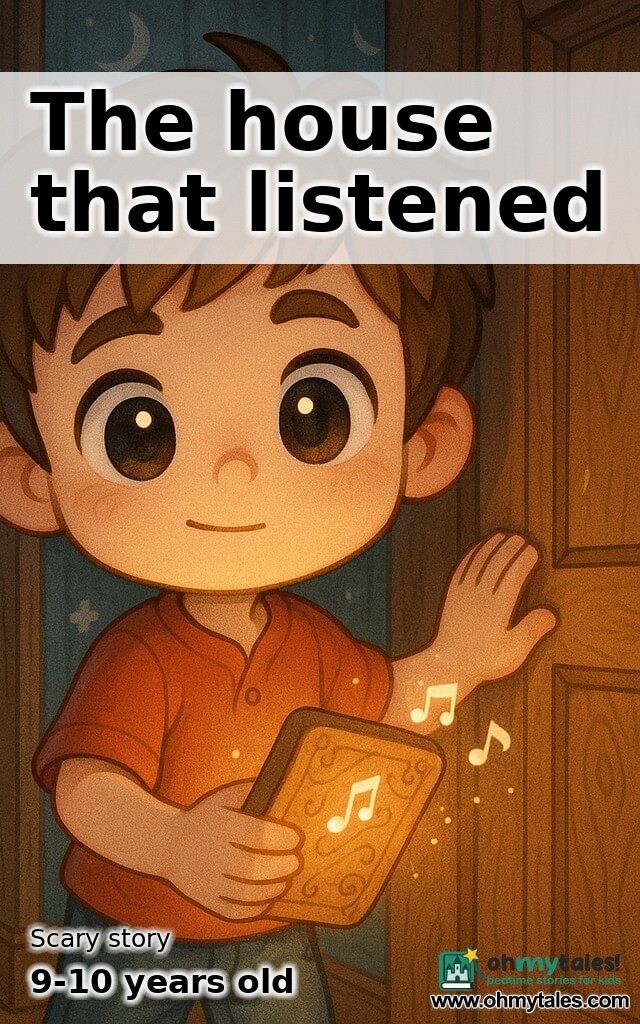
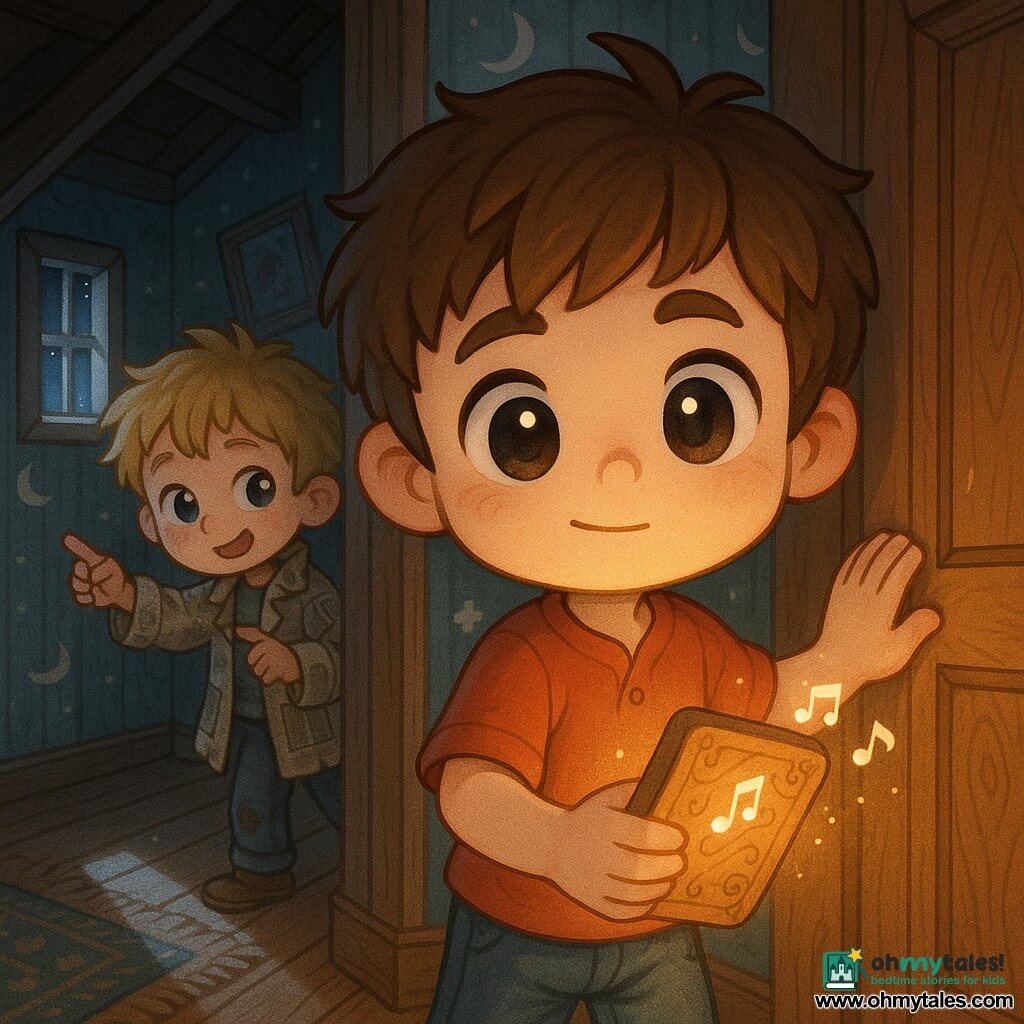
He used the iron key in the chest at his feet, not the attic door. The crescent key turned with a small, satisfied click. Inside the chest was a thin, carved tablet of wood, engraved with tiny symbols that shimmered faintly. When Ethan touched them they ticked like the heartbeat of a tiny thing.
"Who are you?" he asked the tablet.
A voice that was not a voice drifted from the wood: "A map knows where walls breathe. Close well; guard the edges."
Ethan pressed the tablet to his chest and felt warm courage rise like bread in the oven. He had always been careful, but he had never been the sort to run from a sound. The house's creaks were not monsters yet. They were questions. He would answer them.
Chapter 3: The Door That Moved
Back in the hallway, the door he had closed earlier hummed differently. The panel vibrated like a throat clearing. Ethan's fingers moved to the knob, but he remembered his mother's words. He listened instead.
The map's line pointed to the attic window now, though Ethan hadn't meant to go. Polished glass caught the moon and split it into shards. Beneath the sill, a sliver of darkness breathed out. From the corner of the hallway, a new sound crept—a slow, soft scratching that made the wallpaper shiver.
He walked toward it, pulse even. When he reached the door, he laid his palm flat against the wood. The creak came from inside and out, a chorus of hinges talking to themselves. He did not push the door open. He did not open it at all. He closed his eyes and listened, letting his other senses gather clues.
From within the room, a whisper, like fabric rubbing, said, "Find the window that breathes and wind the latch." Ethan's hand found the matching notch on the inside of the doorframe—an old catch, rounded by many careful hands. He worked it slowly. The house accepted his gentleness.
The door swung open a sliver and then stopped, as if held by invisible fingers. Beyond, the room was a patchwork of moonbeams and shadow. Creaks skittered across the floorboards; the wardrobe door swung with no wind. But the creak that had been following him since the hallway moved into a shape he could almost understand: it was the memory of someone leaving too quickly.
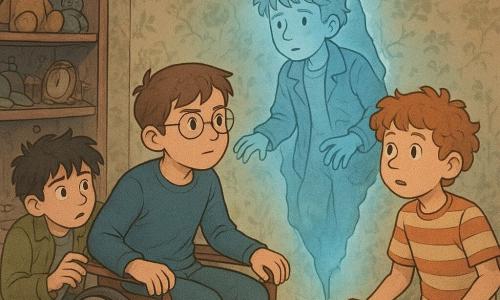
"Ethan," a voice called from the corner, tender and frightened. A small figure stepped forward: a child no older than nine, hair like tangled straw, eyes luminous as night glass. He wore a coat stitched from newspaper and smelled of attic dust.
"I lost the latch," the boy said. "It keeps the echoes in. Without it, they wander."
Ethan thought of the tablet and the key and the map. He knelt to meet the boy's gaze. "I'll help," he said. "But we have to be careful."
The boy's smile was a bonfire in winter. "Careful is the only magic that keeps the house from swallowing you whole."
Together they examined the window that breathed: a narrow sash with a crack in the sill, where cold air went in and came back with secrets. Ethan felt the creaks like threads and pulled gently at the frame. The latch lay under a curled strip of molding. It was small and stubborn, shaped like a tiny bone.
As he fitted it, the room exhaled, and the creaks around them swelled and then steadied into a murmur. The boy tapped the latch with a knuckle and hummed a tune that sounded like a lullaby for old wood.
"Why did you leave the latch?" Ethan asked.
The boy shrugged. "Curiosity," he said simply. "And the fear that comes with it." His eyes softened. "I wanted to see what the creaks were saying."
"Do creaks ever hurt anyone?" Ethan asked.
"Only when they're allowed to wander," the boy said. "Sometimes sound finds a place and begins to claim it. A closed door is a promise. An open one is an invitation."
Ethan thought of the door he had closed at the start, the way the house had changed after that click. He had closed it like a promise; now he saw why. He tightened the latch and turned the key from the chest in a small metal hole. The window shivered as if in relief.
From somewhere deeper in the house, something knocked—three soft taps that could have been a clock, could have been a heart. Ethan and the boy exchanged a look. "That means the house is listening," the boy said. "It will tell us where to go next."
Chapter 4: The Horizon of Quiet
They followed the house's knocks like a compass, moving through rooms where the creaks formed sentences and the chandelier hummed like bees in its sleep. Sometimes the sounds grew hostile—sharp rattles and high, thin whines—until Ethan remembered to breathe and close a door gently behind them. Each time he did, the noise softened and receded.
At a landing above the foyer, they found a long mirror clouded with age. The reflection showed the two of them, small against the stairwell, and around their feet the floorboards had joined hands in a ring of darker wood.
"It's the Hush Ring," the boy whispered. "It keeps the house from leaking all its sound at once."
Ethan ran a finger along the ring and found a seam that had been pried open. The creaks that had been furthest away now pushed like waves toward the gap. He realized with a cold clarity that the house was not angry—it was lonely and frightened, and when people left parts of it unguarded, its noises slipped into the world like escaping steam.
"We need to close it," Ethan said.
They worked together, pushing the seam closed. It resisted, each plank telling them a story of footsteps and years. Ethan used his whole shoulder, the way his grandfather had once taught him to push heavy doors: steady, even, patient. The boy helped from the other side, humming the lullaby again. The seam sighed and then settled.
The house exhaled like a tide falling away. The creaks braided themselves into a soft, contented murmur. The air tasted less like lost things and more like dawn.
"Will it stay?" the boy asked.
Ethan set the tablet against the seam. Its carved symbols glowed, then dimmed like lamp light. "If we keep promises and close what needs closing," Ethan said, remembering the first door. "If we listen and don't pry."
They walked back through the halls. Each door they passed they checked and closed slowly, making sure not to trap anything, but to keep wandering creaks where they belonged. At the front door, Ethan paused. The world outside looked tired and silver in the early light. The creaks in the house had relaxed into the kind of sound that belonged to old stories told before sleep.
"Do you have to go?" the boy asked.
Ethan felt a sudden tug—part curiosity, part a desire to belong to this muted, living place—but he folded the map and slipped it back into his pocket. "I live here," he said. "And living means being careful. I have to make sure the doors stay promises."
The boy nodded, eyes bright as if he had seen a far-off lighthouse. "Then close the door well." He leaned forward and pressed the carved tablet into Ethan's palm. "So you remember."
Ethan accepted it and felt the warmth of the tablet even as the boy faded like breath on glass. He reached the front door, set his hand on the brass, and looked one last time down the hallway where the shadows were no longer teeth but curtains.
He closed the door gently. The click was patient and sure. The house replied with a long, satisfied creak that sounded almost like a word: thank you.
Outside, the horizon was soft and pale. The moon sank like a coin into a pocket of cloud, and a thin line of dawn began to paint the sky. Ethan stood for a moment with his back against the door, his map in his pocket, the tablet tucked like a secret in his hand. The creaks of the house thinned to a comfortable rhythm, like a distant sea.
He walked to the window and watched the horizon grow calmer, colors unspooling slowly. He had learned that being careful did not mean never going forward. It meant moving with thought, with respect, and with courage when the creaks wanted to pull you away.
A robin landed on the sill and pecked at the glass. Ethan smiled. The house hummed on, content to be a house again rather than a chorus. The world outside flushed with sun.
"Good morning," he said to the horizon, and the light answered him with a promise: a wide, warm day waiting to be met.