Chapter 1: The Night the Voices Began
Milo pressed his palm against the cool glass of the attic window and watched fog creep over the crooked roofs of Hollowbridge. He was tidy with habits and curious about small things—the exact pattern of moth wings, how a clock kept ticking without a heart. Tonight the town was quiet, but the air hummed with a sound only just there: faint, like people whispering from far down a long tunnel.
Ava leaned in beside him, her braid brushing Milo's shoulder. She had a small silver hearing aid that clicked like a tiny lobster when she pushed it; she often laughed about its noises. Jonas came last, steadying himself on a wooden cane that he could balance without thinking. The three of them were nine and used to exploring dusty places. They called themselves the Night Rovers.
“Do you hear it?” Milo asked. His voice felt thin in the attic. He liked to reach for things before he understood them. He reached out and put his hand on the glass as if touching the sound might make it stronger.
Ava nodded. “Like a choir far away,” she said, eyes wide. “But no one is singing.”
Jonas frowned. His cane tapped a small pattern on the floor—one, one-two. “My gran used to say voices come when something wants to be found,” he murmured. The thought made Milo's heart thump with equal parts dread and excitement.
Below them, lights blinked on in the harbor. A crooked lighthouse at the edge of town—long unused—had a lamp that shone ghost-bright for a moment, then went dark. The whispers rose like smoke. Milo felt them tug at the edges of his mind, like fingertips on a sleeve. He reached his hand toward the empty room, an instinctive offering to whatever was calling.
“We should go,” Ava whispered. “We'll see where the voices lead.”
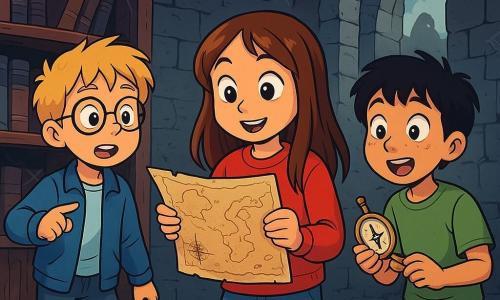
They packed a small bag: a torch, a map hand-drawn by Milo, spare batteries, and a slice of Jonas's gran's ginger cake. They slipped out into a night that smelled of salt and old stories.
Chapter 2: The Road of Distant Echoes
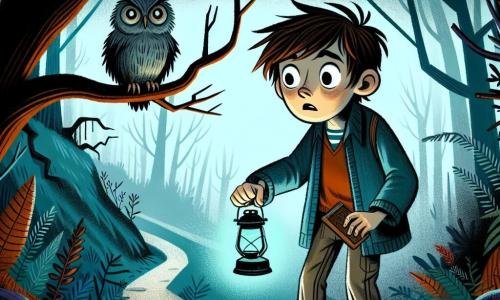
The path to the lighthouse curved through fields that were more shadow than grass. The voices shifted as they walked—one moment so far away the trio could only feel them in their teeth, the next just beyond a hedgerow, like guests at a party they could not yet join.
As they entered the marshy lane, the earth hummed and the air felt heavier. Their torch beam carved a slice through the dark and showed shapes: a row of foxgloves bowed like listening ears, a tangle of old rope on a fence post. Suddenly the whispers grew clearer, repeating a string of sounds that might have been a name.
Milo felt his hand twitch. He wanted to reach forward, to touch the air and catch the syllables. “Step carefully,” Jonas said. His voice carried steadiness. He walked slightly ahead, checking the ground. His cane struck a hollow patch that revealed a shallow, water-filled pit. Ava hopped over it with neat, sure steps. Milo followed, counting his footfalls like a drumbeat.
They reached a gate that led to the lighthouse yard. The gate swung on rust with a keening sound, like a small animal calling out. On the other side, the lighthouse tower rose, dark as a tooth. Shadows moved in the windows, but when they shone their torch, only webbed panes stared back.
From somewhere deep inside the tower, the voices cried like a bundle of bells being melted. Milo's fingers tingled. He put out his hand as if to bridge the gap, to offer help to the sound itself. The gesture steadied him, like giving a hand to someone about to climb.
On the lowest stair, they found marks—scratches that looked like letters but were worn by rain. Ava swept her small hand over them and, with a soft laugh, read a crooked word. “Remember,” she said. The voices seemed to hold their breath.
Chapter 3: The Lantern Room and the Shape That Watched
Climbing the tower was a slow, creaking business. Each step whispered secrets. The closer they climbed, the more the voices braided into patterns—trails of words that snagged on the children's names. At a landing littered with sea shells, Milo paused. He matched one of the voice-threads to the scratch on the stair and felt like he had found a missing stitch in a sweater.
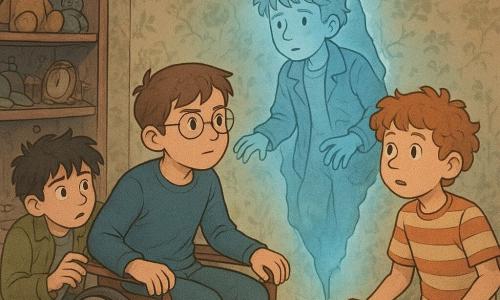
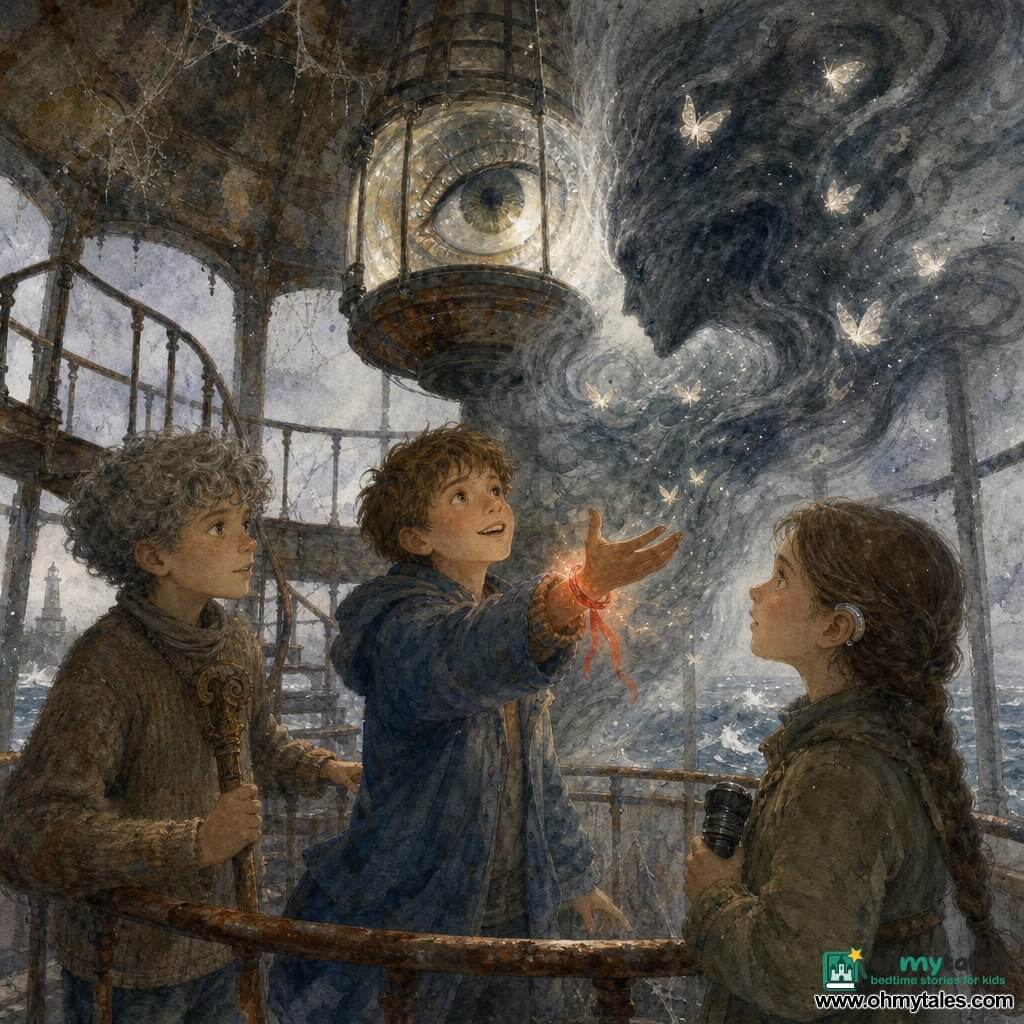
At the top they reached the lantern room. The great glass was cloudy with salt and time. The lamp inside hung like an eye. When Milo pushed the door, the sound rushed in: a chorus now, begging and warning and singing. Center stage was a tall shadow that leaned against the lamp, a shape with too-many elbows and a face made of fog.
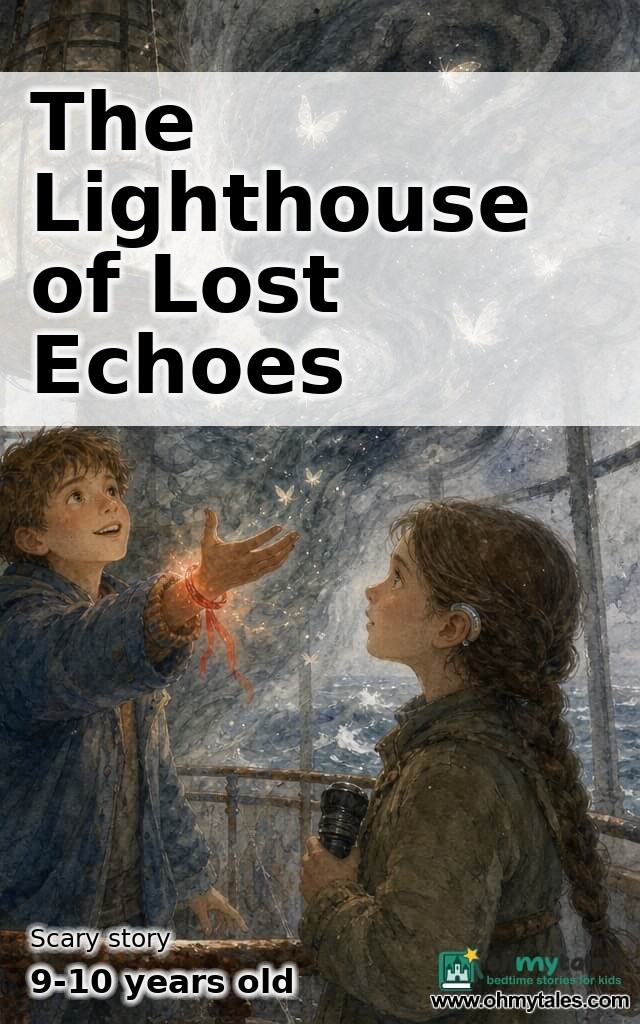
Milo's hand went out before he thought. He would reach the hand that reached for others. The shadow halted and folded in on itself, astonished by a touch. It smelled of old paper and wet wood. Jonas stepped forward to steady Milo and knocked the shadow with his cane. The shadow shivered like a curtain caught in wind.
“Why are you here?” Ava asked, brave and small. The shadow's voice came out like broken glass. It told of ships that forgot how to come home and of children's toys left on the shore, of promises that rusted and fell apart. It was lonely and afraid, calling any ear that would listen.
The lamp winked. The shadow told them its name—if names could be called to a creature of fog—“The One With Lost Echoes.” It wanted to be remembered. It wanted its songs to have a mouth and its stories a listener. Milo felt sorrow for something made of the town's forgotten things. He thought of how he liked to tidy lost things and mend torn paper. He reached his hand into the shadow's cool air and felt a thousand small voices brush his palm like tiny wings.
Chapter 4: The Bargain of Small Lights
The shadow wanted a trade. It would quiet the whispers if they would give it a small, steady sound to hold—a promise that would not break. In return, it would show them the reason for the calls: a place beneath the lighthouse where an old box lay buried with things that deserved names again.
“It is scary,” Jonas said. He balanced carefully. He was not afraid to be cautious as a kind of bravery. Ava clicked her hearing aid and leaned close to Milo. He thought about all the times his hands had reached out to fix things. If fear had a shape, Milo decided, you could place your hand on it and still choose to move forward.
They made a pact. Milo tied a thin ribbon around his wrist and, with a breath that shook, hummed a steady, simple tune—the kind his mother used to whistle when tucking him in. The ribbon warmed and pulsed in his hand like a tiny lantern. The shadow wrapped the lantern-ribbon gently in its misty fingers and the chorus softened into single, grateful notes.
The ground beneath the lantern room grated and opened like an old book. A stair led down into the place where the sea had been allowed to keep its old things. The three friends took breaths like oaths and went down.
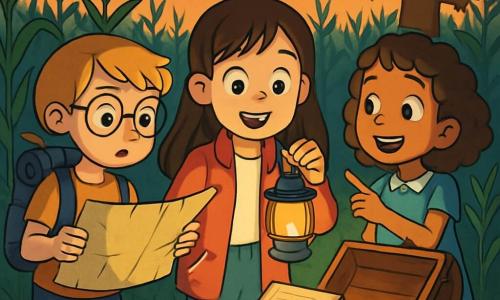
The cellar smelled of salt and cedar. In the center sat an iron box, curly with rust and carved with waves. Milo put his hand on the lid and the voices swelled, not cruelly now but like a tide remembering its name. Inside the box were trinkets: a cracked music box, a sailor's scarf, a wooden boat with letters faded by rain. Each item hummed with a story.
Ava read aloud the names she found etched in the wood and metal. Jonas hummed the cadence of each tale. Milo whispered the smallest histories, mending the broken threads with his steady, reaching hand. With every name spoken, the objects shivered and brightened like moths finding light.
Chapter 5: Quiet, and the Dream That Follows
When the last name left Milo's lips, the shadow sighed—a sound like wind through reeds. It folded itself around the lighthouse lamp and, for the first time in years, allowed the night to be still. The distant voices softened into single notes of thanks, then faded into the hush of the sea.
The lighthouse lamp lit proper and steady, casting a warm pool across the tower room. The sharpness of fear wore away like fog in sunlight. The three children stood together, hands linked, feeling that their reaching had been answered. Jonas's cane made a gentle circle on the floor. Ava straightened her hearing aid with a grin. Milo tucked the ribbon under his sleeve, a small warm promise beating against his wrist.
They left the lighthouse with the iron box carried between them, its weight now less than before because it carried no more unfinished words. As they walked back through the marsh, the moon watched like a patient face. The town slept but not entirely—windows glowed like small eyes, listening.
At their doorsteps they placed the case on the porch where the town's memory could come fetch its things. The voices that used to haunt the night had become stories bright enough to sleep by. Milo felt his fingers relax around the cool ribbon. “We did it,” he whispered.
That night each child went to bed with the quiet stamped in their bones. Milo pictured the shadow now sitting under the lighthouse lamp, humming a gentle tune, a keeper of echoes who had learned to keep and give. He closed his eyes and reached out with his hand—not to a thing but to the steady rhythm of his own breath.
Outside, the distant voices turned into soft wind, then into nothing at all. Inside, Milo dreamed of small lights gathering into a lantern, of hands that touched and healed, and of a town where forgotten things were remembered. He slept calm and sure, the ribbon warm around his wrist, and somewhere beyond the fog, the lighthouse kept its slow, watchful promise.