River Between Two Homes
In a village tucked where hills fold like sleeping hands, a river ran with a slow, bright song. Houses sat on each bank, like pears on a stem, and people on one side rarely crossed to the other. The river remembered stories from both sides, but the people forgot to share them.
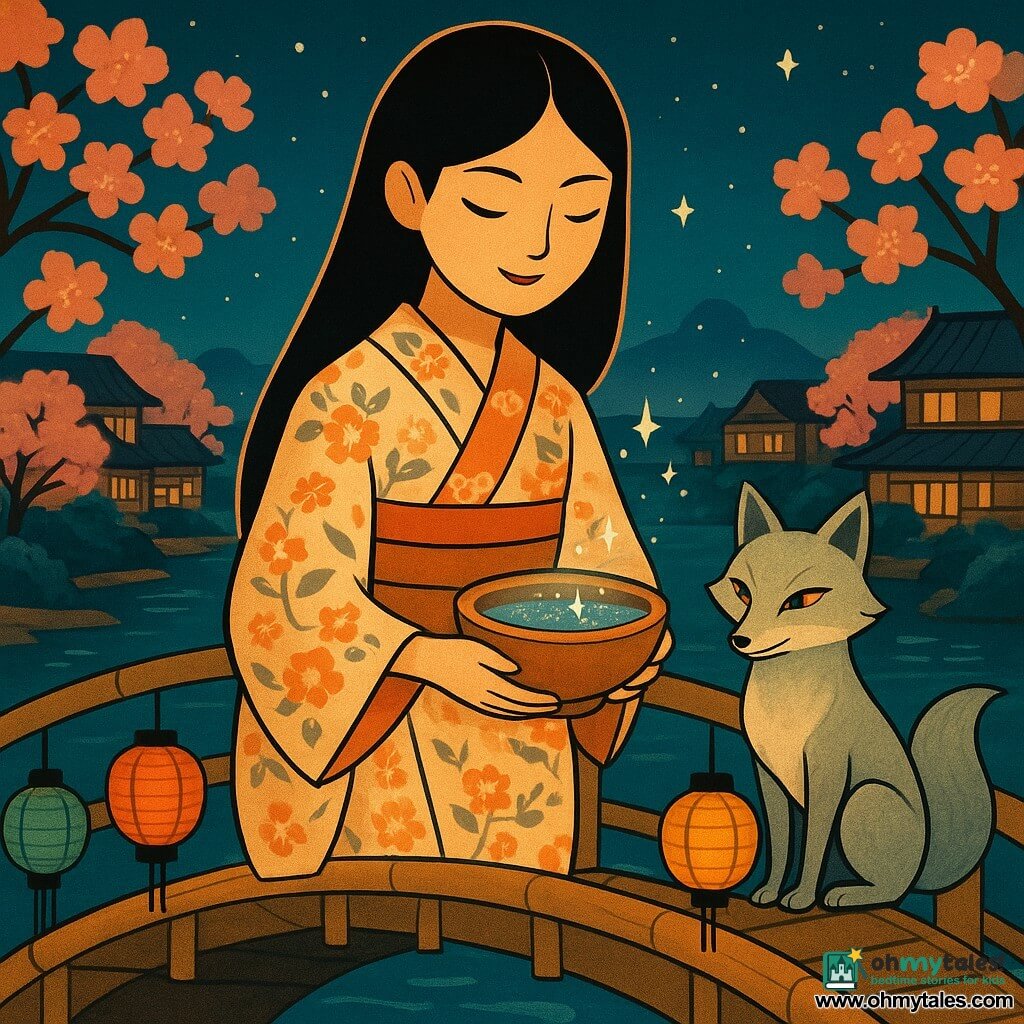
Hana lived in a small house of weathered wood and rice-paper windows. Her hair smelled like rice straw and moonlight. Each morning she took a clay bowl the color of wet earth and walked to the river. The bowl was round and smooth, as if it had once been a small moon. People said it had been made by an old potter who listened to wind and knew how to make mud into music.
Hana's feet knew the path by heart. She stepped over foxglove and moss, and the river greeted her with ripples that looked like silver threads. She dipped the bowl into the water and watched the river fill it. For Hana, carrying water was not just a job. It was a promise: a promise that the village would be fed, that gardens would bloom, and that the bowl would always hold what the sky and river shared.
When she walked to the other side the first time, villagers watched. Some frowned like crumpled paper; others turned away, afraid of old arguments and quiet storms. The bridge between the banks was small and woven from bamboo, and it shook like a sleeping cat when Hana crossed. Her bowl sat steady on her hip, and sometimes the bowl seemed to hum with a secret tune.
Hana liked to look at the river closely. She saw little lights under the water—tiny spirits that twirled like fireflies. Parents called them kappa in stories, or river-children who liked to play. Hana smiled and bowed to them. "Good morning," she whispered. They dipped and splashed in answer, and their laughter made the river sound like bells.
At dusk, when lanterns came alive like lantern-birds in the trees, Hana would light simple paper lanterns and hang them on the bridge. Each lantern had a soft word painted on it—hope, story, hello. They glowed like warm rice and made a path of gentle light across the water. The lights did not solve everything, but they made faces softer and steps lighter.
The Art of Carrying
Hana learned the art of carrying not from a teacher but from the things that kept the village steady. Her grandfather had taught her to balance the bowl by placing a pebble inside the rim. "The pebble listens," he said one autumn evening when crickets stitched the air. "It keeps the bowl humble and remembers where the water came from." Hana kept the pebble. When she walked, she thought of the pebble's listening heart.
Carrying water was a quiet dance. Hana breathed with the river's song. She counted her steps—one for the willow, two for the stone lantern, three for the bent pine—and the bowl rocked like a lullaby. Once, a gust of wind blew hard, and the bowl tipped. Water spilled and fell in a line like silver thread, but Hana did not cry. She caught some in cupped hands and let the rest go back to the river. The village saw this and felt a small warmth, like a tea cup held between both hands.
Hana began to place baskets on the bridge. In the morning she filled them with vegetables grown by hands that had stopped speaking to each other. She left sweet rice cakes on a blanket by the willow. Every time she crossed, she carried not only water but small things that smelled like home—pickled plums, bundles of dried herbs, a single painted crane. When she placed these gifts on the bridge, she arranged them like a small spread of peace.
People started to notice. At first, a few children came to peek. They chased the lantern lights and tried to catch the river-children with strawberry-jar nets. "She gives too much," whispered an elderly man who missed seeing an old friend across the water. But seeing children laugh is like seeing spring arrive; it can melt a winter hat. Faces softened. A woman who had not spoken to her neighbor in many seasons came to the bridge and touched a lantern. "It smells of night jasmine," she said aloud, and the words traveled across the water to the other bank.
Hana did not force anyone. She only carried and placed and lit and listened. When someone came to the bridge and stood with a hand on a lantern, Hana would smile and say, "The light is for both sides." If someone asked why she crossed the river every day, she would bow slightly and say, "Because the river sings to me and I answer."
Lanterns and Stories
As months folded one into another like paper cranes, the lanterns multiplied. Each lantern held more than light. People began to write things on slips of paper—little stories, apologies, songs, dreams. Young men who had looked away from old dances wrote about the drums they once loved. Mothers left notes about their children's first steps. The river received each paper slip like bread.
On a rainy day, tiny clouds stitched patterns across the valley, and the river swelled with thought. Hana stood under a maple tree, holding a lantern close like a small hearth. She watched a piece of paper drift on the water. Someone had written, "I miss my sister's laugh." Hana picked it up and read the name. She knew where the sister lived; she had seen her hanging laundry like flags.
That evening, Hana carried two bowls across the bridge. One held water, the other a little cloth wrapped around a warm steamed bun. She walked up to the house and knocked. An old woman opened the door, eyes like folded paper. Hana placed the bun in her hands and said, "Someone misses your laugh." The woman smiled a slow smile, and it unfolded like a map. Tears came, but they were gentle and bright, like morning dew. She began to sing a small tune that rode the river and landed at a window on the other bank. A boy on the other side heard it and laughed. He walked to the bridge with the quick steps of someone who had found a lost toy.
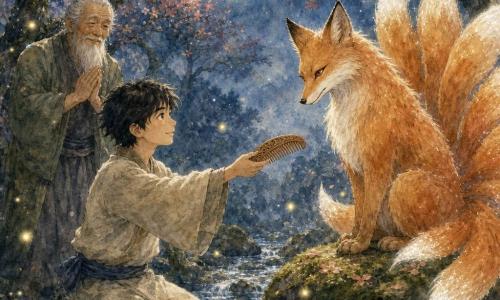
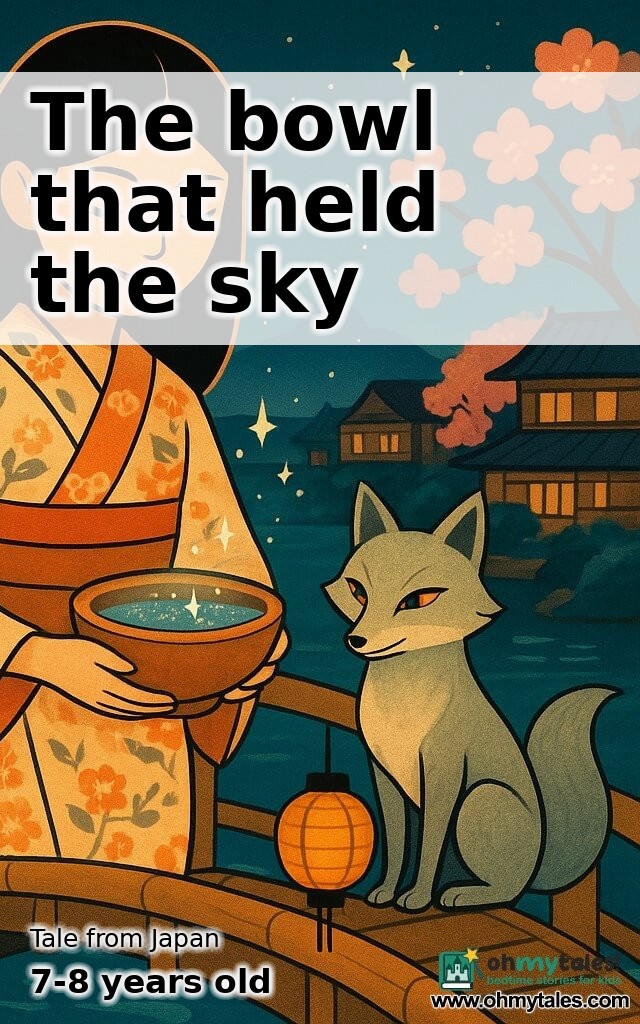
Sometimes spirits came too—the gentle ones who liked when people remembered their names. A small fox spirit, with a coat of moonlight and soil, sat at the edge of the bridge and watched. It tapped the pebble inside Hana's bowl with a paw and then looked at her as if to say, "You carry more than water." Hana nodded, because she knew it was true.
At evening gatherings, people from both sides sat on mats near the river. The lanterns reflected in the water and looked like boats carrying stars. A man who had been angry for a long time told a joke that made everyone clap. A girl told a frightening story about a storm, but then she ended it with the image of the river returning all lost things. When faces met and eyes softened, the village felt like a great woven cloth, warm and whole.
Hana's lanterns had become small bridges of light. The villagers began to trade stories like fish in a basket. They told tales of the mountain that occasionally sneezed out cherry blossoms, of a grandmother who could whistle the clouds, of a boy who mended a kite for a lonely star. Each tale was like a lantern: simple, bright, and carrying its own light.
The Bowl that Held the Sky
One night the moon hung thin as a curved rice grain. The river was nearly still, and the lanterns hummed like bees. Hana climbed to the highest step of the bridge and lifted her bowl to the sky. It looked small and round, and for a moment it caught moonlight and held it as if it were a soft white fish. The bowl reflected the sky and the river and the faces gathered below. Children gasped softly, and even the fox spirit sat very still.
Hana whispered, "This bowl holds the sky tonight." Someone answered from the crowd, "Then it holds us too." The villagers felt a warmth spread like soup through their bellies. They realized that when one person cared for the river, they all learned to care for each other.
Seasons turned their pages. Snow fell like flour and melted into small rivers of memory. Spring painted the hills with green. Hana kept carrying water. The pebble stayed patient in the bowl. The bridge, once quiet, now carried little songs, giggles, and the sound of tea being poured. When young people fell in love, they tied tiny paper cranes to the bridge's rails. When old people rested, children would place lanterns at their doors.
One autumn, when the maples burned bright like small fires, the potter who had made Hana's bowl came to visit. He had hands full of stories and eyes like smoothed stones. "You have learned the art well," he said. "A bowl can hold water, yes, but it can also hold promises." He touched the pebble and nodded to Hana. "It listens and keeps what we give it."
Hana laughed, and the laughter sounded like a bell. "The bowl listens, but the river remembers," she said. "And the people—" she looked at both banks, now braided with light and steps, "—the people remember each other."
The potter bowed and left a small new bowl on the bridge. It was painted with tiny waves and a single red blossom. "For the children," he said. "So they learn the carrying too." Children queued like rice seedlings, their hands eager and full of hope. They learned to balance, to step softly, and to speak kindly when lanterns needed tending.
At the heart of the village, life became gentle as a woven kimono. Arguments faded, like clouds that thin with time. When troubles came—a fence that fell, a storm that scattered laundry—the village fixed things together. They repaired the bridge, re-tied the lanterns, and shared warm miso soup with hands that smelled of ginger and kindness.
Hana grew older, but her steps never forgot the rhythm. The pebble finally cracked into two small pieces one winter night, and she planted them by the willow as if they were seeds. "They will listen from the earth now," she whispered. The river, always the best listener, carried the sound away and kept it safe.
On calm evenings, when lantern light braided with the river's song, villagers would point to the water and say to children, "See that bowl? It once caught the sky." The children would giggle and imagine themselves holding a small moon. They would learn to carry water, to hang a lantern, to write a small note and leave it like a feather on the river. They learned that small acts can be soft bridges.
Hana sat by her window with a warm cup and watched the bridge. Sometimes a fox spirit would visit and curl like a comma at her feet. Sometimes a child would press their nose to the glass to watch the lanterns sway. In her heart, Hana held the village like the bowl held moonlight—carefully, gently, and with steady love.
And so the river kept its song, the bridge kept its lights, and the people kept their stories. The bowl that once just held water had learned to hold the sky, because Hana showed them how to carry not only what they needed, but also what they could give. The village became a place where small things—lanterns, bowls, pebbles, and words—turned into the simple magic of togetherness.