Morning Light and a Small Knot
Milo woke to the soft light slipping through his curtains like warm honey. He lay very still for a moment, listening to the house breathe: the quiet tick of the clock in the kitchen, the muffled laugh of his sister watching cartoons, the distant whistle of the kettle. Today was a school day that felt a little bigger than the others. It wasn't the first day of school, and it wasn't the last day either. It was a day when he had to present something in front of the class, and the thought made a tiny knot sit in his stomach.
He swung his legs over the side of the bed and padded to the window. Outside, the row of maple trees by the sidewalk had begun to sprout little green flags. A robin landed on the fence and cocked its head, as if to say, “Good morning, Milo.” He smiled back and felt the knot loosen by a thread. He dressed quickly—blue jumper, jeans with a patch on the knee from last month's bicycle tumble—and ate toast with strawberry jam, spread thick as a secret. His mother hummed while she packed his lunch, and she tucked a small note into his lunchbox: You can do it! Love, Mum.
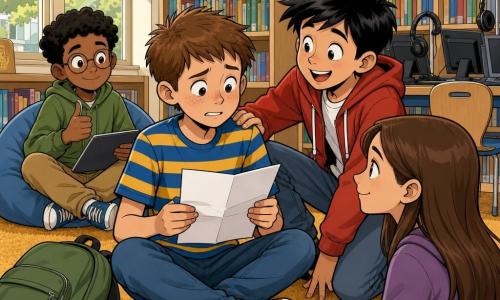
At the school gate, the playground buzzed like a jar of busy bees. Milo met his friends: Tom, who loved soccer more than socks; Aisha, whose laugh could push clouds away; and Ben, who always forgot his school tie but knew the best jokes. They walked to class together, their backpacks bumping like drumbeats. Milo tried repeating the words he would say before the class: “Today I'll talk about how seeds become plants.” Saying it out loud made it sound smaller, like something he could hold in his hand.
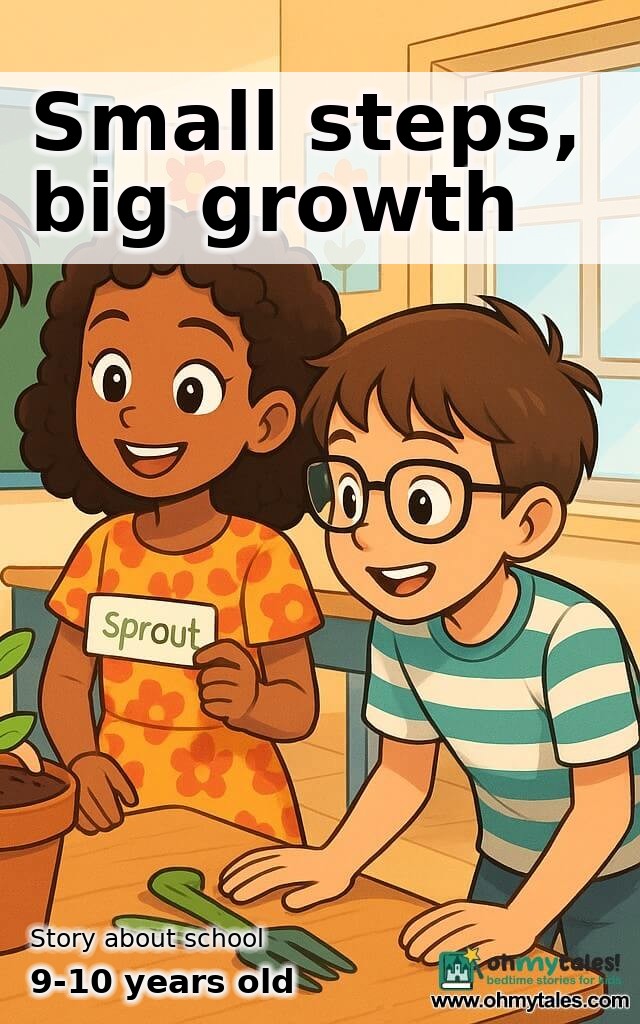
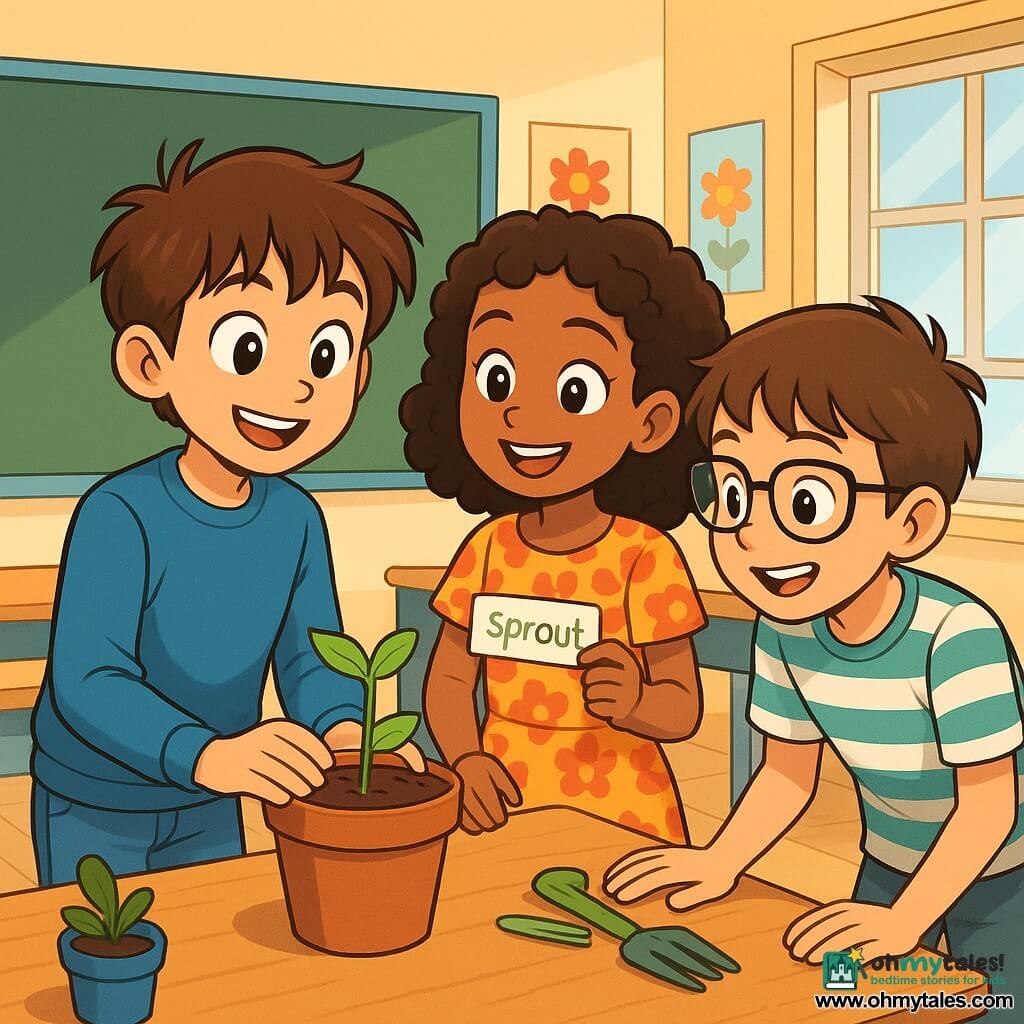
Their teacher, Miss Rivera, greeted each child at the door with a warm smile and a note on her desk that said, “Small steps, big learning.” She had a way of making the classroom smell like oranges and books. Today, she had set up a small table near the window with pots, soil, and a taped-up chart. The whole class had been part of a little project: to grow one plant from a seed and watch how it changed. Milo's plant was named Sprout, and Sprout had a single, shy leaf peeking above the soil.
“Today,” Miss Rivera announced, “we will share what we learned about our plants and how we helped them grow.” Milo's fingers tightened around the strap of his backpack. He could picture the others standing with bright drawings and neat labels. He pictured himself forgetting the order of the words or saying something too fast. But then he looked at Sprout, which had stretched toward the light without needing a speech. Milo took a deep breath. The knot in his stomach didn't disappear, but it unraveled enough for him to step forward.
The Math Problem That Grew
Math hour arrived after circle time, a subject Milo usually liked because numbers felt orderly, like stepping stones across a river. Today's lesson was about fractions, and Miss Rivera had a new game called “Build a Pizza.” The children had to share toppings equally among slices and explain their choices. Milo's team had two pizzas and five friends, and their job was to make sure every slice was fair.
They began with crayons and cardboard circles, drawing pepperoni and green peppers as if they were little suns and moons. Milo counted the slices carefully and started dividing toppings, but when the pizza needed to be shared into fifths, his neat numbers started to wobble. He scratched his head. Tom said, “We need ten slices total!” and Aisha suggested, “Let's cut one pizza into five big slices and the other into five too.” Milo tried to explain that five was a tricky number when you liked dividing things into twos and fours. His words came out like a puzzle someone else had started.
Miss Rivera noticed Milo's puzzled face and came over. She didn't take over; she knelt down and pointed at the cardboard pizzas. “If you imagine sharing one pizza with four friends, how many slices does each person get?” she asked gently. Milo thought of the burger he had last week that his family cut into four triangles. “One-fourth?” he said. “Right,” she said. “Now if we have two pizzas and five friends, what could we do?” Milo thought about splitting pizzas into smaller pieces so each friend could get two pieces. Aisha suggested they make ten slices in total—five sets of two—so everyone could get the same amount. Milo's eyes lit up. The answer was clear now, like a path opened between numbers.
They explained their plan to the class using the cardboard pizzas. When Milo spoke, his voice trembled a little at first. But as he moved the slices around and showed how two small pieces could make an equal share, he found a rhythm. The class clapped for the clever way they'd solved the puzzle. It wasn't that Milo had become a fraction genius in a minute; it was that he had worked with friends and taken one small idea at a time until the whole thing made sense.
After math, during free time, Milo practiced explaining fractions to Ben, pretending the playground bench was a stage and Ben was a bar of chocolate. Ben listened, nodded, and then handed Milo a peeled orange as a prize. “Thanks,” Milo said, feeling the knot in his stomach get a little softer each time he made something clear to someone else.
The Garden Project and Listening Ears
The third event of the week was the garden project. Miss Rivera had turned half the schoolyard into a mini-garden with wooden beds and a tiny sign that read, “We are gardeners.” Each group had a corner to plant different things. Milo's group chose carrots and marigolds. Carrots were patient, Miss Rivera said; they liked deep soil and time to think.
Working together was like building a story one sentence at a time. Each child had a job—digging, sprinkling, labeling—and Milo found himself enjoying the small, steady tasks: pressing the soil gently over the seed, patting it like a kitten, writing the date on the label. Tom dug a neat trench, Aisha made tiny flags to mark where the seeds were, and Ben hummed a tune that made the soil seem to dance.
As they worked, a boy from another class named Leo wandered over. Leo had recently moved to town and sometimes felt shy. He asked if he could help. Milo remembered how the knot had felt that morning and how it had eased when others reached out. He nodded and handed Leo a trowel. At first, Leo was awkward with the tools, tipping dirt like he was pouring a bucket of pebbles. But Aisha guided his hands gently, and Tom showed him how to make the trench straight. The garden had an unspoken rule: everyone's small efforts mattered.
During the digging, they found a baby worm, and the team paused. They watched as it curled and stretched, a tiny, wriggly helper. Milo was surprised that something so small could do so much for the soil. “Worms are like little gardeners,” he said. “They make the soil happy.” Miss Rivera smiled and added, “So do you—all of you, when you help each other.”
When they finished, Milo felt proud in a soft, steady way. The garden bed looked like a promise: a row of seeds pressed into the earth, waiting. He and Leo exchanged a high-five that was both clumsy and sincere. Milo realized that learning wasn't just about speaking correctly in front of the class. It was also about listening, sharing tools, and making room for someone new.
Presentation Day and a Quiet Celebration
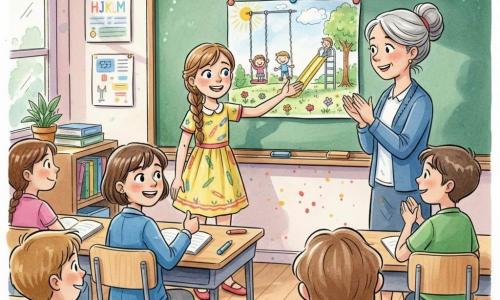
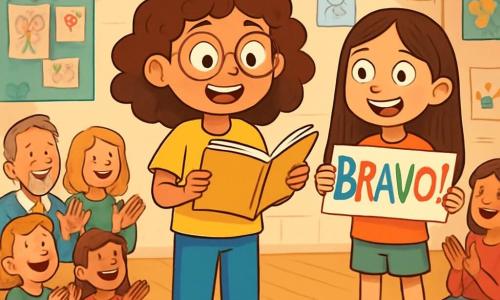
The last chapter of this little school adventure was presentation day. The classroom felt like the soft belly of a book—in it, stories waited to be read. Each child took turns in front of the circle, showing their plant and saying what they had learned. Milo held Sprout carefully, like a fragile idea. When his turn came, he stepped forward and felt all his practice lace up his shoes tight with courage.
He began by telling how he had named the plant Sprout and how he had watched it stretch toward the light. He explained how he had helped Sprout by watering it a little each morning and keeping it out of the cold draft by the window. He also talked about the garden, the worm, and helping Leo. At one point he hesitated, unsure which word to use, and his voice dipped. But Aisha caught his eye and gave him the tiniest nod. That nod was like a brief flashlight in a dark room, enough to help him find the next step. He finished the story, and Miss Rivera asked a few kind questions that made Milo think more than perform. He answered them with the calmness of someone who had owned each idea before saying it.
When everyone had presented, Miss Rivera hung a new sign above the classroom board: “We celebrate small progress.” She passed around little stickers shaped like stars. Milo's sticker had a tiny green sprout on it. They all had a small celebration: cups of apple juice, square cookies, and stories about what they wanted to plant next.
As the school day ended, Milo walked home with his friends. The sun was lower now, painting the trees gold. He thought about the morning knot that had seemed so big and how it had slowly untied through the day. He thought about fractions that had stopped being a tangle and become a picture he could draw. He thought about the garden and how a worm and a handful of people had helped make space for life to begin.
At home, he set Sprout on the windowsill where it would get the late sun. His sister asked him what he'd done in school, and Milo told her, in small proud sentences, about the garden and the fractions and the worm. She listened wide-eyed, and then they both crunched a cookie each, crumbs dusting Milo's jumper like little stars.
That night, before bed, Milo wrote in his notebook. He drew Sprout, wrote a few lines about the garden, and underlined the words “small steps.” He closed the notebook and felt warm inside. Learning had become a gentle habit now, a thing that grew when you watered it a bit every day and when you let others help water it too.
He slept with the sound of the house around him, the peaceful kind of noise that says everything is alright for now. Outside, the maple trees rustled and the robin sang a little lullaby. Milo dreamed of seeds becoming plants and numbers becoming clear paths. He dreamed he was walking through a garden full of friends, each carrying a tiny shovel. In the morning, he would wake to sunlight and a new small step ready to take.