Part 1: The Missing Toy
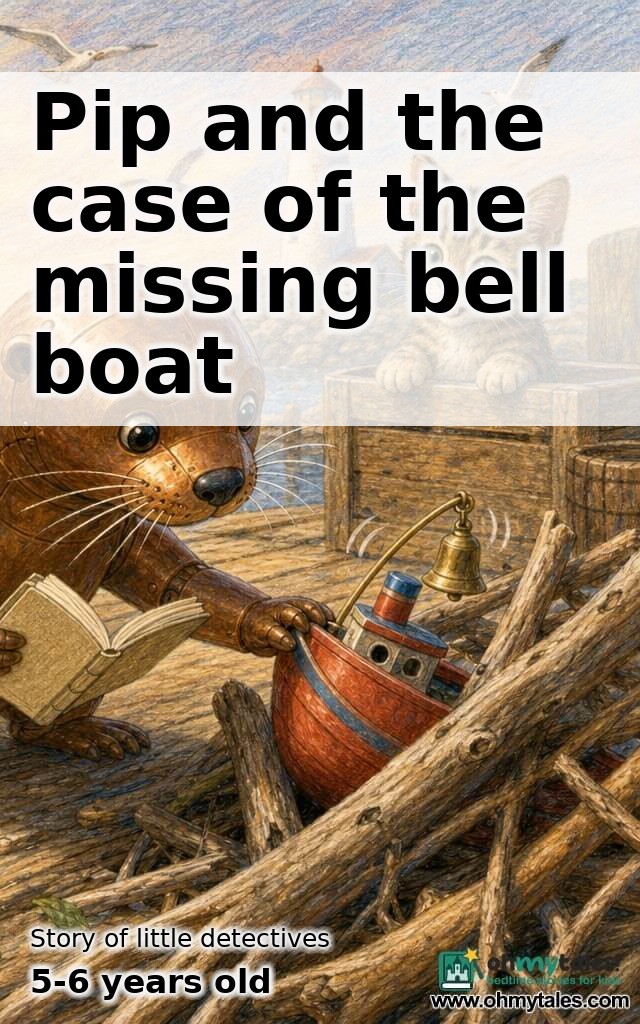
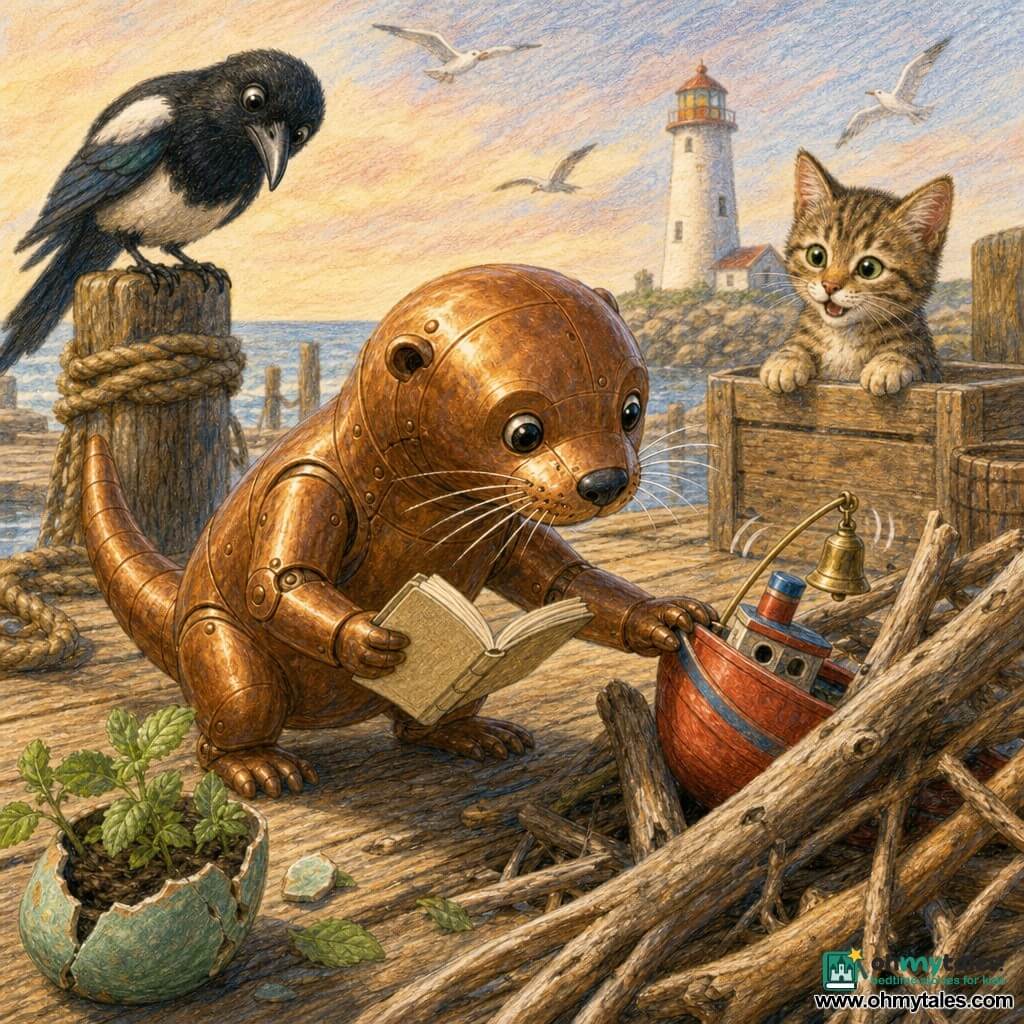
Pip was a small clockwork otter with shiny copper whiskers and a neat little notebook tucked under one arm. Pip liked neat things: neat lines in the sand, neat stacks of pebbles, neat lists of facts. Pip also liked questions, especially the kind that helped a mystery turn into a simple answer.
This morning, the harbor was bright and busy. Gulls swooped like white paper planes. Ropes creaked. A sleepy lighthouse blinked once, as if it had not finished waking up.
Pip lived near the wooden quay, where boats rested and bobbed. The quay felt familiar, like a long, friendly bench. It smelled like salt, seaweed, and old wood warmed by sun.
Pip had planned a calm day: count the boat bumps, oil one squeaky elbow joint, then read a page about “How to Notice Clues.” But the day changed quickly.
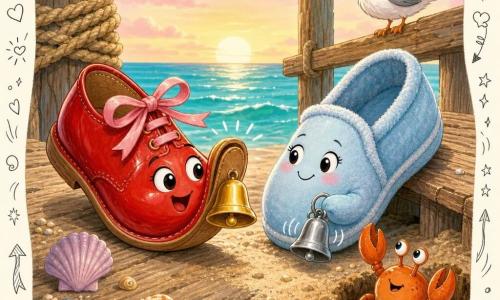
On a low crate by a coil of rope sat a little toy boat, painted red with a blue stripe. It belonged to Tansy the tabby cat, who visited the quay to watch the waves. The toy boat was special because it had a tiny bell inside. When it moved, it made a cheerful ding-ding.
Now the crate was empty.
Pip's copper whiskers twitched. A missing toy was not a monster mystery, but it mattered. A lost thing could make a heart feel wobbly, like a boat in a storm.
Pip opened the notebook. On the first clean page, Pip wrote:
1. What is missing?
2. Where was it last seen?
3. What changed?
Pip looked carefully at the crate. The wood was dry. No water drops. That meant the toy had not been splashed away recently. Pip leaned closer. On the crate edge was a tiny smear of green. Seaweed? Paint? Or something else?
Pip sniffed. It smelled like mint.
Mint was not a usual harbor smell. Pip wrote: “Mint smell + green smear.”
Next, Pip checked the sand beside the quay. The tide was low, so the sand showed many tracks like little road maps. Pip saw thin bird footprints, round crab dots, and a set of soft, padded prints.
Cat prints.
Tansy's paws, perhaps. Or another cat. Pip did not guess yet. Pip only noted: “Cat prints near crate.”
Then Pip asked the quay itself, in Pip's quiet way, by looking and listening. The ropes were still. The boats were calm. Nothing looked broken. That meant the toy was likely taken, not fallen.
Pip's gears hummed with purpose. This mystery could be solved by steps, not by worry.
Pip decided to follow three clues: the mint smell, the green smear, and the paw prints.
Part 2: Clues Along the Quay
Pip walked along the quay boards, each step clicking softly. The quay had many places a toy could hide: behind barrels, under nets, inside old buckets, between stacked crates.
Pip chose a simple plan.
First, Pip checked places that matched the clues. Mint smell meant “near mint.” Green smear meant “touching something green.” Paw prints meant “a padded traveler.”
Near the end of the quay stood a small snack cart for seagulls—no humans ran it. A clever old vending box clicked out fish crackers when a gull pecked a lever. Beside it grew a patch of mint in a cracked pot. The mint leaves danced in the breeze, proud and fresh.
Pip leaned in. The mint smell was strong here. Pip saw something else too: tiny green flakes on the ground, like crumbs of leaf.
Pip's notebook page filled neatly:
- Mint pot at snack cart.
- Green leaf flakes nearby.
Pip looked for the toy boat. Under the cart: only a lost feather. Behind the cart: a smooth stone shaped like a heart. No red toy, no blue stripe.
Pip did not feel sad. Pip felt steady. Finding nothing was still a result. It meant: “Not here.”
Next, Pip followed the paw prints. They went over a board, then onto a patch of sand, then back onto the quay. At one spot, the prints stopped beside a thick coil of rope. Pip bent down.
In the rope fibers, something glittered. Pip carefully pulled it free. It was a tiny blue paint chip.
Blue stripe.
Pip's whiskers lifted. The toy boat had been close to this rope. Maybe it got rubbed. Maybe it got tugged.
Pip looked at the rope. One end led to a small rowboat tied to the quay. The rowboat's side had green smudges—seaweed stuck from an earlier trip. Pip tapped the side gently. The rowboat rocked and made a hollow thump.
A hollow sound could mean “empty.” Or “something inside.”
Pip peered into the rowboat. There was a folded net, an old bucket, and a striped scarf. No toy boat.
But the net had a faint mint smell.
Pip paused and thought in a very Pip way. Pip asked a new question: “Who would carry mint?”
Some harbor animals liked mint. Snails liked it. Some birds used it for nests. And one animal always smelled like mint because of the candy wrappers it collected.
Milo the magpie.
Milo was famous on the quay, not for being mean, but for loving shiny things. Milo did not steal to hurt. Milo collected because collecting felt like a game. Still, a missing toy was not a good prize.
Pip followed the faint mint trail along the boards. It led past the lighthouse steps and toward a tall pile of driftwood. The driftwood pile was like a wooden mountain, full of cracks and shadows.
Halfway there, Pip noticed a mini-rebound. The paw prints changed.
The soft padded prints stopped, and thin clawed bird prints began.
Pip smiled a small smile. Clues were lining up like ducks.
Pip wrote: “Paw prints → bird prints near driftwood.”
Now Pip was very close to the driftwood pile. Pip listened. Inside, there was a small rustle, then a quiet ding-ding.
A bell sound, soft and trapped.
Pip's heart gear clicked faster, but Pip stayed calm. Pip remembered perseverance: keep going, even when the path bends.
Pip did not rush into the driftwood. Pip made a safer plan: look for an opening, then check for trouble, then act.
Pip crawled on careful paws. In a dark nook, Pip saw something red.
The toy boat.
It was wedged between two sticks, as if it had sailed into a tiny wooden cave and got stuck.
Beside it lay a small pile of shiny things: bottle caps, a silver button, and a bright candy wrapper that smelled like mint.
Milo's stash.
Pip did not feel angry. Pip felt ready to fix the problem.
Part 3: The Best Return
Pip needed to get the toy boat out without breaking it. The driftwood sticks were tight, like a trap made by accident.
Pip tried the first idea: pull the boat gently. It did not move. The bell inside went ding-ding, but the boat stayed stuck.
Pip tried a second idea: push from the back. Pip reached in with a paw, but the space was too narrow.
Pip did not give up. Pip took a deep, steady breath of salty air and asked a helpful question: “What can make the space wider?”
A lever.
Pip looked around and found a flat piece of driftwood shaped like a paddle. Pip slid it into the crack beside the toy boat. Very slowly, Pip pressed down. The driftwood sticks creaked. The space opened a tiny bit.
Pip pressed again. Creak. A little more space.
Pip pressed a third time, patient as the tide. The opening was wide enough for the toy boat to wiggle.
Pip reached in, held the toy boat carefully, and pulled it out. The little bell rang a happy ding-ding-ding, like it was cheering.
Pip checked it for damage. The red paint was fine. The blue stripe had a small scratch, but the boat was still brave and bright.
Now came the important part: returning it kindly.
Pip also wanted to keep the quay peaceful. Milo's collection might include things that were lost too. Pip sorted quickly: the silver button looked like it came from the lighthouse cloth flag, the bottle caps were harmless, and the candy wrapper was just trash.
Pip placed the trash in a nearby bin made from a hollow log. Then Pip arranged the other shiny items in a neat line on top of the driftwood pile, where their owners could spot them. Pip wrote a simple note in the sand with a small stick: “FOUND HERE.”
No humans would read it, but animals could. Pip knew many animals watched the sand like it was a message board.
Then Pip carried the toy boat back to the crate by the rope coil, the very place it had been last seen. Pip set it down softly, facing the water, as if it was ready to sail.
Pip added one more helpful thing. Pip took a short piece of string and tied it gently around the crate handle and the toy boat's little loop, making a simple leash. The toy could still move and ring, but it would not wander far.
At that moment, Milo the magpie fluttered down onto a post, black feathers glossy in the sun. Milo tilted the head, curious and a little embarrassed.
Pip did not scold. Pip simply opened the notebook and pointed to the three clues written there: mint smell, green smear, prints that changed from paws to bird tracks. Pip tapped the page, then tapped the toy boat.
Milo blinked. Milo looked at the neat line of “found” treasures on the driftwood pile, then at the toy boat returned to its spot. Milo's beak clicked once, like a tiny apology.
Pip felt warm inside. The mystery was solved, but the best part was the gentle lesson: take care of what belongs to others, and fix mistakes with help.
The harbor felt calm again. Boats bobbed. Gulls swooped. The lighthouse blinked, as if saying, “Good work.”
Pip stood on the quay and listened to the toy boat's bell ring once in the breeze. Ding.
Pip wrote the final line in the notebook:
“Perseverance is small steps that do not stop.”
And the day went on, bright and safe, with one toy restored and one curious mind feeling proud.