Chapter One: The Pig with a Pocket of Coucous
Percy the pig carries a pocket that no one can see but everyone feels. It jingles like a pocketful of giggles and rustles like a secret map. Percy does coucous — little sneaky hellos that pop up behind tree trunks, under mushroom umbrellas, and inside piles of autumn leaves. He doesn't shout hello; he peeks with a paw, flashes his brightest snout, and whispers "coucou" in the softest way, making even the grumpiest badger blink twice and snort a laugh.
The village glade is a watercolor of moss and sunbeams where animals hustle with tiny errands: the hedgehog posts morning berries, the squirrel practices upside-down cartwheels, and the geese discuss the exact angle of cloud shadows. Percy practices his coucous between errands, hiding behind a daisy, behind a patch of ferns, then behind a scarecrow made of twigs and old scarves. Each coucou is a small, playful shock that brightens faces. He keeps count with pebbles in his pocket: one coucou, two coucous, three.
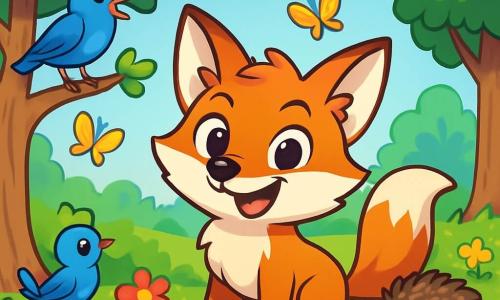
One morning Percy meets Riddle-Rill, a slim fox with whiskers like question marks and eyes full of sparrows. Riddle-Rill wears a tiny cap stitched from map scraps and carries a satchel of puzzles. He speaks in twigs of riddles that tangle your tongue and tickle your brain. "What walks without feet and sings without a throat?" he asks, smiling. Percy grunts and tilts his head. Together they laugh when the answer is "wind," which tickles the leaves and their hair.
That day a wind of mischief ripples through the glade. A notice flutters down from a branch: the Festival of Light is coming, and every creature must bring something that shines. Percy thinks of coucous that shine like coins, but coucous are not things you can hang on a string. Riddle-Rill suggests, "Why not make something that tells a story when it waves?" Percy's snout blooms with ideas. They decide to make a banner the whole meadow can wave, a flag stitched from small bright things collected on their travels.
Chapter Two: The Great Gathering
Percy and Riddle-Rill set off with a rucksack and a list written in rhyme. Their first stop is the pond where the frogs play hop-opera. Percy performs a coucou behind a cattail; the frogs leap and the lily pads clap. From the frogs they gather glow-amber frogspeckle (which refuse to be called fireflies and prefer "pond-lanterns") and a strip of silver reed that shines in moonlight.
They bustle through the berry market where a hedgehog sells buttons made of mussel shells. "Perfect for a flag," Percy whispers, performing a coucou from the berry stall. The hedgehog chuckles and hands over a dozen mismatched buttons. Riddle-Rill solves a riddle for a loaf of cloud-bread, trading his own riddle in return: "I am both door and keys; what am I?" The baker badger presses a crumb into Percy's hoof and grins; it is a lock of laughter.
Pairs of animals join. A pair of pigeons promise feather-thread that never frays; a beaver offers a strip of water-polished wood. Percy adds pebbles that hum when rubbed, and Riddle-Rill tucks in a pocket of puzzling papers—the kind that fold into tiny boats when you blow on them. With each addition, Percy practices a coucou, hiding behind the donations and startling the donors into giggles. The pile grows into a cheerful chaos: ribbons, bits of glass that catch the sun in tiny rainbows, a patch of gingham from a mouse's picnic blanket, and a bell that sounds like tinsel.
At twilight, they arrive at the old oak. Percy's pile of treasures looks like a small moon on the grass. But there is worry in his steps; a flag must hold together, and nothing in the pile is exactly a flagpole. Riddle-Rill tilts his head and offers another riddle. Percy claps hooves and, with a snort of determination, decides to find the strongest stick.
Chapter Three: The Pole of Many Hands
The stickhunt becomes a parade. The field echoes with the shuffle of paws and the clack of hooves. A woodpecker drums a rhythm above them, and a badger scouts for the straightest branch. Percy does coucous from the hollow of a log and pops out so suddenly the badger nearly drops his pick. Laughter binds the search like rope.
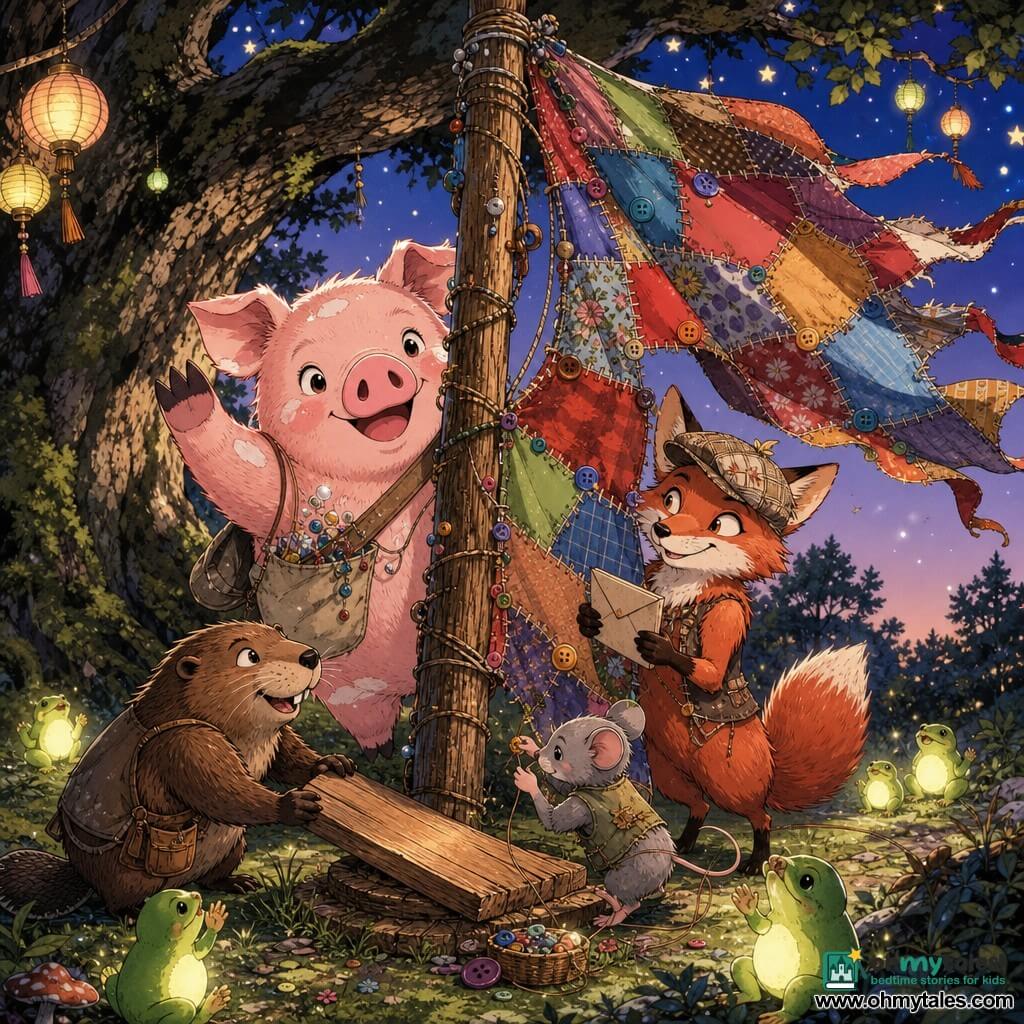
They find a fallen branch that is as long as three rabbits and as sturdy as a bridge. It's nicked, knotty, and slightly crooked in a very friendly way. The beaver offers to bite it smooth; the hedgehog offers to tack buttons on for decoration. Everyone adds something: a feather here, a ribbon there. Percy, whose talent is small surprising snuggles of joy, tucks his pebbles into a little net and hangs them so they chimed like tiny laughter when the breeze passed.
By evening the pole was a masterpiece: patched with feather-thread, wrapped in gum-willow vine, decorated with shells and bell, and stubbornly charming. Riddle-Rill whispers a riddle of fastening, and a mouse with nimble fingers threads the final knot. Percy performs a grand coucou behind the pole, and the crowd bursts into applause as if someone had let a bucket of sunshine spill.
They raise the pole together. It leans in like a tall friend taking a bow. The satchel of puzzles flutters and the button collection glints. But the flag itself is missing—a patchwork needs a face, something to wave. Percy ponders, his snout twitching, remembering the tiny things that made the day glow.
Chapter Four: The Flag That Could
The next morning a small committee—Perсy, Riddle-Rill, the mouse, the beaver, and a pigeon duo—gather around the mound of treasures. They begin to stitch, glue, and tell riddles between knot-tying. Riddle-Rill slides a riddle under Percy's nose: "What flies without wings and waves without hands?" Percy snorts and answers, "A flag!" but grins; that's exactly what they're making.
They drape the gingham as a heart, line it with silver reed, and stitch on the buttons like stars. The frog-pearl lights are wrapped at the edges to glow softly when dusk comes. The bird feather-thread makes tassels that sway like little thoughts. Percy finds a small square of patchwork left by the mouse: a scrap of yellow, a scrap of blue, and a scrap of green. He sews them together with a pebble's hum and whispers a coucou, because a flag is also a story told to the wind.
When they hoist their makeshift flag, something unexpected happens. The wind, which loved riddles and sneaky coucous, decides to dance. It lifts the banner and makes the bell jingle like laughter. The patchwork flutters in colors that seem to say, "Keep going, try again, every little thing brightens the day." Even the grumpy old badger smiles until his whiskers twitch.
The Festival of Light arrives, and the meadow glows with lamps and lanterns. Percy's flag does not shine like a polished mirror, nor fly like an eagle's standard, but it waves like a big, warm hello. Animals point at the buttons and giggle at the frogs' glow. A gust ruffles the button-studded edge, and the pebble net sings. Percy bows and performs one final, splendid coucou, popping out from behind the flagpole with such timing that everyone erupts into laughter.
Riddle-Rill recites a last riddle to the crowd that unknots into applause, and the flag flutters as if applauding back. The night hums with small, contented sounds. Percy counts his pebbles—more than the morning—and tucks an extra one into his pocket for luck.
No grand prize flies down from the clouds. No thunderous announcement declares them best in the land. Instead, the animals carry home a feeling that something bright and handmade can lift a whole meadow's spirits. The flag, patched and proud, stands by the oak, and whenever a breeze passes, Percy's coucous echo through the leaves—quiet little greetings that say simply: keep smiling, little by little.