The Squirrel's Whisper and the Fox's Plan
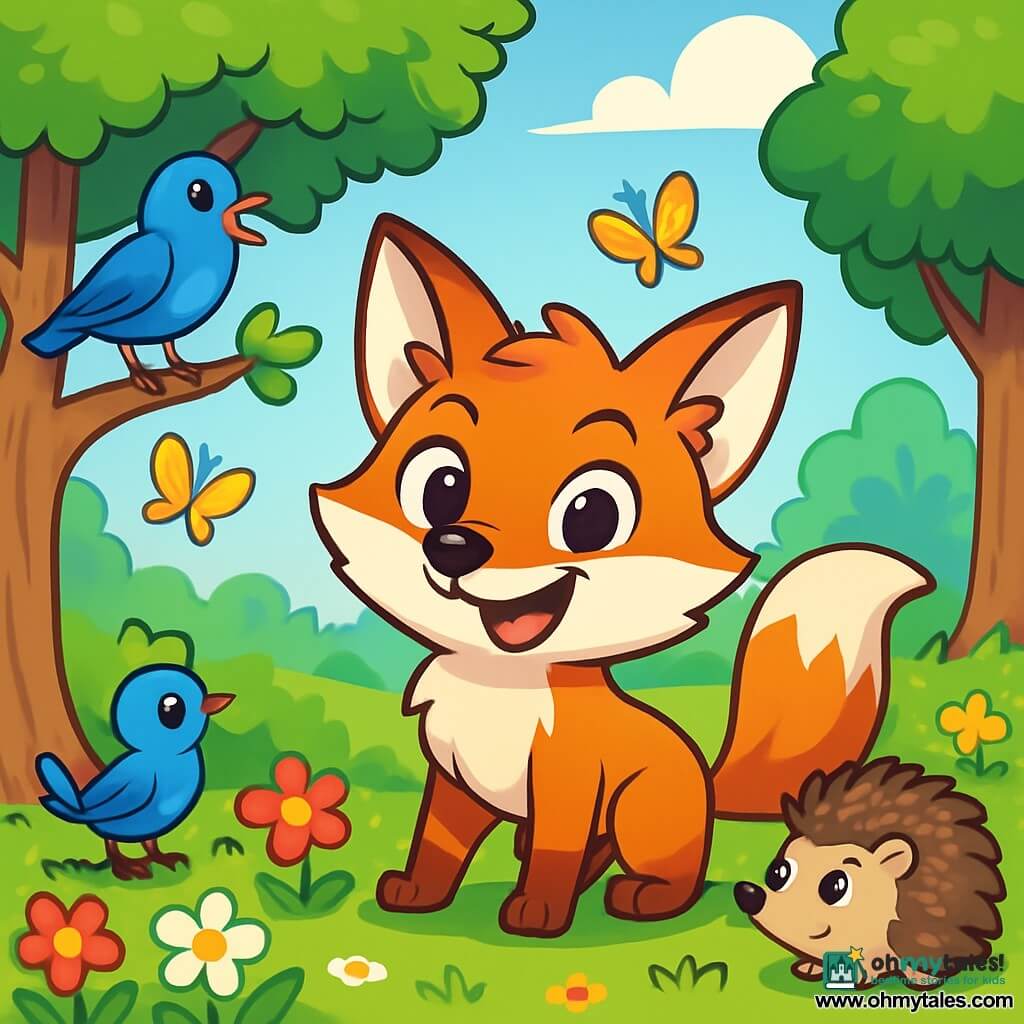
Fenn the fox woke with a hiccup of laughter stuck in his whiskers. He was the sort of fox who saw paths as ribbons to be tied into bows, and puddles as mirrors that 꼭 must be winked at. On this particular spring morning, he smelled something strange: a smell like old books, sun-warmed stones, and a promise.
"Today's the day," he told the crooking willow, which drooped in an agreed-upon way. "I will make Griselda grin."
Griselda the badger was famous in the forest for having the world's most locked jaw when it came to smiling. Her face was a list of rules and grumbles. Rabbits used her den as a shortcut when she was out; hedgehogs whispered her name for dramatic effect; swans told stories about her frowns across the lake. Not one of them had ever seen Griselda break into a smile. She was, for lack of a kinder label, the grumpiest animal in the wood.
Fenn had a mission. He didn't like grumpy things if they were lonely. Smiles, he believed, were like dandelion seeds—meant to be caught and shared.
He packed a bag with things a fox might find handy: a stripy scarf that had seen three picnics and one pancake stand-off, a magnifying glass that made freckles look like planets, and a suspiciously jingling collection of buttons. He slipped on his boots—mismatched on purpose—and set off with a hop in his step.
Halfway down the nut lane, he stumbled on a curious object half-buried in a patch of moss that smelt faintly of marigold tea. It looked like a small cone, painted sky-blue, with a corked end and a tiny mouthpiece. When Fenn picked it up and cupped it to his ear, a feather-light voice said, "Pssst. Say something silly."
"A whispering megaphone?" Fenn breathed. The voice was so soft he could have sworn it was the wind reading a bedtime story. "What a splendid thing!"
"Use me wisely," the cone whispered. "I can make a soft shout or a loud hush. I can make whispers travel like balloons. But I only work when used for one true purpose."
Fenn's heart did a joyful somersault. "To make the grumpiest smile," he said aloud, and the cone hummed like a kettle pleased to be boiling.
He packed the megaphone into his bag, tucked it between the scarf and the magnifying glass, and darted away, his tail a waving semaphore of plans. Along the way, he practiced whisper-jokes into the cone, which whispered them back in dramatic falsetto: "Why did the mushroom go to the party? Because he was a real fungi!" Fenn snorted so loud he nearly startled a squirrel into dropping a nut.
By lunchtime he had a plan worked out like a paper accordion. The first event would be a parade of oddities: costumes, noises, and unexpected pies (not the eating kind—surprise pies, that is). If one thing failed, the next would come along, like trains arriving late but stylish. The whispering megaphone would be his secret knobby key. He imagined Griselda's eyebrows doing something uncharacteristic—perhaps a single, tiny wiggle. The thought made Fenn giggle. He tucked the image into his pocket for safe-keeping.
"Creativity is like marmalade," he told a passing ant with authority. "It spreads better when shared."
The ant blinked twice, offering Fenn a crumb that looked like encouragement. Fenn hopped on, feeling ready for the first step of his plan: recruit the animals.
The Parade with Pretzels and Pianos
Fenn stood in the clearing, blew a dramatic raspberry, and waited. This was his rally-cry: the sound of comically serious business. From every nook and burrow, the animals appeared, each more odd than the last.
There was Delilah the duck, wearing a sunhat with a suspiciously sincere ribbon. There was Monty the mole, who was carrying a tiny piano on his back and insisted, rather politely, on being called Maestro Mole. There were twins—pepper and pickle—two raccoons who loved tap-dancing but could not agree on a rhythm. An owl offered a hat that kept trying to sleep.
Fenn addressed them with a flourish. "Friends! Today we march for smiles. Today we parade for the grumpiest! We will be splendidly silly. We will be pleasantly peculiar. We will—"
"—be tasteful?" asked Monty, adjusting his piano's keys.
"—occasionally tasteful," Fenn amended. "Mostly, we will be so entertaining that Griselda will have to crack a smile to check whether it's daytime."
"What's in it for us?" asked Delilah, who looked like she had a very good reason to be involved.
"Glory and crumbs," Fenn answered. "And the chance to be creative."
They practiced. Delilah quacked syncopated rhythms. Monty thumped a lid and played Chopsticks with two thimbles. The raccoon twins tapped out a debate with delightful flailing feet. Fenn presented the megaphone for rehearsing. Each animal took a turn whispering an odd line into it. The megaphone muffled them all into gentle bumbles that drifted like bubbles over the crowd.
"Whisper me your silliest sound," the cone urged each performer.
"A quacking kazoo!" cried Delilah, and the megaphone answered with a chorus of tiny saxophones.
"An opera sneeze!" offered Monty, and a tiny velvet tenor sneezed a note that sounded like someone discovering a huge secret.
Fenn's plan felt marvellous. They would parade to Griselda's hill, deliver a bouquet of gags, then finish with a grand crescendo of nonsense supported by the whispering megaphone. The megaphone, he believed, could make a soft idea travel like a cheer.
When they arrived at Griselda's hill, the badger was awake and sitting on her stoop like a small, strategic mountain. She wore a tea-stained apron and an expression that had more furrows than a well-read map.
"Good afternoon," said Fenn, giving his most practiced bow, which involved one foot, an elegant twitch, and a hatless flourish.
Griselda glanced at the parade. "You're better off indexing your own enthusiasms," she announced. "Noise is not novelty. Novelty is not nourishment. And definitely no pies without warning."
Delilah did a tiny quack-sigh. Monty nearly dropped his piano in disappointment. The raccoon twins considered dramatic fainting.
"Stand by, friends," Fenn whispered, clutching the megaphone. He remembered the cone's line: only work when used for one true purpose. He wrapped his paws around it and whispered into its corked mouthpiece.
"A whisper for a grin," he breathed. The cone shivered, accepted the task, and puffed out a sound like a butterfly rehearsing a bassoon.
Fenn signaled the parade. Delilah did a quack-chorus that sounded suspiciously like applause for invisible teapots. Monty played a piece he called "The Silent Sonata"—mostly keys without notes, which made the air very tense and very ridiculous. The twins tap-danced so fast a squirrel fainted from admiration.
Griselda's nose twitched. She did not smile. Her whiskers merely wrote a list on the air.
"Try the whisper-megaphone," she said dryly. "If it doesn't fail like everything else, I might clap. But do not expect anything dramatic."
Fenn turned the cone toward her and whispered the silliest line he'd saved: "If pancakes could sing, they'd probably be flat."
The cone carried it like a paper plane. Griselda's ear flicked. Nothing. Then, just behind her ribcage, something shifted. It sounded suspiciously like a single, tentative snort.
The parade cheered politely. It was a small victory. Fenn felt a flicker of hope. He knew that to make Griselda smile, he needed more than one odd trick. He needed a swirl of surprises—the kind that pile up like pebbles until, eventually, a grin slipped out like a secret.
The Costume Catastrophe and the Clever Fix
For the next plan, Fenn decided on disguises. "If Griselda will not smile at a parade," he said, "she might at least laugh at Monty dressed as a cabbage." Monty frowned, which looked like his eyebrows were reading a book they did not enjoy.
They set to work crafting outfits from the forest's finest recyclables. Delilah found a ribbon that looked like a rainbow. The raccoon twins borrowed a hat that belonged to a particularly forgetful hedgehog. Fenn made himself a cape from the stripy scarf and a mask out of stiff leaves that tickled his nose when he smiled.
Monty, however, being a mole, had limited vision for costume detail. He placed a cardboard box over his head for cunning effect. The box, unfortunately, had a painted face that looked more startled than fashionable. The raccoon twins attached bells to the hat. The bells then fell off within ten seconds and performed an impromptu skittering performance down the hill.
Everything was going beautifully absurd until the hatless bells collided with the stony path and made a sound so farcical that the nearby frogs considered applying for chorus scholarships.
Griselda did not even twitch. She simply observed, like a judge sampling wines and discarding the odd bouquet. "Noise, again," she muttered. "I prefer the solitude of sensible silence."
Fenn's heart flickered like a lantern. Then he remembered the megaphone's other trick: it could carry a whisper that sounded much larger than itself. He had been using it for private chuckles and small quips. Perhaps it could be bolder. He had an idea so daft his whiskers tingled.
"Quickly," he whispered to his parade, "we will perform the Great Swap!"
The Great Swap was simple: everyone traded props and roles. Monty became the narrator, Delilah wore Monty's box like an art installation, the raccoon twins attempted a duet of silence, and Fenn, with much deliberation, became a giant, wobbly cabbage (since he'd made Monty the cabbage earlier, this was confusing but entertaining).
They rehearsed. They bungled. A frog joined in because it liked the rhythm. The forest smelled of mashed berries and optimism.
When they arrived at Griselda's stoop, the swap performance began. Monty narrated with heroic squeaks. Delilah, inside the box, produced a muffled quack-opera that sounded like a royal announcement and also possibly a request for jam. The twins tried to be silent but kept giggling like springs. Fenn, as a cabbage, rolled in unexpectedly near Griselda's shoes and performed a dance that involved precise leaf-flipping and a very dramatic wobble.
Griselda looked down. For a moment, a small sound escaped her, like a pebble laughing at a snail. Then she rasped, "That cabbage has better footwork than my cousin's accordion."
There it was—another tiny victory. A half-grin bubbled in the corner of Griselda's mouth like a shy sun. Fenn nearly toppled from his cabbage posture in sheer delight. The megaphone hummed proudly in his bag, pleased that its whisper had been useful.
But the triumph was interrupted by a sudden hiccup: a gust of wind blew Delilah's hat into a puddle and the raccoon twins' bells clanged a melodramatic final note which made the frogs gasp. In the confusion, the box toppled, Monty tripped, and the mole's piano slid down the hill like an obedient sled.
Monty ended up with a single thimble stuck on his nose, and it looked so comical that even a nearby badger pup that had been watching grinned a small hungry grin. It was messy, it was loud, it was far from perfect—but it was alive and crackling with creativity. Fenn took this as a sign that perhaps the next step should be something simple and unmissable.
The Whispered Joke That Went Astray
The megaphone had one more trick—if you whispered a secret into it and then asked everyone to pass it along in whispers, the secret would grow sillier with each telling. It was like a game of telephone played inside a soft, laughing cloud. Fenn decided to use this trick to stir a gentle storm of laughter.
He whispered a tiny, silly secret into the cone: "Griselda's dance-step involves wiggling one ear when surprised."
The megaphone took the secret and wrapped it in a ribbon of sound. Fenn instructed the parade to pass the whisper along, softer and softer, until Griselda would hear the rumor as a feathered tickle.
They formed a whisper-line. One by one, each animal bent close to the next, passing the secret. The whisper grew cobbler-crumbs of nonsense. By the time it reached the last mallard, the secret had acquired an extra detail: the ear-wiggle was now performed while balancing a turnip on the head and singing about vegetables.
The whisper finally reached Griselda's stoop. She blinked, and the corners of her mouth almost took a holiday. Fenn felt a triumphant fizz inside him like a kettle about to sing. Yet, as whispers have a mind of their own, a small squirrel in the rafters misheard the turnip as a tutu and decided to illustrate. The squirrel leaped into the clearing wearing, nothing less than, a tiny tutu constructed from mushrooms and spider-silk.
The sight was so astonishing that every animal—including Fenn—let out a sound that belonged to the realm of disbelief. The squirrel twirled; the raccoon twins applauded in perfect unison; Monty tried to conduct. Griselda blinked and then, for reasons even she wouldn't be able to explain later, she let out a laugh that was more of a snort-and-a-half than a full smile. It was a new sound for the forest, like when rain sings on a tin roof for the first time.
"Ridiculous!" she declared, and somehow the word came out as warm as soup. Everyone froze for the smallest second and then laughed at the fact they had all frozen.
Fenn's cheeks felt like they were stuffed with marshmallows. He surged forward to present the megaphone as if it were a medal. "You started the whole thing," he said, but Griselda waved a paw.
"Don't be dramatic, fox," she said, but her eyes were bright. "I won't be responsible for rising expectations."
They celebrated with a round of tea—her tea was particularly stern—and a stack of biscuits that soothed nerves and mouths. The squirrel received polite applause for its tutu; it curtsied terribly.
Everything felt closer to smiling than ever. The megaphone hummed a lullaby of success. Fenn's tail wagged like a bell. Yet he knew something was missing: a big bold finish, something that would make everyone laugh together, not just watch Griselda's lips do small gymnastics.
A Very False Song and a Very True Smile
Fenn gathered everyone in the clearing for a final flourish. "We need a song," he announced. "A song so gloriously off-key that it will ring like a spoon in a bowl of pudding."
"No one can carry a tune," said Delilah. "We can carry a tune if it's in a bucket."
"We shall be gloriously off-key together!" cried Fenn with theatrical conviction. "Join me. Bring your voices, your hiccups, and your best loud whispers!"
They arranged themselves into a semicircle. Monty took his piano (which had been rescued and had acquired a new dent that made it sound like a laughing cow). Delilah warmed up her throat. The raccoon twins polished their tapping shoes. The mole brought a chorus of thimble-percussion.
Fenn produced the whispering megaphone for the last time. He whispered into it: "Sing like you mean it, but don't expect the notes to be correct." The cone glowed briefly, a sliver of comet-light, and agreed.
"One, two, three—" Fenn began, and then the forest exploded into song.
The song was ridiculous. It began with a brave attempt at a proper melody and then joyfully forgot itself. Delilah sang the wrong words with perfect confidence. Monty played the piano like he was explaining riddles to a cloud. The raccoon twins harmonized in ways that involved more elbow than expected. Squirrels provided backing squeaks. A family of frogs offered croaky counterpoint which, astonishingly, sometimes landed on the right note. Fenn led with an anthem of mashed-up phrases: "Oh, we love your hat, and the way you nap, and your stoic, slightly crispy map!"
They sang loud and false and utterly joyful. The notes tripped over each other and dove for puddles; sometimes they landed right, more often they didn't. Yet the energy was bright and warm and contagious the way sunlight is contagious to a sleepy garden.
Griselda listened. She folded her paws, which normally looked like tidy stacks of reasons. Her face began to do something no one had ever seen before: it unbuttoned. Her mouth opened, which might have been a prelude to scolding, but instead came a sound that was like a hiccup of happiness. She cleared her throat and, with a whisker of mischief, joined in.
She sang a single line—off-key and full of clinker-charms. The forest paused only long enough to notice: the grumpiest animal had sung. It sounded like a marmalade jar being opened by a careful hedgehog. Then she sang another line, and another, and within minutes the song carried her like a small, unexpected gust.
Everyone whooped and clapped; the raccoon twins performed a last-minute flourish with their feet. The megaphone hummed a delighted, contented sigh and then, in a tiny bubble of sound, whispered, "Mission accomplished."
After the song, they all joined in something slightly ridiculous: a choreographed bow that involved three curtsies and one very dramatic sneeze. The forest shimmered with a feeling that was almost the same as a smile. Griselda's grin was broad enough to startle a passing cloud.
"That was loud," she said, grumbling fondly as she wiped an eye with the sleeve of her apron. "And not at all terrible."
Fenn beamed until his ears almost unfolded. He had wanted to make her smile, and he had. He had used costumes, music, a whispering megaphone, and a squirrel in a tutu. Mostly, he had used the forest's collection of creative ideas and sewn them together with kindness.
At dusk, when the stars were learning their positions, the animals formed a circle for one last whimsical act. They stood together and sang a chorus that was wonderfully, intentionally off-key—a song that mistuned on purpose to match the mood of a day spent making the impossible likely.
It went like this, roughly, very roughly indeed:
"We sing of hats, and bats, and unexpected chats,
We sing of turnips on heads, and dancing treads,
We sing, oh we sing, while the moon is still young—"
They couldn't remember the rest, but it hardly mattered. Their voices wrapped around the clearing like a blanket quilted with giggles.
Griselda sang the highest squeaky note she had in her repertoire, which startled a bear into applauding in the distance. And when the song ended—false, offbeat, and utterly joyful—everyone joined hands, paws, and wings in a final, sloppy bow.
Fenn tucked the whispering megaphone back into his bag, careful to thank it. "You had the perfect whisper, old friend," he murmured.
"Only when used for a single true purpose," the cone replied in a voice like wind chimes.
Fenn nodded. The grumpiest badger smiled in a new and reckless way. The clearing hummed with the kind of happiness that collects in pockets and grows teeth—teeth made for biting into the sweet, messy fruit of creativity.
They all went home that night singing slightly off-key, their imaginations buzzing like glow-worms. Fenn's boots left prints like punctuation marks. He walked slowly, thinking of new possible plans for making more creatures grin. His scarf fluttered behind him like a flag that said, simply and loudly: try something funny today.
And somewhere between a whisper and a giggle, the forest slept with the lightness of a prank well done. The last sound before the stars took over was the animals' final, imperfect, altogether joyful chorus. It was not a perfect melody, but it was shared, and that made it beautiful enough.
They sang, together and proudly false, and the world felt a tiny bit more open to new ideas.