Chapter 1: Good Morning, Officer Miles
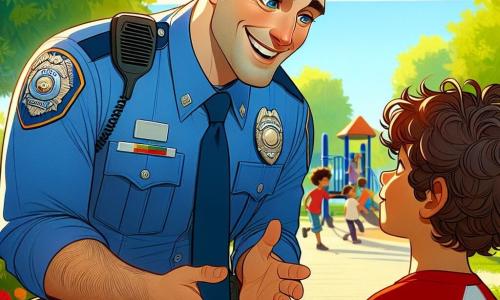
Officer Miles Carter was a young man with a neat haircut, a steady smile, and a small habit that made him famous on Maple Street: he loved it when everyone greeted each other.
Not a quick, half-asleep nod. A real greeting.
He walked into the station just as the morning sun slid between the buildings like warm honey. The hallway smelled like floor polish and fresh coffee. People passed in both directions—officers, clerks, visitors.
“Good morning, Ms. Denny!” Miles called to the front-desk clerk.
“Good morning, Officer Carter,” she replied, looking up with a grin. “You're early.”
Miles tapped the brim of his cap. “Early enough to catch the good mornings before they escape.”
A teen volunteer carrying a stack of flyers nearly bumped into him. Miles stepped aside and lifted a hand.
“Morning! Watch your corners—hallways are like rivers. Everyone's flowing.”
The teen laughed. “Morning, Officer!”
Miles liked that. A greeting was small, but it changed the air, like opening a window.
Today wasn't a “chase-the-bad-guy” day. Miles preferred most days that way. Today was Community Walkabout Day, when an officer visited the school, the library, and the community center, answering questions and helping with everyday problems before they turned into big ones.
He checked his list: school safety chat, bike-check station, lost-and-found box at the library, then a short meeting about the neighborhood's new “Quiet Corridor” rule at the community center.
He picked up his patrol bag—a navy blue bag with reflective stripes—and slung it over one shoulder.
Instantly, it tugged at him, pulling his shoulder down like a stubborn puppy.
Miles paused. “Nope. Not today.”
He set the bag down again. He had a feeling he'd be teaching someone about this later.
Chapter 2: The Hallway Lesson
At Maple Grove Middle School, the front office buzzed with the sound of lockers clicking and sneakers squeaking. A poster near the entrance read: “Respect Looks Like: Listening, Greeting, Helping.”
Miles smiled at it like it was an old friend.
Principal Alvarez met him by the office door. “Officer Carter! Right on time.”
“Good morning, Principal Alvarez,” Miles said. “How's the day treating you?”
She chuckled. “It's 8:05. Ask me again at 2:45.”
Miles followed her toward the gym, where a small group of sixth and seventh graders waited on the bleachers. They looked half-curious, half-suspicious, the way preteens often did—like they were deciding if something was cool or secretly babyish.
Miles stood in front of them and didn't start with rules. He started with something better.
“Good morning,” he said, clear and calm.
A few students replied.
Miles tilted his head, pretending he hadn't heard. “Hmm. I think my morning got stuck in traffic.”
Laughter rippled across the bleachers.
“Good morning!” the group tried again, louder.
“There it is,” Miles said. “Much better. Greeting each other is a simple way of saying, ‘I see you. You matter.' That's a kind of respect you can carry around for free.”
A girl in a purple hoodie raised her hand. “Are you, like… always on duty?”
Miles nodded. “Sometimes I'm in uniform, sometimes not. But my job is always the same: to keep people safe by helping, listening, and solving problems. A lot of police work is talking, not running.”
A boy near the end of the row pointed at Miles's bag. “What's in there?”
Miles glanced down. “Tools. Not the superhero kind. The helpful kind.”
He lifted the bag, and it sagged. “Also, it's heavier than it needs to be. Which is a perfect moment for a mini-lesson.”
The students leaned forward.
Miles set the bag on a bench and faced them. “Who here carries a backpack?”
Every hand went up.
“Who here has ever had a sore shoulder, or a strap that slides off, or a bag that smacks you in the hip like it's mad at you?”
Hands stayed up. A few kids nodded dramatically, as if their backpacks had personally insulted them.
Miles picked up his bag and demonstrated. “First rule: don't wear your bag like it's trying to escape.”
He slung it on one shoulder again. It pulled him sideways.
“This is how you end up walking like a question mark,” he said, bending a little. “And your muscles will complain all day.”
A boy snorted. “My muscles complain anyway.”
Miles grinned. “Mine too. That's why we make it easier. Second rule: use both straps. Keep the bag snug against your back. High and close—not dangling like a shopping bag.”
He put both straps on, adjusted them, and straightened his posture. “Feel the difference? The weight spreads out. Your back stays happier.”
A student in the front row raised a hand. “What if it's too heavy no matter what?”
“Excellent question,” Miles said. “Then you do what we do in the field: pack smart. Heavy items closest to your back. Lighter items farther out. And if you don't need it today, don't carry it. Your spine is not a storage unit.”
A couple of kids laughed, and one murmured, “Tell that to my math binder.”
Miles pointed gently. “Also, keep straps flat, not twisted. Twisted straps dig in. Flat straps cooperate.”
He stepped toward the bleachers. “Police officers carry gear too. If we carry it wrong, we get tired faster, and tired people make mistakes. So taking care of your body is part of staying safe.”
Principal Alvarez nodded, impressed. The students looked like they'd just discovered backpacks could be negotiated with.
“Okay,” Miles said. “Now for the next part of my job: answering questions. Nothing is too small. Prevention is about the small things.”
A hand shot up. “Do you have to be scary?”
Miles's eyebrows rose. “Do I look scary?”
The student squinted. “More like… organized.”
“That's fair,” Miles said. “Police work isn't about being scary. It's about being calm. It's about helping people when they're confused or upset. Sometimes that means setting limits. But we try to use words first. We try to understand the problem.”
Another student asked, “What if someone's arguing in the hallway?”
Miles held up two fingers. “Step one: don't join the fire. Step two: get an adult. If you're the adult, you separate people, speak respectfully, and help them cool down. Most conflicts shrink when someone calm shows up.”
He looked around the gym. “And step three is my favorite: say hello before things get tense. It's hard to stay mad at someone who's treated you like a human being all week.”
The bell rang, and the students stood.
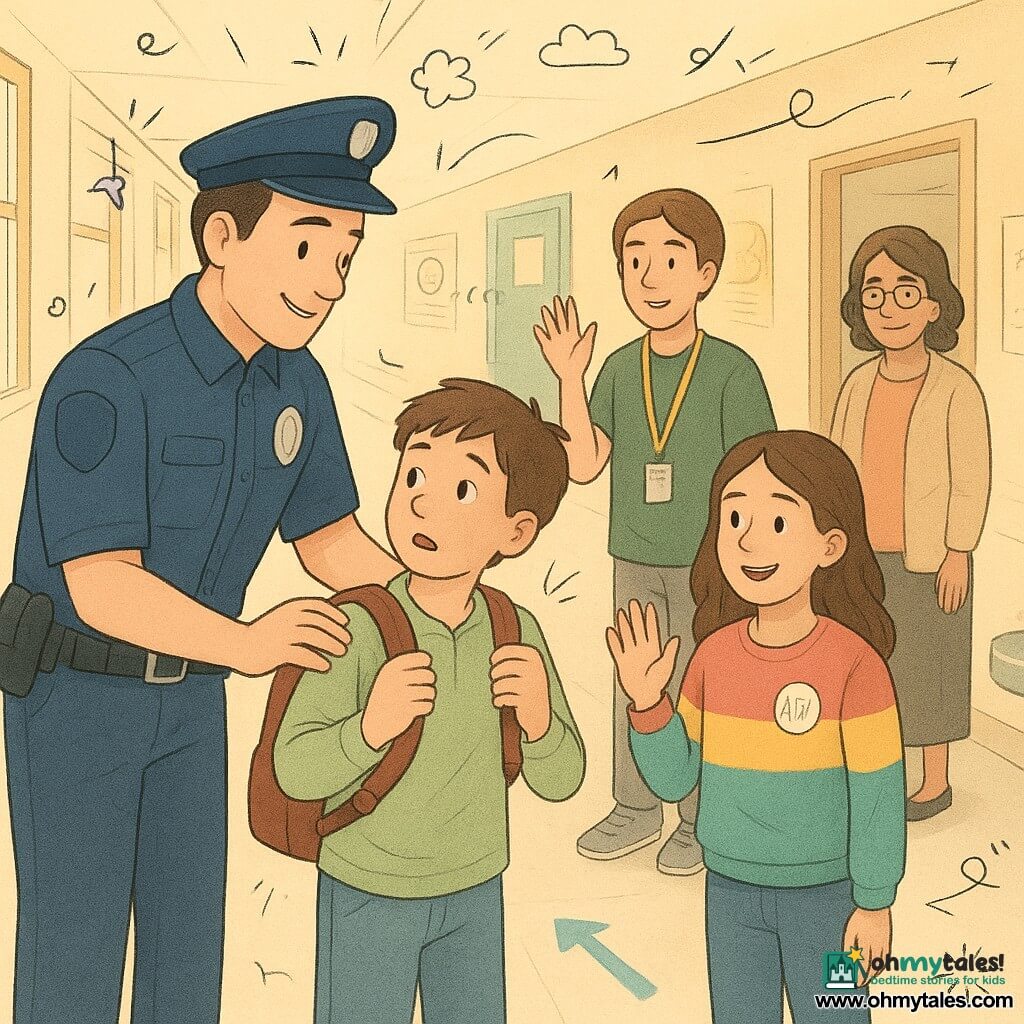
Miles lifted his hand. “Have a good day. And try greeting someone you don't usually greet. Just one person.”
A few kids waved back. Some tried “Good morning!” as they filed out, testing the words like new shoes.
Miles watched them go, feeling the day settle into place.
Chapter 3: Bikes, Bells, and Small Fixes
Outside the school, Miles set up a little bike-check station near the sidewalk. It wasn't fancy: a folding table, a small toolkit, and a stack of reflective stickers shaped like tiny stars.
Kids rolled up with bikes and scooters, their wheels whispering over the pavement.
A seventh grader named Jonah pointed at his handlebars. “My bell doesn't work.”
Miles crouched beside the bike. “Let's see.”
He examined the bell, turning it carefully. “Sometimes it's just dirt. Sometimes a screw is loose. In police work, we check the simplest thing first. It saves time.”
He used a small screwdriver, tightened one part, and flicked the bell.
Ding!
Jonah's face lit up. “Nice!”
Miles handed him two star stickers. “Put these on your helmet. Cars see stars better than dark plastic.”
Jonah peeled one carefully. “Do you, like, know how to fix everything?”
Miles chuckled. “No. I know how to stay calm, ask questions, and find the right help. That's a skill you can use anywhere.”
A girl on a scooter rolled closer. “Officer Carter, what do you do if someone steals a bike?”
Miles rested his hands on his knees so he was eye-level with her. “First, we make a report. That's writing down what happened: where, when, what the bike looks like. Details matter. Second, we check cameras if there are any. Third, we talk to people nearby. And we also teach prevention—like using a good lock and not leaving your bike in dark corners.”
He pointed to the rack. “Bright places are better. And if you can, lock the frame and the wheel.”
She nodded slowly, taking it in. “So it's not just… catching someone.”
“It can be,” Miles said. “But a big part is stopping it from happening again. Safety is a team project.”
A teacher approached with a worried look. “Officer Carter, could you come to the entrance? Two students are arguing about whose turn it is to hold the door.”
Miles blinked once. Then he smiled. “The Door Debate. Classic.”
He walked with the teacher to the entrance where two kids stood, both gripping the door like it was a trophy.
“I held it yesterday!” one insisted.
“And I always hold it!” the other snapped.
Miles stood between them, relaxed like a traffic cone—firm, but not mad.
“Good morning,” he said brightly.
They paused, confused.
Miles continued, “I'm Officer Carter. I'm here to help. Let's use respectful words. Tell me what you want, one at a time.”
They spoke, each trying not to sound too dramatic.
Miles nodded. “So you both want to be helpful. That's actually a good problem.”
The kids blinked.
Miles pointed to the sign near the entrance: “Respect looks like helping.”
“Here's a solution,” Miles said. “One of you holds the door for the next three people. Then you switch. That way the kindness gets shared.”
The kids loosened their grip. The door swung smoothly.
The first student sighed. “Fine.”
The second mumbled, “Okay.”
Miles added, “And you can both say, ‘After you.' No one loses.”
As they did it, their shoulders relaxed. It was amazing how quickly a small argument could dissolve when someone gave it a fair shape.
Before leaving, Miles turned back. “Also—good job wanting to help. Just remember: when you want the same good thing, you don't have to fight over it. You can take turns.”
The teacher mouthed, “Thank you.”
Miles tipped his cap, then returned to his bike station, where the day kept rolling on like a steady wheel.
Chapter 4: The Library's Lost Box
After lunch, Miles walked to Maple Street Library. The air inside was cool and smelled like paper and quiet concentration. It was the kind of place where even footsteps seemed to whisper, “Shh.”
Librarian Mrs. Patel waved from behind the desk. “Officer Carter! We've missed your cheerful voice.”
Miles lowered his voice immediately. “Good afternoon, Mrs. Patel. I brought my indoor volume.”
She slid a cardboard box toward him. “Our lost-and-found is overflowing. I thought you might help us set up a better system. Kids keep losing things, and then they panic.”
Miles peeked into the box. A single sock. A water bottle with stickers. A paperback book with a bent cover. Three pencil cases. And—strangest of all—a lonely, tiny toy dinosaur.
He lifted the dinosaur gently. “This little guy has seen things.”
Mrs. Patel covered her mouth to hide a laugh. “He has been waiting for weeks.”
Miles placed the dinosaur on the desk like it was evidence. “All right. First step: organize. In police work, we keep track of items carefully. If we don't, people can't get their things back.”
He asked Mrs. Patel for sticky notes and a marker. Together, they made sections: “Clothes,” “School Supplies,” “Bottles,” “Books,” and “Other.”
A pair of students wandered over, curious. One of them, a boy with messy hair, frowned at the box.
“My dad says police just tell people what to do,” he said quietly.
Miles kept his voice gentle. “Sometimes we give instructions, yes. But a lot of the time we work with people. Like this. Mrs. Patel knows the library. I know some organizing tricks. Together, we make it easier for everyone.”
The boy looked at the dinosaur. “What happens if nobody claims it?”
Miles tapped the desk thoughtfully. “We keep it for a while. If it still doesn't go home, the library can donate it or use it for a display. But we always try to return things first. People feel respected when their belongings are treated carefully.”
The other student pointed at the water bottle. “How do you figure out who it belongs to?”
“We look for clues,” Miles said. “Names, class labels, unique stickers. We might ask staff if they recognize it. But we don't guess and hand it to the wrong person. Being fair matters.”
He placed the water bottle in the “Bottles” section and turned it so the stickers showed. “Whoever owns this has good taste in stars.”
Mrs. Patel smiled. “You make everything sound like a lesson.”
Miles shrugged softly. “That's kind of the job. Not just enforcing rules—teaching habits that keep communities running smoothly.”
A younger child shuffled up, holding a lopsided backpack with one strap stretched long and the other tight.
Miles noticed right away. “Hey there. That bag looks uncomfortable.”
The child nodded. “It keeps sliding.”
Miles glanced at Mrs. Patel. She nodded permission.
Miles crouched. “Can I show you a trick?”
The child nodded again.
Miles adjusted the straps carefully, making them even, shortening them so the backpack sat higher. “Both straps on. Snug. Like a hug for your books.”
The child wiggled their shoulders. “Oh! It doesn't pull anymore.”
“Your body will thank you later,” Miles said. “And when you walk in a hallway, you'll bump fewer people. That's respect too—giving others space.”
The child's eyes widened as if this had never been connected before: backpacks and respect, straps and kindness.
Miles stood and looked around the library, where people read peacefully at tables. “Small changes,” he murmured, “make quiet places possible.”
Chapter 5: The Community Center Plan
In the late afternoon, Miles headed to the community center for a meeting about the building's busiest hallway. It was a long corridor connecting the gym, the art room, and the computer lab. By 4:00 p.m., it usually sounded like a hundred sneakers trying to beat a drum solo.
Today, a few adults and teens sat in a circle of folding chairs. There was Mr. Henson, the center manager; Coach Riley; two teen volunteers; and a shy fifth grader who had come with his older sister.
Miles greeted everyone, one by one, as if he were handing out warm cups of tea.
“Good afternoon,” he said to the teens. “Thanks for being here.”
One teen, Suri, raised an eyebrow. “You really do the greeting thing everywhere.”
Miles nodded. “It's my favorite habit. It turns strangers into neighbors.”
Mr. Henson cleared his throat. “We want the corridor to be calmer, especially near the study room. People complain they can't focus.”
Coach Riley crossed his arms. “Kids are kids. Hallways get loud.”
Miles listened without rushing. Then he said, “True. But we can guide the energy instead of fighting it.”
He stood and walked to the corridor. Everyone followed.
The hallway was empty right now, but Miles could imagine it filled with after-school motion: backpacks swinging, voices bouncing off the walls.
He faced the group. “In police work, we often start with observation. Where does the noise begin? Where does it get worse? What times are busiest?”
Suri pointed. “Right there—by the water fountain. Everyone stops, then they yell over each other.”
Miles nodded. “A bottleneck.”
The younger child spoke quietly. “And people run to the gym.”
Miles crouched to his level. “Thanks for saying that. Running in hallways can lead to bumps and falls. We want everyone safe.”
He looked at the group. “Here are a few ideas. First: make a ‘walking lane' on the right, like a road. Second: add a ‘quiet zone' sign near the study room. Third: assign two teen volunteers as friendly reminders—not bosses. Greeters.”
Suri blinked. “Greeters?”
Miles smiled. “Yep. They stand here and say, ‘Hey! Good afternoon!' and gently remind people: ‘Quiet voices near the study room, please.' When you start with respect, people listen more.”
Coach Riley scratched his chin. “That might actually work.”
Mr. Henson asked, “What if someone ignores them?”
Miles answered calmly. “Then we don't embarrass them. We repeat the reminder, and if it keeps happening, an adult steps in. The goal is guidance, not punishment.”
The shy fifth grader whispered, “If someone says hi to me, I talk quieter.”
Miles's eyes warmed. “Me too.”
They walked the corridor, picking spots for signs. Miles suggested placing a small bench away from the fountain so kids could stop without blocking traffic. Coach Riley promised to remind athletes to walk until they reached the gym doors. The teen volunteers agreed to take turns being “corridor greeters.”
Before they left, Miles added one more piece. “One of the easiest ways to keep hallways safe is to carry your bag properly. If your backpack swings behind you, it hits people. If it's too low, you trip. Snug straps, two shoulders, hands free. That's not just comfort—that's courtesy.”
Suri adjusted her own backpack thoughtfully. “Okay, Officer Carter. I admit it. That's useful.”
Miles smiled. “I'll take ‘useful' as a compliment.”
As the meeting ended, Mr. Henson thanked him. “You make safety sound… normal.”
“It is normal,” Miles said. “Safety is built out of normal choices, repeated every day.”
Chapter 6: A Quiet Corridor, At Last
Evening settled in gently, like a blanket pulled up to the chin. The community center filled with after-school kids, then slowly emptied as families headed home for dinner.
Miles stayed a little longer. He wasn't waiting for trouble. He was waiting for proof that simple plans could work.
At 6:15, the corridor began to wake up with movement: a group leaving the computer lab, a pair of kids jogging before remembering and switching to walking, a basketball team filing toward the gym.
Suri and the other teen volunteer, Mateo, stood near the fountain, wearing bright lanyards that said “Ask Me.” They looked slightly awkward at first, like statues trying to learn how to smile.
Miles approached and kept his voice low. “How's it going?”
Mateo shrugged. “It's… fine. People keep looking at me.”
Miles nodded. “That's normal. Try this: greet them first. Make it friendly.”
Mateo took a breath and tried. “Good evening!”
A kid carrying a heavy backpack replied automatically, “Evening.”
Suri added, “Quiet voices near the study room, please.”
The kid nodded and lowered their voice without complaint. It was almost magic. Not perfect, not instant, but real.
Miles watched as the flow of the hallway changed. The bench kept the fountain area clear. The walking lane—marked with simple tape arrows—helped people pass without weaving. And the greetings, soft but steady, set the tone like a slow rhythm.
A younger boy stomped in, his backpack hanging from one shoulder, banging against his hip.
Miles stepped beside him, not blocking, just matching his pace. “Hey. Good evening.”
The boy glanced up. “Hi.”
Miles pointed gently. “Your bag looks like it's trying to start a fight with your leg.”
The boy smirked despite himself. “It is.”
Miles kept his voice friendly. “Want a quick fix? Two straps. Snug them up so it sits high. Heavy stuff close to your back.”
The boy hesitated. “I'll look dumb.”
Miles shook his head. “You'll look smart. Like someone who wants to walk without whacking people. That's respect.”
The boy shifted the backpack onto both shoulders. He tugged the straps. His posture changed, straighter, steadier.
“Huh,” he said. “That's actually better.”
Miles nodded. “Your future self is applauding.”
They reached the quiet zone near the study room. The boy's voice dropped on its own, as if the corridor had reminded him.
Miles looked toward the study room window. Inside, a few kids leaned over worksheets. A tutor pointed to a page. No one flinched. No one looked up in annoyance.
A parent walked through the corridor with a little girl holding their hand. The parent said, “Good evening,” to Suri. Suri answered, “Good evening!” and smiled like she meant it.
The little girl whispered, “Why is everyone quiet?”
The parent whispered back, “Because people are being thoughtful.”
Miles stepped farther down the hallway. The noise that usually bounced here—shouts, echoes, sudden bursts of laughter—had softened into something else: quiet footsteps, muffled conversation, an occasional polite “Excuse me.”
It wasn't silence like an empty building. It was silence like a library page turning. Like people choosing, together, to make space for each other.
Miles stopped at the end of the corridor and looked back. The lights overhead hummed faintly. The signs were simple. The plan was ordinary. The result felt almost surprising.
Mr. Henson joined him, speaking softly. “It's working.”
Miles nodded. “People usually want to do the right thing. They just need a clear path.”
Suri and Mateo walked over, their faces proud but calm.
Mateo whispered, “It's kind of nice. Saying hi all the time.”
Miles's eyes crinkled. “Told you.”
Suri crossed her arms, trying not to smile too much. “Okay. It's nice.”
Miles stood there a moment longer, breathing in the peacefulness. He felt tired in a good way—the kind of tired you get after helping, not after worrying.
As the last group headed out, their voices faded. The corridor, once a loud river, slowed to a gentle stream, then to still water.
And finally, the hallway became silent.