Chapter 1: The New Seat
Milo was ten, and he liked things that made sense. He liked sharpened pencils, straight margins, and finishing his homework before the cartoon theme song even started.
On Monday morning, he walked into Room 12 and froze for half a second.
There was a new desk. And in that desk sat a new kid.
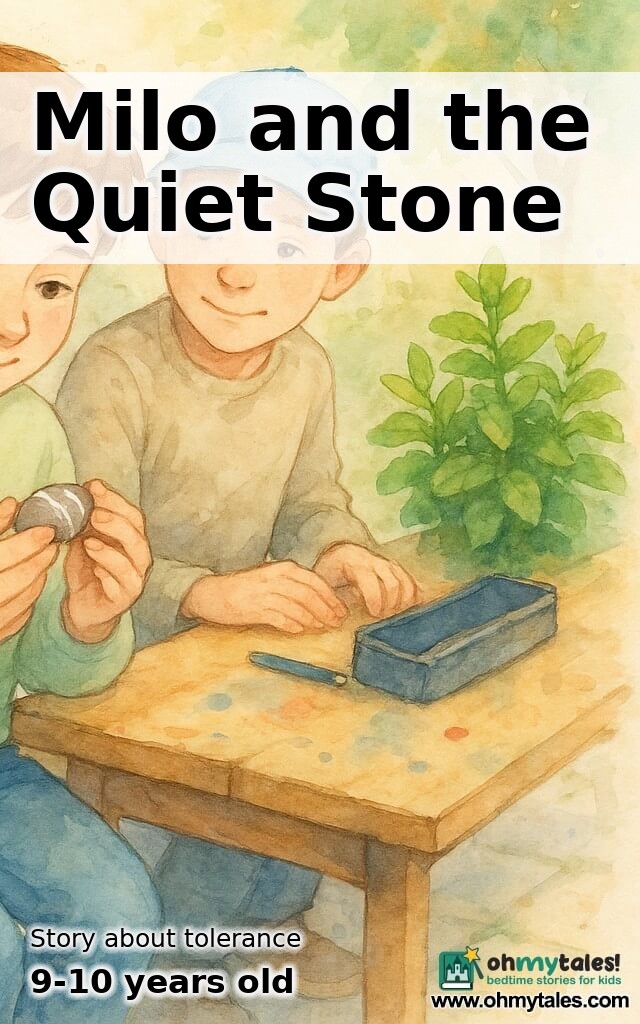
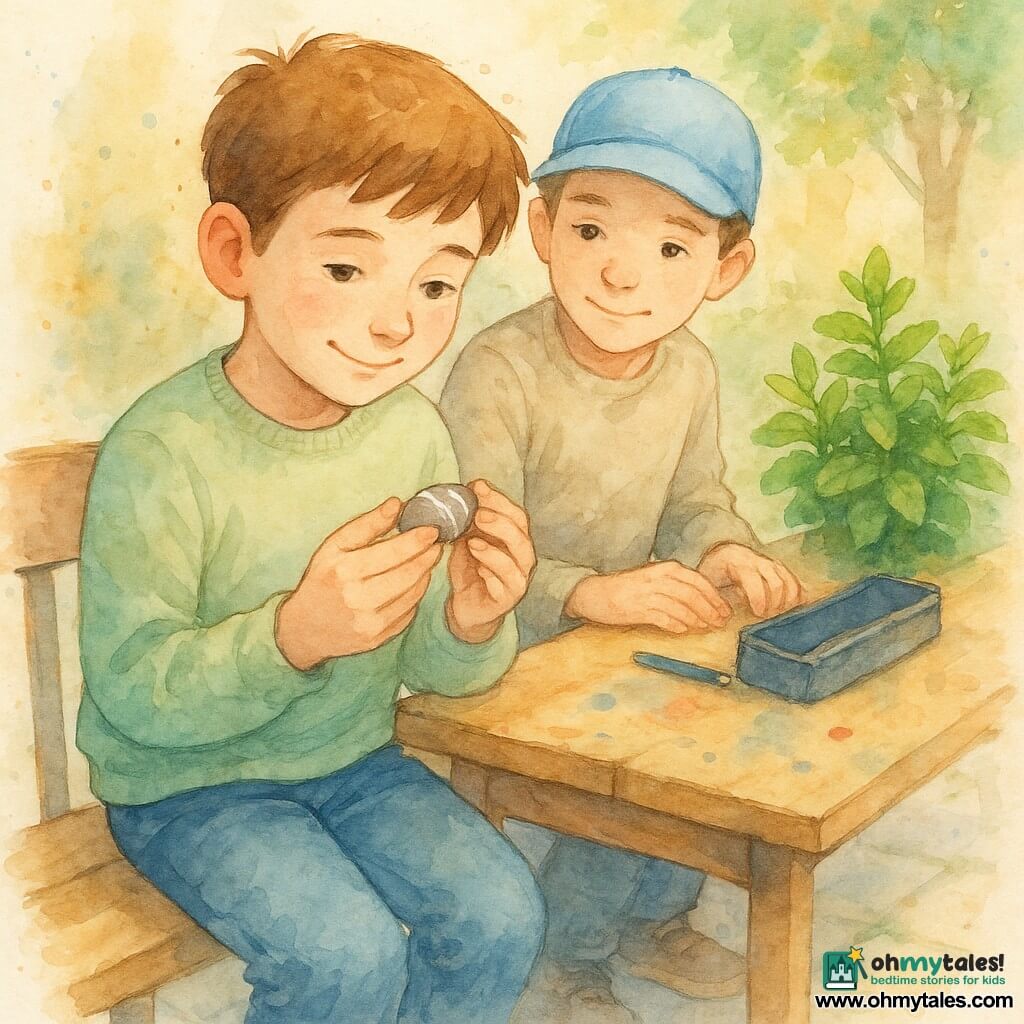
The boy wore a soft blue cap and kept turning a small smooth stone in his fingers, like it was a tiny planet. He didn't look up right away.
Ms. Patel clapped her hands gently. “Good morning, everyone. We have a new classmate. This is Sami.”
A few kids whispered. Milo heard someone behind him murmur, “Why's he wearing that hat indoors?”
Milo felt his ears warm. He didn't love whispering. It always made the air feel prickly.
Ms. Patel continued, “Sami is joining us from another school. Let's help him feel welcome.”
Sami finally looked up. His eyes flicked around the room quickly, like he was counting the windows. Then he looked down at his stone again.
Ms. Patel smiled at Milo. “Milo, could you sit next to Sami today?”
Milo was applied. That meant he tried hard, and teachers often trusted him. Still, his stomach did a small nervous flip. What if Sami didn't talk? What if Milo said something wrong?
He slid into the chair beside the new desk. “Hi,” he said softly.
Sami nodded once. “Hi.”
Milo noticed Sami's pencil case was lined up perfectly at the edge of his desk, like it was following a rule. Milo liked that. It was familiar.
When the bell rang, Milo whispered, “Do you want help finding the page? It's… page twelve.”
Sami stared at the math book like it was a puzzle box. Then he said, very carefully, “Yes. Please.”
Milo opened his own book and pointed. “Here.”
Sami's shoulders loosened a little. He placed his stone beside the book, right above the number twelve, like it was holding the place.
Milo didn't ask about the stone. Not yet. He just thought, Maybe this is his way.
Chapter 2: Stone Rules and Quiet Jokes
At recess, Milo usually played four-square. It had clear lines and clear rules. Today, he walked with Sami to the playground.
Sami kept to the side of the crowd, eyes narrowed like the shouting kids were too bright.
Milo said, “Do you want to play four-square? It's not too hard.”
Sami watched the bouncing ball. “Too loud,” he said.
Milo nodded. “Okay. There's a bench by the garden. It's quieter.”
They sat near the small school garden where the mint smelled like toothpaste for plants. Sami took his stone out again and rolled it between his fingers. Milo noticed it wasn't just smooth—it had a tiny white stripe, like a lightning bolt.
“What's your stone called?” Milo asked, then immediately wondered if that was a strange question.
Sami blinked. “It is… just a stone.”
Milo smiled. “Mine would be called Captain Rock. Because he looks brave.”
Sami's mouth twitched. It wasn't a full smile, but it was something. “Captain Rock.”
Milo leaned back. “Sometimes I keep a coin in my pocket for luck. I flip it before tests.”
Sami nodded slowly, as if filing the information. “Stone helps me… stay calm.”
“Oh,” Milo said. “That makes sense.”
A wind pushed the leaves around. Milo watched two younger kids argue over a skipping rope. One grabbed, the other yanked back, and the rope snapped like a thin whip.
Sami flinched hard and covered one ear.
Milo didn't laugh. He didn't say, “It's just a rope.” He remembered how prickly whispering felt. He said, “That noise surprised you.”
Sami lowered his hand. “Yes.”
Milo pointed at the mint. “If you rub a leaf, it smells strong. Want to try?”
Sami hesitated, then rubbed a leaf between his fingers and sniffed. His shoulders dropped again.
“Mint,” Sami said.
“Yep,” Milo agreed. “Toothpaste plant.”
Sami looked at him, and this time he did smile, small but real. “That is funny.”
Milo felt something settle inside him. It was like finding the right piece in a puzzle—quietly satisfying.
Chapter 3: The Group Project Mix-Up
After lunch, Ms. Patel announced, “This week we're making posters about our town. Landmarks, parks, people—anything that shows what makes it special. You'll work in groups.”
Milo's hand shot up. “Can I write the facts?”
Ms. Patel nodded. “That sounds like a role that suits you, Milo. You're careful with details.”
Milo sat a little taller. He liked having a job he could do well.
Ms. Patel placed Milo, Sami, and two other kids—Lena and Jay—in a group. Lena loved drawing big, bold pictures. Jay loved making jokes, especially the kind that made everyone groan.
They gathered around a table. Lena said, “I'll draw the river and the bridge!”
Jay said, “I'll draw the best part of town: the pizza place.”
Milo opened his notebook. “I'll write the facts. Like when the bridge was built.”
Sami sat quietly, hands folded, eyes on the poster paper like it was a blank ocean.
Jay glanced at Sami's cap. “Hey, are you a secret agent or something?”
Milo felt that prickly air again. Jay wasn't being cruel exactly, but his voice had that teasing edge.
Sami stared at the table. His fingers tapped once, twice, then stopped. “No,” he said.
Lena whispered to Milo, “Why doesn't he talk much?”
Milo didn't know everything, but he knew one thing: guessing about people felt like building a story without asking the person in it.
He cleared his throat. “Maybe he's just new. We can ask him what he wants to do.”
Milo turned to Sami. “Sami, would you like to draw, write, or… something else? Any part you like?”
Sami looked up. “I can… check. For mistakes.”
Jay laughed. “The mistake police!”
Milo kept his voice calm. “That's actually helpful. Posters need to be clear.”
Sami's eyes stayed on Milo's face for a moment, like he was testing whether Milo meant it. Then Sami nodded. “I will check spelling. And lines.”
Lena brightened. “Great! Because I always spell ‘bridge' wrong.”
Jay shrugged. “Fine. But if he finds mistakes, he has to make a siren noise.”
Sami didn't smile, but Milo did—just a little. “Maybe a quiet siren,” Milo said. “Like… ‘weee-ooo' in a whisper.”
Jay tried it, whispering dramatically, and Lena giggled. Even Sami's lips pressed together, almost a smile.
They got to work. Milo wrote: “The Old River Bridge was built in 1932.” Sami leaned in and pointed carefully. “Capital letters,” he said, tapping the start of the sentence.
Milo nodded. “Good catch.”
As the poster filled up, Milo noticed something: Sami wasn't just checking. He was making the whole thing easier to read, with neat lines and steady spacing. It was like he could see order in the mess before anyone else did.
Milo thought, Sami's different. But different doesn't mean wrong. Different can be useful.
Chapter 4: The Noise, the Pause, and the Plan
Two days later, the class practiced presenting their posters. Ms. Patel said, “Remember, be kind listeners. Everyone deserves a calm room.”
Milo liked that rule.
When it was their group's turn, Lena held up the poster proudly. Jay started talking loudly, like he was announcing a wrestling match. “WELCOME TO OUR TOWN—HOME OF—”
Sami stiffened beside Milo. His eyes darted to the classroom door. His fingers searched his pocket.
Milo leaned toward Jay and whispered, “Lower your voice. Please.”
Jay blinked. “What? I'm being exciting.”
Milo kept his voice steady. “Exciting can still be quiet.”
Ms. Patel noticed too. She stepped closer, her voice gentle. “Jay, let's use our ‘presentation voice,' not our ‘stadium voice.'”
Jay grinned, a little embarrassed. “Okay, okay.”
The room softened. Sami's shoulders dropped.
When it was Milo's turn, he read the facts clearly, not too fast. He made sure to point at the words as he spoke, so everyone could follow.
Then Sami stepped forward, holding a ruler like a tiny baton. He didn't speak much, but he pointed to the clean lines, the labels, the spelling.
He said, “We made it easy to read. So everyone can understand.”
There was a quiet moment. Then Lena said, “That's true. It is easy.”
A couple of kids nodded. Someone even clapped, softly at first, then louder.
Sami blinked like the applause was surprising, but his mouth lifted into a small, proud smile.
After school, Milo and Sami walked toward the bike racks. Milo said, “You did great.”
Sami looked at his stone, then at Milo. “You told him to be quiet,” he said.
“I didn't want it to be hard for you,” Milo replied.
Sami nodded. “Sometimes noise makes my head feel full. People think I am rude. But I am not.”
Milo swallowed. He remembered the whispers on Monday. He wished he could scoop them up and throw them in the trash.
“I won't think that,” Milo said. “And if someone doesn't understand, we can explain. Calmly.”
Sami held his stone out. “You can hold it. If you want.”
Milo took it carefully. It was cool and heavy, like a tiny piece of river. The white stripe ran across it like a smile.
“It's… nice,” Milo said.
Sami nodded. “It helps.”
Milo handed it back gently. “Thanks for trusting me.”
Sami tucked it away. “Thank you for asking, not guessing.”
Milo grinned. “That might be my new rule.”
Chapter 5: The Respect Bookmark
On Friday, Ms. Patel placed a stack of small, blank bookmarks on each table. “Before the weekend,” she said, “we'll make a bookmark with a word we want to carry with us. A word that helps us be our best.”
Kids chose words like “Brave,” “Kind,” and “Try.”
Milo held his bookmark and thought about the week: the whispers, the mint garden, the careful lines on the poster, the way Sami had trusted him with the stone.
He wrote one word in big, clear letters: RESPECT.
Under it, he added, in smaller writing:
“Respect means: I listen. I ask. I don't judge. I make room.”
He drew a tiny bridge under the word, with a river line below it. On one side of the bridge he drew a small coin. On the other side, a smooth stone with a white stripe.
Sami leaned over. “That is a good word,” he said.
Milo looked at Sami's bookmark. Sami had written “CALM,” neatly, with even spacing. He had drawn a mint leaf in the corner.
Ms. Patel walked by and paused. “Milo,” she said softly, “I noticed how you helped your group work well together. You found a role that fits you, and you used it to include others. That matters.”
Milo felt warm inside, like a mug of cocoa you could hold with both hands. “Thanks,” he said.
At the end of the day, Milo slipped his “RESPECT” bookmark into his library book. He thought about how a bookmark wasn't loud or flashy. It didn't shout. It just stayed there, holding your place, waiting patiently so you could return.
That night, when Milo opened his book before bed, the bookmark rested against the page like a promise.
Respect, Milo thought, is how you keep your place in someone else's story—without trying to rewrite it.