Chapter 1: The Narrow Call
Marin stood at the bow of the small surveying cutter, hands tucked into the pockets of her weathered coat. The strait spread ahead like a ribbon of glass between two steep green walls. Morning mist hugged the cliffs, and gulls marked the air with sharp, salt-sour calls. Her map lay rolled in her satchel—a careful patchwork of notes from old logs, inked warnings from captains long gone, and the careful measurements she'd taken herself. She was both explorer and diplomat: a woman who spoke kindly with village elders and kept a steady compass when storms rose. Today she had one quiet promise to keep: to find the right place to turn back.
Villages on either side had whispered tales of the strait for generations. Some spoke of hidden coves where light bent like silver; others warned of whirlpools that could swallow a skiff. Marin had come to listen and to learn. She had sketched faces, traded tea for stories, and written notes in careful, honest ink. The elders had given her more than gossip—an old line carved into an oak plank that read: "Turn where the moon first rests on rock." It was poetic, but not precise enough for a mariner's heart.
She eased the cutter into the current. The hull cut the water with a soft, steady sigh. The strait narrowed where two jagged headlands reached out like ancient hands. Wind tugged at Marin's hair. She scanned the cliffs for the stone marks the maps suggested—small notches, perhaps a cairn, or fishermen's faded paint. Around midday she found a painted arrow, almost gone, pointing inward. It was the first true sign she had seen. She made a note and pushed on, because an explorer knows that signs tease but do not answer.
A sudden chorus of bird cries lifted the mood. Fry leaped from the water, silver sheets flashing as if the sea itself was showing jewels. Marin smiled. The strait had beauty and danger braided together. Her task was to read them both.
Chapter 2: The Whispering Rocks
As the cutter moved deeper, the cliffs closed like pages of a book. The wind carried shapes of sound—low, rolling echoes that made the hairs on Marin's arms stand up. At first she thought it was the wind itself, but the sound had pattern: a gentle voice that repeated, as if the rocks remembered rainfall and told others the story.
She anchored near a narrow inlet to examine the shoreline. Salt crystals clung to her boots and stung her fingers when she touched the rocks. There was a line of pebbles, arranged almost like teeth. Marin knelt and ran her hand along them, feeling for grooves, for signs of human hands. There was an indentation, smooth and sun-worn, like a thumb pressed into clay. Someone had been here before. Someone had turned the cutter back or gone further and never returned.
The strait offered riddles in small things—a barnacle cluster that formed a map, a shell stained with red algae in a pattern like the sun. Marin sketched each detail. She was patient; patience was the currency of wisdom. She remembered the elders' carved line and tried to think what it might mean when the moon "first rests on rock." She checked the sky. Clouds drifted low, and the sun glinted off a tall, lone spire on the northern cliff. That spire caught the light earlier than any other rock. Perhaps it was the place the elders hinted at—where the light arrives first.
She consulted her small hand-dial, a device that married old craft to new instruments. The dial told her the angle of the sun. She marked the time when the spire blazed in gold. "If the moon follows, the turning point may be where light meets stone," she murmured. There was a soft reply from the strait, a low murmur like agreement. She felt the responsibility settle on her like a cloak. Turning back at the right place would mean safety for future travelers and for the small fishing boats that crossed these waters.
Later that evening a bank of fog rolled in, swallowing the cliffs. Marin lashed the cutter to a rocky cleft and waited. The fog felt older than time, damp and full of secrets. In the gray hush she heard a child's voice calling in the distance, a memory of laughter. She closed her eyes and thought of home—of lanterns and warm bread—and promised herself she would not be reckless. Courage, she knew, wore wise shoes.
Chapter 3: The Heart of the Strait
When the fog lifted, hours later, the strait had changed. The current ran with more force, like a river waking. There were eddies and bright swirls of foam that stuck to the cutter's keel. Marin felt the sudden tightening of a test. She adjusted the sail and steered towards a narrow channel where the water shimmered darker, as if something unseen moved beneath.
The explorers' ledger had warned of a "heart"—a place where tides met and made strange water. Many had sought it as a sign of courage; fewer had understood its purpose. Marin approached slowly. The cliffs here were steep and she could see where the rock had been smoothed by some ancient flow, a long-ago sea that had loved this place fiercely. She noticed a groove carved parallel to the waterline, like a finger tracing the cliff. Within the groove sat a row of stones, each one marked with a shallow cross, perhaps a fisher's token or a marker for safe passage.
A sudden current caught the cutter's stern and pulled. Marin set the oar and kept her face steady. A whirlpool formed as if to test her resolve. Her boat dipped, climbed, and the world narrowed to the sound of water and her breathing. She remembered what the elders said to a diplomat in need: "Speak gently to the sea. It answers the bold who listen."
She did not shout nor push foolishly. She guided the cutter with small, sure movements, angling it so the swell slid under the bow. The whirlpool tugged; she yielded with calm. The cutter spun and then came free. Beyond, a small cove lay like a bowl carved out for ships to rest. Marin exhaled a laugh. She had passed the heart, but she was not yet done. The true trial, and the moment to turn back, were still ahead.
On the cove's beach was a cairn built of rounded stones, each layered with care. On the topmost rock someone had etched a small crescent moon. The place felt deliberate. Marin pressed her palm to the stone and felt its cool, old surface. Her hands trembled with a mixture of fear and joy. She sat on a nearby drift log and opened her map. The elders' words returned: "Turn where the moon first rests on rock."
If the moon rested on this rock before all others, then perhaps this was the place. But the map—her tools—spoke also of another marker further along, a hidden spit of land that pregnant tides could swallow. Wisdom urged caution: the right turn should protect those who came after. Courage would be to look, to verify, without endangering her crew or the cutter.
Chapter 4: The Choice and the Return
Marin waited until twilight. The sea had a color like cooled ink and the first stars pricked the sky. She climbed the headland for a higher view. Wind flattened her coat against her back and salty spray cooled her cheeks. From the ridge she could see farther than the cove—an outcrop jutted into the channel, faint and flat. It would be easy to miss in a storm. The moon, a pale slice, rose slow and silver behind clouds. Marin watched where its light would fall if she stayed a little longer.
Her instruments showed two possible points: the crescent cairn where the moon might rest first when low behind clouds, and the outcrop that would catch light sooner when the moon was higher. The elders' phrase was gentle but clever; perhaps it meant the first rest, the earliest safe turn in any tide. Diplomatic instinct told her to choose the decision that served most people: safety for the fishermen and a reliable marker for travelers in fog, day or night.
She laid stones on her map where the currents swirled. She recalled the groove with crosses and the smooth cliff where the spire first took the sun. Wisdom, like a lantern, lit the truth: the outcrop, though small, commanded the current. Boats that missed the outcrop came too close to the swallowed spit. Much as she wanted the cairn to be the sign—because it felt like home—Marin chose the outcrop. It was the safer turn.
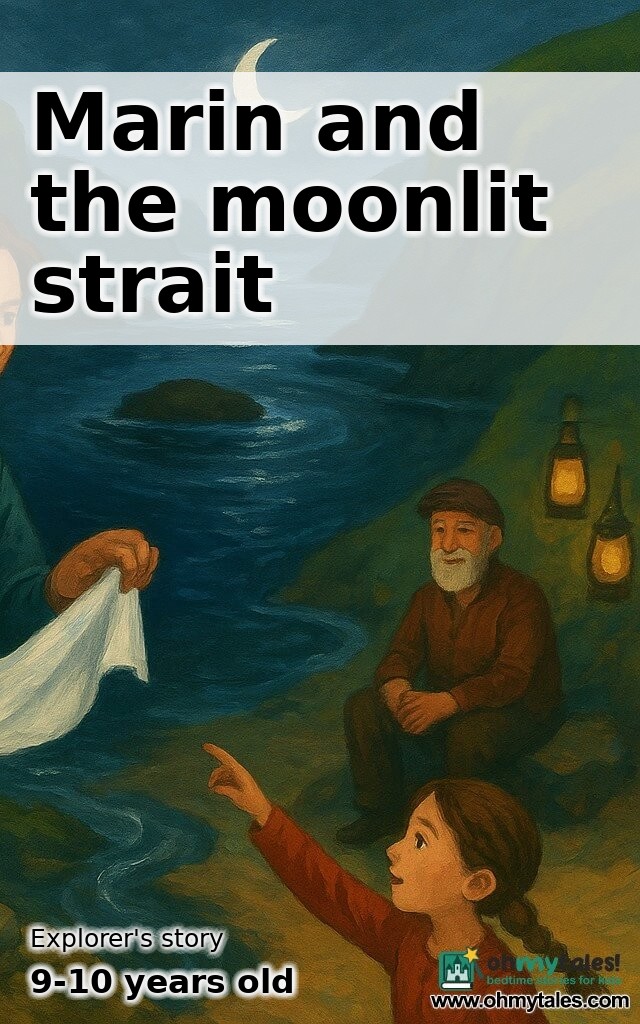
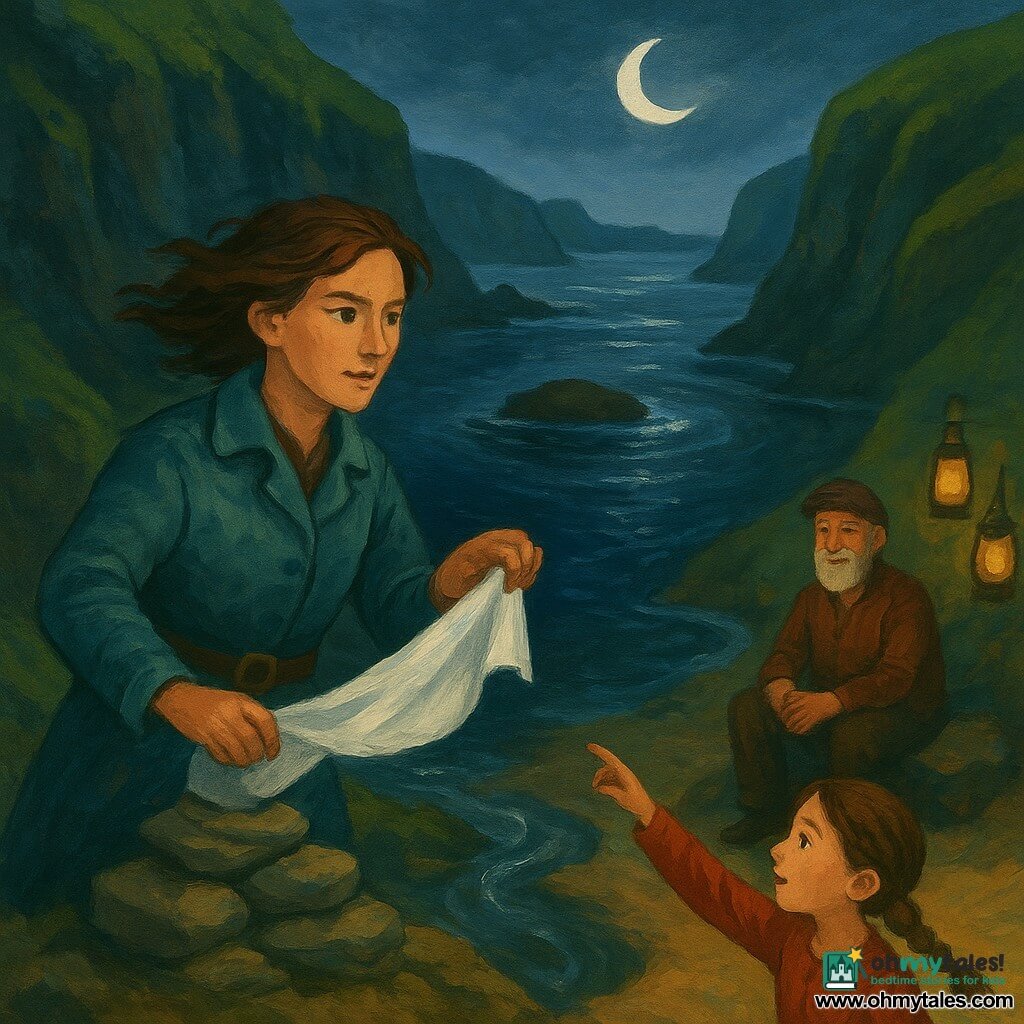
Before she turned the cutter, she built a small marker on the headland: a stack of flat stones and a strip of weatherproof cloth threaded through them. It was a gentle signal, simple and honest. She used a ribbon of the sailcloth, knotting it with care. She did not want to impose a permanent change; she wanted only to offer a clear choice to those who would follow.
The return through the heart of the strait was less dramatic but no less reverent. Marin steered with the same patient attention, watching the water's mood and the way light moved on the rocks. The whirlpool retreated like a tested friend acknowledging her passage. Her boat rode the water as a bird rides the wind—steady, aware, alive.
When she reached the villages she greeted elders and children with the map rolled under her arm. She told them what she had seen, where she had placed her small marker, and why she had chosen the outcrop for the turn. They listened with faces open, hands folded, and laughter at a joke she made about gulls being the kingdom's loudest heralds. Then they named her the Strait's Guide, a title she accepted with a modest nod.
That evening, the elders invited her to a small celebration. Lanterns swung from poles and the smell of bread and roasted fish warmed the air. Marin sat by the water's edge, watching the sea. Children pointed to the cloth on the headland like a secret treasure. She felt a quiet pride—not from any glory, but from the knowledge that she had chosen wisely, balancing courage with care.
Later, beneath a sky stitched with stars, Marin wrote the final note in her ledger: "Turn at the low outcrop where the current turns gentle. Mark with cloth, not stone. Teach sailors to watch light and tide, and to speak kindly to the sea." She folded the paper and tucked it into the satchel she kept by her bedroll. Outside, the strait whispered against the shore, content and secretive as ever.
Marin slept with a small smile. She had explored far enough to understand when to return. That night she dreamed of maps that moved and rivers that sang, and of a ribbon of cloth fluttering on a headland, guiding future hands home.