Chapter 1: Morning on Willow Creek Farm
The day began with a soft, golden light sliding over the fields. Dew sparkled on the grass like tiny beads, and the air smelled of damp soil and minty weeds. Mara pulled on her boots, tied her hair into a quick knot, and stepped outside her farmhouse.
Her farm was called Willow Creek Farm, because a thin creek curved around the back pasture where willow trees leaned down to drink. Mara liked that name. It sounded gentle, even when the work was not.
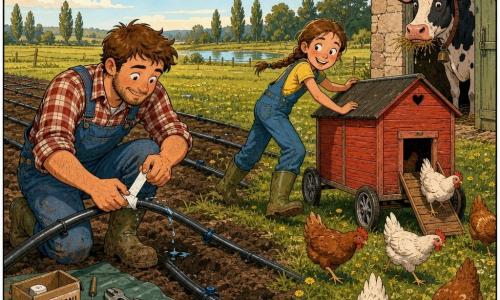
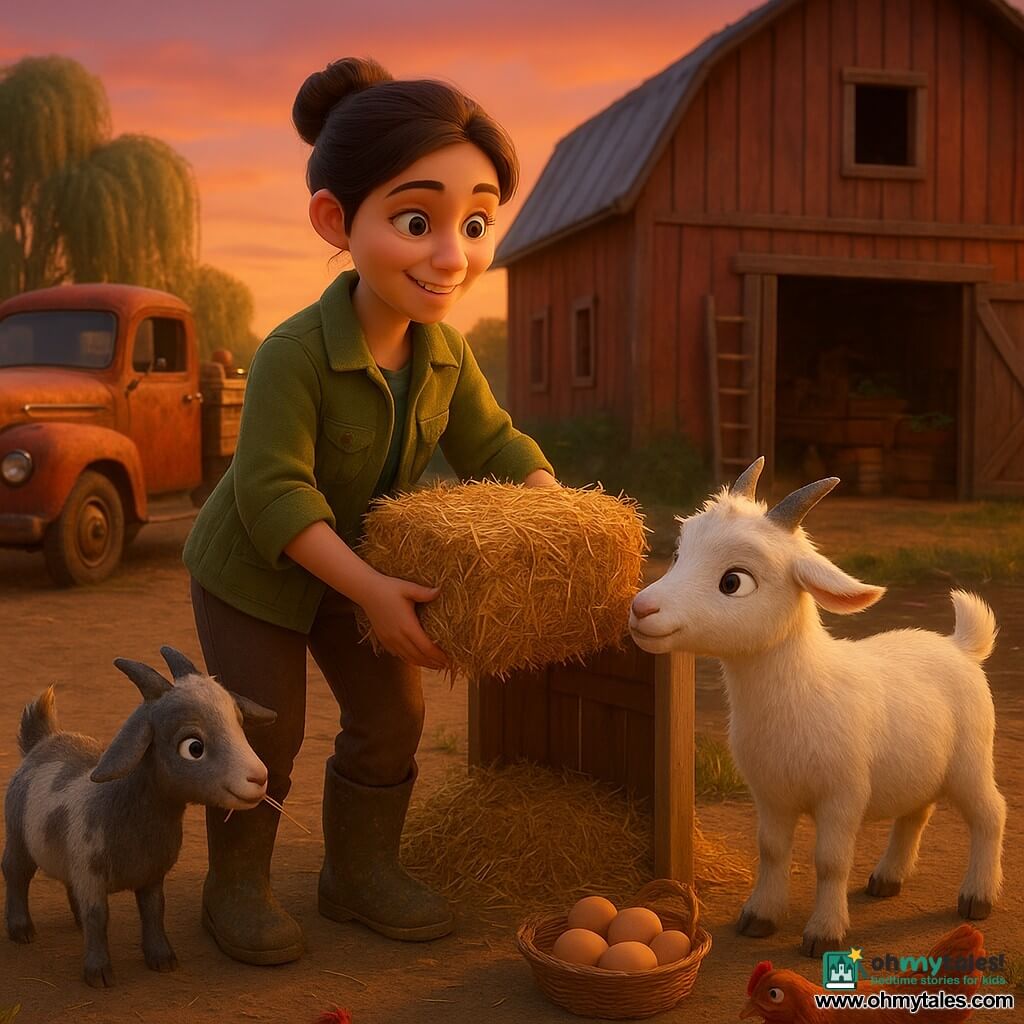
First came the animals. Mara carried a bucket of grain that rattled like marbles. The hens hurried toward her, their feet tapping fast in the dust. She opened the coop, and warm, feathery air puffed out.
“Good morning, busy ladies,” she said, and the hens answered with proud clucks.
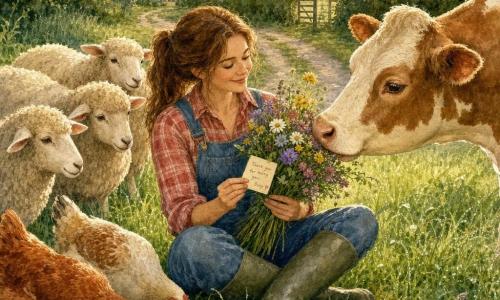
Mara checked the water troughs, too. Clean water mattered as much as food, especially in warm weather. She tipped a heavy bucket, watching the water splash and settle. Then she walked to the goat pen. Her two goats, Pepper and Cloud, pressed their noses to the fence, hoping for scratches.
Mara scratched their heads, feeling their short fur and little bumps of horn. Goats were curious and cheerful, but also excellent at getting into trouble in silly ways. Pepper once stole a whole rag from Mara's pocket and ran away as if it were treasure.
After the animals, it was time for the land. Mara crossed the yard to the vegetable beds. The soil was dark and crumbly, and she could smell it as she knelt down. She lifted a small patch of straw mulch. Under it, the ground stayed cool and damp. Mulch was like a blanket for the soil. It helped keep water in and weeds out, which meant Mara did not have to water quite as much.
Mara believed in taking care of the earth, because the earth took care of her. She used compost from old plant scraps and animal bedding. She planted clover between rows to help the soil stay healthy. And this year, she was ready to do more.
She stood up and looked across her farm. The fields were not huge, but they were busy: a small orchard, a patch of wheat, a big garden, and a meadow where the goats ate. Beyond it all, birds fluttered over the hedges, and the sun rose higher.
A truck door creaked behind her. It was her farm truck—dusty, reliable, and full of small surprises like twine, gloves, and forgotten apples.
Mara smiled. “We'll have an adventure today,” she told the truck, even though it didn't answer.
She was about to head back inside when she spotted a bundle in the mailbox at the end of the lane. A thick stack of envelopes sat there, looking important and a little bossy. Mara carried them inside, set them on the kitchen table, and washed her hands. Farm hands were honest hands, but they were not always clean.
She made a cup of tea and sat down with the mail. The quiet clink of her spoon sounded calm, but the envelopes looked like they might cause a storm in her brain.
“All right,” Mara said to herself. “Let's sort you out.”
Chapter 2: The Pile of Papers
Mara spread the letters across the table like playing cards. Some were from the feed store, some were bills, some were flyers with bright pictures of new tools. And some were the kind of mail that made her sigh before she even opened it: farm forms, rules, and notices.
Administrative mail was not like collecting eggs. It did not smell warm and cozy. It smelled like ink and worry.
Mara made three piles. She put anything urgent on the left, anything that could wait on the right, and anything confusing in the middle. The middle pile quickly became the tallest.
One envelope had a green leaf printed on it. Mara opened it and read slowly. It was about a new program to help farms save water and protect streams. If she joined, she could get help paying for a rainwater tank and drip hoses that used less water than sprinklers.
“That sounds helpful,” Mara murmured. She imagined a big tank catching rain from the barn roof, like a giant cup. Then, on dry days, she could water the plants in a careful, steady way, drop by drop.
Another envelope talked about planting trees and shrubs along creeks to stop soil from washing away. Mara looked out the window toward Willow Creek. The bank near the pasture sometimes got muddy after heavy rain. A strip of shrubs could be like a strong edge for the creek, holding the ground in place and giving birds a place to rest.
Mara's eyes lit up. “Yes. That could work here.”
But then she opened another letter that was less friendly. It listed dates, deadlines, and boxes to check. The words were not difficult, but they felt heavy. There were so many steps. Proof of this, copies of that, forms to mail, forms to fill online, forms to sign.
Mara rubbed her forehead. “I can grow carrots,” she whispered. “Why is it so hard to grow paperwork?”
She did not want to give up. She really did want to make her farm kinder to the land. She wanted to use less water, protect the creek, and waste less fuel. She had heard about solar panels, too, and wondered if her barn roof could catch sunlight the way it caught rain.
Still, she was only one person. She fed animals, planted seeds, fixed fences, harvested vegetables, and delivered boxes of produce to families in town. The day already felt full.
Mara took a deep breath and returned to her piles. Sorting was a kind of farming too: you did one small job, then the next, until the big job was done.
She found a letter from the town co-op. They wanted her to bring a few crates of squash and potatoes for a weekend market. Mara smiled. That was the kind of mail she liked. It meant people would eat food she had grown.
She glanced at the clock. If she wanted to deliver produce and also pick up a load of straw for bedding, she needed to leave soon. And the truck needed fuel.
Mara placed the urgent letters into a folder. The green-leaf program letter went right on top, like a hopeful flag. She tucked the confusing ones behind it, promising herself she would ask for help later. The rest she put in a drawer for the evening.
Then she packed the truck: crates of vegetables that smelled of earth and sunshine, a cooler with eggs, and a small toolbox. She patted the dashboard.
“Okay, old friend,” she said. “Let's roll.”
Chapter 3: Road Lessons in the Farm Truck
The farm truck rumbled down the lane, past the mailbox, past the willow trees, and onto the country road. The tires hummed. A few pebbles clicked against the wheel well. Mara drove with both hands on the wheel, watching for rabbits that sometimes darted across the road like fluffy commas.
On her right, she saw fields of corn in neat lines. On her left, there were hay bales sitting like giant rolls of bread. The world looked calm, but Mara knew every field was full of choices: when to plant, when to water, when to rest the soil.
As she drove, she thought about the letters on her kitchen table. The green-leaf program sounded good, but the forms made her shoulders tense.
A gust of wind pushed a swirl of dry leaves across the road. Mara slowed, then continued. She liked this part of her work—the moving part. The road gave her space to think.
At the fuel station near town, she pulled in behind a small delivery van. While the tank filled, she checked her tires with her eyes, making sure they looked round and strong. Farmers learned to notice small things. A tiny problem in the morning could become a big problem by afternoon.
Inside the station, she bought a simple sandwich and a bottle of water. The person at the counter pointed at her muddy boots and smiled.
“Farm day?” they asked.
Mara nodded. “Always.”
Back in the truck, she drove toward the co-op. The town got closer, with more cars and stop signs. Mara stayed patient. Food could not rush. Seeds did not rush. People in traffic could learn from that, she thought, though she didn't say it out loud.
At the co-op, volunteers helped unload. The crates thumped gently onto the table. Squash sat like little green moons. Potatoes were dusty and proud.
As Mara signed a delivery slip, she noticed a poster on the wall: SAVE WATER ON YOUR FARM—FREE WORKSHOP TODAY. It showed a picture of a rainwater tank and neat rows of drip hoses. Right under the picture was a phone number and a time. The workshop was happening in an hour, in the room behind the co-op.
Mara felt a small spark of excitement. This was connected to the green-leaf letter. Maybe she could learn the steps without getting lost in the forms. Maybe there would be someone to explain.
She looked at her watch. She still needed straw from the farm supply store, but the store was only ten minutes away. The workshop was right here.
Mara made a quick plan, like she did when clouds appeared over the fields. She drove to the farm supply store, loaded bales of straw into the truck bed, and tied them down with rope. The straw smelled sweet and dry. Good bedding kept animals comfortable and clean, and clean bedding made good compost later.
Then she drove back to the co-op and parked. She carried her folder of letters inside. The room behind the co-op was plain, with chairs and a whiteboard. A few farmers sat there, some with hats, some with notebooks, all with tired-but-ready faces.
A friendly instructor spoke about saving water: collecting rain, using drip irrigation, and checking soil moisture before watering. “Water is precious,” the instructor said. “Sometimes the best watering tool is your finger. Feel the soil. If it's still damp under the mulch, you can wait.”
Mara liked that. It was simple. It sounded like something she already did, only more on purpose.
The instructor also talked about buffer strips along creeks—planting grasses and shrubs to keep soil from washing into the water. “Healthy streams mean healthy farms,” they said.
When the instructor invited questions, Mara lifted her folder. “I got this letter,” she said, and her voice came out steady. “I want to join, but the forms feel like a maze.”
The instructor nodded, not surprised at all. “You're not alone. Bring the forms after the workshop. We'll go through them together.”
Mara felt her shoulders loosen. Help was real. She didn't have to solve everything by herself in her kitchen with a cup of tea.
After the workshop, she sat with the instructor at a table. They pointed to the boxes, explained what each part meant, and helped Mara make a checklist. Step one: measure the barn roof. Step two: choose a tank size. Step three: mark where a buffer strip could go. The confusing pile in Mara's head became smaller, like a haystack turning into neat bales.
When she left, the sky had turned a softer blue, as if the day itself felt calmer.
Mara climbed back into the truck. The straw bales rode behind her like quiet passengers. She started the engine and headed home, thinking of rainwater tanks and creek-side shrubs, and also of one other thing: she did not have to do it all at once.
Chapter 4: Evening, Gentle Choices
By the time Mara turned onto her lane, the sun was lower, warm and orange. Shadows stretched across the pasture. The willow leaves fluttered as if they were waving her back.
Mara parked near the barn and unloaded the straw. Pepper and Cloud watched closely, because goats believed every new thing might be edible. Mara laughed softly and shooed them away from the bale twine.
She spread fresh straw in the goat shelter, making a soft, clean nest. The goats stepped in and looked pleased, as if Mara had given them a fluffy gift. She checked the hens again and collected the afternoon eggs. Their shells were smooth and cool in her palm.
Then she walked to Willow Creek. The water moved quietly, catching pieces of light. Mara crouched and touched the muddy edge where the bank sometimes crumbled. She pictured shrubs with strong roots, holding the soil like gentle hands. She pictured butterflies landing on leaves. She pictured the creek staying clear after rain.
Back at the house, she washed up and made a simple dinner. The kitchen filled with the smell of onions and herbs. Outside, crickets began their evening music.
After dinner, Mara brought her folder to the table again. The letters did not look as scary now. She had a checklist and notes from the workshop. She could start with one small task tonight: write the date of the next deadline on her calendar and fill in the first page.
She did that, carefully, without rushing. Her handwriting was neat, but not perfect. Farmers were not machines. They were people.
When she reached a part that asked for something she didn't have yet—an exact measurement of the barn roof—she paused. She could grab a tape measure and go outside in the dark, or she could wait until morning.
Mara listened to the quiet house. She listened to the distant rustle of animals settling in. She could feel her own tiredness in her arms and behind her eyes.
She set the pen down.
“I can't do everything tonight,” she said softly, and the words felt kind, not guilty. “Tomorrow is part of the farm too.”
Mara put the forms back into the folder and placed it near the door, where she would see it in the morning. She made a note to measure the roof after feeding the animals. She also wrote down the instructor's number, just in case she needed another question answered.
Then she stepped outside for one last look. The stars were coming out, one by one. The barn stood steady. The fields rested. Even the creek seemed to sigh.
Mara breathed in the cool night air, smelling straw and soil and the faint sweetness of hay. She thought about the families in town who would eat her potatoes and eggs. She thought about the creek and the shrubs she would plant. She thought about rainwater collected in a big tank, waiting for dry days.
Some changes would happen soon. Some would take time. Either way, she was moving in the right direction.
Mara went back inside, turned off the light, and headed to bed with a calm mind. She had done good work today—real work with her hands, learning work with her brain, and gentle work with her heart.
Tomorrow, she would start again, one steady step at a time.