Chapter 1: Morning on Willow Brook Farm
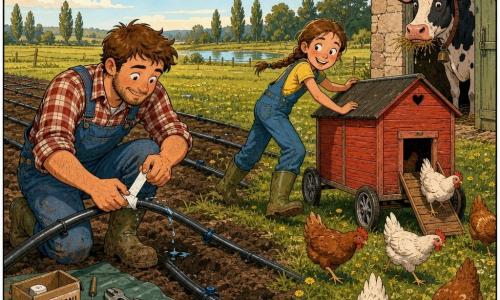
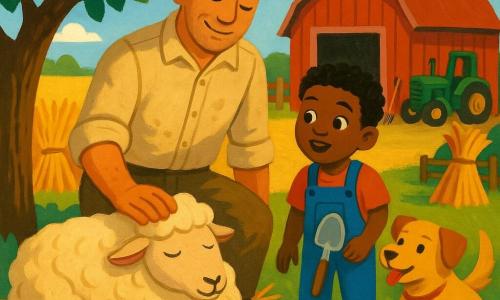
Dawn slid in quietly over Willow Brook Farm, turning the wet grass silver. Ben, the farmer, pulled on his boots and stepped outside. The air smelled like soil and cold leaves, the kind of smell that promised spring was trying its best.
From the barn came a friendly “Moo-oo,” as if the cows were saying, “Good morning, Ben!”
“Good morning to you too,” Ben said, patting the big wooden door. He always spoke to the animals. It helped him feel less alone with his thoughts.
Ben loved farming, but he didn't always feel confident. Some mornings he woke up with a little knot in his stomach, wondering if he was doing things the right way. Nature was strong and surprising. A farmer had to be steady, but also ready to learn.
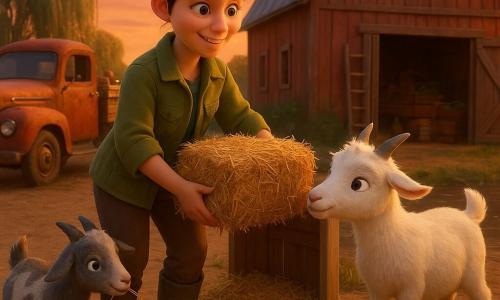
He carried feed to the chickens. They hurried over, pecking and bobbing their heads like tiny, hungry dancers.
“Easy, ladies,” Ben chuckled. “Breakfast is not running away.”
As he worked, he made a list in his head. Check the water troughs. Look at the seedlings. And today—very important—check the trailer. He needed it to bring compost and young plants to the cold greenhouse.
Ben rubbed his chin. “I can grow good carrots,” he said softly, “but trailers… trailers can be tricky.”
Just then, a small voice called from the farm lane. “Ben! Can I help today?”
It was Mia, a neighbor kid who loved visiting the farm after school. She waved so hard her sleeve slipped down.
Ben smiled. “If you don't mind a little dirt, I could use an extra pair of eyes.”
Mia ran closer, her sneakers already collecting mud. “I don't mind dirt at all. Dirt is where snacks for rabbits come from.”
Ben laughed. “That's a very farm answer.”
They walked toward the equipment shed. The trailer waited there—metal sides, a wooden floor, and wheels that looked sleepy in the shade.
Ben took a slow breath. “Okay,” he said, mostly to himself. “We'll check it carefully. A safe trailer makes a safe day.”
Mia stood tall. “I can be your Trailer Inspector Mia.”
“Perfect,” Ben said. “Let's inspect.”
Chapter 2: The Trailer Check
Ben showed Mia the hitch first—the part that connects the trailer to the tractor.
“This has to be locked tight,” Ben explained. He wiggled it gently. “If it's loose, the trailer can wobble. And wobbling is not a fun farm dance.”
Mia giggled. “No wobble dancing. Got it.”
Next, Ben knelt by the wheels. He pressed the tire with his thumb. “We check for enough air. Not too soft, not too hard.”
Mia copied him, pressing her thumb against the rubber. “It feels like a bouncy ball, but less fun to throw.”
“Exactly,” Ben said. He pointed to the lug nuts. “These hold the wheel on. We make sure they're not loose.”
Mia leaned close. “They look like tiny hats.”
“They do,” Ben agreed. “Tiny hats that must do their job.”
Ben checked the lights and reflectors too, even though he wasn't going far. “Safety is a habit,” he said. “Habits help when you're tired.”
Mia watched him work. “Do farmers do this every day?”
“Not every day,” Ben said, “but often. Farming is many small steps. Feed the animals, care for the soil, fix what breaks, plan for weather you can't control.”
He stood up and brushed his hands on his jeans. A cloud drifted across the sun, and the air felt cooler.
Ben frowned a little. “I always worry I'll miss something.”
Mia looked at the trailer, then at Ben. “But you're checking. That means you care.”
Ben blinked, surprised by how helpful that sounded. “That's true,” he said. “Caring is part of the job.”
He found a small crack in one of the trailer boards. It wasn't dangerous, but it could catch on a crate.
“Hm,” Ben murmured. “We'll replace that board soon. For today, we can lay a flat mat over it.”
Mia nodded firmly. “Because crates don't like splinters.”
“Right,” Ben said. “And neither do hands.”
When the trailer was ready, Ben hitched it to the tractor. The metal clicked into place with a solid sound.
Mia made a serious face. “Inspector Mia approves.”
Ben gave her a playful salute. “Then we can head to the cold greenhouse.”
“The cold greenhouse?” Mia asked. “Isn't that just… outside?”
Ben smiled. “Not quite. You'll see.”
Chapter 3: Spring in the Cold Greenhouse
The cold greenhouse sat at the edge of the field like a long, clear bubble. Its plastic skin shone in the pale spring sun. Inside, it was warmer than outdoors, but not hot like a summer greenhouse. That's why it was called “cold.” It used the sun, not a heater.
Ben opened the door, and the air changed right away. It smelled like damp earth, green leaves, and fresh beginnings. Water dripped softly from the frame, tick-tick-tick, as yesterday's frost melted.
Mia stepped in and whispered, “It's like a plant bedroom.”
Ben nodded. “A place for young plants to grow strong before they go outside.”
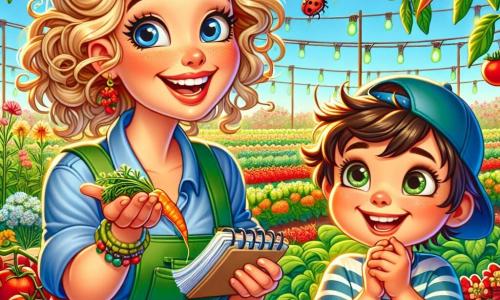
They walked between rows of trays. Tiny seedlings stood in neat lines—little stems with baby leaves, reaching up like they were trying to touch the light.
“These are lettuce,” Ben said, pointing. “And these are tomatoes. They'll stay here longer because tomatoes love warmth.”
Mia bent close. “They're so small. How do you know they'll make food?”
Ben shrugged, honest. “Sometimes I doubt it. Seeds are small, and storms are big. But we do our part—good soil, water, light, and patience. Nature does the rest.”
He picked up a handful of compost from a bin. It was dark and crumbly, like chocolate cake—except it smelled like the forest after rain.
“This helps the soil,” Ben explained. “It feeds the tiny living things in the ground. Worms, bugs, and millions of things we can't see. Healthy soil makes healthy plants.”
Mia wrinkled her nose, then smiled. “It smells… serious.”
Ben laughed. “That's a good word for it.”
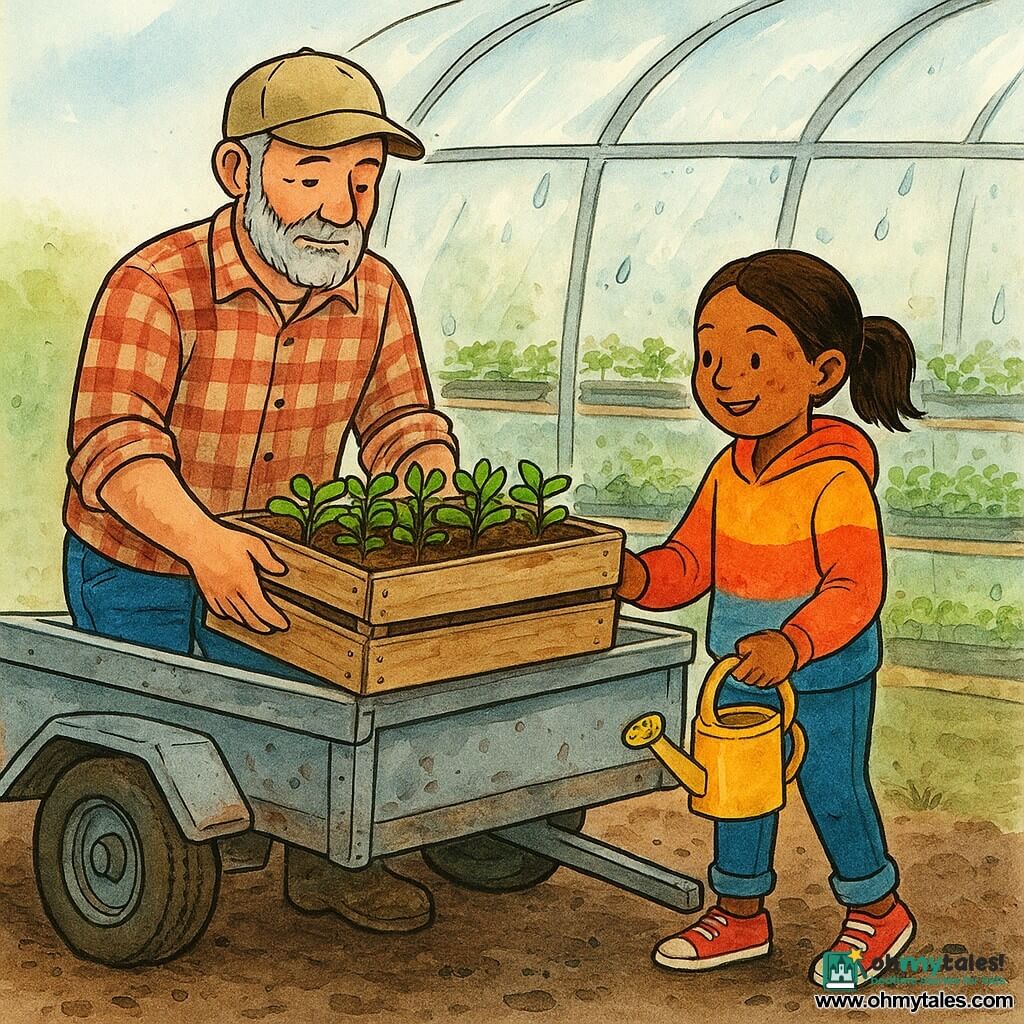
They loaded the trailer with bags of compost and a few crates of sturdy seedlings. Ben moved slowly and carefully, lifting with his legs like he'd learned, setting each crate flat.
Mia carried smaller items—a roll of twine, empty trays, and a watering can that sloshed a little. “I'm the Twine Manager,” she announced.
“Excellent,” Ben said. “Twine saves the day more often than you'd think.”
While they worked, a breeze rattled the greenhouse plastic. The sound was like a soft drum.
Ben paused, listening. “Weather's changing,” he said. “We should water now, before the wind dries the soil.”
He showed Mia how to water gently, not blasting the seedlings. “Like rain, not like a fire hose,” he said.
Mia sprinkled carefully. “Hello, tiny lettuces. Drink up.”
Ben's shoulders relaxed. Watching the seedlings drink made him feel calm. Farming had so many jobs, but each one mattered.
Then Mia pointed to a tray where a few seedlings drooped. “Uh-oh. Are they sad?”
Ben leaned in. The soil looked dry in that corner. “Not sad,” he said quickly, reassuring. “Just thirsty. They're telling us what they need.”
He watered them, and within minutes the leaves looked less tired.
Mia exhaled. “Good. I didn't want them to have a bad day.”
Ben smiled. “Plants have ups and downs, just like people. We help, but we can't force. That's why farmers have to be humble. We work with nature, not against it.”
Mia looked around at all the green. “So your job is like being a helper to a very big team.”
Ben nodded. “A big team I can't even fully see.”
Chapter 4: A Quiet Lesson and a Thank-You
By late afternoon, the trailer was empty again. Compost was spread, trays were set, and the cold greenhouse looked tidy. Outside, the sky turned soft orange. The animals were fed, the gates were latched, and the farm settled into its evening sounds—gentle clucks, low moos, and the hush of wind in the hedges.
Ben and Mia sat on an upside-down bucket near the greenhouse door. Ben offered her a warm mug of apple cider. He sipped his own and felt the warmth travel down to his hands.
Mia swung her feet. “Ben, do you ever feel like you might mess up?”
Ben looked at the fields. “Yes,” he admitted. “More than I'd like.”
Mia frowned. “But you know so much.”
“I didn't always,” Ben said. “I took training classes. About soil, about safe equipment, about animal care, even about planning for weather. I used to think I had to figure everything out alone. But learning from others made me better.”
Mia's eyes widened. “Like farmer school?”
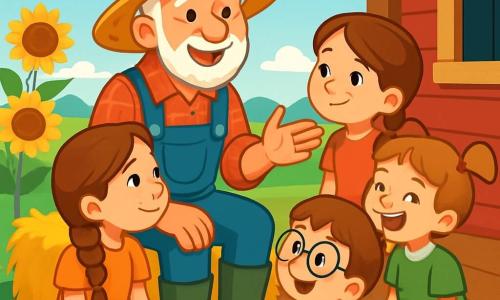
Ben chuckled. “Sort of. Workshops, courses, and advice from older farmers too. Even videos and books. Farming is an old job, but there's always something new to learn.”
He glanced at the trailer, parked neatly by the shed. “Today, I was nervous about the trailer. But I remembered what I learned—check the hitch, tires, boards, lights. Step by step. Training helps turn worry into a plan.”
Mia nodded slowly, as if storing the idea in a special pocket. “So when you doubt, you can learn.”
“Yes,” Ben said. “And when nature surprises us, we stay respectful. The soil, the sun, the rain—they're not machines. They're living parts of the world. We do our best, and we're grateful when things grow.”
From inside the greenhouse came a tiny drip, and Ben imagined the seedlings tucked in for the night, safe and waiting.
Mia smiled. “I'm grateful too. Because someday I might eat those tomatoes.”
Ben laughed. “You will. And maybe someone else will too. That's the best part—growing food for people.”
He stood and stretched, feeling the good tiredness of a day well spent. “Thank you for helping, Inspector Mia.”
Mia hopped down. “Any time. Tomorrow I can inspect the chickens.”
“The chickens may disagree,” Ben said, and they both giggled.
As Mia walked home, Ben stayed a moment longer, looking at the fields and the cold greenhouse glowing faintly in the dusk. He felt small in a comforting way, like a person standing beside something bigger than himself.
“Thank you,” he murmured—not just to Mia, but to the teachers who trained him, to the neighbors who shared tips, and to the steady land beneath his boots.
Then Ben turned off the shed light, listened to the farm's sleepy sounds, and went inside, ready to begin again tomorrow.