Morning in the Golden Field
The sky was a pale blue when Tom stepped out of the farmhouse. He breathed in the cool air and smiled at the sea of gold in front of him. The wheat was tall and ready. The stalks bowed like an audience waiting for the show to begin.
"Morning, field," Tom said, patting his straw hat. "You look beautiful today."
His dog, Poppy, wagged her tail and trotted ahead. The tractor sat by the barn, shiny from a quick sweep the night before. Tom checked the engine, oil, and tire pressure with steady hands. He liked to do a little every morning. It kept things calm and it kept him ready.
"Everything feels right," he told Poppy as he climbed into the tractor. "But let's not rush. Harvest is a big job."
He drove slowly along the edge of the field, listening to the soft hush of wheat rubbing against wheat. He thought about the bread the village baker would make from this grain, about the market where neighbors would buy it, and about the small grocery shop that only sold what farmers nearby grew. Tom believed in short trips from his farm to the people's tables. He liked to know who ate his wheat and to know their smiles.
As the sun climbed, Tom worked carefully. He adjusted the harvester, guided it down long rows, and hummed a tune he had learned from his father. Poppy chased a butterfly and then lay down in the warm dirt to take a nap.
"Good work," Tom said to the machine often. He always spoke kindly to the tools. "Steady now. Remember what I taught you."
When a breeze ran across the field, the wheat waved like children cheering. Tom felt proud. He thought ahead, planning where to store the grain and how much to save for seed next season. Anticipation was important—knowing tomorrow's needs helped him avoid worry.
The Animal in the Meadow
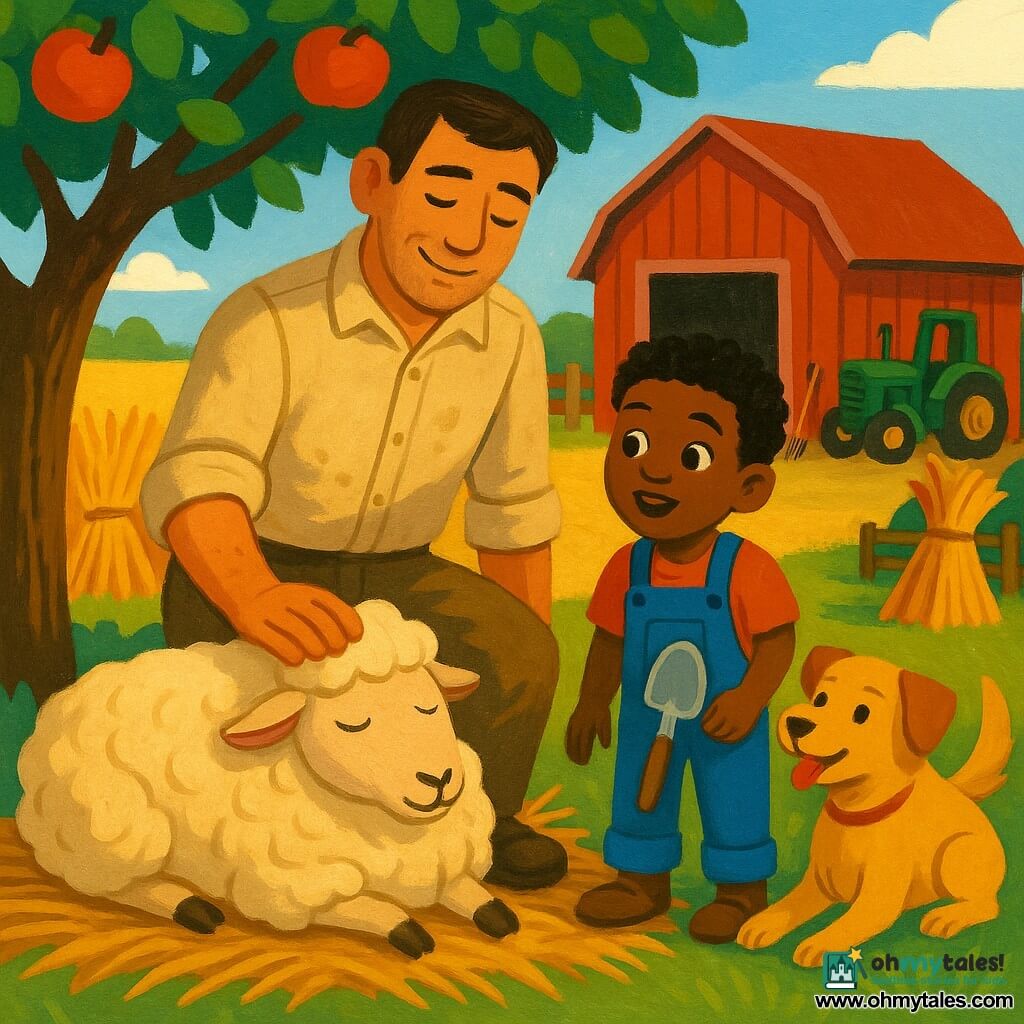
After the morning's work, Tom walked to the back meadow. It was soft there, a green pillow dotted with daisies and buttercups. The farm's small herd of sheep usually grazed here. Today, one of them lay apart on the grass, breathing slowly.
"Oh dear," Tom said gently as he crouched down. The sheep's coat was rough and its eyes looked tired. Poppy nudged the sheep with her nose, then sat beside Tom, head tilted.
"What's wrong, little one?" Tom asked. He rubbed the sheep's head and felt a small fever under its wool. "You must be hot or sick."
Tom had learned to watch animals closely. A small change could mean a big problem later. He thought of the farmer's rule: notice early, act kindly. He felt a calm urgency in his chest. He needed to help.
He carried the sheep to the shade of an apple tree and gave it fresh water. He mixed a gentle broth of warm water and a pinch of salt to help the sheep feel better. He checked the rest of the flock, counting and naming each by their bell or band.
"You're all right, Daisy," he said to a young ewe who bleated and nuzzled his hand. "We will take care of her."
Tom phoned the vet and explained what he had seen. He spoke with clear, steady words. "She's breathing slowly and has a bit of a fever," he said. "I'll keep her cool and give her water while I wait."
While they waited, Tom told stories to the animals. He talked about the harvest, the villagers, and how the little shop liked to put a few fresh eggs and a bag of grain on its shelf every morning. He hummed more tunes. The sheep's breathing grew slower and steadier. Poppy rested her head on Tom's knee.
"You're brave," Tom told the tired sheep. "You rested when you needed to. Good thinking."
When the vet arrived he smiled and nodded. "You did well to notice early," the vet said. "A quick rest and simple care often make the difference."
Tom felt relief wash through him. He packed fresh straw around the sheep and shaded her from the sun with a light cloth. He planned the next day: check every flock again, carry extra water to the meadow, and note which fields might need more shade. Anticipation helped him prepare so little troubles did not become big ones.
Evening at the Market Table
The next day, the village market sat under a line of chestnut trees. Tom unloaded sacks of golden grain, jars of honey from his neighbor, and a basket of fresh eggs. He liked to put his goods on the wooden table where people would stop and smile.
"Tom!" called Mrs. Hale, the baker. "I saved a corner of the oven for your wheat. The smell will be glorious."
Tom grinned. "Bring your loaf by tomorrow morning. I'll drop off more grain if you need it."
Children skipped past the stall, noses dusted with flour. An old man stopped and placed his hand over the wheat. "You grow it with care," he said. "You taste the work in every loaf."
Tom always liked these moments. They felt like the end of a day's sewing where the stitches made a warm blanket for the town. He spoke with the other farmers about next week's planting and about which customers liked whole grain or white flour.
"We should plan more carefully for the summer," said Maria, who raised vegetables nearby. "People want more fresh greens. If we plant now and share our plans, we can stagger the harvest so the shop always has something fresh."
Tom nodded. "Yes. If we talk and plan, our neighbors won't be surprised by empty shelves. We can help each other." He wrote notes in his small leather book: plant beans here, save seeds, water the meadow early, call the vet if any sheep cough.
A little boy tugged on Tom's sleeve and peered at the sacks. "What's inside?" he asked.
"Golden wheat," Tom said. "It becomes bread. That bread will warm hands and bellies."
The boy's eyes widened. "Can I help plant seeds when you're ready?"
"Of course," Tom said, smiling. "Come next month. I'll teach you to plant in straight rows and to count the seeds. Planting is like telling the land what you hope for."
The Soft Meadow and Small Triumphs
Back on the farm, the sheep had rested and were nibbling clover. The one that had been ill—Daisy—stood more steady, her wool fluffing in the breeze. Tom moved slowly around the meadow, checking fences and fixing a small gap that a fox might have used. He used a hammer and long nails, singing softly as his hands worked a familiar rhythm.
"Done," he said, stepping back. "That will keep you safer at night."
He thought about how farmers plan not just for today but for weeks and months. Anticipation helped him sleep at night. He made a calendar and marked days when seeds needed watering, when fences needed mending, and when the market would be crowded. Planning felt like a warm light on a cool evening.
That afternoon, Tom walked along the edge of the field with a basket of corn to feed the chickens. He looked at the wheat, now stacked in neat bundles by the barn, waiting to be threshed. He touched a bundle and felt the dry rustle. The whole farm hummed with small, useful sounds.
"Everything has its place," he said to Poppy. "We do a little each day, and then the work becomes whole."
He remembered the vet's words about noticing early. He had watched the sheep and acted. He had thought ahead and prepared extra shade and water. The sheep recovered because he saw the small sign and acted quickly. He felt proud not because he had done something big, but because he had kept watch and helped when needed.
That evening, he sat on the porch with a warm cup of tea. The sky blushed with pink. The barn's door was closed but not locked; there was trust in the farm. Tom thought of the market, of Mrs. Hale's oven, and of the boy who wanted to plant seeds. He thought of how each task fit into a bigger plan.
A Circle from Field to Table
Weeks later, when the village smelled of fresh bread and fields rolled green with new sprouts, Tom walked to the town square with a small loaf from Mrs. Hale. He handed it to the boy who had asked to help. "You planted the seeds, remember?" Tom said. "We saved some of this wheat together."
The boy's face shone. "We did it!"
Tom talked to the shoppers about how the farm worked and why planning mattered. "When we think ahead," he told them, "we can share more and worry less. I plan my planting, watch the animals every day, and keep good talks with neighbors. Then our shop has bread and the children have dinners."
A young mother hugged Tom's arm. "Your grain makes our bread," she said. "We like knowing it comes from nearby. It feels like home."
Tom felt a gentle warmth spread through him. The short trip from field to table made a long chain of small, kind things: a farmer who watched carefully, a baker who kneaded with a smile, a shopkeeper who kept the shelves tidy, and a family who gathered around the oven. All of it lived on small acts and on being ready.
That night, Tom walked back through the meadow. The moon hung low and soft. He stopped by the apple tree where the sheep had rested and looked at Daisy grazing quietly. "Good night," he whispered. "Sleep well."
He knew there would always be surprises—a sick lamb, a late rain—but planning and watching would make those surprises smaller. He would keep his calendar, fix fences before storms, and call the vet when a cough appeared. He would teach the children to plant in straight rows and to count seeds, so they too would learn to think ahead.
Tom closed the barn door and turned off the lights. The farm breathed a slow, calm breath. He felt tired but satisfied, like someone who had sewn a small patch on a big blanket. He folded his hands and smiled.
"Thank you," he said softly to the field, to the animals, and to the people he served. "We'll do it all again tomorrow."
Far away in the village, the oven warmed slowly, and the smell of fresh bread promised mornings yet to come. The circle from field to table turned quietly, made of steady hands, kind hearts, small plans, and the careful care of a farmer who loved the land.