Part 1: Morning at the Shelter
Dr. Lina Park opened the animal shelter early, while the sun was still soft and sleepy. The building smelled like clean soap, warm blankets, and a tiny bit like kibble. Lina liked that smell. It meant the animals were safe.
She was a shelter veterinarian. That meant she helped many kinds of animals, even ones that did not have families yet. She wore comfy shoes, a light blue shirt, and a little badge with her name. In her pockets were useful things: a penlight, a small notebook, and treats that crunched like little leaves.
First, Lina washed her hands. Then she walked through the quiet hallway. She checked the list for the day. It had careful notes: “Cat with sneeze,” “Puppy checkup,” “Bunny nail trim,” “New arrival: scared.”
Lina moved slowly and gently. She listened for sounds that told her how everyone felt. A happy bark. A nervous whine. A cat purring like a tiny engine. Listening was part of her job.
Soon, a group of children arrived with their teacher. They were visiting to learn about animals and how to care for them. Their eyes were wide, and their steps were tiptoe-quiet, like they were inside a library made of fur.
Lina welcomed them with a warm smile and showed them the hand-washing sink. Clean hands helped keep animals healthy. Then she led them to a big window where they could see into the exam room.
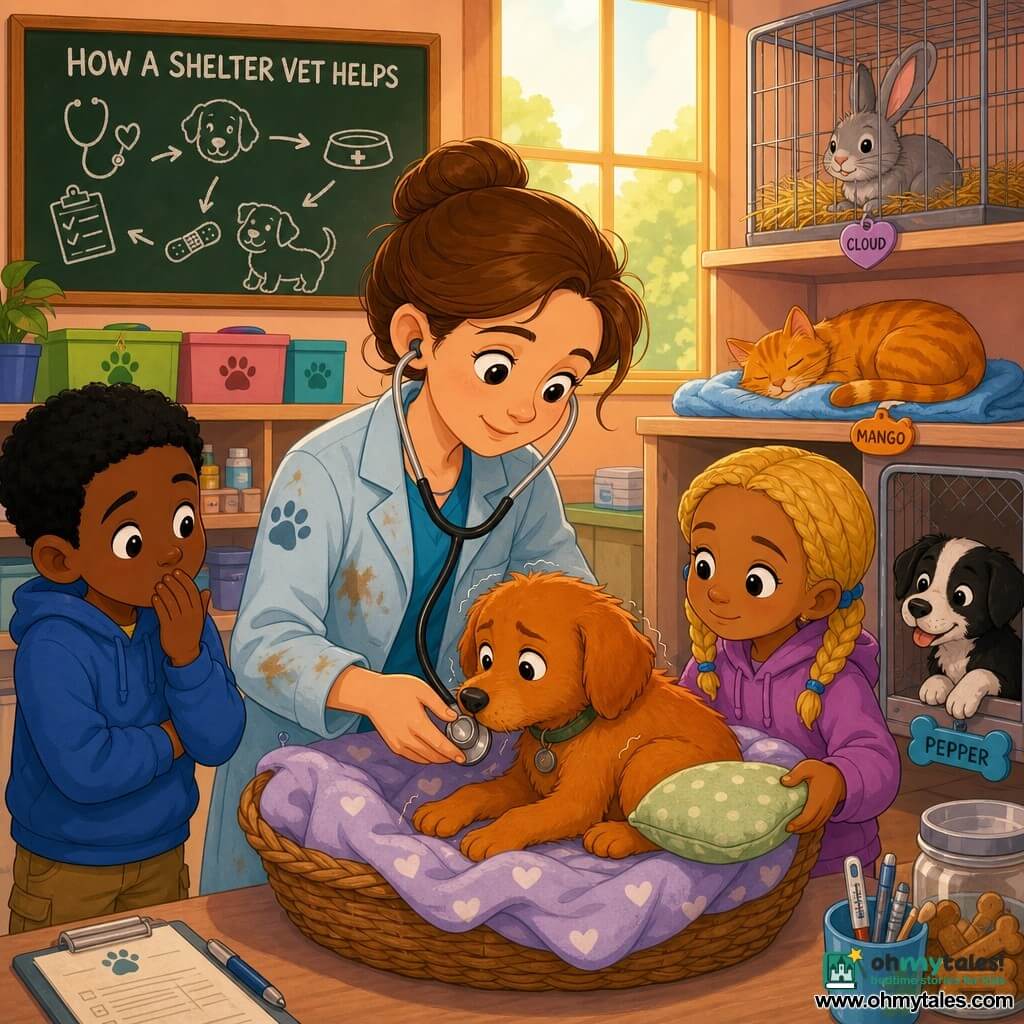
On a table lay a calm orange cat named Mango, wrapped in a towel like a cozy burrito. Lina used a stethoscope and listened to Mango's chest. The children leaned close, careful not to bump the glass.
Lina's work was not only about medicine. It was also about feelings. Animals could not say, “My tummy hurts,” so Lina watched their eyes, their ears, their tails, and how they moved. She checked Mango's nose for drips, his mouth for sore spots, and his fur for itchy patches.
Mango gave a little sneeze. The children's faces changed from excited to worried.
Lina stayed gentle and calm. She took Mango's temperature with a quick, careful tool. She looked in his ears with a small light. She wrote notes. She made sure Mango was warm and comfortable.
Then she prepared a tiny bit of medicine and a plan: rest, clean air, and a quiet room away from stress. The children learned that sometimes the best help is simple and patient.
After Mango, Lina visited the kennel area. A black-and-white puppy named Pepper bounced like a popcorn kernel. Lina checked Pepper's belly and teeth. She looked at Pepper's paws and made sure the puppy's skin was healthy. Pepper had sharp little baby teeth, so Lina offered a chew toy and taught the shelter team to keep safe, kind habits.
The children watched Lina's careful hands. They saw that a veterinarian did not rush. A veterinarian noticed small things. A veterinarian tried to understand.
Part 2: The Case of the Quiet Bunny
In the next room, a fluffy gray rabbit named Cloud waited inside a carrier. Cloud's ears were tall, but today they were a bit tilted, like droopy leaves after rain.
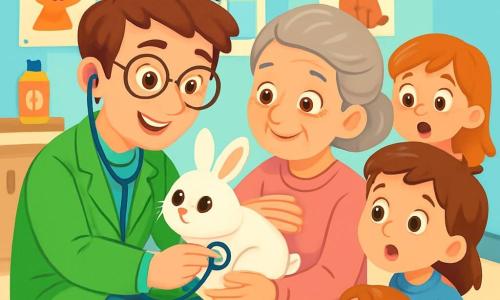
Lina set the carrier on a blanket and opened it slowly. She let Cloud hop out by himself. Rabbits could get scared easily, so Lina used a low voice and gentle movements.
She checked Cloud's eyes. She checked the nose. She watched the bunny's breathing. Then she looked at Cloud's nails. They were long and curled.
Long nails could hurt. They could snag on blankets. They could even make it hard to hop. Lina showed the children a soft towel and how it could be used to hold an animal safely, like a snug hug. She took tiny nail clippers and cut just the tip of each nail.
A small twist happened then. Cloud gave a sudden kick, not because he was mean, but because he was frightened. The clippers fell onto the table with a tap.
The children jumped, but Lina stayed steady. She paused. She gave Cloud a moment. She offered a leaf of lettuce and waited until Cloud's whiskers stopped trembling.
Lina's patience was part of her medicine.
She checked Cloud's feet again and noticed something else. One paw looked a little red. The bunny had been hopping on a rough surface. Lina cleaned the sore spot with warm water and put on a safe ointment. She explained that soft bedding and clean floors helped paws heal.
The children's faces relaxed. They learned that animals sometimes act wiggly when they are scared, and that calm hands can help them feel brave.
When Cloud was done, Lina placed him back in his carrier with fresh hay. Cloud began to nibble right away. His ears stood taller again.
In the hallway, Lina stopped by a big shelf full of supplies. There were bandages, tiny syringes without needles for feeding, flea combs, and special food. A shelter veterinarian had to be ready for many different needs.
And then Lina saw a new name on the board: “New arrival: scared.”
Part 3: The Scared Newcomer
In a quiet room at the end of the hall, a small dog named Juniper sat curled in the corner of her kennel. Juniper's fur was the color of toasted bread. Her eyes were wide, and her tail was tucked close.
Lina asked the children to stand still like trees. Loud sounds could feel like thunder to a scared animal.
Lina knelt down so she was not tall and scary. She turned her body a little to the side. That was friendlier than facing straight on. She placed a treat near the door and waited.
Juniper did not move at first.
Lina waited longer.
At last, Juniper crept forward one step, then two. She sniffed the treat and ate it with tiny bites. Lina did not reach for her. She let Juniper choose.
This was also part of being a veterinarian: helping animals feel safe enough to be helped.
Lina checked Juniper's body in a slow, gentle way. She looked for scratches and lumps. She felt Juniper's ribs to see if she was too thin. She checked her gums, which should be pink like a seashell. She listened to her heart, a quick little drum inside a small chest.
Juniper flinched when Lina touched one ear. Lina did not press. She looked carefully and saw a little dirt and a scratch. It might itch and hurt. Lina cleaned the ear with a soft wipe and gave medicine that would help with soreness and keep germs away.
Then another small twist: Juniper began to shake. Not from anger—just from too many big feelings at once.
Lina wrapped a blanket around Juniper's shoulders. She made the room quiet. She helped Juniper breathe slowly by staying calm herself. The shaking eased.
The children learned something important: animals have feelings, too. Some animals need extra time. Kindness can be a quiet kind of courage.
After the checkup, Lina wrote instructions for the shelter team: gentle walks, a calm space, soft music, and a treat when Juniper chose to come closer. She also planned a vaccine visit later, when Juniper felt safer. Vaccines helped protect animals from sickness, like tiny shields.
Before the children left, Lina brought them to a wall near the exam room. She took a marker and a big sheet of paper.
Part 4: The Wall Chart of Gentle Care
Lina drew a simple chart and taped it up where everyone could see. It was bright and clear, with little pictures.
At the top she wrote, in big neat letters:
“HOW A SHELTER VET HELPS”
Under it, she drew four squares.
In the first square, she drew an ear and a heart. She wrote: “LOOK and LISTEN.” She added: “Eyes, ears, nose, breathing, tail.” She showed that a body told a story even without words.
In the second square, she drew hands under water. She wrote: “STAY CLEAN.” She added: “Wash hands. Clean tools. Fresh bedding.” Cleanliness kept germs from spreading.
In the third square, she drew a bandage and a tiny bottle. She wrote: “FIX HURTS.” She added: “Medicine, ointment, bandages, vaccines.” She explained that medicine should be used carefully and safely, only the right kind and amount.
In the fourth square, she drew a blanket and a small smile. She wrote: “BE KIND.” She added: “Go slow. Give space. Use soft voices.” Kindness helped scared animals become hopeful.
The children stood quietly, reading the chart with their eyes and their fingers in the air. They could remember Mango's sneeze, Cloud's sore paw, and Juniper's trembling ears. They could see how Lina helped with both science and softness.
Before leaving, the children helped place a fresh blanket in Juniper's kennel, and they left a toy shaped like a star. Juniper watched from her corner, then inched closer and sniffed it.
Lina looked at the wall chart one more time. It made the idea clear, like a bedtime lamp in a dark room: caring for animals was not only about being smart. It was also about being gentle.
As the shelter grew quiet again, Lina finished her notes and turned off the bright lights. The animals settled into their beds. Mango curled into a warm ball. Cloud chewed hay like a tiny gardener. Juniper rested with her new blanket tucked around her paws.
And on the wall, the chart stayed up, ready to teach the next curious visitors that empathy is a kind of healing, too.