Chapter 1: Morning at the Meadow Clinic
Lina woke with the light tapping on her window. She was a young woman who loved wild animals. Her small clinic stood at the edge of a big meadow. Birds sang as she walked in. A fox cub waited on a soft blanket. A hedgehog peeked from a box. Lina smiled and put on her green coat.
She loved being a wildlife veterinarian. Her job was to care for animals found hurt or lost. Sometimes she fixed broken wings. Sometimes she gave gentle baths to wet fur. Sometimes she sat very still and listened to a heartbeat. Lina believed that being kind and curious helped her learn. She used science and softness together.
On the table sat a little notebook full of drawings. Lina had drawn an owl's wing and the pattern of frog skin. She loved to ask questions. Why did the rabbit limp? How long does a bad wing take to heal? She wrote down what she saw. Then she tested carefully. She talked to the animals in a soft voice. They trusted her calm hands.
A small bird fluttered in the door. It had a bent wing. Lina laid it on a towel and shone a tiny light into its eyes. She counted its breaths. She hums a gentle tune. She wrapped the wing with a tiny splint. The bird blinked and chirped. When she finished, Lina tucked her pen into the side pocket of her pencil case. It was a small habit. Putting her pen away meant she was ready to move on, to leave no small thing behind.
Outside, the wind called Lina to the meadow. A ranger came running. “There's a fawn near the stream,” he said. “It looks lost.” Lina nodded. She slung her bag over her shoulder. Inside the bag were bandages, a stethoscope like a soft Y, and a warm blanket. She checked the strap, then reached to tuck her pen into the pencil case one more time. It slid in with a click. Lina smiled and set off, her boots making soft prints in the grass.
Chapter 2: The Fawn and the River
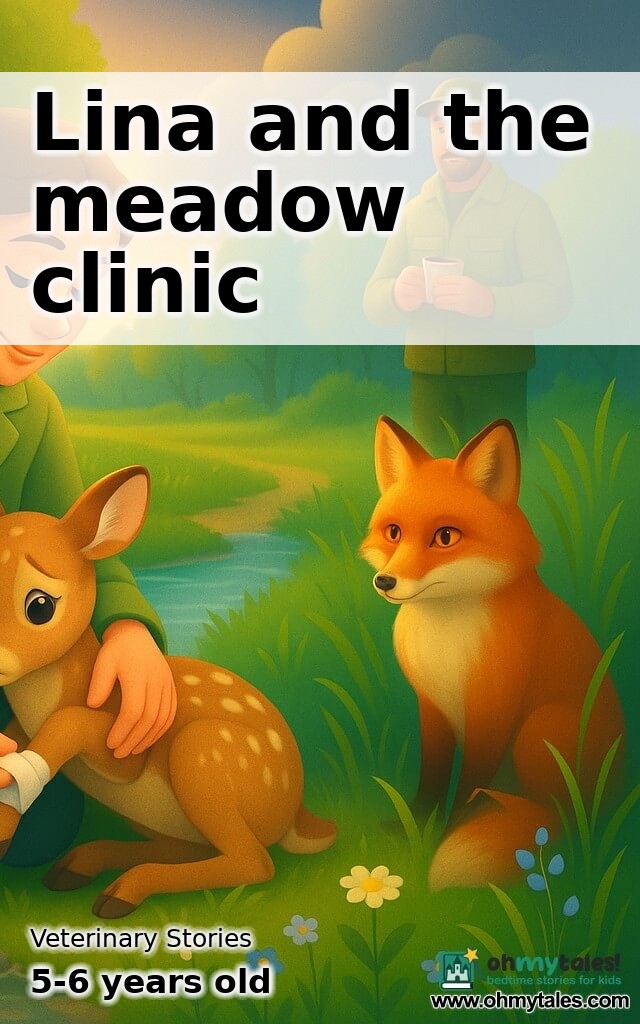
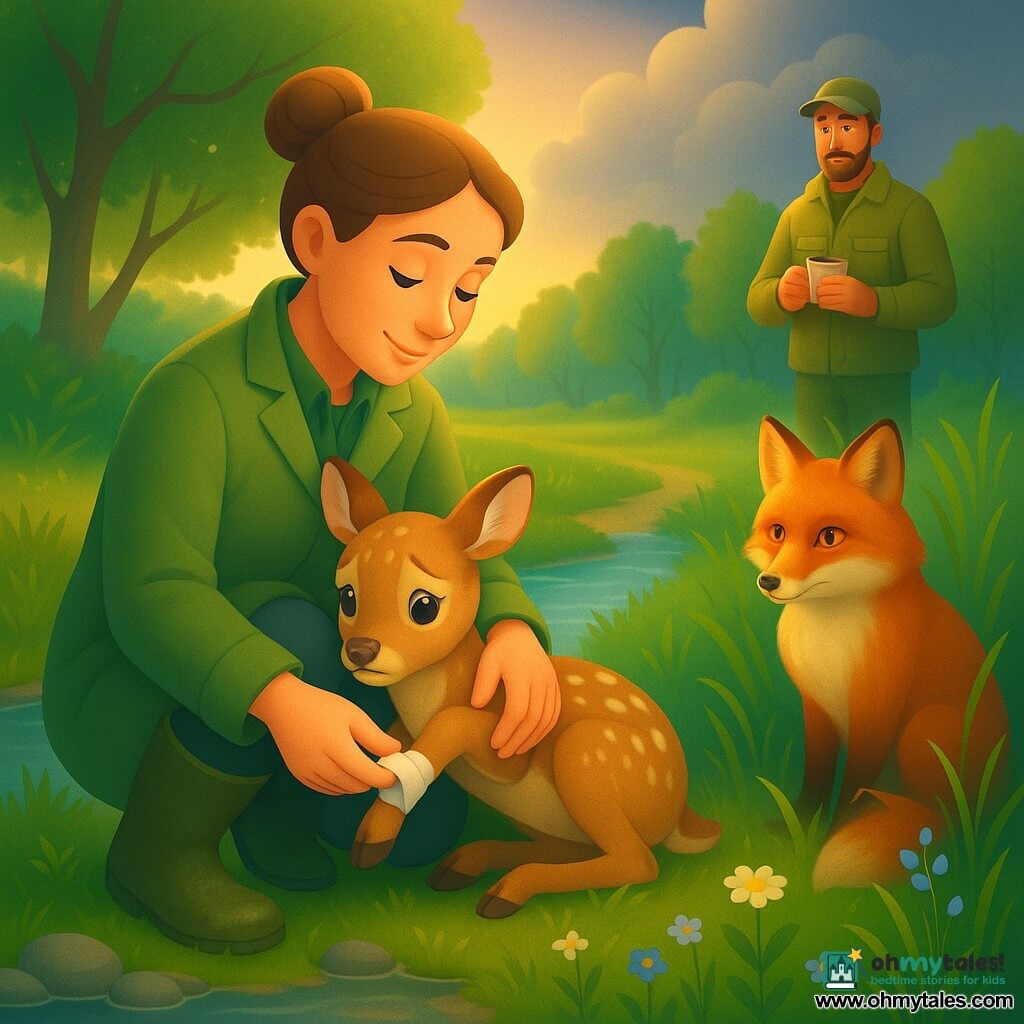
At the stream, sunlight jumped on the water. The little fawn stood with its ears high and its legs shaking. Mud clung to one hoof. Lina lowered her voice and walked slowly. She remembered to breathe like a calm river. The fawn blinked and did not run. Lina checked its eyes and its pulse. She listened with her stethoscope. The heartbeat was fast but steady.
“Probably scared,” Lina whispered. She wrapped a towel around the fawn like a tiny blanket. She spoke softly about stars and mint leaves and safe nests. The fawn calmed. Lina asked questions out loud, like a scientist telling a story. Where did its mother go? Did the fawn eat this morning? What did the tracks say? She looked at the ground. Tiny hoof prints led toward the tall trees. Lina smiled inside; the mother might be nearby.
Still, the hoof looked sore. Lina cleaned the mud with warm water and gentle hands. She smelled the air and knew the stream had fresh stones. She put on a small splint to help the hoof heal. She marked the time in her notebook and made a little diagram of the splint so she would remember how to check it later.
As she worked, a storm cloud rumbled far off. The fawn shivered. Lina wrapped it in the warm blanket and lifted it onto her lap. She hummed a tune and told the fawn about the meadow's secret places. The fawn listened like a small friend. Lina's patience, her science, and her kindness were all working together.
They walked back slowly toward the trees. Halfway, a pause. A rustle. From the bushes leaped a fox lady, eyes bright, tail low. She darted to her fawn, nuzzled it, and hesitated. Lina stepped back and bowed her head. She knew not to frighten the wild.
The fox sniffed the splint. She looked at Lina with an odd fox look—keen and a little shy. Lina took one deep breath and held out her hand, palm up. She remembered a trick from school: be small and still. The fox sniffed and then licked Lina's fingers. The fox's tail lifted. The mother carried the fawn gently, and together, they melted into the grasses.
Lina let out a quiet cheer. “Good job,” she told the ground. She picked up her pen from the pencil case to note the time and the tale. After she finished, she slid the pen back in and zipped her case closed. The little click felt like a promise to care for small things, always.
Chapter 3: Moonlight Lesson
That night, Lina returned to the clinic with muddy boots and a head full of stars. The animals slept in soft boxes. The bird with the splinted wing tucked its head under its wing and slept. The hedgehog snuffled. Lina cleaned her tools and took out the notebook. She drew the hoof splint and wrote the fawn's name—Flicker—because it ran like a little light.
She thought about the day. Being a wildlife veterinarian wasn't only about fixing bones. It was about watching closely, asking why, and trying ideas that the animals could live with. It was about charts and tests and also soft blankets and songs. Lina loved both the science and the care. She loved to study animal tracks and to measure breaths. She loved to be gentle and to learn from the animals.
As she packed her bag, Lina found her pencil case. She tucked another little note inside. She always carried a tiny treat for foxes—a piece of dried meat for emergencies. She zipped the case and, as she did every night, she slid her favorite pen into it. The pen had a small star on the top. It felt warm in her hand, like a small light that said, “Remember.”
Lina sat by the window. The moon was round and kind. She thought of the fox's quiet eyes and the fawn's small hooves. She looked at her reflection and smiled. Sometimes the day had surprises. Once, a bad storm came and a whole family of birds needed a new nest. Lina and friends built one. Another time, a porcupine got tangled in a blanket; Lina learned how to be very careful and slow. Each time she learned, she added a new question to her notebook.
A soft knock came as the ranger returned. He had a cup of tea and a tired smile. “You were brave today,” he said. Lina shrugged. “I was curious,” she answered. Curiosity was a kind of courage. It made her ask, “What can I try?” and “How can I be safer?” The ranger sat and sipped his tea. He said, “You made more than repairs. You gave hope.”
Lina looked at him, then at her animals sleeping under the moon. She thought of the fox licking her hand, the fawn listening to her songs, and the bird that blinked at dawn. She realized something very small and very big: a smile could change a moment. That day, when she had smiled at the fox, the fox relaxed and trusted her. When she had smiled at the fawn, the fawn calmed. When the ranger smiled, the day felt lighter.
Her work was about medicine and careful checks, but it was also about kindness that fit like a warm glove. A soft smile could help an animal feel safe. It could help a person feel braver. Lina put her pen into the pencil case, closed the bag, and felt the comfort of small things being in their place.
Before she turned off the light, Lina whispered to the sleeping animals, “Good night. Keep learning.” She thought of the future: more questions to ask, more animals to help, more tiny smiles to give. She knew that her curiosity would always guide her, like a warm flashlight in the dark.
Outside, the meadow breathed under the moon. Lina walked home with her coat wrapped tight and a peaceful feeling in her chest. The day had been full of tests and gentle fixes, of diagrams and songs, of science and heart. She understood then that being a wildlife veterinarian meant using both the brain and the softness inside the chest.
When she reached her door, a little neighbor child waved. Lina waved back and smiled. The child smiled back, even in the dusk. Lina felt the truth bloom inside her like a small flower: a smile in a hard moment can be a kind of medicine too. She opened her door and placed the pencil case on her desk, pen tucked safely inside. The light went out, and Lina dreamed of maps of animal tracks and peaceful forests, ready to wake and ask new questions, and to help with a steady hand and a gentle smile.