Early Light on the Ridge
The farmhouse woke with a soft creak as Jonah pulled on his boots. He was an adult with a face shaped by sun and seasons, and his hands remembered the weight of tools even before his mind woke. Outside, the sky was the pale blue of chamomile tea. Dew clung to the grass like tiny glass beads. Jonah breathed in the smell of wet soil and hay and felt at home.
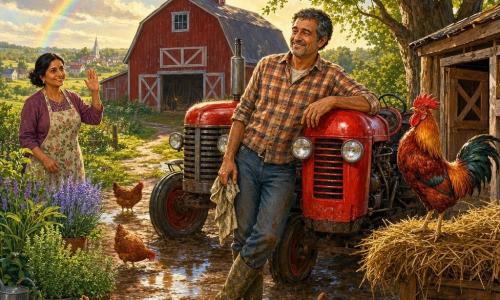
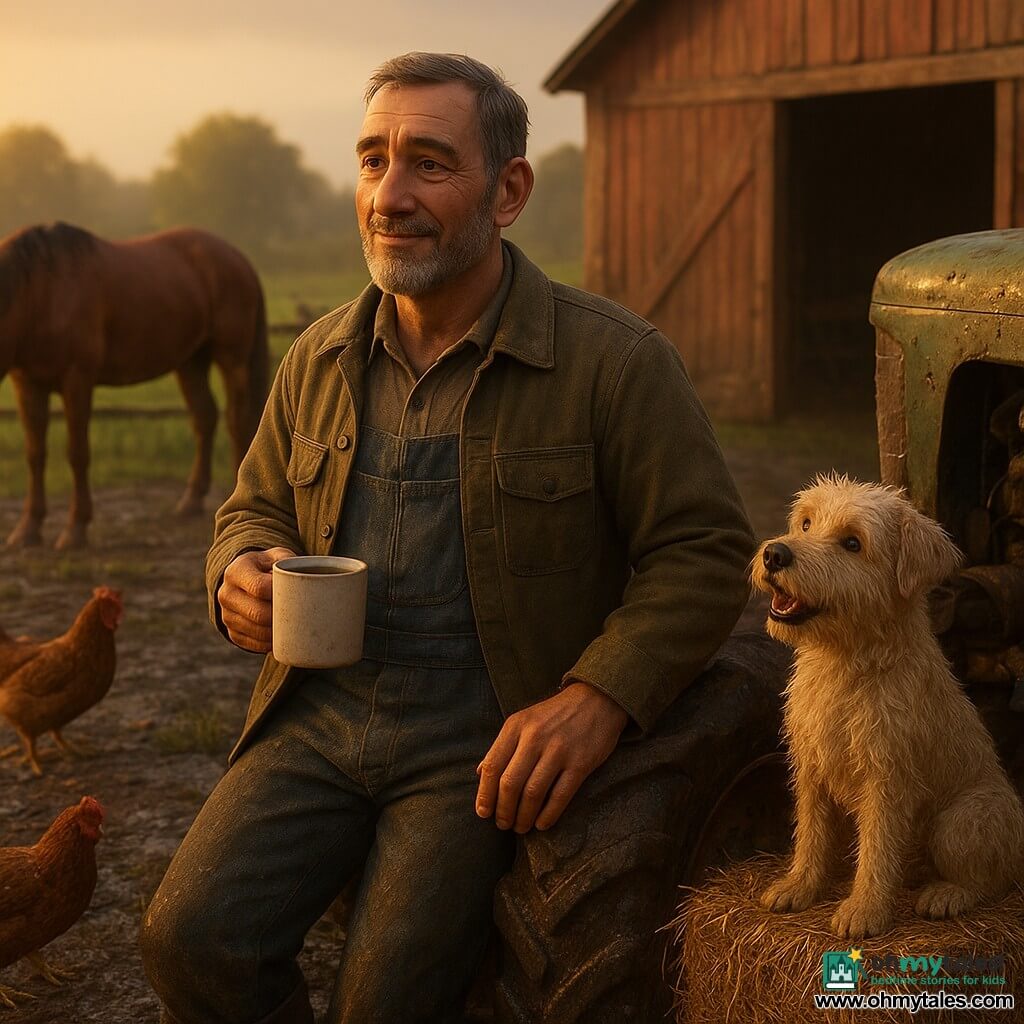
He walked the ridge where his fields rolled down like a green-socked staircase. Rows of young wheat stood in tidy lines, and a patch of carrots peeked orange from the earth. The hens clucked from their coop, and a tractor dozed in its usual corner, hood slick with morning mist. Jonah ran a careful eye along the furrows. He loved the neatness of work well done — straight rows, even sowing, clean fences. That meant respect for the land and for the families who would eat from his fields.
Today was a planting day. Jonah checked the seed boxes, oiled the planter, and loaded the trailer. He hummed a little tune he'd learned from his grandfather while the sun climbed, warming his shoulders. There was pleasure in the routine: filling sacks, checking the depth of the planter, fastening the harness to the cart. Each motion had purpose, each breath a small promise to the soil.
The Mud That Would Not Let Go
By midday the weather turned. A sudden shower rolled across the valley and the ground drank it greedily. Jonah felt the change beneath his boots. The furrows, once solid, softened. When he steered the tractor into the field, the tires sank with a heavy groan. Mud spat up and stuck to the treads like stubborn stickers. He tried a firm steady pace, but the machine coughed and slid. The planter left uneven lines. Jonah's jaw tightened.
He climbed down, sticky boots leaving a print. Rain tapped the brim of his hat. He could have pushed on, forcing the tractor forward, risking ruts that would rot the rows and make months of work harder. Jonah set his hand on the tractor's cooling hood and took a breath. He had learned long ago to pause when anger or worry nudged him; the land was patient, and so must he be.
Jonah walked to the edge of the field and thought. He pictured the whole season in his head: the grain ripening in the sun, children's lunches with bread from this wheat. He could not let haste ruin that. That was when he found a plan B.
A Plan Born in the Barn
The barn door was heavy and warm with stored summer air. Inside, the hangar smelled of straw, dry corn, and a faint sweetness of apples stored in a corner. Jonah switched on a lamp and looked over his stacks. Big sacks of stored seed, bales of hay, spare tools and the old corn dryer stood by the far wall. He ran his hand along a bag labeled "winter oats" and smiled.
He started a different kind of work. If the fields were too muddy to plant, there was always maintenance to do, and the hangar held a hundred small urgencies. Jonah untied a sack and began to sort seeds by hand, checking for pests or clumps. He repaired a torn tarpaulin that would keep the harvested wheat dry. He checked the combine's belts, cleaned out chaff, and sharpened blades until they shone. He stacked crates neatly, counted jars of feed, and wrote notes on a clipboard: oil for the generator, nails for the fence, call the vet about the sheep's cough.
As he worked, Jonah whistled and thought about the field outside, how the mud would dry in a day or two. He made a list of things that would make the day in the field easier once it was ready: a smoother seedbed, a tightened fence to keep the stray lambs out, a clear path so the tractor could turn without slipping. Plan B was not giving up; it was preparing better. The barn hummed with usefulness.
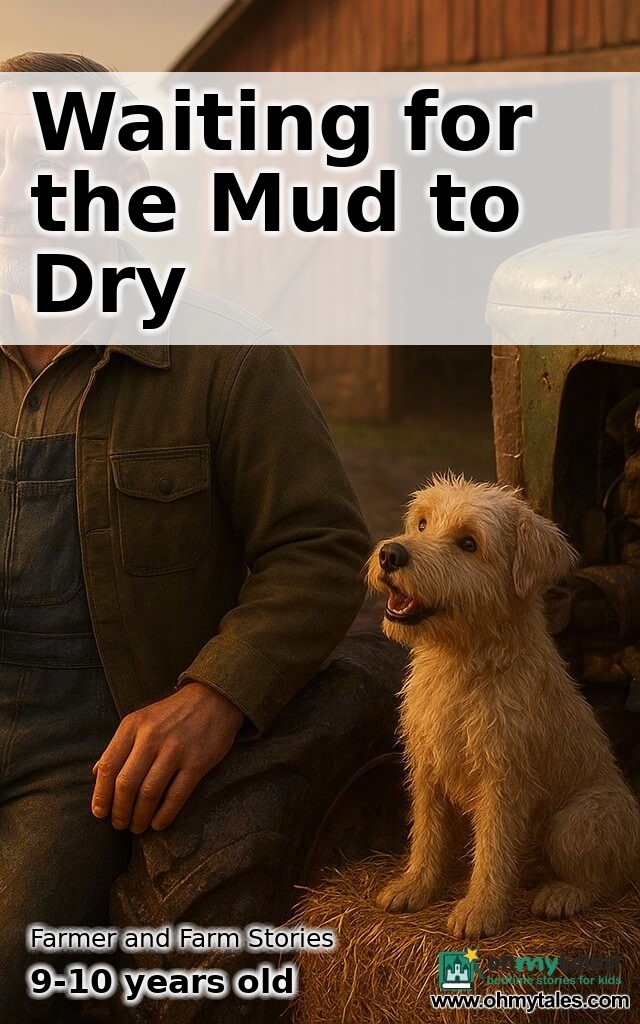
Then a small sound stopped him — a soft knock, like a paw on wood. Jonah found a wheaten terrier nosing through a pile of blankets. The dog wagged, eyes bright. Together they fixed the leaky window at the back of the hangar, using a scrap of old glass and a dab of putty. When the last nail sat snug, Jonah felt a satisfaction almost like harvest itself.
Evening Thanks
By late afternoon, the rain slowed to a whisper and the field's surface began to dry into ribbons of damp soil. Jonah walked the boundary with his hands in his pockets, feeling the day's work in his muscles. He had not planted as planned, but the seeds were sorted and stored, the tools were ready, and the hangar stood tidier than it had in years. He had found a way to turn a muddy problem into useful, steady work.
He fed the animals: the hens clucked approval at their corn, the sheep grazed contentedly, and the old horse nibbled slowly from Jonah's palm, warm breath steaming in the cooling air. Families would still be fed because this farm was a whole of careful acts, not just a single busy morning.
As the sun slid down like a bruised orange behind the hedgerow, Jonah sat on the stoop with a mug of warm tea. He looked over the land with a soft, grateful smile. He spoke aloud, because he often did, thanking the earth. "Thank you," he said, fingers touching the packed soil by his boot. "For giving, for holding, for teaching."
He thought about stepping back — how the mud had asked him to wait, and how waiting had given him time to prepare better and rest the land. That taking a breath had been part of the work, too. The day had shown him the dignity in small, careful actions: mending a roof, sharpening a blade, sorting seeds. These were as much a part of farming as sowing or reaping.
Night came soft and cool. Inside the farmhouse, Jonah wrote his notes for tomorrow and set the plans he had made in the hangar into his pockets like promises. He lay down with the steady sound of rain beginning again, content. The farm breathed with him: steady, alive, patient. Jonah slept with gratitude toward the thick, dark earth that fed him and the people he served, knowing that work well done grows not only food but also respect, peace, and quiet pride.