Morning Light on the Fields
Marta woke before the sun, as she always did. The farmhouse was quiet except for the soft tick of the kitchen clock and the distant lowing of cows. She pulled on her boots, wrapped a scarf around her neck, and stepped out into the cool air. Mist clung to the rows of vegetables like memory, soft and silver. The earth smelled of rain from the night before—rich and warm. She breathed it in and felt a steadying calm.
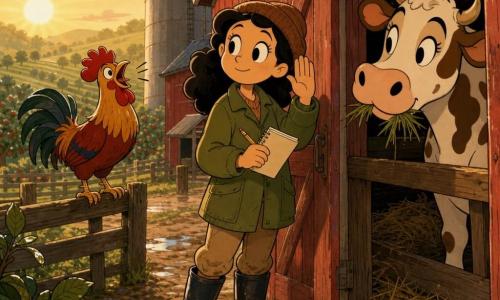
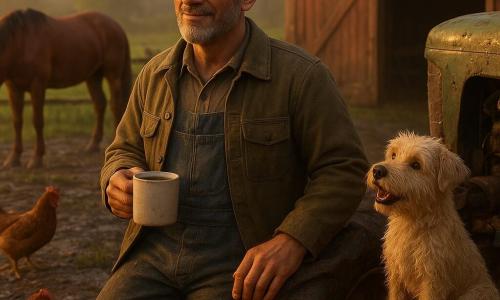
Her hands moved by habit: to the barn to feed the pigs, then to the henhouse to gather eggs that rested, still warm, against her palms. She greeted each animal with a nod and a gentle tone, because the work was practical and also a conversation with living things. When she walked the fields, she pressed her fingers into the soil and felt its crumbly texture: alive, full of tiny roots and earthworms that turned the soil into a promise.
People sometimes said farming was simple—dig, sow, reap. Marta knew it was more. It was listening to weather, mending broken fences in a rainstorm, guiding a scared calf into life, choosing which seeds to plant for the season ahead. It was rhythm: seed, growth, harvest, rest. It was patience stitched with sudden urgency when storms arrived. Most of all, it was stewardship—caring for land that would feed others.
The Festival Idea
A flyer arrived tied to the gate with blue twine: Festival of Rural Life, three days in the nearby town. The town wanted to celebrate farms, crafts, and food. Marta smiled. The festival would be a chance to show people what farming really was. She had heard many ideas—some people thought farmers had endless time, or that machines did everything, or that farms were quiet and easy. She wanted to share the truth with warmth.
She prepared jars of chutney made from late tomatoes and apples, small sacks of flour from whole-grain wheat, and neatly labeled bundles of herbs. She packed photographs of the farm through the seasons: a newborn lamb wet and shaking, a field of sunflowers nodding, a winter fence wrapped in frost like a silver ladder. She also packed a little wooden box with a spare pair of socks, a bandage, and a poem she had written about the first frost. It was a simple box of practical things and of feeling.
At the festival, people moved between stalls beneath bunting and flags, their voices mixing with music from a fiddle player. Children ran barefoot on the grass and tugged at their parents to look at a pile of hay. Marta set up her table and arranged her jars and photographs. A boy of nine hesitated, then asked, “Do you sleep a lot, like forever?” Marta laughed softly and handed him a jar of chutney to taste.
“Farming's a lot of work,” she said. “But we sleep when we can. A farmer's sleep is like a good coat—keeps you warm and ready for the next day.” The boy's eyes widened. His mother listened and nodded, surprised to hear the truth told simply.
Misconceptions and Real Work
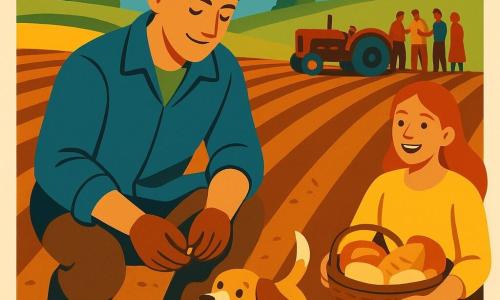
Through the day Marta met many questions. A woman asked if the animals just looked after themselves. Marta shook her head and described milking a cow by hand when the machine broke, the steady rhythm of hands and the soft breath of the animal beside her. A man asked if tractors did everything. Marta pointed to the photo of her kneeling by a seed bed, tending tiny green shoots with a careful hand. “Machines help,” she said, “but there's still a lot that needs patience and touch.”
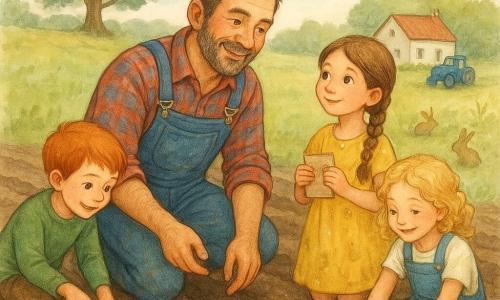
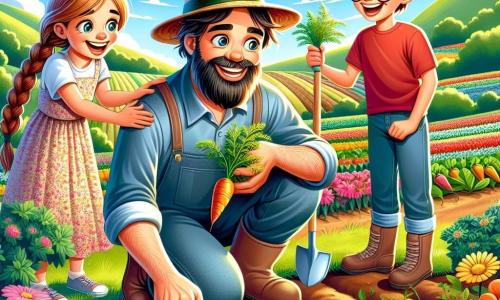
She showed children how to feel soil and count worms. Little fingers went into the earth and came out sticky and amazed. “Why care so much?” an elderly visitor asked. Marta thought of the people who ate her crops, of neighbors who traded eggs for flour, of the school that ordered vegetables for lunch. “Because food is a story,” she said. “It starts here, with soil and sun and hands. We are part of that story, and we must be grateful for it.”
A local journalist wanted a quick quote for the paper. He asked if farmers were lonely. Marta considered the question as she watched a group gather to learn how to braid straw. “Sometimes the days are quiet,” she said, “but the farm is never alone. There are seasons, and songs, and neighbors. Loneliness is real, yes, but so is community.” People applauded when she mentioned the simple acts of exchange: a neighbor mending a fence, a child bringing freshly baked bread after a storm.
Unexpected Trouble and a Gentle Choice
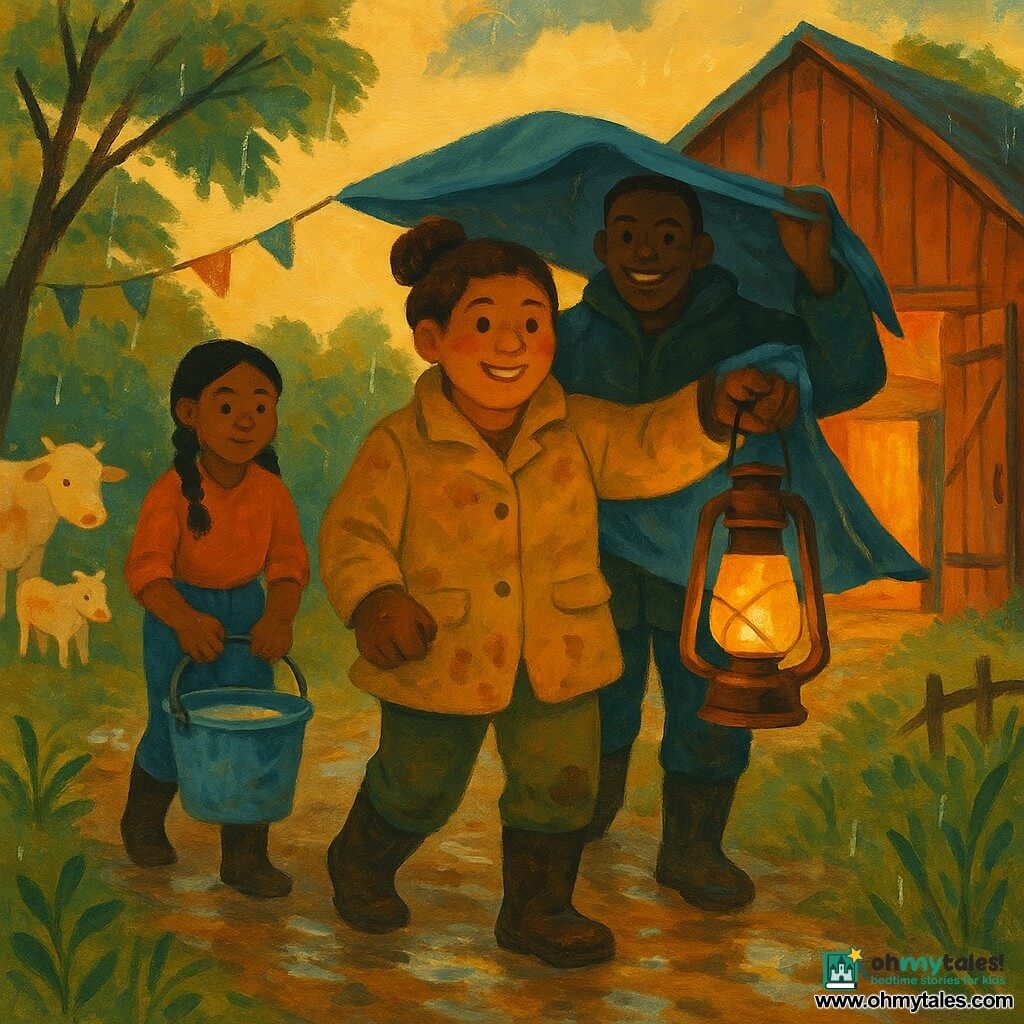
On the festival's second day, a sudden storm rolled in. Rain pounded the tents and wind tugged at the bunting. Marta thought of the flock she had left for a few hours and felt that familiar prick of worry. She tried to call the farm but had no signal. A small panic rose—what if a tree had fallen? What if the lambing pen had a leak? For a moment she felt the old pull to rush back, to shoulder everything herself.
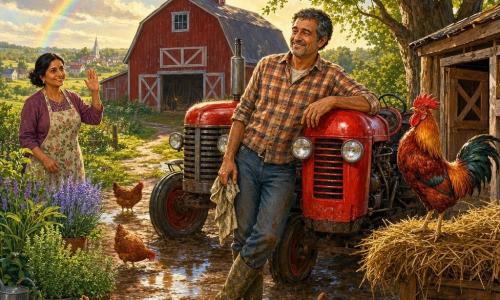
Then she remembered the bandage in the wooden box, the neighbor, Tomas, who always checked the animals when storms came. She found Tomas under a dripping awning and asked if he could look after the farm while she stayed to help with the tents. He grinned, hair plastered to his forehead, and said, “We're in this together, Marta.” Relief was like warm tea—slow and settling.
Together they went back, some people from the festival helping to secure tents in exchange for learning how to mend a fence. Marta's hands were muddy and her boots full of water, but her heart felt light. She had given herself permission to accept help. That night, back at the farmhouse, she lay down earlier than usual. Her bones were tired in a good way, and she could feel the farm's steady breathing—animals grazing, wind through the trees. She slept.
In the days after the festival, Marta reflected on the small surprises of the event. People had come with questions, left with new stories about where their food came from. Teenagers had signed up to help on weekends. A teacher planned a field trip. Compliments had warmed her, but the most important outcome was quieter: neighbors had reminded each other of their shared responsibility, and Marta had chosen to rest when her body asked.
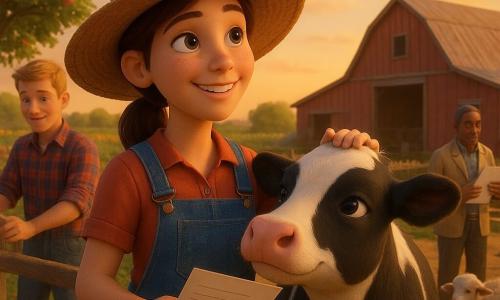
She began to change small habits. She set a bedtime and watched the sky with her morning coffee instead of checking every message. She trained a young apprentice, Lila, to milk the cows and to recognize when a hen was truly unwell. She scheduled time to walk the fields slowly, to check for tiredness in her own hands as well as in the soil. Gratitude found its way into these acts—gratitude for helpers, for the land, for the people who ate from her fields.
The seasons turned. Winter softened the land and Marta wrapped the farmhouse in stew-scented evenings and extra quilts. Spring arrived like a held breath released. She woke one morning to a tiny note pinned to the gate: “Thank you for feeding us. Sleep well.” It was from someone at the festival. Marta folded the note into her pocket and felt a deep, gentle pride.
When she thought of the old ideas people had about farming—that it needed no thought, or that it was lonely, or that it demanded endless sacrifice—she remembered the festival and the hands that had tied the tents, the children with soil on their thumbs, the neighbor who came when the storm hit. Farming was hard, yes; it required stubbornness and tenderness. It also required rest and care for the farmer, because the land gave best when her steward was healthy.
Marta tidied the barn at dusk, the light softer than a whisper. She stroked a cow's flank, listened to the low rattle of a pig content in its straw, and smiled at the quiet orchestra of the farm. She walked back to the house, put fresh water on for tea, and let herself sleep earlier than she might have before. Her choice to preserve her health and sleep was not a surrender, but a careful, grateful decision—one that taught others by example.
In the end, the farm remained a place of work and wonder, full of small miracles: a row of seedlings breaking soil, a child learning to count worms, a neighbor bringing bread to say thanks. Marta learned that being a farmer was to be steady and kind, to answer ideas with truth and open hands, and to protect the one thing that lets her do it all—the simple, honest rest that comes after a day well done.