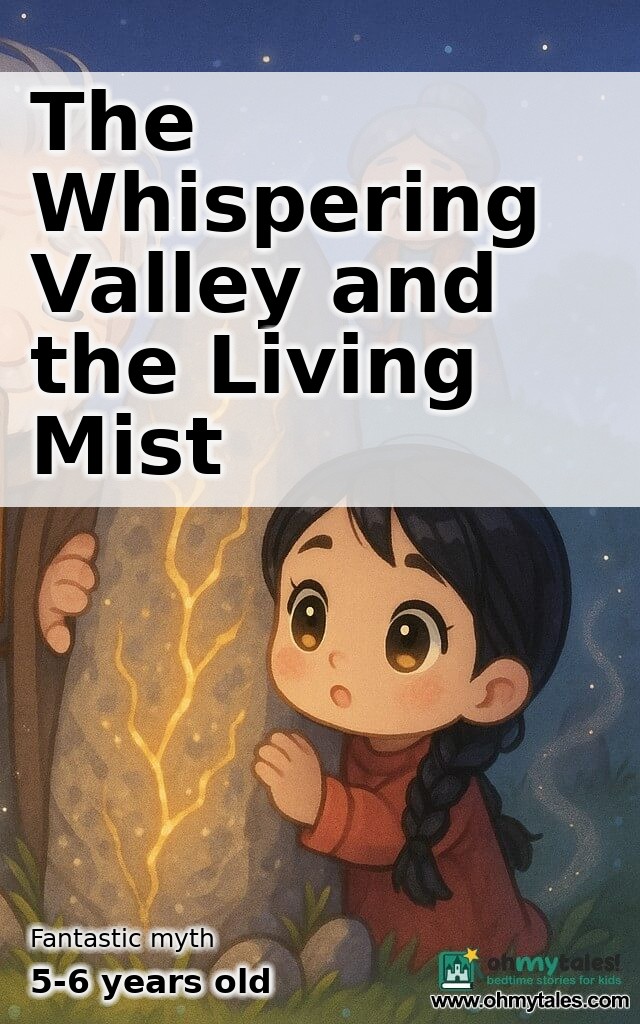
Part One: The Whispering Valley
The man walked with a slow, sure step. His cloak was the color of warm sand. In his hair there were stripes of silver like moonlight. People in the small villages called him Arman. Arman loved old stories. He loved the rivers that sang and the hills that remembered names.
One morning, the sky was soft and blue, but a pale fog rolled over the valley. The fog was not like fog he had seen before. It breathed. It hummed. It smelled faintly of figs and smoke. It moved like a slow cat, curling around trees and stones, hiding paths and faces.
"It is the Living Mist," said an old woman at the market. "It eats voices and hides stars."
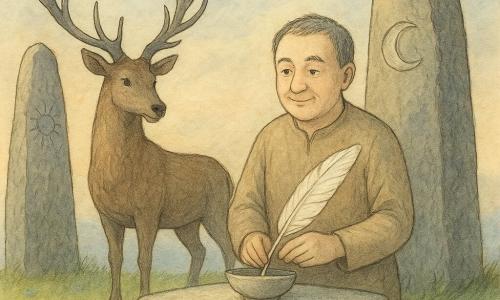
Arman touched the mist and it shivered. "I will help," he said. He felt a small drum tied at his waist and a wooden flute in his pocket. He walked toward the place where the mist grew thickest: the Circle of Stones, where a tall menhir stood like a watchman.
The mist whispered names. It called to the menhir in a voice that sounded like wind in leaves. Arman listened. He knelt and put his hand to the warm stone. He heard a faint pulse, like a heartbeat inside the rock.
"Why do you cry?" he asked the stone.
The menhir did not answer with words. It answered with a cold breath that moved the hairs on Arman's arm. The mist wrapped the stone and made it look older than the sky.
Arman sat down and played the flute. The tune was a simple call his grandmother had taught him, a curve of sound like sunlight on water. The mist trembled and drew back for a moment, like a shell opening.
"Please," Arman said softly. "You are not a monster. Tell me your story."
The mist hummed louder. It tasted of unfinished songs.
Part Two: The Journey of Light
Arman decided to follow the mist to its heart. He wrapped his cloak around him and walked into the living fog. It pressed against his face like cool fingers. He could not see more than a step, but he could hear the world: a goat's bell, a child's laugh, a far-off drum. The mist kept those sounds blurred, like a painting left in rain.
"Are you afraid?" asked Arman aloud, to the mist and to himself.
"I am," answered a small voice. It belonged to a child who had wandered too close and had been held by the fog. Her name was Leyla. Arman took her hand. Her fingers were cold as river stones.
"Come," he said, and he hummed the melody again. The rhythm was steady: step, step, breath; step, step, breath. He beat the drum gently. The sound gave the mist a shape to move around. It liked the drum. It liked the flute. It liked being remembered.
They walked until the fog grew thinner. They found a path lined with pomegranates heavy as little suns. The mist hid under the trees and watched them with quiet eyes. It remembered when it had been called Mist of Memory, when it used to keep stories safe. But in time, people had stopped speaking the old names. The mist grew lonely and folded itself into a slow, hungry hush.
Arman set down the drum. "You are hungry for names," he said. "Tell me one of your stories."
The mist swirled and showed him an old garden: a woman in a blue dress planting a seed, a child laughing, a stone that shone with a soft light. Arman nodded. He spoke the names that the mist had forgotten: the gardener's name, the child's name, the stone's name. Each name was a little spark. The fog blinked and let the sparks go.
"Keep going," Leyla whispered. "Say another."
Arman walked with the mist around him like a shawl. He told stories he had heard as a boy, small bright things about kindness, about steady work, about finding lost things. The mist kept each story like a bead on a string. When Arman spoke, the beads glowed. When the beads glowed, the mist lost some of its hunger.
At a bend in the path, a small wind danced through a hollow reed. The mist wanted to swallow the wind, to hold it forever. Arman played a quick tune and laughed out loud, and the wind slipped free, tickling his ear. The mist hissed, but it did not snatch the wind.
"Why do you hold on?" Arman asked. "Why do you keep the voice of the wind and the sound of the river?"
"I was afraid of being forgotten," the mist answered, softer now. "I wanted to keep everything until people came back."
Arman took Leyla's hand and squeezed. "People will come back," he said. "People remember when someone shows them the way."
Part Three: The Menhir Calmed
At last they reached the Circle of Stones. The menhir stood tall and lonely, its face like a moon carved from mountain. The mist clung to it like a shawl of sorrow. Arman stepped forward. He placed his palms on the stone again. This time it felt warm and tired.
"You have watched many suns," Arman said. "You have carried many names. Let them rest."
He called the names of the stones around the circle, the names of the rivers that had kissed their bases, the names of children who had left songs by the rocks. Each name made a light inside the menhir. The light traveled through the stone like a river through sand.
"Sing with me," Arman told Leyla and the few villagers who had followed. They sang the simple tune—the flute, the drum, soft voices like moss. The mist listened. It leaned closer, not to take, but to learn.
A small miracle happened. The living fog sighed, and the sigh sounded like a story finished. The beads of memory the mist had held untangled, floating up in thin threads of silver and gold. They rose into the sky and turned into small bright stars that rested for a moment above the menhir.
The menhir sighed too. A crack of worry that had run through it for many years smoothed like a hand across water. The stone stopped trembling. It blinked, if a stone can blink. It felt light as if the names had become feathers and flown away.
"Thank you," the menhir said in a voice that was like deep ground. It was not loud, but everyone heard.
Arman smiled. Leyla's fingers warmed around his. The villagers spread blankets and placed bowls of pomegranate and bread at the base of the stone as an offering, not to keep the stone, but to thank it for keeping stories safe.
The mist folded itself up and became gentle mist like the breath of the earth. It went to wash the leaves and cool the wells. It no longer took voices. It kept them, but it also let them go.
"Keep walking," Arman told the mist. "Keep remembering, and keep sharing."
The menhir felt appeased. It had been afraid of losing memory; now it knew it would not lose everything. It would hold the story of the valley like a sleeping child holds a dream. The menhir hummed slowly, a low song of rock and sky.
When night fell, the new stars shone over the circle. The villagers sang and clapped softly. Leyla yawned and curled against Arman. He wrapped his cloak around both of them and looked up at the sky.
"You did well," said an old woman who had watched from the hill. "You kept going."
Arman touched the menhir one last time. "We kept going together," he said.
The valley felt calm. The mist now moved like a gentle veil, helping the river find its way, helping leaves speak to the wind. The menhir kept its watch, but its watch was quiet and kind.
And so the valley slept under a sky full of small lights, and Arman walked home with Leyla and the sound of the flute still humming in his heart. The menhir sighed once more, content and soothed, like a rock that had at last heard its name spoken kindly.