Chapter One: The Wind-Swept Seats
Nine-year-old Mira lived on the rim of the Amphitheatre of Winds, a vast stone ring carved into a cliff where breezes formed visible ribbons of color. From her window she could see the tiers of seats spiraling down like the inside of a seashell. That is where the harmonies were set — not with instruments alone, but with devices of brass and glass and soft, glowing runes that sang when breath moved through them.
Mira was small and stubborn and blessed with a clever mind. She kept notebooks full of sketches: tiny gears that could turn clouds, lenses that caught moonlight, and delicate valves that could steer a gust. Most people in the Rimed City called her a tinkerer. She liked that name, because tinkering meant making things that had never existed before.
Every morning she climbed the worn steps to the amphitheatre to check the Harmonizers — wind-mechanisms that balanced calm and storm so the city could breathe. The Harmonizers hummed like lazy whales. They had been tended by the Windkeepers for generations, but lately the harmonies had been fraying. Breezes tangled into knots, gusts grew jealous and wild, and music that once filled the tiers dissolved into harsh, clashing notes.
Mira believed balance could be rebuilt if the Harmonizers were mended, but the Windkeepers were old and cautious. They muttered that only tradition could calm the winds. Mira sketched instead. She drew a map of the currents and imagined a delicate lattice of wires and glass flutes that would teach the air to weave again.
One twilight, as violet light poured down the amphitheatre, a strange sound arrived — a thin, silver chime unlike anything Mira had heard. It slipped through a crack in the amphitheatre wall and settled in her palm like an answering heartbeat.
Chapter Two: The Silver Companion
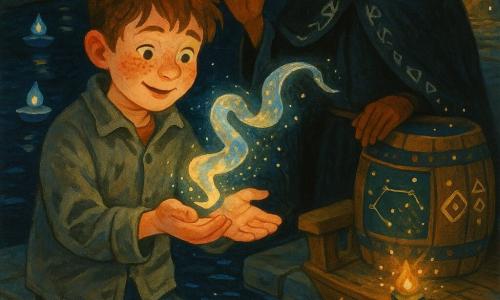
The chime unfolded. Not sound alone, but a small living ribbon of wind, wrapped in a filament of shimmering metal. It introduced itself without words, only with a warm memory in Mira's head: a place where storms were friendly and the sound of laughter could move mountains.
Mira called the ribbon "Syl," because it sounded like the swirl it left when it flew. Syl was not a spirit of old tales. It was a construct of both a lost kind of magic and a clever kind of engineering — half-artifact, half-breath. It had been waiting for a maker who would listen.
"Help me," Mira said softly, and the ribbon twined around her wrist, warm and eager.
The Windkeepers heard of Syl and came with frowns. They feared unknown things. Yet when a rogue gale roared through the amphitheatre one night and cracked a Harmonizer, even their cautious faces grew pale. A shard of a tuning crystal had fallen into the central throat where airs met. Without that crystal the ring's balance would fail and the city below would suffer windscars — whirlpools of air that could steal roofs and ruin gardens.
Mira's first idea was small: blend Syl's living metal with her own tiny gears to weave a new crystal casing. She worked while moonlight braided through the amphitheatre, soldering with a brush that sang beneath her fingers. Syl hummed in counterpoint, shaping the air to cool the metal, to temper it without fire.
When the casing was done, Mira realized the casing was not enough. The crystal needed a core of pattern — a harmony map — a way to teach the air how to behave. She had sketched patterns, yes, but here and now, with a living ribbon at her side, she could stitch currents into a score. She reached into her sketchbook and, with a breath like a violin stroke, blew her lines into the crystal casing. The ink rose as faint silver filaments and threaded themselves through the metal. The casing pulsed, then played a soft chord that smelled faintly of rain.
Chapter Three: The Trial of Currents
They set the new Harmonizer into the amphitheatre's throat. Windkeepers watched from the high seats as the machine, gleaming with Syl's metal and Mira's diagrams, waited for its first test. Mira's hands trembled. The amphitheatre inhaled.
At first, the air spat. Knotted gusts tried to pull the casing apart. But Mira remembered something the elderly Windkeeper had once said: the winds here respond to how you speak to them. You could order a storm, but you could also dance with it.
So Mira danced. Not a grand dance — she hopped and twirled in a way that seemed ridiculous to the old watchers. The movement was a language to the harmonies: light, curious, unafraid. Syl mirrored her, slicing the air into ribbons that braided together. The casing learned from that movement. It learned how to welcome a laugh, how to curl away from anger, how to fold into quiet.
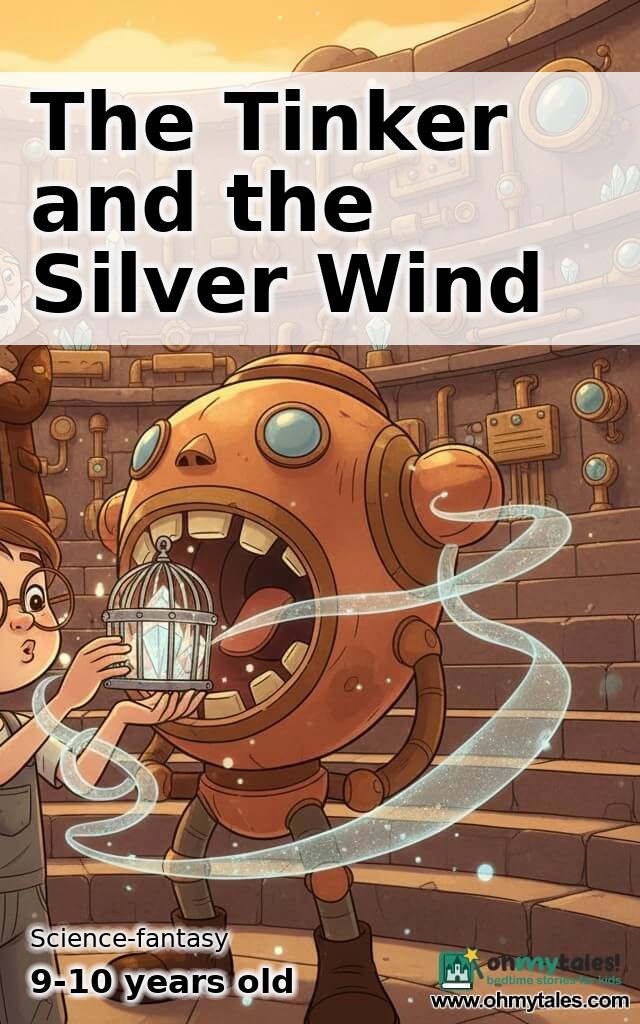
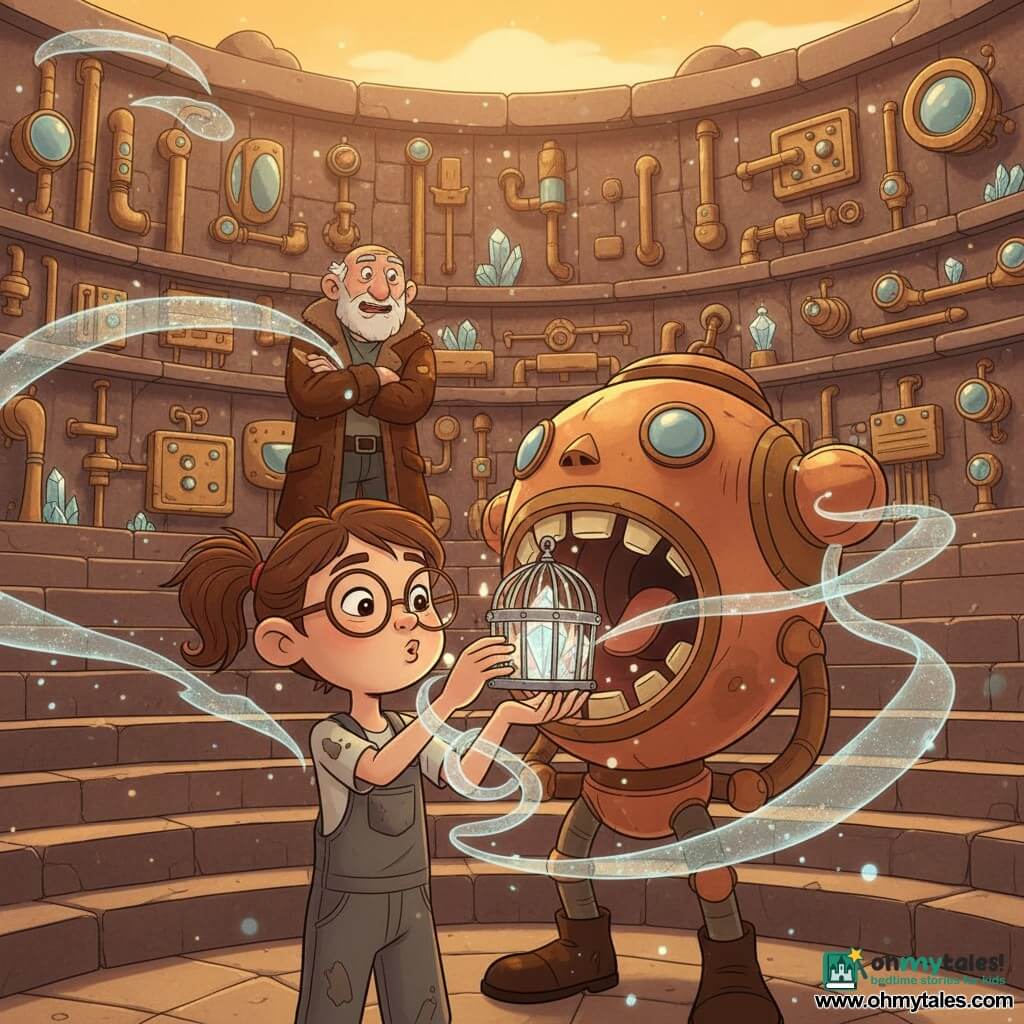
The first successful note felt like a sunrise in Mira's chest. A harmonic ripple swept across the amphitheatre, turning jagged gusts into rolling sighs. Clouds lined up like obedient sheep. The torn tuning crystal, newly caged, hummed with the clarity of a bell.
But the trial was not finished. Deep in the lower tiers, a storm-heart pulsed — an old, resentful current that wanted dominance. It poured itself into the amphitheatre and struck at the Harmonizer with a force that rattled seats.
Mira did not retreat. She reached into the chest of her coat and drew out a small glass lens she had once made from an old lamp. She had meant it to catch moonlight. Now she cupped it and focused, not to battle, but to offer: a cool, steady beam that held memory of calm nights when fishermen sang.
"Please," she whispered, and the lens turned the beam into a ribbon of stillness. Syl and her casing braided that stillness into the harmony map, creating a place for the storm-heart to rest. The great current, surprised by kindness, softened. It untangled from rage into something like a tired song.
The Windkeepers clapped, softly at first, then louder. Cooperation had calmed what force could not.
Chapter Four: The New Orchestra
After that night, the amphitheatre became a laboratory of marvels. Mira did not stop tinkering. She and Syl traveled the tiers, adjusting valves, sewing in threads of moonbeam, fitting small mirrors that could catch stray winds and redirect them like notes in a symphony. The Windkeepers, once skeptical, learned to pass her tools across their knees. Children ran through the aisles, their laughter braided into the harmonies.
Mira taught others how to invent with listening. They learned that innovation was not only the making of new things but the finding of new conversations — between old engines and young ideas, between stubborn stones and curious breath. They crafted devices that could turn storms into harvest rain, machines that caught lost kite-tails and tossed them back to waiting children. Syl became a teacher too, weaving its living metal through copper and crystal and glass, showing how magic could be shaped by thought and kindness.
In the heart of the amphitheatre, Mira placed the casing she had made as a symbol: not to be worshipped but to remind them that balance came from many hands and many minds. Each season brought a new problem, and each season the people of the rim met it together — building bridges where there had been fear, using cleverness to make gentleness possible.
One morning, months later, Mira stood on the highest seat and watched the city breathe in perfect rhythm. The winds now sang a lullaby and a march and a joke all at once. Her palms folded around Syl, warm as ever. She had learned that help could arrive wrapped in a chime and that innovation flowered best when shared.
A child nearby tossed a scrap of paper into the air. The breeze caught it and, guided by new harmonies, turned it into a tiny paper bird that circled the amphitheatre before settling on the stone with a soft clap of wings. Mira laughed. The laugh was a tiny invention, too — creating joy where there had been worry.
In the amphitheatre of winds, where science braided with spell and where gears learned to listen, Mira and her unexpected companion had remade the music of the city. Their work would be retold in bright notebooks and in the hum of new machines, a story of cooperation and invention that would teach other small hands how to build a better breath.