Chapter One: The Cloister of Falling Light
Ten-year-old Mira had hair the color of comet dust and eyes that liked to ask questions. Each morning she walked the long stone steps into the Cloister of Meteors, a round place carved into the cliff where the sky felt close enough to touch. The monks there did not worship gods; they prayed to paths—silver lines that streaked across the dark dome above. They called them trajectories, and they believed every spark that fell changed something.
Mira was small for a trainee, but she carried a brass satchel full of tools: a pocket compass that hummed, a pencil stub, and a few smooth stones polished by meteor winds. She liked to trace the trajectories with her finger on the dome's underside, as if her touch could help the sky decide where to go.
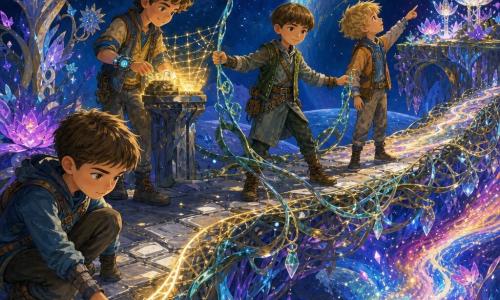
One dusk, as the cloister bells tinkled like crystal rain, Mira found a loose tile hidden under a pew. It was colder than the other stones and felt like the inside of a comet. When she pried it open, a folded strip of paper slid into her hands—a map. Not a map of islands or cities, but of lines: glowing, thin lines, crisscrossing like a spider's web. At its center was a small, pulsing dot.
“This must be the lost chart of Arion,” whispered Brother Ced, who had been watching from the shadows. His voice was part awe, part worry. “It's said to show the true routes of meteor paths—where they will feed and where they will fade.”
Mira's heart beat like a small drum. “What if it wants to be read by me?” she said, before she could stop herself.
Brother Ced blinked. “Maps choose, child. They test trust.”
Mira held the map to the light. The lines shimmered and rearranged themselves like fish in a shoal. The pulsing dot blinked once, then twice. It felt as if the map had breathed. Mira felt a sudden warmth, a promise of adventure, and the cloister seemed to hold its breath with her.
Chapter Two: The Machine That Listened
The cloister was a mix of old stone and new metal. At its center stood the Heliograph, a tall device of gears and glass that tracked falling stones and translated their whispers into patterns. The monks wound it with prayers and programming loops. Machines and magic lived together here like friends who finished each other's sentences.
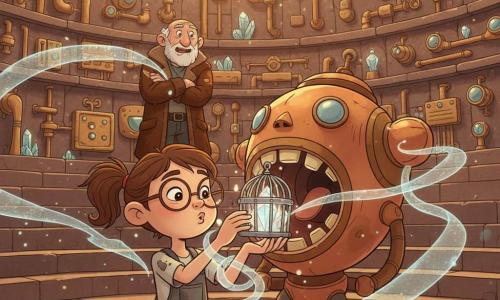
Mira brought the map to the Heliograph. When she placed it inside the glass cradle, the machine hummed like an awake whale. Lights danced along the arms, and a soft voice—half radio signal, half chime—said, “Trace.”
Mira's pencil tip touched the map's pulsing dot. The map warmed beneath her finger. Lines leapt from the page into the air, forming glowing threads. The Heliograph read them with a rumble that sounded like a cathedral in the wind.
“Those lines are not ordinary trajectories,” Brother Maia said, leaning over Mira's shoulder. She was the cloister's machinist, sleeves often marked with oil and stardust. “They show paths hidden to our instruments—paths that meteors take when they are guided by minds instead of gravity.”
Mira whispered, “Who guides them?”
Brother Maia smiled sadly. “There are stories of Sky-Keepers—old watchers who spoke to falling things. Few believe now. But this map... it remembers their language.”
The threads in the air settled into a pattern that pointed to a valley beyond the cloister cliffs, a place the monks had marked as dangerous. The pulsing dot on the map shone bright when Mira looked, and she understood as if the map had spoken: it needed to be followed. Trust sat in her chest like a small warm stone.
“You must not go alone,” Brother Ced said before she could ask. The cloister's rules were strict about journeys. “Trajectories can be lonely and sharp.”
Mira nodded, thinking of the dangers and of the Heliograph's gentle voice. “Then we take the Heliograph,” she said.
Chapter Three: Valley of Singing Stones
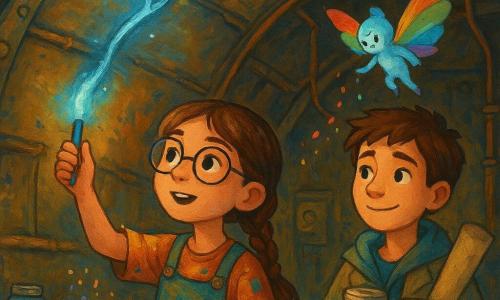
Mira and two helpers, Brother Maia and Lio—a lanky apprentice with quick fingers—descended to the valley with the Heliograph strapped to a sled. The world below was wide and strange: silver grass that whispered secrets, and stones that hummed when the wind touched them. Meteors lay like sleeping turtles, small craters cooling their feathers of light.
As they followed the map's threads, the air grew thick with songs. The meteors hummed in different notes, as if each remembered a different sky. Lio laughed, trying to catch a falling note with his hand. “It's like a symphony!” he said.
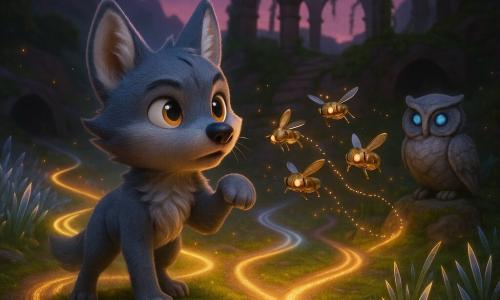
But the valley held more than songs. Shadows that were not entirely darkness moved between the rocks. Some carried tools of old technology, clawed devices with glowing sigils. One shadow stepped out—a Skyhound with eyes like polished onyx, body made of alloy and moon-silk.
“You travel where paths twist,” the Skyhound said, voice like wind across glass. “Why bring the Heliograph?”
Mira sat on a stone and lifted her chin. “The map called to us. We want to learn and to help. We trust the map, and we trust each other.”
The Skyhound's head cocked. “Trust is a currency rarer than stardust. Many who come here take without asking.”
Mira looked at Brother Maia and Lio. “We will share what we find. We'll listen to the meteors. We promise.”
The Skyhound studied her like a keen-eyed judge. After a moment, its alloy jaw relaxed. “Then walk with care,” it said, and stepped aside.
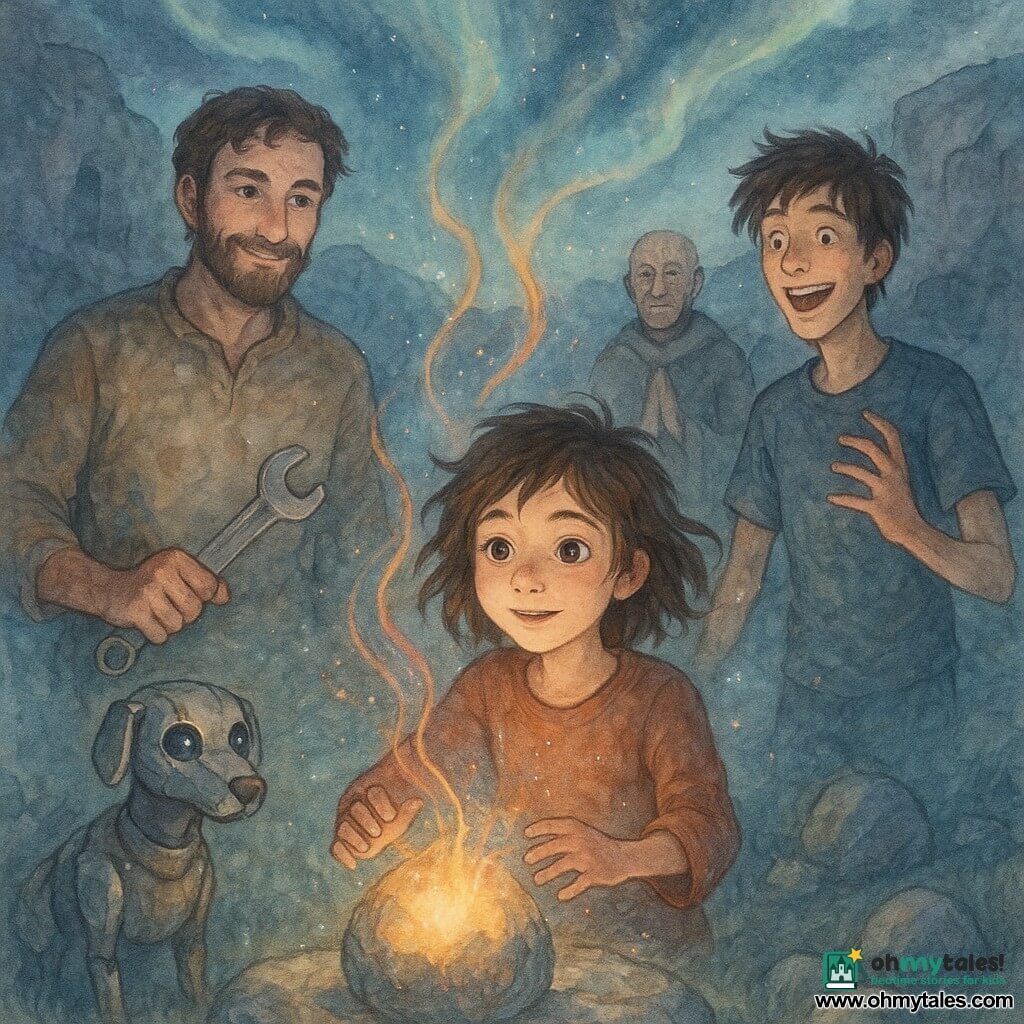
They reached the center of the valley where a circle of meteorites glowed faintly. The map's threads unfurled, weaving a ring of light around the largest stone. The stone pulsed slowly, like a sleeping heart.
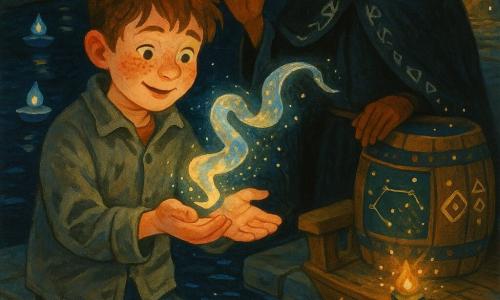
Mira placed her hands on the meteor's cool surface. Images flowed up her arms—stars folding, old machines singing lullabies to falling rocks, and a vast wheel in the sky that turned on promises. She saw the Sky-Keepers, not as giants but as listeners who braided technology and song. The meteor hummed a single clear note. Mira understood then the map's secret: it did not only show paths; it showed bonds. Trajectories were more than travel; they were promises between the sky and earth.
Sudden wind whistled. From the heights, a cluster of scavengers descended, their metal talons gleaming. They wanted the Heliograph and the map—stories of hidden paths were valuable. Lio gripped the sled. Brother Maia tightened a wrench like a sword.
Mira closed her eyes and listened to the meteor's note. She felt its trust wrap around her like a blanket. “We share,” she said loudly, to the scavengers and to the valley. “We will not let fear break what the sky and stone agreed upon.”
Her voice carried. The meteors answered in harmony, and the sky hummed. The scavengers hesitated, then lowered their talons. Solidarity had arrived like a shield: the valley's stones and the Skyhound formed a line, and Brother Maia and Lio stood beside Mira. Together they looked less small.
Chapter Four: The Paths We Keep
The scavengers left, not out of fear alone but because the valley's chorus had shown a possibility of another way. Mira learned that night how trust grows like rings in a river—small at first, then wide. The map had chosen, and Mira had answered with solidarity.
They brought the Heliograph back to the cloister, but not as a trophy. The device had learned from the valley; its arms pulsed a softer light. “It listened to the meteors,” Brother Maia said, wiping a smear of comet dust from her hands. “It learned to hear promise.”
Mira spread the map on the floor of the dome. The threads in the air twined into new shapes: routes that could connect forgotten valleys, paths that could carry small meteors to places that needed their light. The cloister's members gathered—monks, apprentices, even the Skyhound returned. Mira looked at all of them and felt a warmth that was not from the map but from being seen.
“Maps can teach us to trust,” Brother Ced said quietly. “But trust must be kept. We must guard these routes together.”
“Then we'll be keepers,” Lio said, puffing his chest like a brave drum. “We'll fix the Heliograph and make roads for the little meteors.”
Mira smiled. She knew she was still small, but she also knew that small did not mean powerless. “We will listen first,” she said. “We will ask what the meteors need and help them go where they choose. And we will share what we learn.”
The cloister agreed. They rewired the Heliograph so it could both speak and listen, teaching it not only to record trajectories but to translate promises. The map's pulsing dot settled into a steady glow, content. In the nights that followed, meteors found softer landings, and the valley hummed stronger songs. The Skyhound became a guardian, not a thief. Solidarity rewove the edges of the world.
Mira kept the map in her brass satchel, not as a secret but as a responsibility. She would trace the threads with careful fingers, sometimes alone, sometimes with a friend leaning close. The dome above the cloister felt larger now, like a bowl holding countless paths, each one a promise between sky and earth.
One evening, as the bells sang low and the stars leaned close, Mira placed her palm on the Heliograph. It answered with a soft chime. “Where next?” she asked.
The machine's lights blinked in slow patterns, and the map's lines shifted toward the horizon. Mira looked at Brother Maia, Lio, Brother Ced, and the Skyhound, and she felt the steady pulse of trust and the strength of shared work.
“Together,” she said.
The sky answered by letting a single meteor streak across the dome, not blazing alone but carrying a string of tiny lights behind it—new paths woven from many hands. Mira smiled as the meteor's song filled the cloister, proof that when people trust and stand together, even the stars find better routes to come home.