Part One
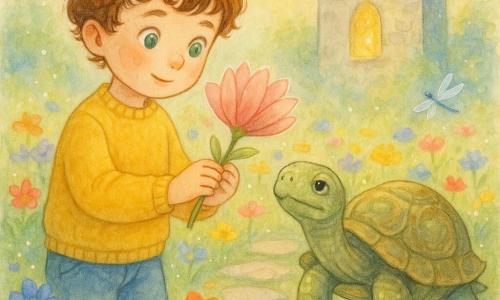
There was a small boy who lived on a round hill made of soft questions. He was six years old. His name was Milo, but everyone called him Quiet-Ears because he liked to listen more than to speak. The hill smelled of warm pages and wild thyme. Around it rolled a slow blue river that spoke in ripples.
In Milo's world, thoughts were not hidden like tiny seeds. They grew like lanterns above people's heads. When someone wondered about a cloud, a little cloud-lantern floated up. When someone felt glad, a bright bird of thought flapped out. The sky was full of slow, shining ideas. People could borrow them for a while. They could see a thought and gently take it to read its shape. The sharing made the town feel like a big, quiet mirror.
Milo liked the lanterns. He liked their soft glow. He liked to walk with his hands behind his back and watch them. Sometimes he saw a thought-lantern that was small and trembling. Sometimes he saw one that smelled of cinnamon and hummed like a bee. He tried to learn the sounds of thoughts. He wanted to know what they meant before he answered.
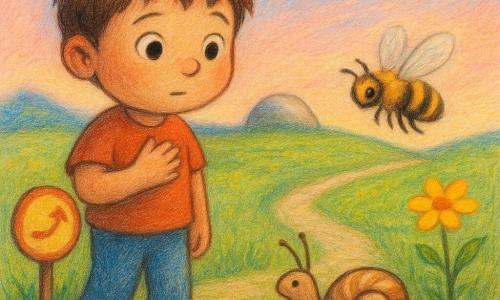
Each morning, Milo tied his shoelace with care. He put a pebble in his pocket. The pebble was not just any pebble. It was cool and plain and remembered everything it had seen. He called it Remember. Remember taught Milo to pause. When Milo felt a little rush to speak, he put his hand on the pebble. The pebble felt like a slow heartbeat. It said: wait. See.
People in Milo's town sometimes rushed to speak. Their words were fast like skipping stones. They splashed a thought and then walked on. That left many lanterns scattered, half-read. Milo found that the world sounded better when lanterns were read slowly. He liked to listen to the creak inside a thought. He liked to taste the color of a question.
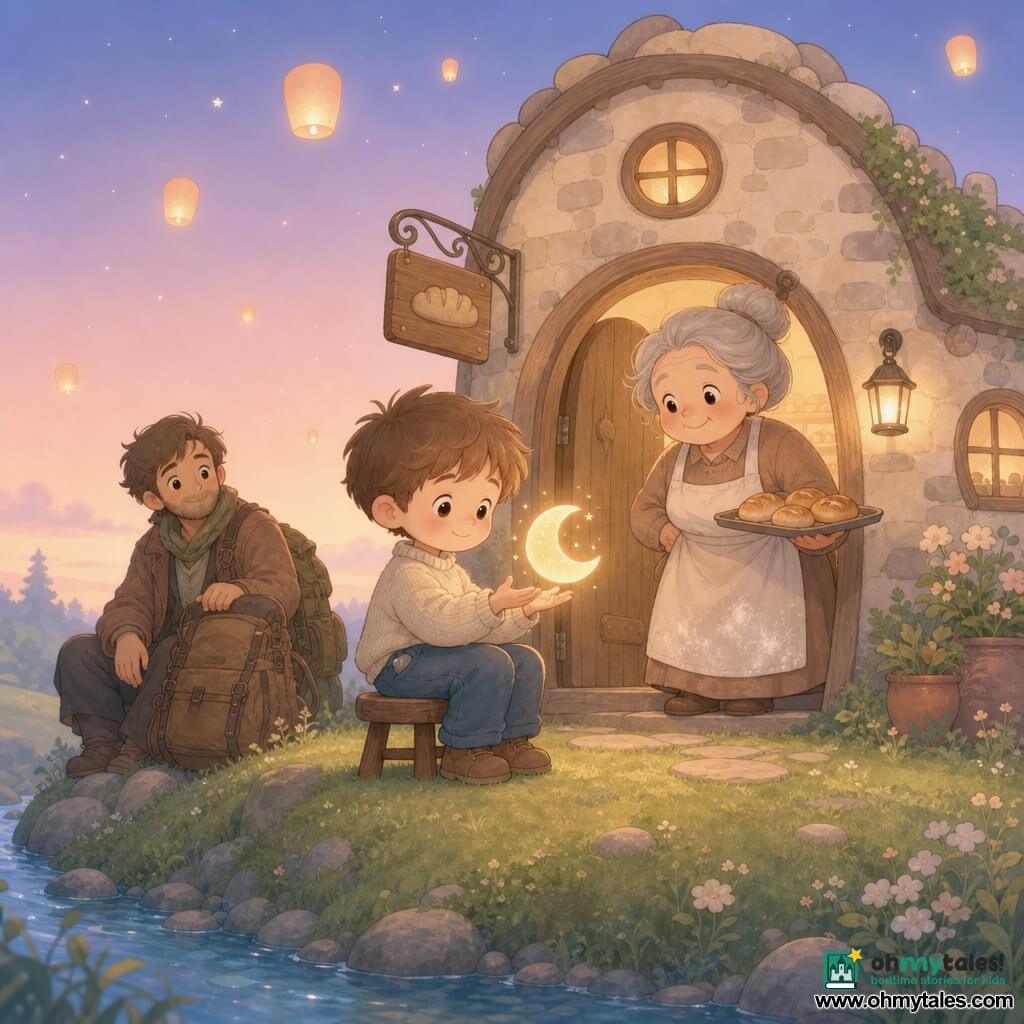
One afternoon, a new lantern arrived above the bakery. It smelled of yeast and starlight. The baker, Mrs. Humming, had a thought that tasted like a wish. Her hands warmed the idea into small round loaves that whistled when they cooled. People came and swallowed the sound. The lantern floated and hoped to be understood. It looked like a tiny moon.
Milo felt the moon-lantern. It asked, in a hush, What is the best thing to make for someone who is alone? Milo pressed Remember. He watched the lantern's edges. He thought of the river, the pebble, the blue of dawn. He did not answer at once. He walked to the bakery and simply sat. He let the moon-lantern shine over his lap like a nightcap.
Part Two
Over the week, Milo sat in many small chairs. He sat in the schoolyard where a child had a lantern of worry. He sat by the pond where an old man had a lantern of memory. He sat under a pear tree where the pears held sleepy ideas. He learned to let thoughts tell their shape. He learned to count the colors in a question. He learned that some thoughts wanted to be heard; others wanted to sleep.
Once, the mayor sent a lantern that was loud and gold. It declared plans in a fanfare. People touched it and made quick answers. The mayor's lantern wanted to be strong. But Milo noticed a tiny gray thread at its edge. The thread trembled with a small doubt. No one else seemed to feel the thread. Milo felt it like a tiny fish under his skin. He put his hand on Remember. He waited.
He walked to the river and watched the blue water as if it were reading aloud. The river said nothing, but it wore a grin. It taught Milo that waiting is a kind of listening. The river flows and hears everything that falls into it. Milo came back to the square. He did not shout at the mayor. He asked, in a soft voice, what that gray thread might wish to say. The mayor blinked. The lantern cooled. People moved closer. The gray thread breathed out a small story of fear about losing the apples on the hill. They found a quiet plan that kept both gold and gray. The lantern felt gentler.
People began to notice Milo's pebble. Children tried to hold it and felt the slow hum. They learned to wait too. Games at recess became softer. Arguments untangled like knotted ribbons. The town felt kinder.
Milo explored the idea of curiosity as if it were a small cat that followed him. Curiosity padded along his ankle and hopped on his shoulder. It asked soft questions like, Why does the moon smell of bread? or Where do small wishes sleep? Milo listened to the cat. He kept it fed with simple questions. Curiosity grew big and brave, but it was never loud. It was a warm kind of wanting.
One evening, a strange lantern arrived. It did not glow like the others. It hung like a quiet bell. It belonged to a traveler who had come from a mountain of maps. His thoughts were filled with many directions. He wanted to hurry to the next place. But his lantern felt tired and small. He had many words ready. He had no place to set them down.
Milo sat beside the traveler and put Remember into his pocket. He asked only one thing: Where are you going inside your head? The traveler stared, then smiled as if the lantern had become a tiny boat he could step into. He let the boat drift. He told Milo, without hurry, about all the roads he had collected. He spoke slowly about the taste of rain in different towns. When he finished, he did not immediately leave. He sat and listened as his own lantern reflected quietly. He learned to enjoy the stillness between words.
Part Three
The sky in Milo's town filled with many bright things. Lanterns of thought painted the night. People learned to borrow ideas and to bring them back polished. A school began to teach children how to fold a thought as one folds a paper boat. The teacher said, Listen before you water a thought. The children liked that. They sang soft songs about listening.
Milo grew steadier. He still had questions like small seeds in his pocket. He still asked many things. He asked the pear tree about the sound of falling fruit. He asked the moon-lanterns why they blinked. Each question made the world a little larger. The pebble hummed in his palm and reminded him that listening is also a way to love.
One day, Milo reached a small hill beyond the river. On top sat a very old lantern. It was wrapped in quiet cloth. The cloth smelled of faraway seasons. The lantern did not glow, but it hummed like a soft drum. People said it belonged to the Pause. The Pause was a wise thing that lived between two breaths. It kept silence like a treasure.
Milo climbed the hill. The Pause looked at him without eyes. It asked nothing. It allowed everything. Milo sat down. He set Remember beside him and took out his pebble. He listened to the field. He listened to the hush between bird songs. He waited as if he were letting a story settle into a cup. A long slow thought floated up, thin as a thread and bright as moon sugar.
The thought said, Why am I so small and big at once? Milo pressed the pebble and let his own lantern rise too. He did not answer right away. He remembered the traveler and the baker and the mayor. He remembered the river. He remembered curiosity like a cat. He felt a gentle warmth that was not a word but a feeling, like the first light on bread.
He whispered, perhaps softly, and the word was a little like a raindrop: Maybe we are questions that take turns being also the answer. The Pause listened and did not nod or shake. It simply sighed. Around them, the lanterns breathed in and out.
Milo realized that listening could be a whole kind of journey. Not all answers must be fast. Some answers grow when they rest. He understood that the best way to keep a thought was sometimes to let it sleep. To let it be. To cherish the space between thinking and saying.
He put Remember back in his pocket. He felt the pebble cool like a small moon. He rose and walked down the hill. He did not hurry. He watched the lanterns like a friend waves goodbye.
When he reached the town, people paused and looked at him with the soft light of questions above their heads. They had learned to wait more. They had learned to let a thought be read entirely before replying. They had grown curious as a garden grows green. Children asked better questions. Grown-ups smiled more quietly. The town hummed like a careful song.
That night, Milo lay in his bed on the round hill. The river sang the last line of the day. His pebble rested on the bedside table like a small moon. Milo thought of lanterns that smelled of bread, of gray threads that told tiny stories, of travelers who learned to sit, and of the Pause that wrapped silence like a blanket. He felt his chest like a small drum. It beat slowly, as if practicing pauses.
He thought about answers waiting like fruit on a tree. He felt curious and content. He did not need to speak. He did not need to fix everything. He had learned to listen enough. The town's lanterns glowed softly outside his window. They were not empty. They were full of questions, shining patient and brave.
Milo closed his eyes. He breathed in. He breathed out. The pebble cooled. The Pause wrapped him like a gentle night. And the world, which liked to share its thoughts, let itself rest too. A soft hush spread like cocoa steam, and for a little while, every question slept.