Chapter 1: The Dreamer and the Music Room
Maya loved to dream. She lived at the end of a quiet street where the trees made soft music when the wind blew. Every morning she walked to the community center with a little backpack and a bright smile. She was eight years old and curious about everything. She liked crayons, long walks, and the way the sun painted gold lines on the pavement.
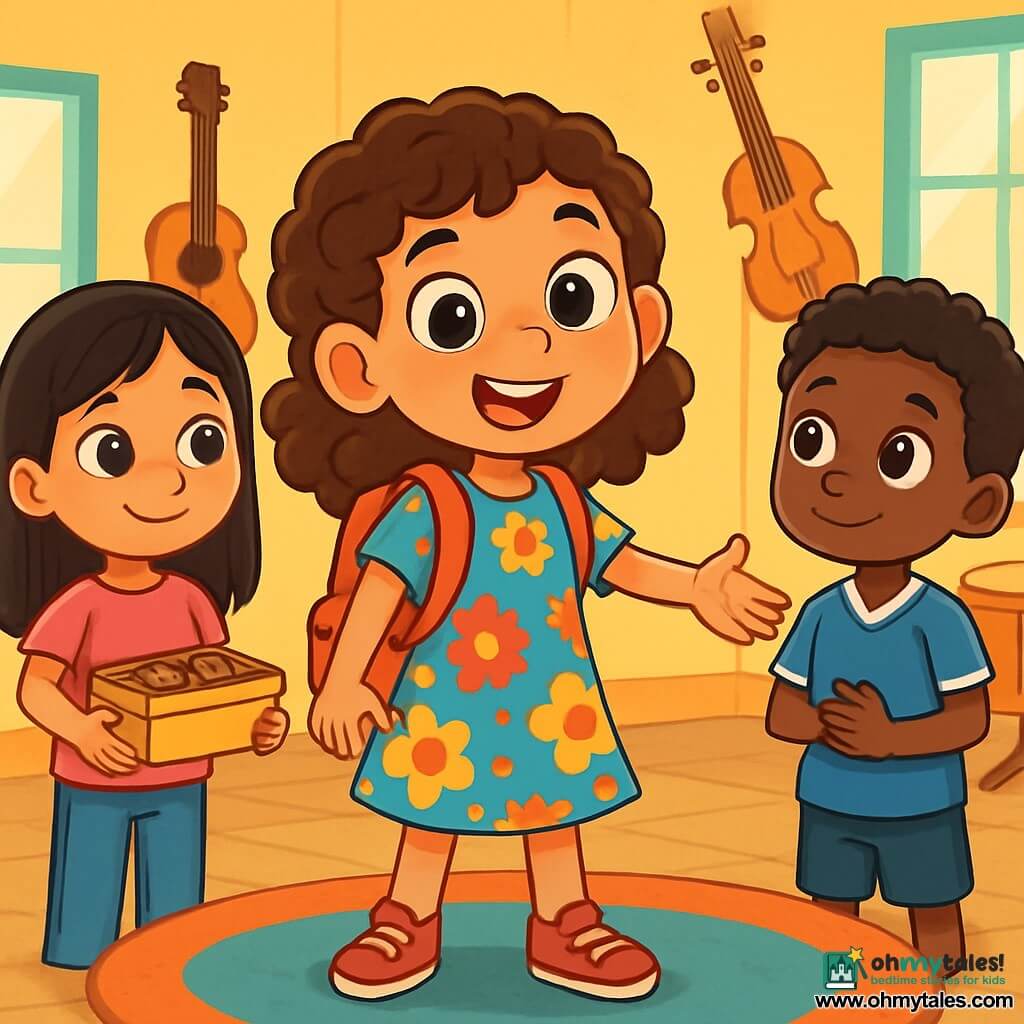
The community center had a music room on the second floor. The door had a small round window that looked like an eye. Inside, instruments sat on shelves like gentle animals. A piano leaned against the wall. Guitars, a tambourine, small drums and shiny triangles rested in cubby holes. The room smelled like polish and warm paper. Light from the tall windows slanted across the floor in long stripes.
Maya often sat on the floor and let her fingers hover above the piano keys. She liked to pretend the notes were birds that flew out of the room. Today, the music teacher, Mrs. Rivera, smiled at her. “We are going to do something special, Maya. A small play about being kind.”
Maya's eyes grew wide. She loved stories. She loved music. Her heart felt like a small drum that beat a steady happy rhythm. “Can I help make it?” she whispered.
“You will lead a little part,” said Mrs. Rivera. “You are a dreamer who helps friends understand each other.” Maya felt a happy flutter. She liked the idea of helping friends.
Chapter 2: The Short Play
The group that week was small. There were children from different places. Some were new to the neighborhood. Some spoke more than one language. There was Samir who hummed to himself, Rosa who drew maps of the stars, Jamal who loved soccer, and Lina who carried a small box of cookies that smelled like cinnamon. Each child was different, and each child was bright.
They made a short play about a picnic. The picnic was in the music room because it rained in the story. They set a small blanket on the floor and placed pretend sandwiches and fruit. Maya's role was the dreamer. She would tell a story about how people learn to sit together.
Rehearsals were warm and quiet. The children practiced lines and moved gently. The music teacher tapped a soft rhythm on the drum to help them remember where to sit. Maya felt proud when she remembered her words. She loved when the little bells chimed just right.
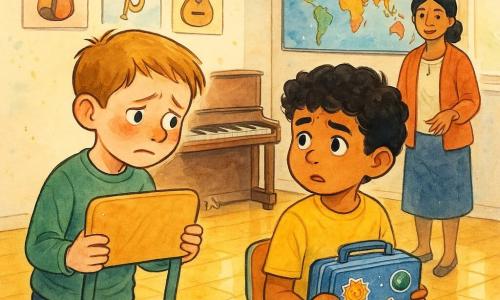
Then a small thing happened. During a practice, one child made a joke that sounded unkind. He said, “You can't sit here. Your food is weird.” It was said in a quick voice. The room fell a little still. Maya's dream-heart felt a twist. Lina's face changed. She folded her fingers tight around the box of cookies.
Maya did not like that the joke had been said. But she also saw the child who had said it look puzzled. He did not mean to make someone sad. He had said the words because he had never tasted Lina's cookies. He did not know how his voice might hurt someone else.
Mrs. Rivera took a breath. She talked in a gentle way. “Sometimes we say things without thinking,” she said. “Our words can make others feel small. That is what we will show in our little play. We will show how to listen and how to say sorry. We will not make anyone feel bad.”
Maya thought of the birds that flew out of the piano. She imagined them carrying soft notes of apology, like little feathers that fell on people's shoulders and made them smile. She wanted to help.
Chapter 3: Teaming Up with Mr. Alvarez
The next day, Maya met Mr. Alvarez in the hallway. He was a friendly dad from the neighborhood who often fixed things for the center. He had a gentle laugh and a toolbox that jangled like chimes. He watched the children from the doorway and listened to their songs.
Maya told him about the joke and the short play. He nodded. “I used to tell jokes like that when I was little,” he said. His voice was soft and warm. “I didn't know my words could hurt either. My mother taught me how to fix it. We can do a little practice, if you like.”
“Will you help?” Maya asked. Her eyes shone. Mr. Alvarez smiled and set down his toolbox. He sat on the floor cross-legged and let the children gather around him like little moons.
He taught them a small exercise. “First,” he said, “we listen. We look with kind eyes. We don't jump in. We hear the person who is hurt. Then we say the truth. We say, ‘I am sorry. I did not know. I will learn.' After that, we do something kind, like share a cookie or make a drawing. That is how we repair.”
They tried it. Jamal said his line and felt bad. He looked at Lina and said, “I'm sorry. I didn't mean that. Your cookies sound good. Can I try one?” Lina opened the box and handed him a cookie. The corners of his mouth lifted. Maya saw the small light in his eyes return.
Mr. Alvarez showed them how to make space for feelings. He told a small story about a time when his neighbor painted his fence a different color. At first he was surprised, but then he learned that the color made the garden look happier. “Different is not bad,” he said. “Different is another way of being beautiful.”
Maya liked that. She thought of the piano birds flying in many colors. She hummed a tune and the children followed. They sang a tiny song about sharing, simple words that fit like puzzle pieces. Mrs. Rivera clapped softly.
Chapter 4: The Photo and the Harmony
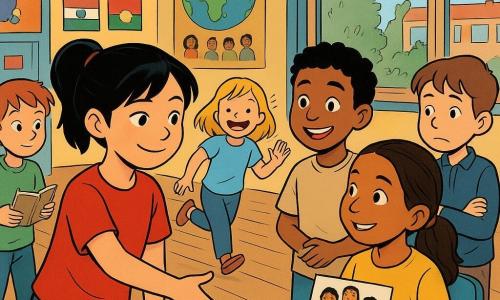
Near the end of the week, Mr. Alvarez suggested a group photo to remember the play. “A photo shows how we look together,” he said. “It can help us see that we belong.” They decided to take it in the music room. Sunlight painted a bright stripe across the floor and the instruments stood like friends in the background.
The children arranged themselves. Maya stood in the middle, holding a small paper bird she had folded. Mr. Alvarez stood behind them with a gentle hand on the shoulder of Samir. Mrs. Rivera held the camera. She counted softly, “One, two, three…”
Just before the camera clicked, Maya saw a small worry in Samir's eyes. He had been quiet that week. She stepped closer and put her folded bird near his hand. He smiled and the worry eased. The camera clicked. It made a soft sound, like a tiny bell.
They printed the photo and gave each child a copy. In the picture they looked like a tight patchwork of different colors, laughing and not-laughing, everyone true. The photo had Lina's cinnamon-smile, Jamal's bright teeth, Samir's shy grin, and Maya's thoughtful eyes. On the wall it hung like a promise.
At the showing of the play, parents came. Mr. Alvarez sat near the door with his toolbox closed. He watched as the children performed the picnic play. The scene about the joke was short and gentle. The child who had said the unkind words said sorry. The child who was hurt said how it felt. The others sat quietly. Then they all shared cookies. The music teacher played a soft tune on the piano. The sound wrapped around the room like a blanket.
When the play ended, the applause was quiet but warm. Mrs. Rivera stood and thanked everyone. “We all make mistakes,” she said. “What matters is that we listen, that we say sorry, and that we learn.” There were nods. There were small smiles.
Maya went to the photograph on the wall. She thought about the way people sometimes say things without thinking, and how brave it is to say sorry. She thought of the birds that flew from the piano and landed gently on the children's shoulders.
After the show, a neighbor asked Maya what she had learned. She thought for a moment. “That words matter,” she said. “And that we can fix things by listening and by sharing.” The neighbor smiled. “That is very wise,” she said.
Mr. Alvarez put a small bandage on his thumb because he had helped pick up a fallen prop. He laughed when half the children offered him cookies in thanks. “I am glad I could help,” he said. “You all helped me, too. You reminded me of when I was learning.”
Maya walked home that evening with the photo in her pocket. The street lamps were turning on. The trees made a soft hush as she passed. She looked at the picture and felt warm inside. The picture was a little map of her week — the music room, the cookies, the apology, the song. It fit in her pocket like a pebble of light.
That night, she put the photo under her pillow. She closed her eyes and thought of notes flying like birds. She thought of being brave when saying sorry, of listening with kind eyes, and of making room for different foods and different songs.
In her dreams, the music room grew into a wide field. Instruments sprouted like flowers. Children walked between them, laughing. Mr. Alvarez hummed a tune as he fixed a swing made of guitar strings. The piano birds landed on shoulders and whispered, “We belong.” The children sang softly, and the sky listened.
Maya woke with the morning sun on her face. She smiled. She felt a calm, steady joy. She knew she would tell the story again and again. She knew that making space for other people's ways is like opening a window to let in a new light. She folded another paper bird and put it on the piano at the community center.
The music room was there, waiting. The instruments waited like friends. The photo still hung on the wall. The soft harmony they had made with words and music stayed in the room. It was a small, warm thing, easy to carry. It was a promise that they would keep learning, keep listening, and keep sharing — one kind word, one small apology, one cookie at a time.