Chapter One: The Upside-Down Day
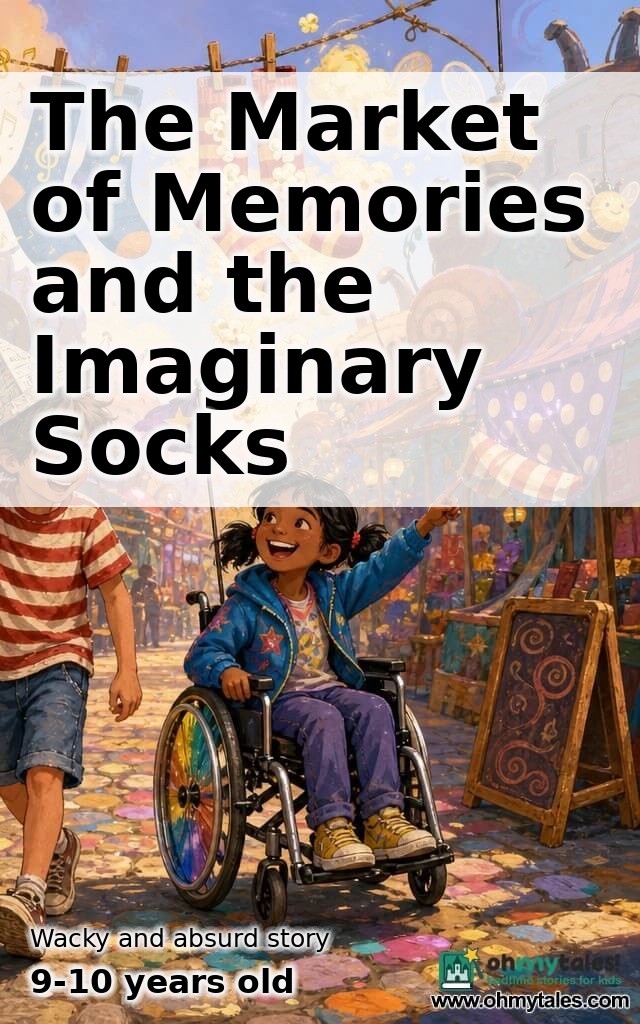
The morning the world decided to wear its shoes on its head, Milo noticed first. He and Nora were cycling down Maple Street — Milo pedaling one-handed while the other hand balanced a paper hat that had been winning the windy game since breakfast. Nora rolled beside him in her shiny blue wheelchair, which had a little flag that waved like a tiny bird. They were both nine, both loud in a good way, both experts at finding small, suspicious adventures.
“Look,” Nora said, head tilted like a detective listening to a clock. “That lamppost is upside down.”
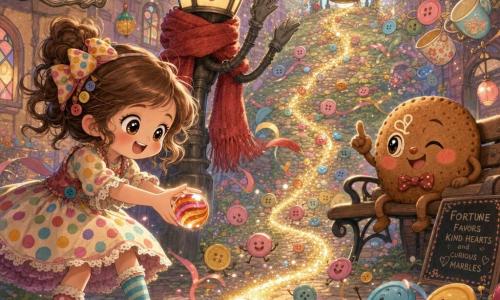
Milo squinted. The lamppost was doing something the lampposts had never done before. Its lightbulb dangled in the grassy roots, and its pole arched into the sky like someone had pulled a long, thin worm back through a buttonhole. Every pigeon in the neighbourhood was perched beneath it, reading tiny upside-down newspapers and wearing hats made of toast.
It was the sort of wrongness that smells faintly of marmalade and makes your knees feel like springs. Milo's paper hat blew away, performed a somersault, and landed perfectly atop an upside-down lamppost light.
“That's not how lampposts go to work,” Milo said, because rules are useful, even the invisible ones that say lampposts stand upright. “They're not supposed to hang on their heads.”
An old woman shuffled past with a shopping bag that winked. “Everything's upside-down today,” she said with a grin. “Best day to visit the Market of Memories. People are swapping socks and stories.”
“The Market of Memories?” Nora repeated. “That sounds like my teacher when she forgets where she put the board markers.”
“You know where that is?” Milo asked.
“Nope. But I know where the upside-down sign is.” Nora pointed to a wooden board nailed to a fence. The sign read MARKET OF MEMORIES, but the letters were arranged in a merry-go-round: some upside-down, some sideways, some doing handstands. An arrow pointed toward the alley that smelled faintly of bubblegum and dust.
They followed the arrow.
Chapter Two: The Market with a Smile
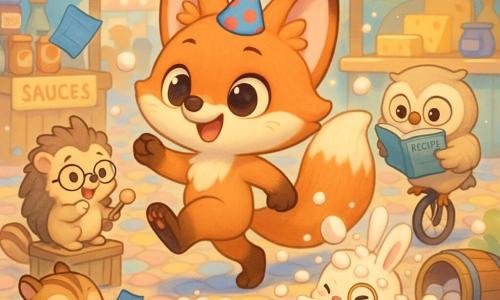
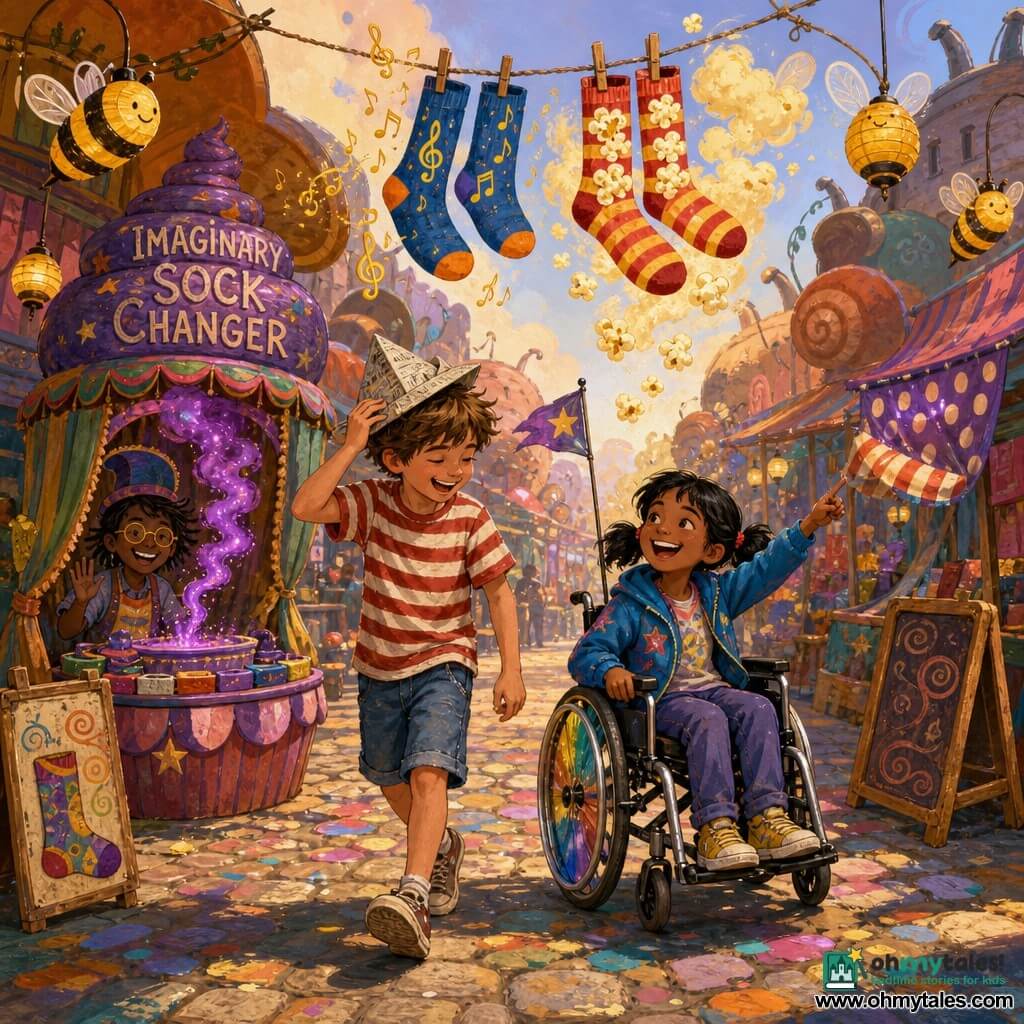
The alley opened like a book, and there it was: the Market of Memories. Stalls curved and bowed like friendly hedgehogs. Lanterns floated like sleepy bees. Stalls sold things you didn't expect: jars of yesterday's rain, postcards from future birthdays, and teacups that whispered the names of places you'd never been.
“Welcome!” called a vendor in a waistcoat knitted from storybook pages. His mustache had its own soundtrack — tiny plinks and plonks whenever he snickered. “Step right up. Trade a memory, take a trinket. No refunds on feelings.”
Milo and Nora wandered between stalls, lungs filling with a feeling like warm soda. Everyone at the market seemed pleased and slightly astonished. A boy about their age was haggling over a feather that promised to give the owner a really good sneeze at precisely three o'clock. A lady sold origami clouds that rained confetti when folded the right way. A man offered maps to places you could only find by humming with your nose.
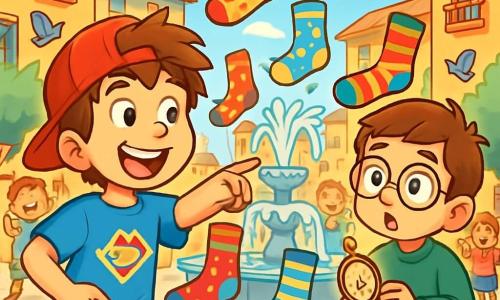
They reached a tent that smelled like grandma sweaters and crayons. On the sign hung the words: SOCKS OF POSSIBILITY — PREPARE TO CHANGE YOUR IMAGINARY SOCKS.
Milo blinked. “Imaginary socks?”
Nora grinned. “You know how sometimes you pretend you're wearing superhero socks? Maybe these are the real pretend ones.”
Inside the tent, socks of every sort hung like a laundry line caught in a giggle. Some were striped with moonlight, others dotted with giggles (actual tiny giggle-dots), and one pair shimmered as if it were knitted from a summer breeze. A kindly vendor with spectacles like two moons peered over a clipboard.
“You have to be ready to change them,” she said. “Changing imaginary socks is an important ceremony. It helps keep your step surprising. Would you like to prepare?”
“We like surprising steps,” Milo said.
“I like steps that clap,” Nora added, and clapped her hands. They made a tiny, polite round of applause.
The vendor handed them two small cloth pouches. “Inside, put a memory you won't mind swapping for a sock,” she instructed. “We don't take the big heavy memories — just the tickly ones you can part with.”
Milo took a pouch and felt its warmth, like a cat that had just read a joke. Nora tucked a memory into hers: the one about a time she'd put jam on toast but then put the toast in her shoe by mistake. She remembered the squishy crunch and how the dog had laughed with his tail. It felt light, the kind of memory that could hop.
Milo thought of something silly to share: the day his cereal sang to him in a very off-key opera. He folded it up, wrapped it in a napkin of thought, and tucked it inside the pouch.
A bell chimed. A procession of items began to move on its own: teacups drifted like petals, old umbrellas flapped soft applause, and a book of lost jokes fluttered pages like wings. The market hummed, as if the whole place were a band warming up.
“Time to practice changing,” said the vendor. “You wiggle your toes in your imagination, you swap a memory for a sock, and your next steps become something new. But be careful — imaginary socks have opinions.”
Nora laughed. “Do socks really have opinions?”
“Only about puddles and banana peels,” the vendor said solemnly.
They practiced. Milo imagined wiggling toes that smelled faintly of adventures. Nora pictured socks that turned their footsteps into piano notes. They swapped their tickly memories into the pouch, and a tiny postman-butterfly took them away on errands.
“That was easier than brushing a dragon,” Milo observed.
Ahead, a sign pointed to the Change Booth, a small gazebo that looked like a cupcake. Inside, a gentle machine with copper knobs and a feathered lever hummed. A sign read: IMAGINARY SOCK CHANGER — NO HICCUPS ACCEPTED.
Chapter Three: The Sock Switch Surprise
They stepped into the gazebo, and the machine greeted them in a voice like wind through reeds. “Names?”
“Milo and Nora,” they said in unison.
“Age nine,” the machine added before they could.
“You're very organized,” Nora told the machine.
“Organization is my middle name,” it replied, which made them both laugh. The machine asked them to close their eyes and imagine the silliest pair of socks possible. Milo pictured socks with tiny rainclouds that spilled popcorn. Nora imagined socks that left tiny garden trails of daisies with every step.
The machine whirred, clicked, and made a sound like a teapot clearing its throat. A puff of glitter-smoke, the color of quiet cartoons, drifted around their ankles. They opened their eyes.
Nora looked down. Her shoes had not changed, because imaginary socks do not show on the outside. But as she took a step on the gazebo floor, the floor made a soft plunk like a xylophone. “Listen!” she squealed. Each step plinked a different note: C, G, high E — like walking on a piano that had been practicing scales in its spare time.
Milo took a step and felt a tiny rain of popcorn scent. A whisper of buttery kernels tickled his nose. He laughed so much his hat almost fell into the popcorn wind.
“Now for the important part,” said the machine. “If you're changing socks, you must name your old ones.”
“Name them?” Milo asked.
“Yes. Old socks like recognition. It makes them feel special, and they will take fewer grumbles on their way to the Sock Drawer of Retirement.”
Milo thought of his imaginary old socks — the ones that had carried him through puddle jumps and sleepy afternoons. He named them Captain Fluffy and Admiral Holey. Nora named hers The Daring Dandelion and Slightly Sad Stripe.
The machine recorded the names on a ribbon and popped it into the air where it joined other ribbons that listed all kinds of sock names. The ribbon of Captains, Dandelions, and Slightly Sad Stripes waved proudly toward the Sock Drawer, which was a large wooden chest guarded by a polite snail with a tiny monocle.
“Goodbyes are sometimes noisy,” the machine murmured. “Sometimes they whisper. Both are fine.”
Nora gave her old pretend socks a little salute. Milo pretended to dip his paper hat in a bow. The snail tipped its monocle in return.
As they left, a small boy ran up with a question. “Do you know how to make your socks do a secret handshake?”
Milo and Nora shared a look. This was the sort of information that should be shared. Nora explained the very serious steps: wiggle your toes, whisper the secret, and give your socks a gentle compliment. The boy practiced on his shoes, which responded by offering a tiny flip.
They felt lighter, as though their shoes had grown a pair of small, polite wings. Outside the gazebo, a parade had started: people walking as if on tiptoes, stomping slightly, clapping softly, leaving behind tiny trails of music and confetti daisies. The Market of Memories hummed happily. Milo found his paper hat had returned, sitting on a stall selling postcards to cloud nine.
Chapter Four: The Memory Mix-Up
Just as they were about to leave, a sudden flurry of pigeons swooped down, dropping little parcels of remembered things. One parcel, tied with a twist of sugar string, fell at Nora's wheels. She reached for it and untied it with a graceful diner-fold.
Inside was a memory that was not hers. It smelled faintly of crayons and ocean breeze. It showed, in a blink, a boy nine years old finding a map stuck inside a comic book that led to a hidden swing. Nora's face softened. Milo peered and recognized the map from a comic he had once read in the library while his cereal was doing its opera.
“Someone must have mixed memories,” Milo said. The vendor with the page-waistcoat popped his head out of a tent.
“Ah!” he said, delighted. “Occasional mix-ups at the Market of Memories. They're like socks in a laundry bag. Full of surprises.”
“Should we return it?” Nora asked. “It belongs to someone else.”
“Memories like to travel,” said the page-waistcoat. “If they're left somewhere unexpected, they grow into small adventures. Sometimes they belong more here than where they started.”
Nora rubbed her chin. “But the boy in the memory looked a lot like me when I squint,” she admitted.
“Then perhaps it chose well,” Milo said. “Or maybe it was waiting to be found.”
They decided to keep the memory for a little while and tuck it into their pouches. It made room for new bits of laughing-soda joy. The Market of Memories, full of helpful oddities, gave them a tiny paper map stamped with a star and a note: KEEP YOUR IMAGINARY SOCKS HAPPY — THEY KEEP WALKING FUN.
They bought a small compass that made purring noises and a packet of giggle-seeds that sprouted chuckles when watered with smiles. The sky above the market slowly eased its shoes back on, and the lamppost straightened up to its polite, upright self, leaving a faint trail of toast-hat crumbs.
Chapter Five: The Gentle Ending
On the way home, Milo and Nora walked (and rolled) like small marching bands, their steps making music and leaving little daisies. Their imaginations had new socks now: one pair left a smell of popcorn that tasted like a memory of fun, and the other played piano with their footsteps. The world felt slightly more surprising, in the best possible way.
They stopped by the upside-down lamppost one last time. It was back to normal, standing tall and proud, but a single pigeon still wore a hat made of toast and nodded politely at them. “Thanks for the names,” it said. “The socks liked their ceremony.”
“You're welcome,” Milo said. He tilted his head and whispered to his socks a small compliment: “You walk like you mean it.”
Nora's socks hummed. Milo's smelled faintly of buttery festivals. They both laughed, and the laugh sounded like a ribbon untying itself neatly.
“Do you think our socks will remember today?” Nora asked.
“They'll probably write it down in tiny letters on the inside,” Milo said. “Or maybe they'll tell our other socks at night, like spoonfuls of starlight.”
The sun slid slowly into the kind of evening that tucks things under a soft blanket. The Market of Memories dimmed its lanterns one by one, and the stalls folded like friendly origami. The music of their steps softened, like a band lowering its voices for a sleepy song.
“At least we changed socks,” Nora said, yawning the way people yawns when they have used all their laughs for the day.
“And we kept our memories light,” Milo added. “Just the tickly ones.”
They walked home slower, each step a small plink or a hint of popcorn, the world around them settling with a smile. The last thing they did before the street swallowed their footsteps in quiet was clap once — a neat, small applause for the day's oddness.
That night, Milo put his paper hat on the bedside table and whispered two names he'd given his old socks, like a secret handshake to the dark. Nora arranged her daisies beside her bed, where they hummed a soft lullaby.
Outside, the Market of Memories folded into itself like a contented cat, keeping tiny secrets under its tongue. The sky no longer wore its shoes on its head. It sighed gently and let the moon polish itself with a sleepy cloth.
And if, sometimes, in the middle of an ordinary Tuesday, a puddle makes the sound of a piano or your shoes leave a scent of popcorn for a second, you might smile. You might remember to compliment your socks. They will remember you back, in quiet letters sewn on the inside, and your steps will always have a small chance of applause.