Chapter 1: The Whispering Door
In the city of Lanterns, where the streets twisted like ribbons of silk, there stood a small orphange, hidden behind a garden of jasmine and palms. Every morning, as the sun stretched golden fingers over the rooftops, Layla swept the steps of the orphanage with a broom made from old date fronds. She had eyes that sparkled like the evening star and a heart as open as the desert sky. Layla was the guardian of the children who called the orphanage home, and she greeted each sunrise with a promise: no child would ever go hungry under her watch.
But one spring, the city's markets grew thin. The river, usually generous with its cool water and fat fish, shrank to a silver thread. The palms whispered of drought and the wind carried tales of empty bellies. Layla's heart fluttered with worry like a trapped bird. She counted beans and rice every evening, her mind swirling with questions as thick as the honey she spread on the children's bread.
One evening, as Layla pondered beneath the moon, the old wooden door creaked open. It was not the wind that pushed it, but a stranger—an old woman with hands as wrinkled as dried figs and eyes bright as polished coins. She wore a cloak woven from scraps of faded cloth, and she smiled with the kindness of a grandmother who has seen many seasons. “Good evening, child,” she said, her voice rustling like autumn leaves. “May I rest a moment in your garden?”
Layla welcomed her with sweet tea and a place beneath the jasmine. The children tiptoed out, curious and wide-eyed, and the old woman watched them play with a gaze that shimmered with secrets.
Chapter 2: The Promise of the Palm
As stars blossomed in the velvet sky, the old woman spoke. “Once, I too was hungry,” she murmured. “But I learned that the heart's magic is greatest when its hands are open.” She reached into her patchwork cloak and drew out a single palm seed, small and smooth as a teardrop. “Plant this in your garden, and care for it with kindness. Share what you have, and you will never be empty.”
Layla's brow wrinkled with doubt. How could a single seed fill so many hungry bellies? But the old woman's words glimmered with hope, and hope is a powerful magic. With gentle hands, Layla pressed the seed into the soil at the heart of the garden. That night, she watered it with what little remained in the well, whispering a wish that it might grow strong enough to shelter her children.
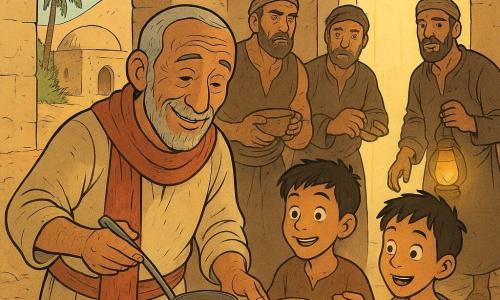
In the days that followed, Layla shared the last of their food as fairly as she could. She made soup from bones and beans, and told stories as rich as any feast. Each meal was small, yet laughter filled the halls as if the walls themselves were fed with joy.
Chapter 3: The Miracle of Green
One morning, the children woke to a gasp of delight. In the place where Layla had planted the seed, a green shoot had burst through the earth, stretching eagerly toward the sun. By noon, it was a young palm tree, its fronds unfolding like emerald fans. The children danced around it, clapping their hands, while Layla watched with shining eyes.
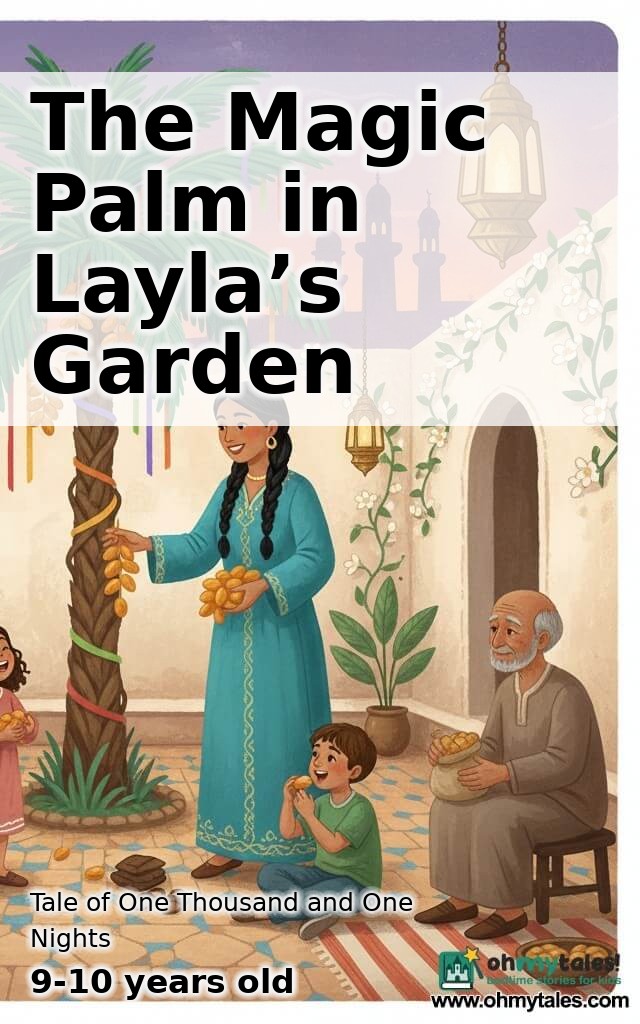
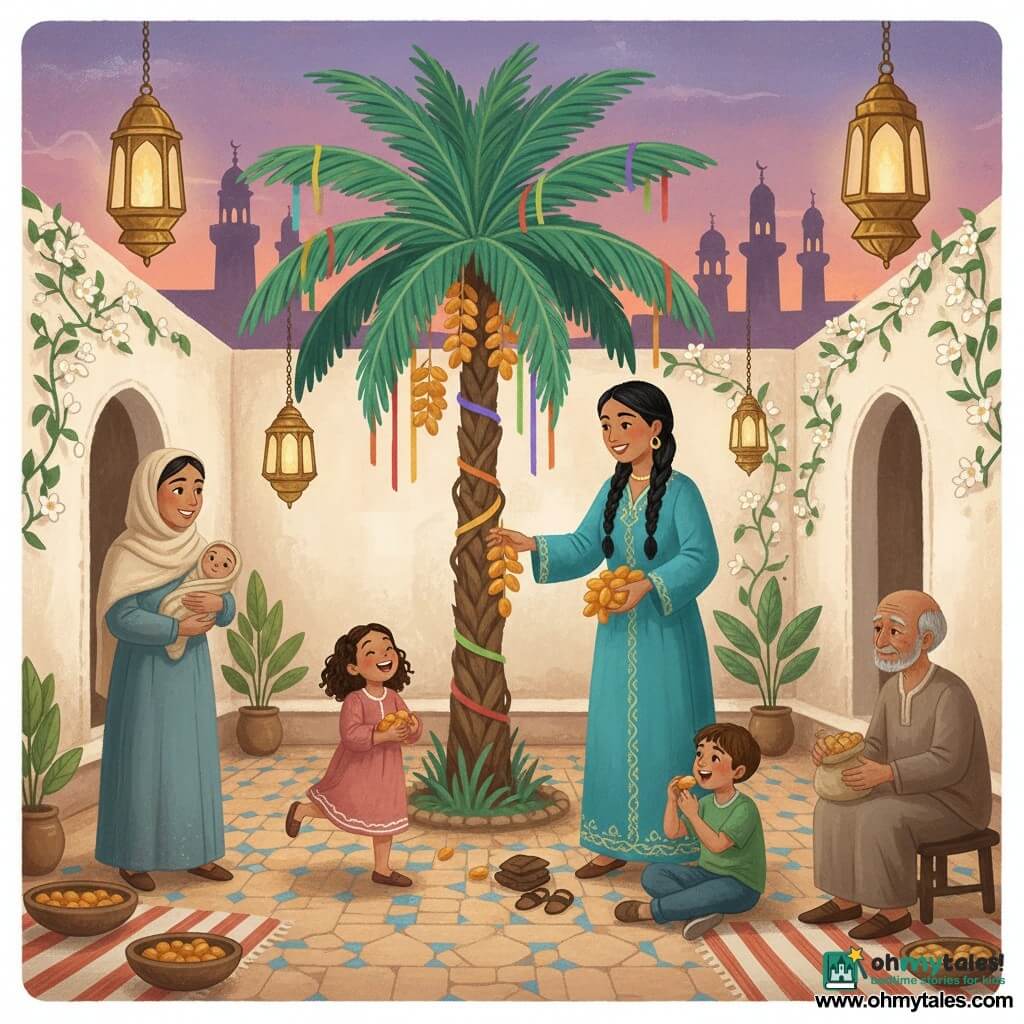
Day by day, the tree grew faster than any tree had a right to. Its trunk thickened, its leaves unfurled, and soon, golden dates hung in heavy clusters, sweet as caramel and warm as laughter. No matter how many dates they picked, more appeared, as if the tree itself was a fountain of kindness.
Layla called the children to gather, and together they feasted on the golden fruit. She remembered the old woman's words and invited the hungry from the city beyond the garden: a shoemaker with tired eyes, a mother with a sleeping baby, a merchant whose luck had run dry. All were welcomed with open hands and hearts.
Chapter 4: The Heart's Riddle
Word of the magical tree spread through the city like perfume on the breeze. Some came with empty baskets, others with empty hearts. Some came hoping for treasure, others simply for a taste of hope. Layla greeted each with a smile, sharing not just dates, but stories and laughter, songs and warmth.
But soon, Layla noticed a shadow creeping among the fronds. One morning, she discovered that someone had tried to dig up the roots of the tree, hoping perhaps to steal its secret. The tree, once so radiant, drooped as if it were weeping. Its fruit shrank and its leaves curled inward, like hands closing in fear.
Layla gathered the children and spoke gently. “A gift grows only when it is shared,” she said. “If we close our hearts and guard our treasures, the magic fades. But if we trust in the kindness of giving, the tree will flourish.”
That night, Layla and the children sat beneath the frail palm, singing songs of hope and gratitude. They tied ribbons of thanks to its branches and whispered their wishes into the night air, trusting that kindness would find its way back.
Chapter 5: The Feast of Open Hands
By dawn, the palm's leaves had begun to uncurl, trembling like green wings. The sunlight bathed it in gold, and once more, the fruit ripened in heavy clusters. The city awoke to laughter ringing from the orphanage, and Layla's garden became a place where stories grew as thick as the dates on the tree.
People learned to visit not just for food, but to share what little they had: a loaf of bread, a song, a kind word. The tree's roots wound through the earth, linking all who gave and all who received in a silent promise. Layla watched with joy as her children learned that the heart's magic multiplies when shared.
As seasons turned and the river flowed full again, the orphanage never knew hunger. The palm tree stood tall, a living symbol of generosity and hope, its trunk carved with the names of all who had shared in its bounty.
And Layla, with her hands always open and her heart always full, knew that the greatest magic of all was not in the tree, but in the simple act of sharing—an invisible door that, once opened, would never close.