Chapter 1: The Little Kitchen Clock
The little kitchen clock ticked like a gentle spoon. Chef Milo wiped his hands on a blue towel and smiled at the morning light. He liked the warm tick-tock. It kept time for recipes, naps, and stories. Today the clock said, "Cook."
Milo was a tall man with flour on his sleeves and kind eyes. He taught children how to cook at the old school by the river. He loved to show them how food could be simple, bright, and kind to the Earth. He always said, "Cooking is caring. We measure with our hearts and our scales."
In the pantry, jars hummed with the smell of spices. Cinnamon smelled like a cozy sweater. Lemon smelled like a clean window. Milo picked up a wooden spoon. He sang a small refrain as he moved:
"Stir with care, measure fair,
A pinch for joy, a spoon to share."
The refrain was soft, like a lullaby. It made the spices feel safe.
This morning Milo had a special plan. He was going to visit a studio for a photo shoot. Not just any shoot — a food-magic shoot. The studio would take pictures of dishes that would teach children how a chef works. Milo packed his bag: a notebook, his special chef's hat, a small cloth bag of herbs, and his faithful kitchen scale.
The scale was a silver friend. It had two round plates and numbers that shone like tiny moons. Milo loved the scale. "The scale tells truth," he told the children. "It helps us share, save, and not waste."
"Goodbye, jars," Milo whispered. "Goodbye, clock." He kissed the blue towel and stepped outside. The air smelled of bread baking down the street. The world looked soft and promising.
Chapter 2: The Studio That Smiled
The studio smelled different. It was cool and bright. White walls, tall windows, and a big table at the center where lights stood like friendly trees. Cameras waited like curious owls.
"Hello, Chef Milo!" called a voice. A woman with a camera smiled wide. Her name was Lina. "We'll take pictures that feel like hugs."
Milo dipped his hand in the herb bag and offered a sprig of basil. "Smells like summer," he said.
"They smell like stories," Lina laughed. "Tell me one."
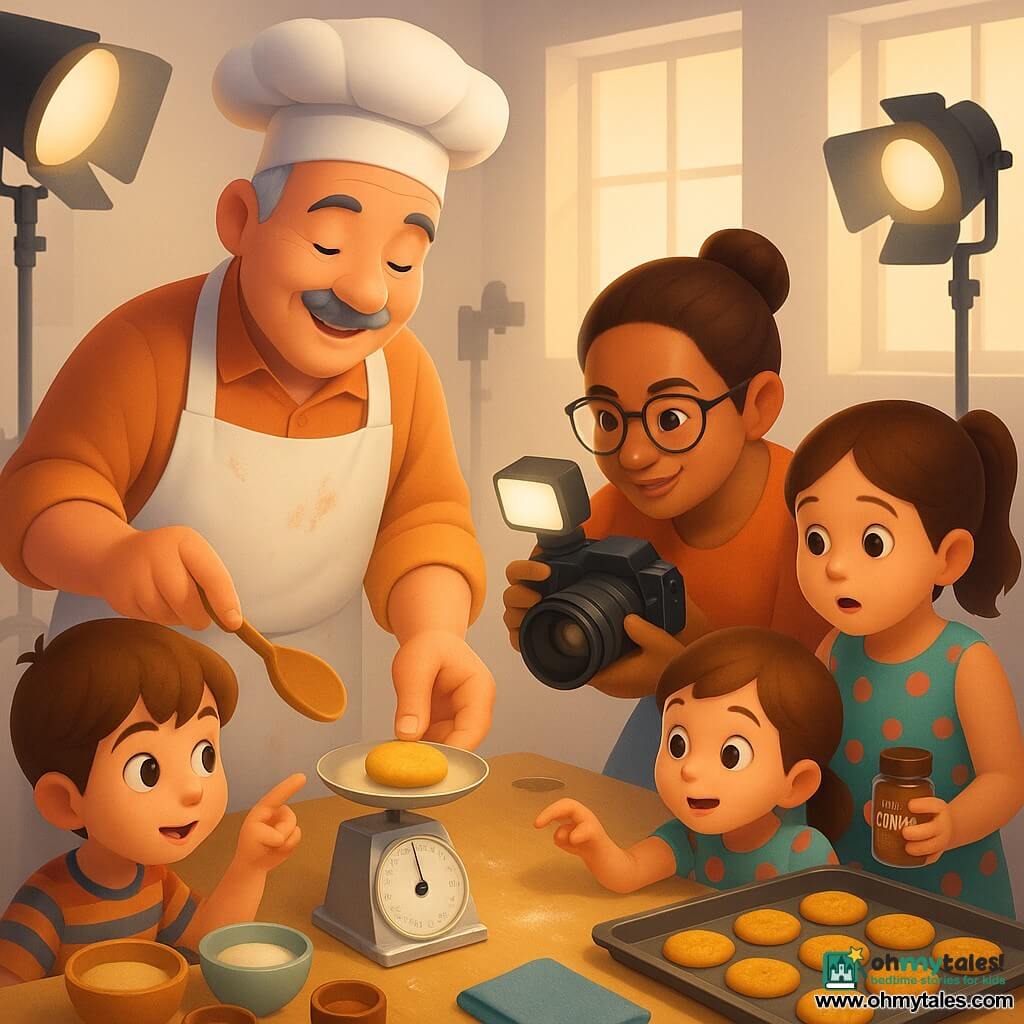
Milo set his scale on the table. Children from the school walked in, peeking from behind a folding screen. Their eyes were big as pancakes.
"Today," Milo said, "we learn about weighing, tasting, and saving. We also make a small dish for the camera — simple, colorful, and kind to the Earth."
He showed the children how the scale worked. "We place our bowl gently," he said. "Zero the scale so it starts fresh. Always start from zero, like a deep breath."
He placed a bowl on the scale and reset the dial. The needle rested like a patient cat. Milo added flour. The needle moved. The children watched numbers dance.
"Why do we weigh, Chef Milo?" asked a curious boy named Sam.
Milo smiled. "We weigh so we don't waste. If we use the right amount, we have enough to share. We also know how much energy it takes to grow food. Less waste, happier Earth."
The camera clicked softly. Lina liked the peace. She captured the little hand that poured a cup of oats. She clicked again when a child shook cinnamon like soft dust.
Milo made a simple oat cookie dough, measured and folded. He taught the children how to smell each ingredient. "Close your eyes," he said. "Tell me what you feel." Little hands waved in the air. "Warm," said one. "Sweet," said another. "Like my grandma's kitchen," whispered a girl named Ana.
They put the dough on a tray. Children learned to use the scale again to make even cookies. "Equal cookies mean equal smiles," Milo said. He tapped the tray like a drum. The children giggled.
He also explained where food came from. "Oats come from fields," Milo said. "Farms need water, sun, and care. If we waste food, it's like throwing away all that sunshine and work. So we use what we need, and we save the rest."
"How do we save?" asked Sam.
Milo reached into his bag and showed them a glass jar. "Store leftovers in jars. Share with neighbors. Compost peels. Even peels are useful — they feed the soil."
"Compost?" said Ana, eyes squinting.
"It is a soft bed for old food," Milo said. "Banana peels, apple cores, and coffee grounds will rest and turn into dark, rich soil. Soil that grows new food. It's like a gentle promise."
Lina pointed her camera at Milo's hands, then at the scale, then at the jars. The photos would teach more children. Milo watched the children learn and felt his heart hum like the kitchen clock.
As the lights glowed, a small dilemma appeared. The tray of cookies looked lovely, but the studio had only one bright plate for the photograph. The children wanted to eat the cookies right away. Milo knelt and spoke softly.
"We'll taste one," he said. "We will leave the rest to be shared."
He placed one cookie on the plate, weighed it with the scale to show portion size, and set it under a warm lamp. The camera hummed, and Lina snapped a picture. The cookie looked like a tiny sun on the plate.
"Click," went the camera. The children cheered. Milo gave each child a small, equal piece from another tray. "Measure with care," he sang.
"Stir with care, measure fair,
A pinch for joy, a spoon to share."
The refrain was soft, and the studio seemed to breathe along.
Chapter 3: The Little Mist and the Big Idea
After the shoot, Milo and the children walked through a small garden behind the studio. Little green leaves tickled their fingers. A gentle mist settled, like a cool blanket. Milo smelled earth and thought of compost.
"Look," he said, pointing at a tiny worm. "The worm helps the soil. It turns old things into new things. Even a small worm can teach a big lesson."
The children crouched close. The worm flicked and wiggled and seemed happy. Milo explained how food scraps could go into a compost bin, and soon, magic soil would feed the garden.
"Chef Milo," said Lina, who had followed with the camera, "would you show me how to make a photo recipe people can follow at home?"
Milo clapped his hands. "A photo recipe! Yes. We will make a little plate of roasted vegetables and a small herb sauce. We will show every step — weigh, chop, roast, taste, and keep what we don't use."
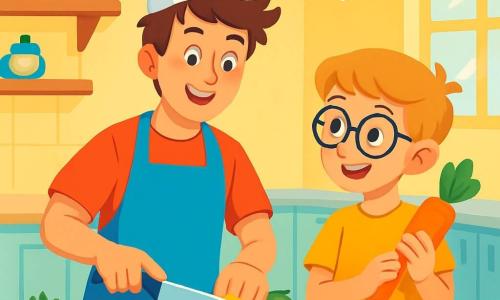
They set the camera to take pictures of every motion. Milo measured vegetables on the scale: three carrots, two tiny potatoes, a bell pepper. He showed the children that each vegetable had a weight. "Numbers tell us how much to cook," he said. "They help us plan."
Milo taught a chopping song to keep hands steady.
"Little chop, little chop, slow and sure,
Keep your fingers curled, always secure."
A chorus of soft "little chops" filled the garden kitchen. The sound was happy and safe. Lina took pictures of the hands, the knife, the scale. She laughed when a carrot rolled like a small orange ball.
They sprinkled herbs and olive oil. The oven smelled warm and sweet, like a blanket. "Roasting brings out a vegetable's smile," Milo said. "It makes it soft, sweet, and golden."
While the vegetables roasted, Milo had the children think of ways to reduce waste. They learned to use vegetable stems in a vegetable stock instead of throwing them away. They learned that one carrot top could become pesto, and potato peels could be baked into crisp snacks.
"Saving is clever," said Sam. "It makes more food and less trash."
Milo nodded. "And it helps the Earth breathe easier."
When the vegetables came out of the oven, they were golden and crackly. Milo arranged them on a plate, weighed the portions, and drizzled the herb sauce. Lina took a picture from above. The photo looked like a treasure chest of colors.
The children learned to pack leftover vegetables into small containers, tag them with notes, and give them to neighbors or the studio team. "Sharing is like a warm voice," Milo said. "It connects our days."
At the end of the afternoon, the camera's memory was full of pictures: a scale ticking, hands measuring, worms wiggling, a cookie like a tiny sun. Lina thanked Milo with a bright smile.
"You have shown their hearts," she said. "Not just their hands."
"Cooking is kindness," Milo replied. "And weighing shows us how to be careful."
Chapter 4: The Phone That Smiled
The sky outside the studio turned pink like a pastry glaze. The children waved goodbye and walked home. Milo gathered his bags. He felt a soft tiredness, like the kind after stirring. He liked that tiredness; it meant he had given something away.
Back at his small kitchen by the river, Milo put the silver scale on the counter. He turned it gently, like saying hello to an old friend. He placed the photos from the day on the table. Each picture was a small story.
He turned on the little radio and hummed his refrain. The kitchen smelled faintly of roasted vegetables and lemon. In the corner, a mason jar held the ends of carrots and peels waiting for the compost bin. Milo nodded at it. "Good work today," he whispered.
His phone buzzed — a soft bell. Milo wiped his hands and picked it up. On the screen, Lina's name glowed with a tiny camera. He smiled before he answered.
"Hello, Chef Milo!" Lina's voice was bright through the phone. "Parents loved the photos. They said the pictures made them want to cook with their children. They asked for simple steps and the little songs."
Milo's smile opened like bread in the oven. "That is the best news."
"Also," Lina added, "one family asked how to compost. Many want to do better for the Earth."
Milo thought of the worm, the children, and the scale. "Tell them to start small," he said. "A jar on the counter. A neighbor's compost pile. A small hand stirring. And remind them to weigh and share."
Lina laughed softly. "You always know the right words."
They spoke about the photos. Lina wanted a short message from Milo to send with the pictures. Milo breathed in and felt the day settle warm inside him. He chose his words like choosing a spice.
"Dear friends," he said slowly, "we made food like a hug today. Measure with care, save with love, and share a smile. Little actions help the Earth grow. Cook together, and tell stories while you stir."
He ended with the refrain softly, and Lina hummed along over the line.
"Stir with care, measure fair,
A pinch for joy, a spoon to share."
Then Lina said something that warmed Milo even more. "Parents want to hear your voice next. Could you read a short story about the scale and compost for bedtime?"
Milo's eyes twinkled like a star in a pot of stew. "Yes," he said. "I will read to them. Make it gentle and short. Make it like a bedtime recipe."
He promised her he would call that night and read. Milo hung up and looked at the photos again. The kitchen seemed to nod. The clock ticked slow and kind. The blue towel was ready.
Milo sat in his favorite chair. The house smelled like the day: roasted vegetables, lemon, and a hint of cinnamon. He made a small cup of chamomile tea. Steam rose and smelled like soft blankets. The scale sat nearby, silver and calm, like a moon.
He picked up the phone and dialed the number Lina had given him for the parents who wanted a bedtime story. The phone rang once, twice. A child's sleepy voice answered, "Hello?"
"Good evening," Milo said in a voice as gentle as warm milk. "Would you like a short story about a scale, a worm, and a little kitchen song?"
"Yes," the child mumbled sleepily.
Milo told the story he had told the children at the studio. He spoke of measuring with care, composting with kindness, and sharing like a small warm loaf. He sang the refrain softly at the end.
When he finished, the child's voice sighed happily. "Thank you, Chef Milo."
Milo's heart felt soft. He smiled and said goodnight. He hung up the phone and put the chamomile down. The little kitchen clock ticked like a spoon.
He thought of the day: the bright studio, the camera that clicked like a friendly frog, the garden worm, and the children's small hands. He thought of the photos traveling to other homes, and of families perhaps weighing a cup of oats together.
Milo looked at the scale and whispered, "We measured a lot today. But the best thing we measured was kindness."
He washed his hands, put the scale back in its place, and closed the kitchen door. Outside, the river hummed a lullaby. Inside, Milo's house glowed a tender light. He climbed into bed with a small smile on his face.
As sleep wrapped around him, he thought of tomorrow — another day to teach, another day to save, another day to share. He dreamed of tiny seeds growing into tall sunflowers, of jars being full of soup for neighbors, and of small hands keeping fingers curled while chopping.
The little kitchen clock ticked once more and said goodnight.
"Stir with care, measure fair,
A pinch for joy, a spoon to share."
And somewhere across town, a camera blinked, a worm wiggled, and a child slept with the smell of roasted vegetables in her dreams.