Chapter 1: The City That Glowed
Leon Arrowson belonged to the kind of city that never quite slept. Neon ribbons winked across glass towers, trams hummed like friendly robots, and the river that cut through the downtown district caught the lights and scattered them like candies. Leon was twenty, with a mop of hair that refused to be tamed and a cape that never quite matched his socks. He kept his hero gear in a sleek satchel: lightweight armor panels, a pair of magnetic gloves, and a small notebook filled with careful diagrams and sticky notes. People called him Vigilant Leon because he moved like a quietly steady wind—calm, clever, and always two steps ahead.
That morning, the city woke to a puzzle. Traffic lights blinked in dances they had never learned; billboards streamed messages in mismatched rhythms; and on the river, boats slowed as if listening for a beat. Folks whispered about a strange signal slipping through everything electric. Leon read the first report on his tablet and felt the familiar nudge in his chest—the nudge that meant duty, and also the itch to solve a good mystery. He laced his gloves, checked his compass, and stepped into the bright streets, smiling before he even reached the first clue.
Chapter 2: The Clues in the Alley
The alley behind a comic shop smelled like popcorn and rain. Neon signs painted the brick purple and gold. Leon crouched, eyes scanning. Metal scraps lay arranged like dominoes, and on a wall someone had spray-painted a spiral that matched a symbol he'd seen on an old transmitter schematic. He tapped his notebook and scribbled, “Pattern—signal mimicry?” The pattern seemed playful but clever, like a game of hide-and-seek where the hiding spots were circuits.
A group of kids were gathered nearby, whispering excitedly. They recognized Leon, not just as a hero but as someone who listened. They pointed to a small drone tangled in string. Leon gently freed the drone, and its tiny camera blinked awake and projected a shaky image: a map with a lighthouse symbol marked on the river bend. A hush fell over the alley. The lighthouse was not the old coastal kind; it stood like a lighthouse for the city—an urban tower that guided river traffic and pulsed with safety lights. The kids clapped. Cooperation had solved the first step. Leon ruffled one boy's hair and promised to follow the map. The clue stitched the mystery tighter, and Leon felt the puzzle begin to hum.
Chapter 3: The Chase on Glass Bridge
Leon crossed Glass Bridge, a skyway of clear panels that arched over a busy boulevard. Pedestrians stopped to watch his figure slice through the air. Behind him—fast and noisy—a slate-gray vehicle slid along rails, chasing the same signal. Leon's magnetic gloves sparked as he gripped the bridge's rail, launching him into one long, graceful flip. He moved like a living comic panel: motion frozen in color, then a burst of speed. The vehicle's driver tried to cut him off, but Leon used the rail's magnetism to swing and place a small magnetic pulse that nudged the vehicle aside without harm.
The chase ended in a rooftop garden blooming with rooftop vegetables and sunflowers that leaned toward the city's light. There, Leon confronted a figure in a soft cloak, who withdrew a tablet showing schematics of the city's signals. The figure wasn't mean—just frightened. She explained her plan: she had been trying to reroute power to help an old community center that had lost funding. Her intentions were good, she said, but the method had made the city jittery. Leon listened. He proposed a better way: cooperation, permits, and a safe plan that would not confuse traffic lights or riverboats. The cloaked figure sighed and agreed to work together. Leon's notebook grew a new note: “Team up—fix, don't frighten.”
Chapter 4: The Lighthouse Puzzle
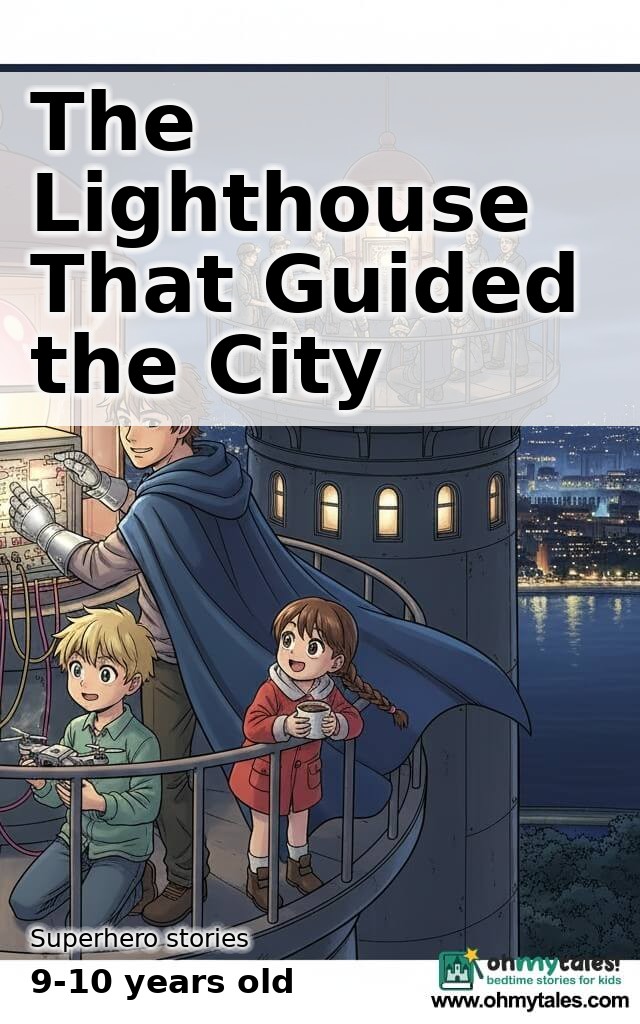
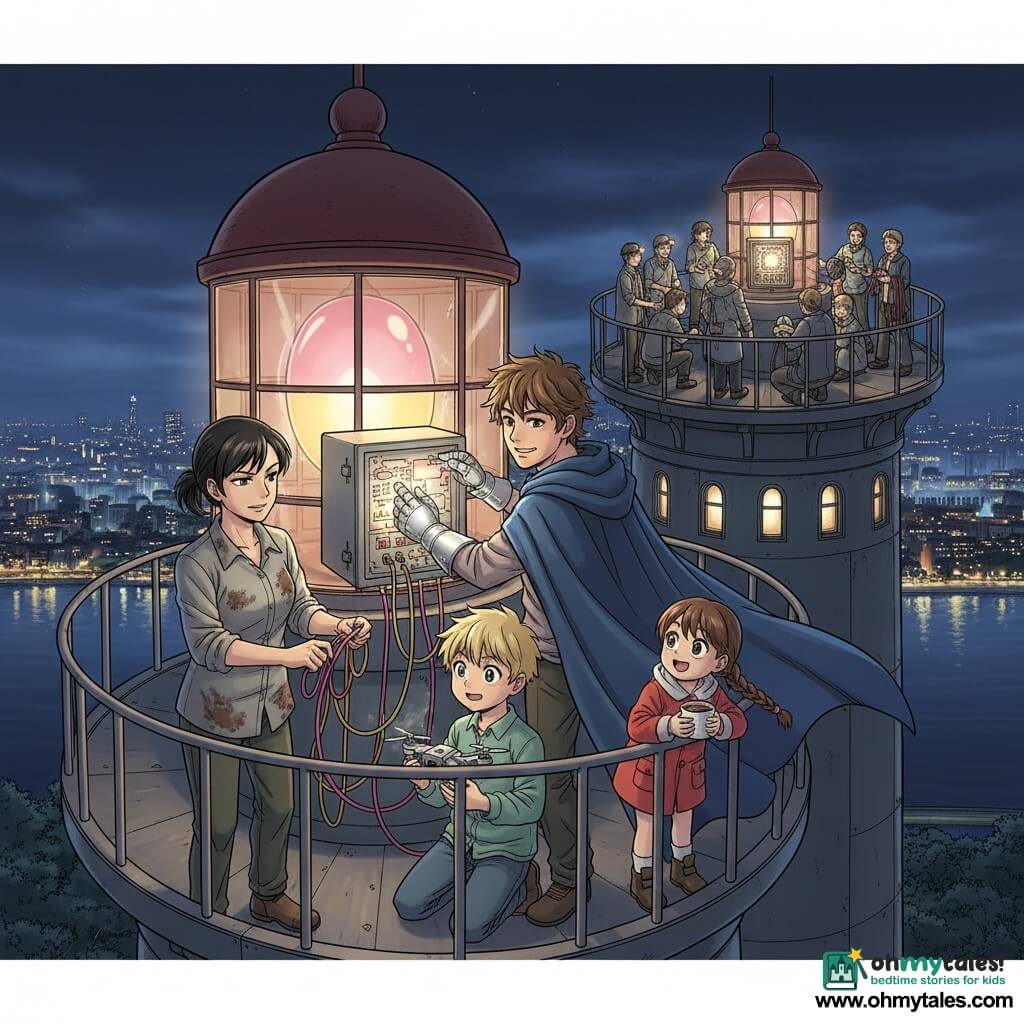
The river breeze smelled like tin and warm bread as Leon climbed the urban lighthouse. Its stairwell spiraled like a coiled story, each step a line of light beneath his feet. At the top, the lantern room glowed with screens and an antique lens that still turned with the sea's wisdom. The signal that had slipped through the city was weaving into the lighthouse's beacon, and Leon realized this was not a simple reroute—it was a message, cleverly hidden in the pulses.
He and the cloaked woman—who now revealed her name as Mira, an engineer with a brilliant but anxious heart—worked together. Leon's steady diagrams met Mira's wild, quick sketches. They tested frequencies, tried different rhythms, and listened to the beacon the way fishermen listen to the sea. The lighthouse seemed to hum approval. As they worked, a shadow moved across the river below: a group of volunteers from the community center had arrived with patch cables, lanterns, and big thermoses of cocoa. They all offered hands and ideas. Piece by piece, the mystery untangled: the signal was a leftover code from an old rescue system, trying to call out for help long forgotten. When Leon and Mira reprogrammed the beacon to sing a friendly, new message—and to include the community center's safe channel—the city's jitter dimmed like a storm passing.
Chapter 5: The Rest Well Earned
With the lights humming normally and the river boats guided safely by the lighthouse's steady beam, the city exhaled. People cheered on the riverbank, waving at Leon, who stood beside Mira and the kids who had helped. He felt tired in a good way—the kind of tired that means you did something brave and kind. The volunteers handed out warm bread and cocoa. Leon sat on the lighthouse steps, cape folded neatly, and looked at the city he loved. He thought about the puzzle, about mistakes made with good intentions, and about how solving things together had been the bravest choice of all.
As the sun sank, the lighthouse painted long golden stripes across the river. Leon closed his eyes for a moment, listening to laughter and the soft clink of cups. Mira nudged him with a grin and said, “Not bad for a cautious hero.” He smiled back. Later that night, back at his small apartment, Leon laid his gear on the table, wrote in his notebook—“Cooperation wins”—and folded his cape. He fell asleep knowing the city was safer, not because one person had fixed everything, but because many hands had reached out. The rest that followed was deep, warm, and well-earned: a hero's quiet celebration with dreams bright enough to promise tomorrow.